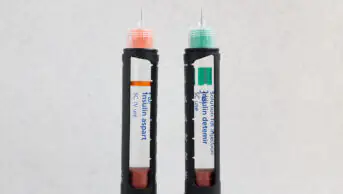
Ingram Publishing/ Alamy Stock Photo
In the years following a type 2 diabetes mellitus (T2DM) diagnosis, women are more likely than men to develop mental health conditions, while men are more likely to develop cardiovascular and renal complications, the results of a study have suggested.
Publishing their findings in PLOS Medicine on 25 August 2026, researchers examined anonymised health records from 28,720 men and women in the UK who developed T2DM between 2010 and 2020. Men constituted 62% of the cohort with a median age of 54 years at T2DM onset, while women were, on average, two years older at diagnosis.
In the years following diagnosis, 39% (n= 11,161) of the participants experienced at least one significant health event, while the events’ trajectory and timing differed by sex, the study results showed.
The study results also highlighted that while women were more likely to develop mental health conditions post-diagnosis (8.1% compared with 5.3%) and experience trajectories culminating in death, men showed higher proportions of cardiovascular disease and end-stage renal disease (8.4% compared with 5.3%), as well as hypertension (21.1% compared with 20.2%).
In addition, the researchers noted that on average, women used more health services and long-term prescriptions than men, which may have contributed to increased diagnoses.
Globally, T2DM affects about 536.6 million people aged 20–79 years or 10.5% of the population — by 2045, this number is expected to rise to 700 million. Cardiovascular disease, end-stage renal disease and mental health disorders, such as depression and anxiety, are all associated with T2DM.
Women and men are known to experience these conditions differently, but research has not yet described the disease trajectories according to sex and age in people with T2DM.
The study results also revealed that both women and men who had a combination of T2DM and a mental health condition experienced premature mortality compared with other trajectories. They also showed that women’s and men’s median age at death was earliest in those with T2DM onset followed by a mental health condition at 61 years and 70 years, respectively.
Across all age groups and sexes, hypertension was the most frequent event that was observed following T2DM onset, the study results underscored.
The study authors said that current UK medical guidelines lacked sex-specific prevention strategies and management for T2DM and comorbidities, especially mental health conditions, highlighting the importance of tailored management strategies that consider sex, age and the interplay of physical and mental health in T2DM care.
“One of the clearest signals in our data was the sex difference. Younger women with T2DM were showing mental health complications earlier and more often than we expected, which suggests routine psychological screening should be incorporated into standard diabetes care,” the study authors added.
“For men, the pattern looked different: cardiovascular and kidney risks tended to emerge earlier, pointing to a need for earlier monitoring and stronger strategies to support men’s engagement with their treatment over time.”
Ruth Hackett, senior lecturer in Health Psychology at King’s College London, commented: “People with diabetes who have poor mental health are at a much greater risk of diabetes complications than people with diabetes alone. The double diagnosis of depression and diabetes is linked with the micro- and macrovascular complications of diabetes, as well as increased mortality. Those with diabetes and poor mental health are also more likely to struggle with day-to-day diabetes control, medication adherence and lifestyle change, which is relevant for pharmacists to know so they can tailor the support they provide.”
She noted that studies have investigated links between diabetes and depression and anxiety, as well as “diabetes distress”, which involves diabetes-specific stress related to disease management and fear of complications.
“It is distinct from clinical depression, and may respond to practical support around diabetes management, as well as a mental health referral,” Hackett said, adding that pharmacists should be aware of both cognitive and psychosomatic signs of depression, such as tiredness, changes in sleep and eating behaviour, as well as low mood.
Hackett continued: “Pharmacists should enquire about changes in both of these, as well as whether the patient is struggling with diabetes control, and adherence to medication and lifestyle advice.”
While the PLOS Medicine study reported higher incidences of mental health issues among women with T2DM, Hackett noted that men were less likely to speak about mental health concerns or seek support, increasing the need for clinicians to ask men about mental health symptoms.
“Where a pharmacist has concerns, the patient can be referred back to their GP, and NHS Talking Therapies has a pathway for people with long-term conditions,” she suggested.