Wes Mountain
Once a medicine is approved by the Medicines and Healthcare products Regulatory Agency (MHRA) and recommended by the National Institute for Health and Care Excellence (NICE), NHS England and integrated care boards (ICBs) have a statutory duty to fund it within 90 days. This reduces to 30 days for Early Access to Medicines Scheme (EAMS) products or for products appraised via NICE’s fast-track appraisal process.
NICE sets out how this is measured. Commissioners demonstrate compliance through policy statements, service-level agreements and/or contracts; providers publish their formularies; and organisations publish audit data and patient surveys to demonstrate use1.
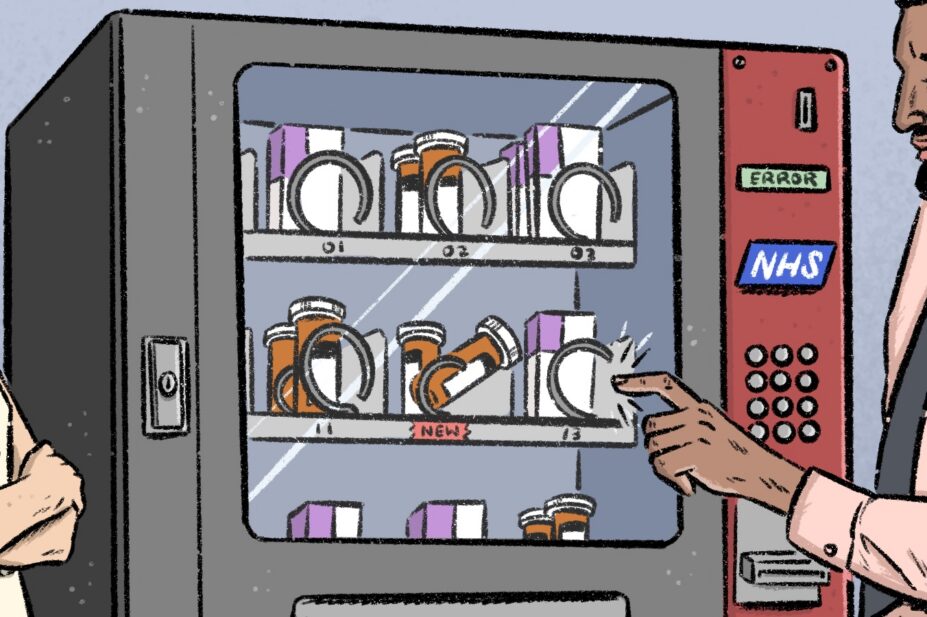
From a governance perspective, these measures provide a clear way to demonstrate compliance. They show that local systems have formally approved a medicine for use. However, approval is not adoption, nor does it guarantee access for an individual patient. A medicine can be NICE-recommended, locally funded and technically available, while patients still struggle to access it.
A medicine does not enter a blank system. It enters an NHS already managing workforce pressures, service demand, diagnostic bottlenecks, fragmented referral routes, financial constraints and competing operational priorities2.
As medicines become increasingly specialised, including gene therapies and targeted therapies, these pressures can become more significant. These therapies often require more complex delivery and monitoring protocols, usually managed by secondary or tertiary care, making the resulting care pathway significantly more resource-intensive — regardless of whether the medicine itself is funded.
The challenge is no longer simply deciding whether a medicine should be available, but whether the pathway needed to deliver it actually exists and has sufficient capacity.
Adoption ultimately depends on a set of practical questions that formulary listing alone cannot answer:
- Who will identify eligible patients?
- Can existing services absorb the additional activity?
- Is diagnostic capacity already constrained?
- Who owns ongoing monitoring and follow-up?
- Can the required data be captured reliably?
- Where is access likely to vary across localities?
A pathway may exist on paper, but that does not mean it has sufficient capacity to deliver additional activity. If the diagnostic test required to identify eligible patients is already operating at capacity, that may become a constraint.
Similarly, if treatment initiation sits within a specialist service with a long waiting list, funding the medicine does not create the capacity required to deliver it. Underlying all of these questions is another even harder one: ‘Which part of the pathway is most likely to become the bottleneck and does the system have the resources to address it?’
Recent NICE recommendations illustrate how these issues can arise in practice. The availability of biologic treatments for people with uncontrolled chronic obstructive pulmonary disease (COPD) and raised blood eosinophil counts creates opportunities for patients who previously had limited treatment options3,4.
However, identifying eligible patients depends on appropriate assessment and access to specialist respiratory services. The medicine being funded does not of itself create the capacity to test, assess, initiate and monitor treatment. If those parts of the pathway are already under pressure, access can still vary despite a national recommendation.
Teplizumab, for example, presents a different set of challenges. NICE has recommended it for people aged 8 years and older with stage 2 type 1 diabetes who meet the relevant criteria5. The treatment requires a course of intravenous infusions over 14 consecutive days.
Too often, implementation is treated as an administrative extension of approval rather than a complex process requiring co-ordination, leadership, pathway planning and dedicated resources
Here, implementation involves more than identifying eligible patients and funding the medicine. It requires a mechanism for identifying people with stage 2 disease, appropriate referral and assessment, as well as services with the capacity and infrastructure to deliver repeated intravenous infusions over 14 consecutive days. The nature of the medicine therefore creates a different set of operational requirements.
This is why implementation needs to focus on where the pressure points in a pathway are likely to be, rather than simply whether the pathway exists. Implementation may be more achievable when systems identify the operational points most likely to determine whether adoption succeeds or fails. This may involve understanding where referral routes are fragmented, where diagnostic demand exceeds capacity, where administrative processes create delays, or where additional monitoring requirements risk overwhelming already stretched services.
The importance of these operational issues becomes particularly relevant in the context of the emerging Single National Formulary (SNF). The SNF has the potential to reduce variation in policy by creating greater consistency in formulary inclusion across England6.
That could be an important step towards reducing variation arising from different local prescribing committee decisions, but it cannot by itself create clinic capacity, expand diagnostics, redesign referral pathways or address workforce shortages. In other words, a medicine being ‘on the formulary for everyone’ does not necessarily mean that patients will have equitable access to it in practice.
This is why operational readiness requires greater recognition as work in its own right. Too often, implementation is treated as an administrative extension of approval rather than a complex process requiring coordination, leadership, pathway planning and dedicated resources.
The challenge will not simply be deciding which innovations the NHS should adopt, but ensuring that the systems responsible for delivering them can do so
Implementation should therefore begin with something more than a formulary decision. For medicines likely to have significant implications for services, some of the operational questions could be considered much earlier:
- How many patients might be eligible?
- Where are those patients currently being managed?
- What diagnostics are required?
- Which service will initiate treatment?
- What additional monitoring will be needed?
- Do the workforce and infrastructure have capacity to deliver this, or will capacity need to be created?
This does not mean that every new medicine requires a major service redesign. In some cases, existing pathways may be sufficient. The important point is to identify this early, rather than assuming that a positive NICE appraisal and a formulary decision are enough to establish a workable pathway.
Pharmacy professionals working across medicines management or optimisation, commissioning and clinical services are often well placed to identify where a medicine is likely to encounter practical barriers. Their role is beginning to extend beyond whether a medicine should be available and towards understanding what needs to happen for patients to receive it.
As healthcare systems continue to adopt increasingly complex and specialised therapies, this distinction is likely to become even more important. The challenge will not simply be deciding which innovations the NHS should adopt but ensuring that the systems responsible for delivering them can do so.
- 1.Achieving and demonstrating compliance with NICE approved medicines or treatment. National Institute for Health and Care Excellence . https://www.nice.org.uk/what-nice-does/our-guidance/about-technology-appraisal-guidance/compliance-with-nice-approved-medicines-or-treatments
- 2.Transforming lives, improving health outcomes: tackling the true cost of variation on uptake of innovative medicines. NHS Confederation and Association of the British Pharmaceutical Industry. 2023. https://thenhsalliance.org/resources/transforming-lives-and-improving-outcomes
- 3.Dupilumab for maintenance treatment of uncontrolled chronic obstructive pulmonary disease with raised blood eosinophils. Technology appraisal guidance TA1142. National Institute for Health and Care Excellence . 2026. https://www.nice.org.uk/guidance/ta1142
- 4.Mepolizumab for maintenance treatment of uncontrolled chronic obstructive pulmonary disease with raised blood eosinophils. Technology appraisal guidance TA1166. National Institute for Health and Care Excellence. 2026. https://www.nice.org.uk/guidance/ta1166
- 5.Teplizumab for delaying the onset of stage 3 type 1 diabetes in people 8 years and over with stage 2 type 1 diabetes. Technology appraisal guidance TA1176. National Institute for Health and Care Excellence. 2026. https://www.nice.org.uk/guidance/ta1176
- 6.Fairer, faster access to medicines for NHS patients: delivering the Single National Formulary. NHS England. 2026. https://www.england.nhs.uk/blog/fairer-faster-access-to-medicines-for-nhs-patients-delivering-the-single-national-formulary/
You may also be interested in

‘More than four walls’: the push to upgrade pharmacy consultation rooms

Fewer than 2% of pharmacies delivered NHS stop smoking consultations in first half 2026, CCA says