
Igor Stevanovic / Alamy Stock Photo
By the end of this article, pharmacists should be able to:
- Know how acute pain is defined, how it is triaged and assessed, and how to use relevant assessment tools;
- Recognise red-flag symptoms warranting urgent referral;
- Know best practice for management of acute pain, including analgesia options and stepping up of treatment;
- Understand principles of opioid prescribing, including indications and avoidance of side effects.
Introduction
Pain is one of the most common reasons people seek medical care in any healthcare setting1,2. In the UK, around 60–70% of emergency department (ED) attendances involve pain, regardless of the underlying cause3. The results of a Finnish study, published in 2021, revealed that around 40% of patients attending general practice (GP) clinics presented with pain-related problems4. Similarly, the results of an Australian study, published in 2023, showed that pain accounts for 55% of ED visits5. These findings demonstrate the widespread impact of pain on healthcare services and the need for effective pain assessment and management6,7.
Pain is a complex, subjective experience influenced by biological, psychological and social factors. The International Association for the Study of Pain (IASP) defines acute pain as ‘pain of recent onset and probable limited duration’. It usually has an identifiable temporal and causal relationship to injury or disease8. The 2020 revised definition of pain as ‘an unpleasant sensory and emotional experience associated with, or resembling that associated with, actual or potential tissue damage’ reflects the complexity of an individual’s experience and the biopsychosocial factors that influence this8. Pain that arises from actual or threatened damage to non-neural tissue is owed to the activation of receptors called nociceptors, which is known as nociceptive pain. It is proportionate to a localised identifiable injury or cause9.
In normal physiology, acute pain is a sudden short-term pain that fundamentally acts as the body’s alarm system to indicate that something is wrong — it is a protective response to tissue damage, illness or injury. It is often overlooked initially by patients and clinicians as acute pain may resolve with rest and not require further investigation or treatment. Acute pain happens suddenly, starts out sharp or intense, and serves as a warning sign of disease or a threat to the body. It tends to be caused by injury, surgery, illness, trauma or painful medical procedures, which, generally, lasts from a few minutes to less than six months. Acute pain usually disappears whenever the underlying cause is treated or healed8.
Acute pain management provides the best outcome when pharmacological and non-pharmacological strategies are combined, prescribed safely and reviewed regularly. National guidance emphasises that multimodal analgesia — using several approaches that act through different mechanisms — improves pain control and reduces reliance on medicines, especially opioids10.
Neuropathic pain
Acute pain may be caused by damage or dysfunction of the nervous system, while patients may present with specific pain descriptors that could indicate acute neuropathic pain such as burning, stabbing and electric shock sensations.
Neuropathic pain is defined by the IASP as ‘pain caused by a lesion or disease of the somatosensory nervous system’. Neuropathic pain is a clinical description — and not a diagnosis — that requires a demonstrable lesion or a disease that satisfies established neurological diagnostic criteria9.
Neuropathic pain has a considerable impact on patients’ quality of life and is associated with a high economic burden on the individual and society11. It is not a single disease entity — rather, it encompasses a range of disorders or lesions characterised by a common cluster of symptoms and signs, with an evolving understanding of the underlying pathophysiological mechanisms12.
It is important to identify during the pain assessment if there is a neuropathic element to the acute pain presentation, as specific medications and topical treatment options for neuropathic pain should be considered.
Triaging and assessing pain
Pain assessment is a multidimensional process that evaluates the intensity, quality, duration, and impact of pain using both subjective and objective measures to guide effective management13. Effective assessment requires a biopsychosocial approach, recognising that the individual is the expert in their pain experience and that their narrative provides the primary basis for understanding pain and its impact13,14. Pain assessment is essential for tailoring interventions, monitoring outcomes and preventing under- or over-treatment8,13,14.
In the ED, patients are assessed on arrival to determine how urgently they need treatment and to ensure that those with severe pain or potentially life-threatening conditions are seen quickly15. In many NHS hospitals, this assessment is carried out by experienced nurses using the Manchester Triage System (MTS), which is used to evaluate pain in life-threatening illness. This evidence-based tool helps prioritise patients according to the urgency of their condition. The use of this standardised system supports the early identification of serious illness and ensures that patients receive timely and appropriate care16. Within the MTS, pain is recognised as an important assessment factor and should be considered in all patient presentations17.
A thorough pain assessment starts with taking a detailed history. Healthcare professionals should ask about when the pain started, where it is located, how long it has been present, what it feels like, how severe it is and whether it spreads to other areas. They should also identify any factors that make the pain better or worse. In addition, the effect of pain on the patient’s daily activities, sleep and emotional wellbeing should be explored18. Previous medical history, current medications, allergies and any history of substance misuse should also be considered when planning pain management19.
Pain assessment tools
There are several other tools available to assess pain and guide clinical decisions, as well as outcome measures for better pain management20. Commonly used tools include the Numerical Rating Scale (NRS), where patients are asked to rate their pain from 0 to 10, Verbal Rating Scale (VRS), where patients rate pain as none, mild, moderate and severe, and the Visual Analogue Scale (VAS)21 (see Figures 1 and 2).
Figure 1: Self report pain assessment tools
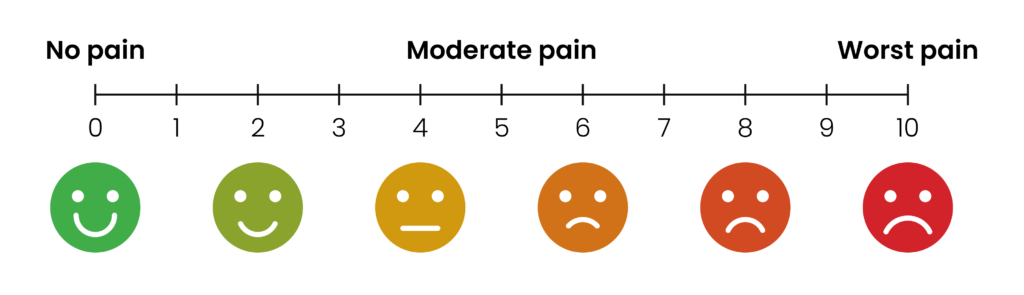
For patients who have difficulty communicating, such as those with cognitive impairment, behavioural pain assessment tools can be used (e.g. FLACC, Critical-Care Pain Observation Tool (CPOT), Behavioural Pain Scale (BPS), PAINAD and Abbey Pain Scale)22 (see Table 1 and Figure 2). However, where patients can provide a subjective pain score, a Functional Pain Assessment Score or Functional Pain Score (FAS) can provide additional information by showing how pain affects their ability to perform activities. The FAS measures pain intensity during movement, providing an indication of how pain affects the patient’s ability to perform functional activities23.
Table 1: Functional assessment scale/score
Additional tools are available for specific pain characteristics — for example, the Leeds Assessment of Neuropathic Symptoms and Signs (LANSS), Douleur Neuropathique 4 (DN4), PainDETECT and Neuropathic Pain Questionnaire (NPQ) are designed to identify features suggestive of neuropathic pain (see Figure 220–25).
Figure 2: pain assessment tools
Selecting an appropriate pain assessment tool should therefore be individualised according to the patient’s cognitive and communication abilities, clinical condition and the nature of their pain22. Importantly, pain intensity should not be considered in isolation, as functional assessment can provide additional information about how pain affects movement and participation in recovery activities26. A comprehensive pain assessment may also help identify concerning symptoms or clinical findings that require further investigation, escalation or specialist referral15,27.
Red-flag symptoms and urgent referral
During pain assessment, clinicians must identify red-flag symptoms that may indicate a serious underlying condition requiring urgent referral28. Examples of red-flag symptoms can be seen in Box 1.
Box 1 Red-flag symptoms
- Sudden severe pain;
- Chest pain suggestive of cardiac disease;
- Neurological deficits;
- Suspected spinal cord compression;
- Signs of sepsis;
- Unexplained weight loss;
- Severe trauma;
- Symptoms suggesting malignancy29–31.
In patients presenting with back pain, red flags — such as bladder or bowel dysfunction, saddle anaesthesia, or progressive lower limb weakness — may indicate Cauda equina syndrome and require immediate specialist review31.
When red-flag symptoms are identified, referral pathways should be followed promptly in accordance with local and national guidelines32. This may involve immediate review by senior clinicians, referral to specialist teams, urgent imaging, hospital admission or transfer to higher levels of care33. Effective communication between healthcare professionals is essential to ensure that critical information is transferred accurately and that patient safety is maintained throughout the referral process34.
Overview of different analgesia and their indications
Treatment options should align with national and professional bodies, including the clinical condition causing the pain35. They should also consider local guidelines and formulary availability35. The aim is to achieve effective pain control using the right treatment, at the right time36. A rational approach should be used, considering all possible options, including non-pharmacological and self-management to support the management of pain in adults37 (see Figure 338).
Specific reference to guidelines or speciality teams should be used for the care of subgroups of patients with additional complexities, including but not limited to:
- Patients with acute exacerbations of chronic pain;
- Patients with opioid tolerance;
- Patients with multiple trauma or significant blunt chest wall trauma;
- Critically ill patients;
- Patients with significant organ dysfunction;
- Pregnant and breastfeeding patients;
- Older and/or frail patient;
- Patients with dementia;
- Patients with physical or learning disability;
- Patients with problem drug and alcohol use;
- Patients with coexisting mental health problems;
- Patients who do not speak English39.
Figure 3: Pain management in adults
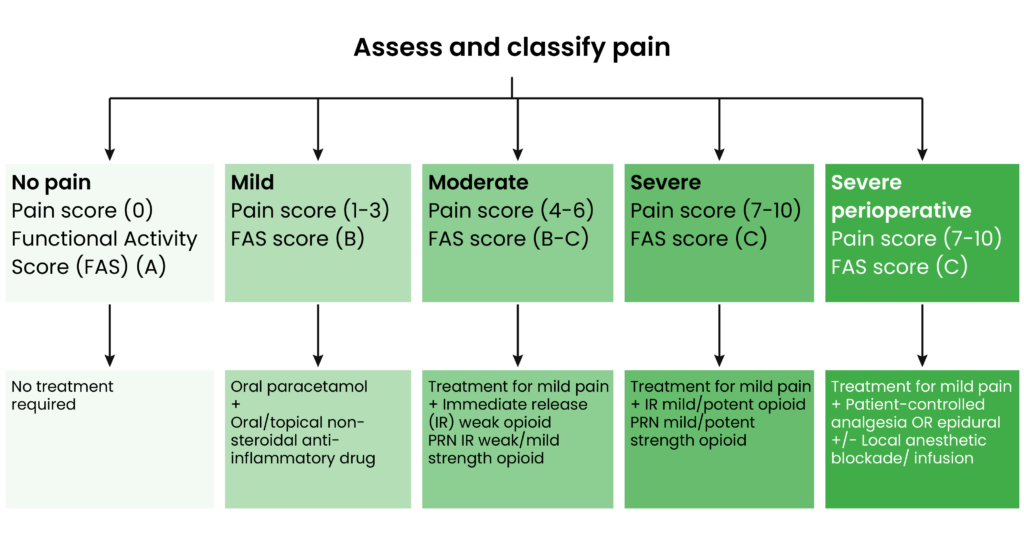
Adapted from: Royal College of Emergency Medicine, Management of Acute Pain in Adults, 2024
Once therapy has been initiated, they must be reassessed. The time frame depends on environment/local practice38.
The World Health Organization (WHO) pain ladder was initially developed for cancer patients with analgesia given in an ascending order approach (i.e. non opioids (step one above), then weak, mild and potent opioids)(see Figure 440). Pain assessment should consider pain intensity, while clinicians should consider starting at the top of the ladder in cases of severe pain.
Figure 4: World Health Organization pain scale
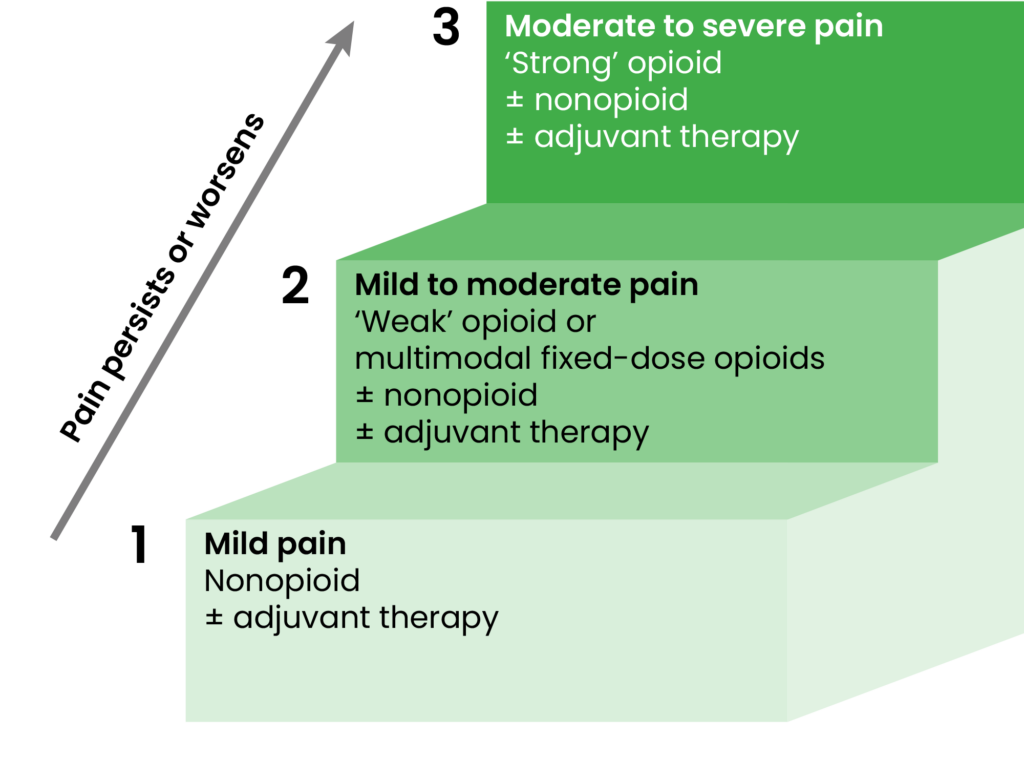
Adapted from WHO 1986
When approaching prescribing, use an agreed time limited therapy trial with defined goals of therapy or clinical outcome. A clinical decision to move up or down the ladder should be based on regular assessment and monitoring of therapy response, including expected functional restoration/improvement37.
In general, at step-one, paracetamol + adjuvant non-steroidal anti-inflammatory drugs (NSAIDs) are recommended. At step two, weak opioids are used, while at step three, the weak opioid is stopped, and a strong opioid is used. Use and titrate one opioid at a time to optimise analgesic benefit, while minimising cumulative opioid exposure and side effects40.
Move up the ladder when pain is not controlled despite optimised treatment at current ladder step. Move down the ladder when pain improves or resolves. Moving up and down the ladder should be aided by ongoing and appropriately timed assessment, including agreed, logical prescribing and timely administration40.
Analgesia
Analgesia should be taken as needed to allow for fluctuations in pain intensity and titrate through the steps until pain is controlled. Have a shared agreed plan for expectations and aims of pain management and role of analgesia. The aim is to reduce analgesics and move down the steps as acute pain resolves41.
Avoid prescribing compound analgesia (e.g. co-codamol) in the first instance, as their components are difficult to titrate — and later deprescribe — and this may limit reaching maximum therapeutic dosing41. In addition, most combination preparations have shown to not provide better pain control than an adequate dose of the non-opiate component alone41.
Immediate release agents should be used. They typically have a faster onset time of action and reach maximum effect in a predictable manner — after 1–2 hours of administration42. These features allow appropriate management of pain to be achieved more effectively and quickly.
Prolonged release agents are associated with an increased risk of opioid-induced ventilatory impairment (OIVI). They take hours to reach maximum effect and typically take longer to clear, increasing risk of accumulation and toxicity43.
Non-opioid analgesia
Paracetamol
Paracetamol is, in most cases, the first-line treatment choice (i.e. step one)36. It has been found to have synergistic interactions with anti-inflammatory, opioid and anti-neuropathic drugs44.
It should also be combined with other agents to increase their effectiveness. Dose adjustments may be required for the following factors: patient weight, renal/hepatic impairment and glutathione deficiency (e.g. chronic malnourishment, chronic alcoholism)36.
Apply a multimodal approach by adding NSAIDs topically or orally for mild-moderate pain (i.e. step one)36.
NSAIDs
NSAIDs offer anti-inflammatory properties and are proven to be very effective, particularly in musculoskeletal, dental and dysmenorrhoea pain36.
Some non-selective NSAIDs have been associated with increased thrombotic event risk, and all NSAIDs have been associated with increased cardiovascular event risk. Consider using the lowest effective doses and for the shortest duration possible45,46.
Naproxen and low-dose ibuprofen — available over the counter — are considered to have the most favourable thrombotic cardiovascular safety profiles and fewer side effects to other NSAIDs47,48.
Prescribe with caution for patients with gastrointestinal disease (e.g. peptic ulcers) and renal impairment on interacting medications36.
They should be taken with or after food and consider a proton pump inhibitor (PPI) for risk factor groups of peptic disease36. Avoid NSAIDs in poorly controlled asthmatic patients36.
Opioid analgesia
Consider adding opioids for moderate-severe pain or pain not responding to simple analgesia (i.e. step two/three)36.
Opioid analgesics are commonly classified into weak (e.g. codeine, dihydrocodeine) and strong (e.g. tramadol, morphine, oxycodone, buprenorphine, fentanyl, tapentadol)49.
All opioids are not the same. Treatment selection should be individualised according to pain features/indication and consider patient risk factors for side effects against pharmacodynamic and pharmacokinetic differences50.
Mild-moderate pain
Opioids commonly used in mild-moderate pain include codeine, dihydrocodeine and tramadol36.
Consider significant genetic differences of rapid and slow codeine metabolism. Dihydrocodeine is safer in patients who are ultrarapid metabolisers of codeine and more effective in those who are poor metabolisers of codeine51.
Tramadol gives analgesia to both nociceptive and neuropathic pain via serotonergic and adrenergic pathways52. This dual action means a lower side-effect profile compared with other opioids. It is a good alternative to consider if codeine or dihydrocodeine are not tolerated. Consider vulnerable patient groups, including older patients, mental health and seizure history53. It has been associated with exacerbating or triggering pre-existing psychological conditions, sedation, serotonin syndrome and lowering seizure threshold54.
The actions of codeine and tramadol depend on metabolism via the CYP2D6 cytochrome. In white populations, 8–10% of people are poor metabolisers, whereas 3-5% are ultra-rapid metabolisers51.
Moderate-severe pain
Tapentadol is an opioids receptor agonist and inhibits noradrenaline reuptake. It also has a lower side-effect profile of the opioids. Consider using when meeting patients with moderate-severe pain, which can be managed only with opioids55.
It is an opioid receptor agonist and inhibits noradrenaline reuptake, which provides synergistic analgesia for both nociceptive and neuropathic pain. Tapentadol has a lower side-effect profile and minimal drug–drug interactions of the opioids, meaning it can be considered for cancer or polypharmacy patients56.
Morphine is the standard opioid of choice in moderate-severe pain36. Consider a maximum equivalent daily morphine dosing of 90mg or less. There is evidence around increased harm at higher doses without noticeable clinical benefit37. Oxycodone hydrochloride is usually the second-line choice thereafter, if morphine is not tolerated, not responsive to pain or in impaired renal function36.
Considerations for opioid prescribing
Consider opioid rotation if pain is not responding to existing opioid or if the patient is experiencing unmanageable adverse effects37,57. When calculating dose equivalence, consider that these ratios are a guide. Consider a dose reduction (i.e. around 25–50% and 50% when switching at high doses) and compensate with appropriate PRN analgesia that can be titrated thereafter37,57.
An oral route is preferred when using opioids, as it is better tolerated and provides easier step-down/patient autonomy. IV, subcutaneous or patient-controlled analgesia (PCA) routes should be considered for patients unable to tolerate the oral route or those with absorption issues, and it must be considered safe to administer in specific clinical settings (e.g. ED, level 2/3 care areas)38.
Invasive analgesia routes and treatment are available for surgical and polytrauma patients, such as PCAs, epidurals and peripheral nerve blocks36,38. These are usually managed and prescribed by specialist teams.
If concerned around overuse of opioids, prescribing in tablet formulation improves precision and reduces liquid ‘swigging’ — unmeasured dosing by drinking directly from the bottle, leading to significant intake variations58,59. Oral morphine also contains alcohol, which may be of consideration in patients with a history of alcohol abuse/those in abstinence/irritated/ulcerated mucosa59.
Modified-release preparations and transdermal patches, such as buprenorphine and fentanyl, should be avoided in the management of acute pain. Their slow release means they take longer to achieve acute pain control and are difficult to titrate safely60. In 2025, the MHRA published safety concerns of the increased risk of persistent post-operative opioid use (PPOU) and opioid-induced ventilatory impairment (OIVI) when modified release or transdermal opioids are used for acute post-operative pain43.
For neuropathic pain, first-line options include amitriptyline, duloxetine, gabapentin and pregabalin. In addition, allow titration window and assess tolerability and adverse effects49. If a medicine is ineffective or not tolerated, trial another of the above list. If there is no measurable benefit after four weeks of titrating, taper the drug and stop61.
Adverse effects
Figure 5: opioid side effects
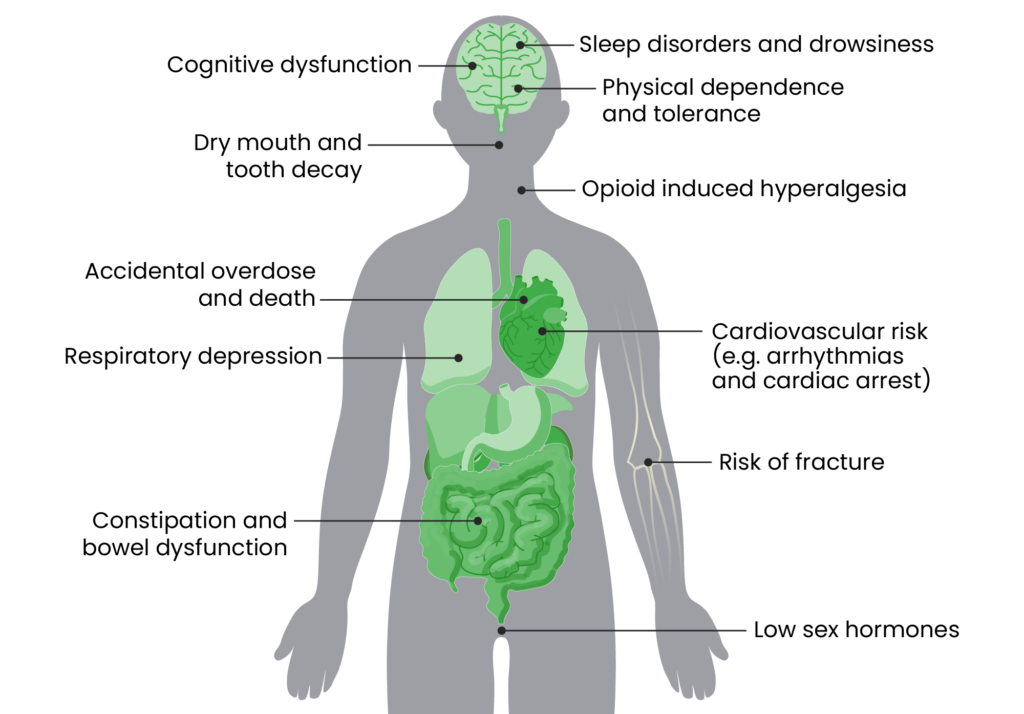
Adapted from 2016 Ming-Chih Kao, PhD, MD, Stanford Healthcare
Opioid receptors are widely distributed throughout the central and peripheral nervous system. Activation of these receptors lead to unwanted side effects62.
There is little evidence for the use of opioids in managing long-term pain, particularly in relation to achieving functional outcomes63–65. Harm and adverse effect risk increases in prolonged use. Some of these effects include sedation, drowsiness, nausea, vomiting, constipation, addiction, pruritus, hyperalgesia, chronic headaches and opioid induced ventilatory impairment (OIVI)62,66.
Opioids share similar side-effect profiles, but this will vary depending on the individual37,50. Opioid-related adverse drug effects, such as constipation and nausea and vomiting, can be managed by prescribing laxatives and anti-emetics57. When prescribing high-strength opioids for severe, acute pain in ED and secondary care, it is prudent to monitor for evidence of OIVI and have naloxone available38,41.
General prescribing principles
The following principles can be used to guide appropriate prescribing for the management of acute pain:
- Use multimodal analgesia — combining paracetamol, NSAIDs (if appropriate), and local measures before escalating;
- Start with the lowest effective dose — titrate cautiously, especially in frail adults or those with comorbidities;
- Avoid opioids where possible — opioids have limited benefit for many acute pain conditions (e.g. back pain, headaches), and carry risks of dependence, respiratory depression and constipation;
- If opioids are required, use short courses only — prescribe immediate‑release formulations, review within 3–5 days and avoid repeat prescriptions unless clinically justified;
- Consider patient‑specific risks— age, renal/hepatic impairment, pregnancy, anticoagulation and drug interactions;
- Document clear treatment goals, such as improved mobility or sleep, not complete elimination of pain9,10,19,41,57.
Monitoring and follow up
Monitoring ensures that treatment is effective, safe and time limited. The frequency of monitoring will vary dependent on guidelines and settings, which is within 15 minutes of receiving analgesia for severe pain in emergency care settings and regularly thereafter — usually every 1–4 hours — in acute secondary care settings. Post‑operative patients may require more frequent checks depending on opioid use and sedation risk38.
In primary or community care, patients started on new analgesics — especially opioids — should be reviewed within 3–5 days67.
Communication between primary care (i.e. GPs) and secondary care (i.e. hospitals) in the form of integrated care plans should be seamless to ensure the patient has a consistent individualised analgesia plan.
As acute pain improves within the expected time frame, analgesia should be reviewed regularly and doses reduced and eventually stopped following the principles of deprescribing to minimise the risk of harm from long-term analgesia medications19.
For patients where acute pain remains a significant issue and fails to respond to treatment (i.e. 4–6 weeks), care and management must be escalated to rule out underlying pathologies and prevent the development of chronic pain with more specialist pain service becoming involved10. This aligns with UK national guidance, which is consistent with the FPM 2021 standards:
- Early identification and escalation when pain is severe or not improving;
- Preventing transition to chronic pain through timely specialist involvement;
- Ruling out underlying pathology when pain persists beyond expected healing time10.
Non-pharmacological approaches
Non-pharmacological interventions and treatments — in general — exert effects across both physiological and psychological dimensions68. Acute pain can be effectively managed using non-pharmacological strategies, such as physical therapies, cognitive-behavioural techniques, and complementary interventions, which reduce pain and improve function without medication-related risks. Non-pharmacological approaches are safe, non-invasive and can be used alongside medications if needed69.
Non-pharmacological approaches empower patients to actively participate in their care, and can improve physical and emotional function. By integrating these approaches into acute pain management, patients can achieve meaningful pain relief, while minimising risks associated with pharmacological therapies69,70.
Pain is exacerbated by anxiety, distress, catastrophising and depression, so a holistic approach is important. Anxiety is a key modulator of descending pain regulation, often impairing the capacity of the brain to suppress pain71. Relaxation, distraction and reassurance can activate endogenous descending inhibitory pathways, including noradrenergic (i.e. adrenergic) pain-modulating systems, thereby reducing nociceptive transmission and decreasing the experience of pain71.
Interventions, such as mindfulness meditation, may primarily influence psychological processes by enhancing awareness and reducing stress, whereas physical therapies may initially target physiological mechanisms such as muscle relaxation or improved circulation68.
Non-pharmacological interventions can be categorised into the following:
- Physical (i.e. sensory) interventions — typically these are patient-specific and inhibit nociceptive input and pain perception, as well as enhance function and activity levels;
- Psychological interventions — these can help reduce anxiety and stress, decrease pain behaviour and focused pain levels and reduce feelings of weakness or loss of control20,51,68,69.
Non-pharmacological approaches should be considered if appropriate and be offered early and tailored to the patient. Examples of physical and psychological strategies can be seen in Figure 620,51,68,69.
Figure 6: examples of non-pharmacological approaches
Acute pain is a biopsychosocial experience, and optimal management requires more than medication alone. Integrating modalities, such as psychological, educational and physical non-pharmacological techniques, into a multimodal approach can improve pain relief, reduce distress, enhance functional recovery and outcomes, provide patients with a sense of focus, and promote patient engagement in care and self-management51,72,73.
Conclusion
In summary, the core principles across both primary and secondary care for the assessment and management of acute pain are to assess thoroughly, investigate and treat the cause. Other principles include using multimodal analgesia, minimising harm, reassessing regularly, promoting functional recovery and involving patients in decisions about their care. If acute pain remains a significant issue and fails to respond to treatment, it must be escalated for further investigation and should involve more specialist pain services.
- 1.Cohen SP, Vase L, Hooten WM. Chronic pain: an update on burden, best practices, and new advances. The Lancet. 2021;397(10289):2082-2097. doi:10.1016/s0140-6736(21)00393-7
- 2.Keating L, Smith S. Acute Pain in the Emergency Department: The Challenges. Reviews in Pain. 2011;5(3):13-17. doi:10.1177/204946371100500304
- 3.Thornton HS, Reynolds J, Coats TJ. A week of pain in the emergency department. British Journal of Pain. 2017;12(1):58-63. doi:10.1177/2049463717731898
- 4.Mäntyselkä P, Kumpusalo E, Ahonen R, et al. Pain as a reason to visit the doctor: a study in Finnish primary health care. Pain. 2001;89(2):175-180. doi:10.1016/s0304-3959(00)00361-4
- 5.Hughes JA, Douglas C, Jones L, et al. Identifying patients presenting in pain to the adult emergency department: A binary classification task and description of prevalence. Published online May 30, 2022. doi:10.1101/2022.05.29.22275652
- 6.Lvovschi VE, Carrouel F, Hermann K, Lapostolle F, Joly LM, Tavolacci MP. Severe pain management in the emergency department: patient pathway as a new factor associated with IV morphine prescription. Front Public Health. 2024;12. doi:10.3389/fpubh.2024.1352833
- 7.Daniels J, Osborn M, Davis C. Better safe than sorry? Frequent attendance in a hospital emergency department: an exploratory study. British Journal of Pain. 2017;12(1):10-19. doi:10.1177/2049463717720635
- 8.Acute Pain. International Association for the Study of Pain. 2021. https://www.iasp-pain.org/resources/topics/acute-pain/
- 9.IASP Terminology. International Association for the Study of Pain . https://www.iasp-pain.org/resources/terminology/
- 10.Core Standards for Pain Management Services in the UK. Faculty of Pain Medicine of the Royal College of Anaesthetists. 2021. https://fpm.ac.uk/sites/fpm/files/documents/2021-12/FPM-Core-Standards-Dec-2021.pdf
- 11.Finnerup NB, Attal N, Haroutounian S, et al. Pharmacotherapy for neuropathic pain in adults: a systematic review and meta-analysis. The Lancet Neurology. 2015;14(2):162-173. doi:10.1016/s1474-4422(14)70251-0
- 12.Murnion BP. Neuropathic pain: current definition and review of drug treatment. Aust Prescr. 2018;41(3):60-63. doi:10.18773/austprescr.2018.022
- 13.Wideman TH, Edwards RR, Walton DM, Martel MO, Hudon A, Seminowicz DA. The Multimodal Assessment Model of Pain. The Clinical Journal of Pain. 2019;35(3):212-221. doi:10.1097/ajp.0000000000000670
- 14.Schug S, Palmer G, Scott D, Alcock M, Halliwell R, Mott J. Acute Pain Management: Scientific Evidence, Section 7 – Non-Pharmacological Techniques. 5th ed. Australian and New Zealand College of Anaesthetists and Faculty of Pain Medicine ; 2020. https://northwestpainguidance.org/wp-content/uploads/2025/06/Acute-Pain-Management_-Scientific-Evidence-5th-edition-2020-1.pdf
- 15.Emergency and Acute Medical Care in Over 16s: Service Delivery and Organisation. National Institute for Health and Care Excellence. 2018. https://www.nice.org.uk/guidance/ng94
- 16.Mackway-Jones K, Marsden J, Windle J. Emergency Triage: Manchester Triage Group. John Wiley & Sons; 2023. https://content.e-bookshelf.de/media/reading/L-4033541-3f8b45baf4.pdf
- 17.van der Wulp I, Sturms LM, de Jong A, Schot-Balfoort M, Schrijvers AJP, van Stel HF. Pain assessments at triage with the Manchester triage system: a prospective observational study. Emergency Medicine Journal. 2010;28(7):585-589. doi:10.1136/emj.2009.085696
- 18.Smart KM. The biopsychosocial model of pain in physiotherapy: past, present and future. Physical Therapy Reviews. 2023;28(2):61-70. doi:10.1080/10833196.2023.2177792
- 19.Best Practice Guideline: Management of Pain in Adults. Royal College of Emergency Medicine. 2021. https://rcem.ac.uk/best-practice/best-practice-management-of-pain-in-adults/
- 20.Outcome Measures in Pain Assessment. British Pain Society and Faculty of Pain Medicine . 2019. https://www.britishpainsociety.org/media/resources/files/outcome_measures_FINAL.PDF
- 21.Ford C. A guide to pain assessment and management in adults. Br J Nurs. 2024;33(5):246-251. doi:10.12968/bjon.2024.33.5.246
- 22.Herr K, Anderson AR, Arbour C, et al. Pain Assessment in the Patient Unable to Self‐ Report: Clinical Practice Recommendations in Support of the ASPMN 2024 Position Statement. Pain Management Nursing. 2024;25(6):551-568. doi:10.1016/j.pmn.2024.09.010
- 23.Hanson A, Jackson S, Laures E. Implementing an Evidence-Based Functional Pain Assessment Scale in an Adult Inpatient Unit. Pain Management Nursing. 2024;25(4):330-337. doi:10.1016/j.pmn.2024.03.004
- 24.Acute Pain Service Guidelines (Adult/Surgical) Assessment & Monitoring. NHS Greater Glasgow & Clyde Queen Elizabeth University Hospital. 2023. https://www.rightdecisions.scot.nhs.uk/media/wgtberng/1106-assess-and-monitor-qeuh.pdf
- 25.Truini A, Aleksovska K, Anderson CC, et al. Joint European Academy of Neurology–European Pain Federation–Neuropathic Pain Special Interest Group of the International Association for the Study of Pain guidelines on neuropathic pain assessment. Euro J of Neurology. 2023;30(8):2177-2196. doi:10.1111/ene.15831
- 26.Baamer RM, Iqbal A, Lobo DN, Knaggs RD, Levy NA, Toh LS. Utility of unidimensional and functional pain assessment tools in adult postoperative patients: a systematic review. British Journal of Anaesthesia. 2022;128(5):874-888. doi:10.1016/j.bja.2021.11.032
- 27.Recent-onset chest pain of suspected cardiac origin: assessment and diagnosis. National Institute for Health and Care Excellence . 2016. https://www.nice.org.uk/guidance/cg95
- 28.How to identify red-flag symptoms and refer patients appropriately. Pharmaceutical Journal. Published online 2024. doi:10.1211/pj.2024.1.305174
- 29.Suspected Cancer: Recognition and Referral. National Institute for Health and Care Excellence. 2026. https://www.nice.org.uk/guidance/ng12
- 30.Sepsis: Recognition, Diagnosis and Early Management. National Institute for Health and Care Excellence. 2025. https://www.nice.org.uk/guidance/ng253
- 31.Low Back Pain and Sciatica in Over 16s: Assessment and Management. National Institute for Health and Care Excellence. 2026. https://www.nice.org.uk/guidance/ng59/
- 32.Wiering B, Lyratzopoulos G, Hamilton W, Campbell J, Abel G. Concordance with urgent referral guidelines in patients presenting with any of six ‘alarm’ features of possible cancer: a retrospective cohort study using linked primary care records. BMJ Qual Saf. 2021;31(8):579-589. doi:10.1136/bmjqs-2021-013425
- 33.Parry A, Selvaraj N. Effective handovers on escalation of care for the deteriorating patient. Nursing Standard. 2023;38(3):77-81. doi:10.7748/ns.2023.e12078
- 34.Clinical Handover and Escalation Guidance. NHS England. 2022. https://www.england.nhs.uk/improvement-hub/wp-content/uploads/sites/44/2017/11/SBAR-Implementation-and-Training-Guide.pdf
- 35.Medicines optimisation. NHS England. https://www.england.nhs.uk/medicines-2/medicines-optimisation/
- 36.Analgesia: mild to moderate pain. National Institute for Health and Care Excellence. https://cks.nice.org.uk/topics/analgesia-mild-to-moderate-pain/management
- 37.Opioids Aware: a structured approach to opioid prescribing—type of pain and timing of therapy. Faculty of Pain Medicine. : https://fpm.ac.uk/opioids-aware-structured-approach-opioid-prescribing/type-pain-and-timing-therapy
- 38.Management of pain in adults. RCEMLearning. https://www.rcemlearning.co.uk/foamed/management-of-pain-in-adults-guideline/
- 39.Chapter 11: Guidelines for the provision of anaesthesia services for inpatient pain management. Royal College of Anaesthetists. https://rcoa.ac.uk/gpas/chapter-11-2025
- 40.Anekar A, Hendrix J, Cascella M. WHO Analgesic Ladder. StatPearls Publishing; 2026. https://www.ncbi.nlm.nih.gov/books/NBK554435/
- 41.Analgesics: treatment summary. National Institute for Health and Care Excellence. https://bnf.nice.org.uk/treatment-summaries/analgesics/
- 42.Hoeben E, Smit JW, Upmalis D, et al. Dose-response relationship after single oral dose administrations of morphine and oxycodone using laser-evoked potentials on UVB- and capsaicin-irritated skin in healthy male subjects. Pain. 2012;153(8):1648-1656. doi:10.1016/j.pain.2012.04.018
- 43.Prolonged-release opioids: removal of indication for relief of post-operative pain. Medicines and Healthcare products Regulatory Agency. https://www.gov.uk/drug-safety-update/prolonged-release-opioids-removal-of-indication-for-relief-of-post-operative-pain
- 44.Moore RA, Derry S, Aldington D, Wiffen PJ. Single dose oral analgesics for acute postoperative pain in adults – an overview of Cochrane reviews. Cochrane Database of Systematic Reviews. Published online September 28, 2015. doi:10.1002/14651858.cd008659.pub3
- 45.Moore R, Gavaghan D, Tramer M, Collins S, McQuay H. Size of placebo effects and their importance in clinical trials: a systematic review. Pain. Published online 2022. doi:10.1002/14651858.CD004602.pub4
- 46.Hernández‐Díaz S, Varas‐Lorenzo C, García Rodríguez LA. Non‐Steroidal Antiinflammatory Drugs and the Risk of Acute Myocardial Infarction. Basic Clin Pharma Tox. 2006;98(3):266-274. doi:10.1111/j.1742-7843.2006.pto_302.x
- 47.Kearney PM, Baigent C, Godwin J, Halls H, Emberson JR, Patrono C. Do selective cyclo-oxygenase-2 inhibitors and traditional non-steroidal anti-inflammatory drugs increase the risk of atherothrombosis? Meta-analysis of randomised trials. BMJ. 2006;332(7553):1302-1308. doi:10.1136/bmj.332.7553.1302
- 48.Cox-2 selective inhibitors and non-steroidal anti-inflammatory drugs (NSAIDs): cardiovascular safety. Medicines and Healthcare products Regulatory Agency. https://www.gov.uk/government/publications/cox-2-selective-inhibitors-and-non-steroidal-anti-inflammatory-drugs-nsaids-cardiovascular-safety/cox-2-selective-inhibitors-and-non-steroidal-anti-inflammatory-drugs-nsaids-cardiovascular-safety
- 49.Managing persistent pain in secure settings. British Pain Society. https://www.britishpainsociety.org/media/resources/files/Managing_persistent_pain_in_secure_settings.pdf
- 50.Cordero-Pérez FJ, Pérez-Baena MJ, Pina-Ruviralta N, Fernández-Testa A, Holgado-Madruga M. Optimizing Opioid Use in Pain Management: A Comprehensive Review of Clinical Benefits, Risks, and Dependence. Healthcare. 2026;14(4):457. doi:10.3390/healthcare14040457
- 51.Schug S, Palmer G, Scott D, Alcock M, Halliwell R, Mott J. Acute Pain Management: Scientific Evidence . 5th ed. Australian and New Zealand College of Anaesthetists and Faculty of Pain Medicine; 2020. https://www.anzca.edu.au/resources/college-publications/acute-pain-management/apmse5.pdf
- 52.Dolan E, Delanty N. Tramadol use and risk of seizure: A report of two cases and a review of recent literature. Epilepsy & Behavior Reports. 2025;30:100763. doi:10.1016/j.ebr.2025.100763
- 53.Gudla SS, Bhumireddy SKA, Vadaga AK. Tramadol and mental health: A systematic review of case reports describing psychological side-effects. Int J Psychiatry Med. 2025;61(3):276-293. doi:10.1177/00912174251322356
- 54.Tramadol educational resources: Review 2021. All Wales Therapeutics and Toxicology Centre . 2021. https://awttc.nhs.wales/medicines-optimisation-and-safety/medicines-optimisation-guidance-resources-and-data/prescribing-guidance/tramadol-educational-resources-2021-review/
- 55.Zavaleta-Monestel E, Anchía-Alfaro A, Villalobos-Madriz J, et al. Tapentadol: A Comprehensive Review of Its Role in Pain Management. Cureus. Published online November 23, 2024. doi:10.7759/cureus.74307
- 56.Pergolizzi J, Raffa R, Taylor R, et al. Tapentadol extended release for chronic pain: A review of clinical studies’. Pain Practice. Published online 2016:525-536.
- 57.Opioid optimisation. Faculty of Pain Medicine. 2024. https://fpm.ac.uk/sites/fpm/files/documents/2024-11/Opioid%20Optimisation%20-%20Nov%2024_0.pdf
- 58.Morphine solution high quantity. OpenPrescribing. https://openprescribing.net/sicbl/A3A8R/morphine_solution_high_quantity/
- 59.Oral morphine liquid: new OpenPrescribing measures. Bennett Institute for Applied Data Science. 2026. https://www.bennett.ox.ac.uk/blog/2026/02/oral-morphine-liquid-new-openprescribing-measures/
- 60.Levy N, Mills P. Controlled-release opioids cause harm and should be avoided in management of postoperative pain in opioid naïve patients. British Journal of Anaesthesia. 2019;122(6):e86-e90. doi:10.1016/j.bja.2018.09.005
- 61.Neuropathic pain in adults: pharmacological management in non-specialist settings. National Institute for Health and Care Excellence. 2020. https://www.nice.org.uk/guidance/cg173
- 62.Barnes A, Heppenstall-Harris G, Dickman A. Opioid analgesics: Managing the predictable. Clinical Medicine. 2025;25(4):100330. doi:10.1016/j.clinme.2025.100330
- 63.Opioids and acute pain management. Faculty of Pain Medicine. https://fpm.ac.uk/opioids-aware-clinical-use-opioids/opioids-and-acute-pain-management
- 64.Over-the-counter painkillers. British Pain Society. https://www.britishpainsociety.org/static/uploads/resources/files/patient_pub_otc.pdf
- 65.Cooney N, Pollack C, Butkerait P. Adverse drug reactions and drug–drug interactions with over-the-counter NSAIDs. TCRM. Published online July 2015:1061. doi:10.2147/tcrm.s79135
- 66.Benyamin R, Trescot A, Datta S, et al. Opioid complications and side effects. Pain Physician. 2008;11(2 Suppl):S105-20. https://www.ncbi.nlm.nih.gov/pubmed/18443635
- 67.Framing Opioid Prescribing Guidelines for Acute Pain: Developing the Evidence. The National Academies of Sciences, Engineering and Medicine ; 2019. https://www.ncbi.nlm.nih.gov/books/NBK554977/
- 68.Wang Y, Aaron R, Attal N, Colloca L. An update on non-pharmacological interventions for pain relief. Cell Reports Medicine. 2025;6(2):101940. doi:10.1016/j.xcrm.2025.101940
- 69.Nonopioid therapies for pain management. Centers for Disease Control and Prevention. 2025. https://www.cdc.gov/overdose-prevention/hcp/clinical-care/nonopioid-therapies-for-pain-management.html
- 70.Chronic Pain (Primary and Secondary) in Over 16s: Assessment of All Chronic Pain and Management of Chronic Primary Pain (NG193). National Institute for Health and Care Excellence. 2021. https://www.nice.org.uk/guidance/ng193
- 71.D’Souza C, Brander-Whittingham E, Hassanpour S, et al. A review of descending pain modulation in humans. Front Pain Res. 2026;7. doi:10.3389/fpain.2026.1743583
- 72.Niyonkuru E, Iqbal MA, Zhang X, Ma P. Complementary Approaches to Postoperative Pain Management: A Review of Non-pharmacological Interventions. Pain Ther. 2024;14(1):121-144. doi:10.1007/s40122-024-00688-1
- 73.Non-opioid therapies for pain: A clinical reference. Centers for Disease Control and Prevention. 2024. https://www.cdc.gov/overdose-resources/hcp/files/non-opioid-therapies-for-pain-a-clinical-reference.htm