Zoonar/Viktoriia Popova / Alamy Stock Images
A proactive pharmacist home visit service for housebound patients found that 30% had not received a medication review for more than five years, while 64% had not received a medicines review for more than two years.
This was despite 66% of the patients involved living with five or more long-term conditions and 70% being at risk of medication-related harm.
In some cases, “patients had gone more than 20 years or had never had a documented medication review”, the lead pharmacist for the project told delegates at the Royal College of Pharmacy’s Delivering a Healthier Wales conference, held in Cardiff on 25 September 2026.
However, a pharmacist home-visiting project has enabled more than half of its patients to reduce their medication, improving rates of falls and hospital visits.
Tracey Witherall, lead pharmacist for Aneurin Bevan Health Board’s Primary and Community Care Academy, shared an update on the Home Visit Project. This has run since summer 2024 and supports 349 housebound patients aged between 23 years and 103 years, with an average age of 80 years.
The project was developed as part of efforts to improve access to care for the area’s most vulnerable patients, who are often frail, with high levels of polypharmacy and multimorbidity, Witherall said.
Following medication reviews received as part of the project, more than half (55%) of patients had at least one medication stopped or the dose reduced, with some patients having up to seven medicines deprescribed, including proton pump inhibitors, anticoagulants and antihypertensives.
This not only reduced medication burden, but reduced the exposure to medicines frequently associated with harm, Witherall said.
While the service began as medication review service, Witherall said: “It quickly became much more than that and it has evolved into a holistic, patient-centred approach.
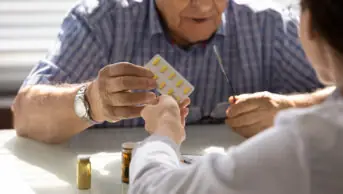
“Visiting patients’ houses allows me to identify medication adherence issues and safeguarding issues, alongside other challenges such as loneliness, bereavement, poor mental health, housing problems, and unmet care needs.
“All of these factors impact how patients manage and take their medication, and increases the risk of falls, worsens their long-term conditions and can result in avoidable hospital admissions.”
Because of the service, pharmacists could review wider factors associated with medicine optimisation, including assessment of bone health, and initiation of vitamin D and bisphosphonates if necessary.
The service now includes, where appropriate, referrals to social care and voluntary-sector services, as well as chiropody, dentistry, befriender services, and hoarding-support charities.
The service resulted in about £10,000 in annual prescribing savings, Witherall said. She added that in the first 18 months of the project, she removed almost £2,700 of medicines waste that could not be reused from patients’ houses.
“An important finding was that over a quarter (27%) of patients with waste [medicines] reported that this was due to medicines being automatically ordered by community pharmacies without checking what patients actually needed,” Witherall told delegates.
Patient outcomes included notable reductions in falls (from 41% to 31% of patients), recurrent falls (from 19% to 11%) and hospital admissions (from 37% to 31%), according to slides shared by Witherall.
While this may not be solely attributed to the pharmacist home-visit service, Witherall said that the findings “demonstrate how proactive pharmacist home visits can improve medicines optimisation, reduce waste, enhance patient safety and wellbeing, and support some of our most vulnerable patients to remain well, independent and at home for as long as possible”.