
Vaccination season in 2021 was a turning point for pharmacy owner Ashley Cohen. As Britain opened up following the COVID-19 pandemic, his two pharmacies were facing back-to-back appointments for flu and COVID-19 jabs.
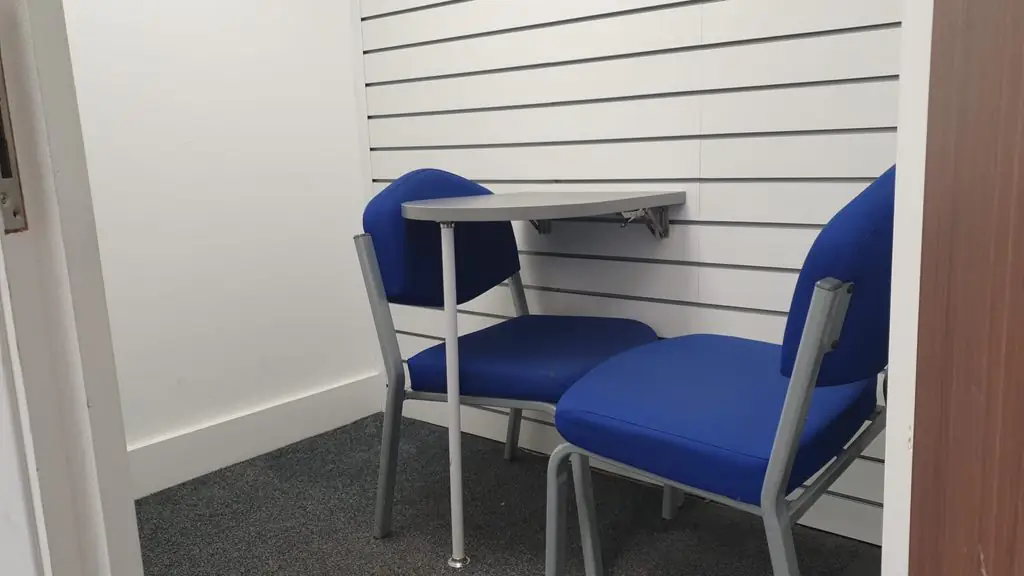
It should have been a positive moment for his business, which operates under the Pharm-Assist brand. Yet, the steady stream of vaccinations meant his consultation rooms were unavailable for all other patients. So, Cohen made the bold decision to install second consultation rooms in his sites in Halton, Cheshire and Seacroft, West Yorkshire.
“It meant we were always able to provide patients with Pharmacy First, contraception services and travel vaccinations without causing capacity issues,” he recalls.
Cohen isn’t the only one to have reassessed his consultation room space. Plenty of pharmacies are looking at their future capacity — whether that involves creating additional space or simply improving the rooms they have — as the profession takes on increased services, such as more prescribing and vaccinations.
“A lot of our members are thinking about the direction of service delivery, and they’re putting in effort to improve their premises,” says Leyla Hannbeck, chief executive of the Independent Pharmacies Association. “I’ve seen several consultation rooms being put in place.”
However, earlier in 2026, the Pharmacists’ Defence Association (PDA) warned consultation room space wasn’t keeping pace with the rapid rise in service provision. It argued spaces need to be “better, bigger and more appropriate” to deal with volumes, as pharmacies conducted over 3.26 million clinical consultations in the year to January 20261.
There are also fears that investment in consultation rooms does not create the right environments. In February 2026, Janet Morrison, chief executive of Community Pharmacy England (CPE), told a parliamentary inquiry that consultation rooms were of a “very variable” standard2.
So, while some improvements are being made, questions are being raised around whether they are sufficient for the services being offered.
Courtesy of Pharm-Assist
The requirements
Most pharmacies today will have a consultation room of some description. In October 2020, new NHS regulations3 introduced changes to the terms of service for contractors. They required almost all pharmacies to have a consultation room. The only exceptions at the time were those pharmacies that did not provide any advanced services, such as Pharmacy First, smoking cessation and vaccinations. These pharmacies later had to install a consultation space by April 20234, meaning the only remaining exemption is for pharmacies that are too small to have a consultation room, which they need to request from NHS England.
We expect pharmacy owners to ensure that consultation rooms are appropriate for the care and services they offer, so that people can have confidential conversations and receive person-centred care
Lynsey Cleland, chief standards officer at the General Pharmaceutical Council
Consultation rooms must also adhere to minimum standards (see Box 1), which are policed by the General Pharmaceutical Council (GPhC).
“We expect pharmacy owners to ensure that consultation rooms are appropriate for the care and services they offer, so that people can have confidential conversations and receive person-centred care in a setting that supports their needs,” notes Lynsey Cleland, chief standards officer at the GPhC.
“When inspecting pharmacies, we assess whether the facilities available, including the consultation room, are suitable for the services being provided and meet the standards.”
A analysis carried out by The Pharmaceutical Journal of GPhC inspection reports published in 2026 revealed that ten pharmacies failed the regulator’s ‘Standards for registered pharmacies’ owing to issues related to their consultation rooms.
This figure includes Seascale Pharmacy, which “does not have a purpose-built consultation room and is reliant upon a curtained area of a general village store”, according to a GPhC inspection report published on 29 September 2026. The finding meant the pharmacy failed standard 3.2, which mandates that “premises protect the privacy, dignity and confidentiality of patients and the public who receive pharmacy services”.
Five of the ten pharmacies were found to have fixed the issues highlighted by the GPhC and met all standards at a subsequent inspection.
Box 1: Basic requirements for a consultation room
To be considered fit for purpose, a pharmacy consultation room must be:
- Clearly designated as a room for confidential conversations — for example, a sign is attached to the door saying ‘Consultation room’;
- Distinct from the general public areas of the pharmacy premises;
- A room where both the person receiving the service, and the person providing it, can be seated together and communicate confidentially4.
The service agenda
The increasing focus on advanced services is bringing consultation rooms further into the spotlight. Since the national flu vaccination programme rolled out across pharmacies in England in 20155, the sector has gone on to play a vital role in vaccinations against flu, COVID-19 and many other conditions. In summer 2026, meningitis B was added to the list6. All vaccinations, of course, require a private space.
At the same time, the New Medicine Service (NMS) and Pharmacy First — which similarly involve private consultations — have grown in scope and volume. Having started out covering just four conditions7, the NMS now spans 18 conditions and was expanded to include depression in October 20258. Meanwhile, pharmacists in community pharmacies will now be prescribing medicines for migraine, rhinitis, ear infections in adults, acne and scabies under updates to Pharmacy First, which come into force in autumn 20269. Overall, it has amounted to a substantial increase in service provision. The Company Chemists’ Association points to data showing that pharmacy delivery of NHS clinical services has grown by 500% between 2019/2020 and 2025/202610,11.
With independent prescribers becoming an established part of community pharmacy practice, it is essential that consultation facilities are designed and equipped appropriately to support these services
Beran Patel, superintendent of Brigstock Pharmacy in Thornton Heath, London
The direction of travel is also highlighted by the Royal College of Pharmacy (RCPharm). “Consultation rooms are increasingly important as pharmacists take on a wider clinical role, from vaccinations and health checks to prescribing and supporting patients with more complex healthcare needs,” says Emily Kennedy, head of professional standards at RCPharm.
The need for pharmacies to provide a sizeable space for consultations is only likely to grow, considering nearly all new pharmacy registrants in the UK will register as independent prescribers (IPs) in 202612.
“With IP becoming an established part of community pharmacy practice, it is essential that consultation facilities are designed and equipped appropriately to support these services,” says Beran Patel, superintendent of Brigstock Pharmacy in Thornton Heath, London.
Inadequate space
The PDA has been particularly vocal on this subject. “Many consultation rooms do provide good levels of privacy, but standards are not always consistent,” says Alison Jones, director of policy and communications at the union.
“Patients should feel confident that conversations cannot be overheard and that consultations can take place without interruption,” she adds. “Rooms should be accessible, comfortable, appropriately ventilated, suitable for infection prevention and control requirements, and equipped for the services being provided.”
As community pharmacies continue to deliver ever more clinical services, investment in premises will be needed to ensure they can continue to meet patients’ evolving needs
Malcolm Harrison, chief executive at the Company Chemists’ Association
Her comments illustrate a growing focus on creating the ideal consultation room environment, rather than simply meeting the minimum requirement. While pharmacists contacted by The Pharmaceutical Journal all agreed most consultation rooms would pass an inspection by the GPhC, there was a concern that many still only reached the bare minimum.
As Mitesh Patel, superintendent pharmacist director at Medicine Clinic Pharmacies, puts it: “A pharmacy consultation room needs more than four walls to do its job.” Both independent and multiple pharmacies say they are aware of the need to future-proof their premises, which is likely to involve more consultation room space.
“As community pharmacies continue to deliver ever more clinical services, investment in premises will be needed to ensure they can continue to meet patients’ evolving needs,” says Malcolm Harrison, chief executive at the Company Chemists’ Association (CCA).
Some solutions
Boots — a member of the CCA — has confirmed that it is rolling out more consultation rooms across its estate. Already, it has over 1,500 rooms across its estate of 1,800 stores, the majority of which have a pharmacy.
Meanwhile, Gareth Jones, director of corporate affairs at the National Pharmacy Association, says: “Many pharmacies have made great strides to invest in and improve consultation rooms.
“I think most contractors have seen the light with the direction of travel and they don’t have ‘broom cupboards’ anymore,” notes Cohen.
The look and feel of the room must ooze healthcare
T3 Pharmacy Design
T3 Pharmacy Design, which specialises in creating pharmacy spaces, has a few key principles for creating an effective consultation area. It must be easily accessible and “clearly visible” from the pharmacy floor, sized appropriately for an interaction with patients and protect confidentiality. On top of those basics, it must be equipped appropriately and free from clutter.
In a blog published in 2022, T3 Pharmacy Design highlighted: “The look and feel of the room must ooze healthcare.”13
Ranjita Dhital, an associate professor at University College London, has led multidisciplinary research into the architecture of pharmacies14.
She believes much more could be done to make patients feel comfortable in consultation rooms. Spaces can often feel “a little corporate”, rather than places designed with patients in mind, Dhital says.
“We are sensory people, and when we design something, it’s not just how something looks; it’s how something feels, the smell, the comfort,” Dhital points out.
Even moving away from pure white walls to “nature-inspired designs” involving green hues can put people at ease, she suggests. But ultimately, Dhital recommends getting the community involved to find out what works for them. She cites the example of one pharmacy that used local people to design artwork.
“The approach that I really advocate for is called experience-based co-design, which is designing with people,” she says. “Their lived experience is an important form of evidence. Who we should be really understanding are the people who use the space: the staff and everybody else who visits the pharmacy.”
Dhital acknowledges things have come a long way since she was a community pharmacist in north London, when private conversations were often held over the counter.
Courtesy of Bedminster Pharmacy
One or two rooms? And at what price?
As well as design, of course, there is the issue of whether pharmacies have enough consultation space. The PDA points to “legitimate questions about whether a single consulting room will remain adequate in many settings”, given the increasing number of services provided by pharmacies.
That issue was also raised by contractors who spoke to The Pharmaceutical Journal. Cohen says two consultation rooms have been vital at Pharm-Assist to ensure the consistent provision of services on top of vaccinations (see Box 2). “An agile pharmacy needs at least two,” he explains.
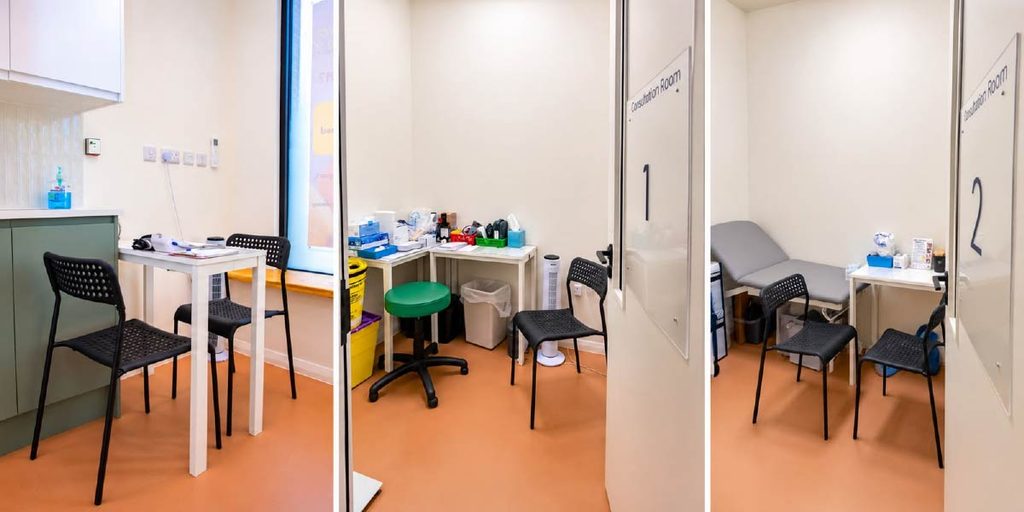
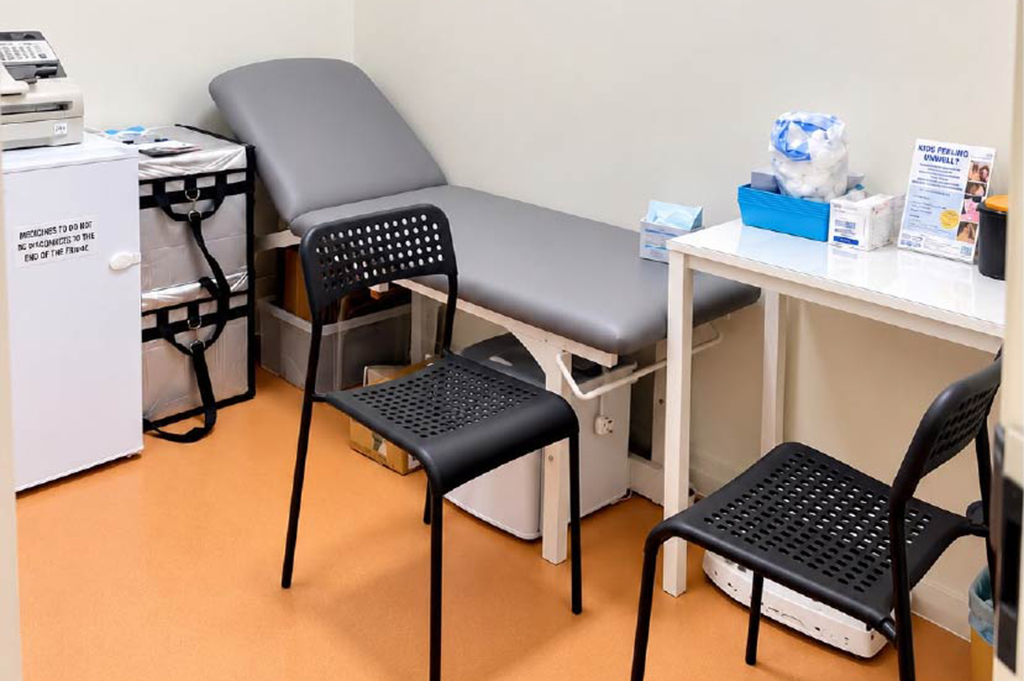
Ade Williams, superintendent at Bedminster Pharmacy in Bristol, has also reaped the benefits of multiple consultation rooms (see Box 3). “We have three,” he says, adding that quantity is accompanied by quality. Williams also notes that pharmacists’ reputation is “hanging on that experience” in the consultation room.
However, upgrading this space comes with a significant financial cost. Cohen spent £10k installing basic second consultation rooms at each of his two sites.
Sustainable funding and a clear long-term vision for community pharmacy are vital if owners are to be able to plan ahead and invest with confidence
Alastair Buxton, director of NHS services at Community Pharmacy England
Pharmacies tend to pay £5k to £10k for basic upgrades, while installing an “IP‑ready” clinical room costs between £15k and £30k, says Luvjit Kandula, director of strategy and pharmacy transformation at Community Pharmacy Greater Manchester.
She is one of many voices calling for funding to improve pharmacy premises — especially considering that the government promised GPs an extra £200m in premises funding in summer 202615.
“If the NHS expects IP‑level clinical care, capital is essential,” says Kandula. Shilpa Shah, chief executive of Community Pharmacy North-East London, believes it could be a win–win situation. “It will be beneficial for the NHS as we will be able to deliver more services, which will take the pressure off the rest of the health service,” she points out.
Courtesy of Bedminster Pharmacy
“Pharmacy owners want to invest in their premises and ensure they have the facilities needed to provide an expanding range of clinical services,” says Alastair Buxton, director of NHS services at CPE.
“But making those investments requires financial stability and confidence in the future. Sustainable funding and a clear long-term vision for community pharmacy are vital if owners are to be able to plan ahead and invest with confidence.”
There is an option to earn back investment in consultation rooms through private services. Both our case studies have supplemented NHS services with private income, on services such as weight management and travel vaccinations. However, the appetite to pay privately can depend heavily on your location.
If the NHS isn’t funding pharmacists to upgrade or invest in their consultation rooms, there may come a point where they’re not available anymore to the NHS
Ade Williams, superintendent at Bedminster Pharmacy in Bristol
“In areas of deprivation, it’s very difficult to find private business, and you are more dependent on NHS income,” says Hannbeck.
Plus, even in areas where plenty of private income is available, another question arises. Consultation rooms may well be booked out with patients who are paying for services themselves. “If the NHS isn’t funding pharmacists to upgrade or invest in their consultation rooms, there may come a point where they’re not available anymore to the NHS,” says Williams.
It’s a stark reminder to the government, which has talked repeatedly about the shift of care away from hospitals and into settings such as pharmacies. A spokesperson for the Department of Health and Social Care tells The Pharmaceutical Journal: “Pharmacy is a major part of the NHS’s move towards providing more care closer to home. Community pharmacies are playing an increasingly important role in delivering care closer to home.”
They also note that under the National Health Service (Pharmaceutical and Local Pharmaceutical Services) Regulations, consultation rooms must be “clearly designated for confidential conversations, entirely separate from general retail areas, and structured so that both the clinician and the patient can sit together privately”.
Pharmacies in England are receiving £340m of funding this current financial year “to support pharmacies to expand clinical services”, they add.
The profession knows what the physical pharmacy space should look like and how many rooms are needed for their businesses. As services provided ramp up, both the quality and quantity of these spaces will undoubtedly need to increase. Kennedy is clear on the duty to patients, adding that “as the role of pharmacists continues to develop, we need to make sure consultation spaces continue to provide the privacy, comfort and safety that patients need”.
Box 2: Case study: Ashley Cohen, managing director of Pharm-Assist (Healthcare) Ltd, which operates two pharmacies in Halton and Seacroft
“In the wake of the [COVID-19] pandemic, we found we were very busy with COVID-19 vaccination programmes. We were offering vaccinations from 9am to 6pm, which meant we couldn’t offer any other service in our consultation room.
“So I made a decision to reduce our OTC [over the counter] space and install another consultation room. The installation cost us £10k per branch, which was sufficient for a good consultation room with a table, sink and soundproofing. It’s not an insignificant sum, but it’s also not a massive amount — we reckoned we could pay for that within 12–18 months with good private services.
“The investment has definitely paid off. We now have capacity for private and NHS services at the same time as COVID-19 and flu vaccinations without being conflicted.”
Box 3: Case study: Ade Williams, superintendent of Bedminster Pharmacy in Bristol
“When we relocated our pharmacy to another site, it gave us an opportunity to look at what we wanted. We had a big retail area, but that isn’t really how the business model works today, so we always had space that was redundant.
“So it was time to ask ourselves the question: ‘How do I change that around?’ In our premises today, we have three consultation rooms — one with an examination couch — which speaks to the broadening clinical scope of pharmacy.
“The quality of consultation rooms is important. You have patient expectations around the quality of your care and your reputation hanging on that experience. You don’t want them to be aghast at what they see — you want them to think this is a clinical destination. You need to be set up to deliver those standards.
“However, the ambition in pharmacy doesn’t match the reality of the funding. Everybody wants to upgrade what they have to offer, but where does that funding come from?”
- 1.Pharmacists’ Defence Association and NHS Business Services Authority monthly data, February 2025 to January 2026. Pharmacists’ Defence Association and NHS Business Services Authority. –
- 2.Quality of pharmacy consultation rooms ‘variable.’ The Pharmacist . 2024. https://www.thepharmacist.co.uk/pharmacy-first/quality-of-pharmacy-consultation-rooms-variable/
- 3.The National Health Service (Charges and Pharmaceutical and Local Pharmaceutical Services) (Amendment) Regulations 2020. UK Government . https://www.legislation.gov.uk/uksi/2020/1126/made
- 4.Regs reminder (#14): Consultation rooms and remote consultations. Community Pharmacy England . 2021. https://cpe.org.uk/our-news/regs-reminder-14-consultation-rooms-and-remote-consultations/
- 5.Championing community pharmacy’s role in vaccination. Company Chemist’s Association. 2026. https://thecca.org.uk/championing-community-pharmacys-role-in-vaccination/
- 6.Delivery of 90,000 meningitis B vaccinations for young people prompts call for annual campaign. Pharmaceutical Journal. Published online 2026. doi:10.1211/pj.2026.1.422754
- 7.What will changes to the new medicine service mean for pharmacists and patients? Pharmaceutical Journal. Published online 2025. doi:10.1211/pj.2025.1.379845
- 8.NHS New Medicine Service – August 2025. NHS Business Services Authority. https://www.nhsbsa.nhs.uk/nhs-new-medicine-service-august-2025
- 9.Migraine and acne included in new prescribing Pharmacy First pathways. Pharmaceutical Journal. Published online 2026. doi:10.1211/pj.2026.1.428767
- 10.Pharmacy and appliance contractor dispensing data. NHS Business Services Authority . https://opendata.nhsbsa.net/dataset/pharmacy-and-appliance-contractor-dispensing-data
- 11.Flu Vaccination Service – Statistics. Community Pharmacy England . 2026. https://cpe.org.uk/national-pharmacy-services/advanced-services/flu-vaccination-service/flu-vaccination-statistics/
- 12.Preparing for pharmacist independent prescribing at scale. Pharmaceutical Journal. Published online 2026. doi:10.1211/pj.2026.1.411033
- 13.Consultation Rooms, The Key Considerations. T3 Pharmacy Design . 2022. https://www.t3designgroup.co.uk/how-to-make-the-most-of-your-consultation-room/
- 14.The Architecture of Pharmacies. The Architecture of Pharmacies. https://www.architectureofpharmacies.com
- 15.10 Year Capital Plan to rebuild NHS and bring care closer to home. UK Government . 2026. https://www.gov.uk/government/news/10-year-capital-plan-to-rebuild-nhs-and-bring-care-closer-to-home
You may also be interested in

Community pharmacy generates value far exceeding investment, negotiator analysis finds

Community pharmacists can prescribe outside of existing Pharmacy First age limits, NHS England confirms