Andrey_Popov / Shutterstock.com
At the end of this article, you should be able to:
- Explain the different transdermal delivery systems;
- Prevent medication-related harm;
- Effectively counsel patients and carers about application methods;
- Navigate areas of clinical uncertainty.
Transdermal drug delivery systems are formulations designed to deliver medicines across the skin into the systemic circulation and include transdermal patches, gels and sprays. Compared with oral administration, transdermal delivery avoids first-pass hepatic metabolism, offers a controlled drug-release profile, improves adherence and provides an alternative route of administration for patients who have swallowing difficulties or are unable to tolerate oral medicines1. Transdermal patches are used across a range of therapeutic indications, including pain management, hormone replacement therapy, cardiovascular disease, neurological disorders and smoking cessation2.
However, successful transdermal delivery depends on both the physicochemical properties of the drug and the formulation used. Drug absorption is further influenced by skin integrity, application site and temperature2.
Transdermal delivery also introduces specific patient safety risk factors that need to be actively managed. Recent medication safety alerts, published case reports and analyses of coroners’ reports have highlighted the potential for serious patient harm, including fatal outcomes, when transdermal patches are used incorrectly3–6.
This article provides practical guidance to support pharmacy professionals in the safe and effective use of transdermal products, with particular emphasis on transdermal patches.
Understanding transdermal delivery systems
Transdermal drug delivery depends on passive diffusion of a medicine across the skin and into the systemic circulation1,2. The principal barrier to absorption is the stratum corneum — the outermost layer of the epidermis — which restricts the passage of most molecules, see Figure 11,2,7.
Figure 1: Illustration of human skin layers and principal pathways for transdermal drug penetration
Medicines can permeate the skin via three pathways:
- Between cells (i.e. intercellular);
- Through cells (i.e. transcellular);
- Via skin appendages such as hair follicles and sweat glands (i.e. transappendageal, also known as the ‘shunt’ route)2,8.
The intercellular route is the predominant pathway for most transdermal medicines, see Figure 12,8. Drug movement across the skin is described by Fick’s law of diffusion, whereby the rate of diffusion is proportional to the concentration gradient across the membrane. Consequently, the extent of drug absorption depends not only on the physicochemical properties of the medicine but also on the formulation and patient-specific factors, including skin integrity, hydration, application site and temperature1,2,8.
The specific formulation used influences drug release, duration of action and has practical considerations for administration9,10. Common examples of formulations used and counselling considerations are summarised in Table 1.
Table 1: Common formulations used for systemic transdermal drug delivery
Unlike patches, transdermal gels and sprays do not contain a drug reservoir or polymer matrix to control drug release9,10. Following application, volatile components evaporate, leaving a concentrated film of drug and excipients on the skin surface9. The drug subsequently partitions into the stratum corneum and diffuses across the skin to achieve systemic absorption9,10. Vehicle composition influences drug solubility, partitioning into the skin and, consequently, drug delivery9.
Transdermal patches can be classified into reservoir, matrix and drug-in-adhesive designs, see Figure 210,11. The way a patch stores and releases medicine influences its performance and has important implications for medication safety, patient counselling and whether modification may be appropriate, see Table 2.
Reservoir systems
Reservoir patches contain the active drug within a liquid or gel reservoir separated from the skin by a rate-controlling membrane2,11. Damage to this membrane may result in dose dumping; therefore, reservoir patches should not be cut unless specifically recommended by the manufacturer or specialist guidance, see Figure 22,3,11,12.
Figure 2: Transdermal patch systems
Matrix systems
Matrix patches contain the drug dispersed throughout a polymer matrix and release it by diffusion following application2,11. These designs are generally thinner and more flexible than traditional reservoir patches and eliminate the need for a rate-controlling membrane. Although some products may be manipulated where clinically indicated, recommendations are product specific and manufacturer guidance should always be followed2,3.
Drug-in-adhesive systems
Drug-in-adhesive patches are a subtype of matrix patch in which the drug is incorporated directly into the adhesive layer. Compared with conventional matrix patches, they are generally thinner and may offer improved patient comfort and adhesion10,12. Their simpler design can also facilitate manufacturing12. However, the adhesive must maintain both skin adhesion and consistent drug release throughout the application period, and suitability for manipulation remains product-specific2,10–12.
Medication safety
Safety of transdermal patches
Transdermal patches are associated with several well-recognised medication safety risks. National safety alerts, case reports, systematic reviews and coroners’ investigations show that most serious incidents result from preventable errors in prescribing, administration or disposal rather than failure of the delivery system itself3–5.
Fentanyl patches account for most published reports, and the Medicines and Healthcare products Regulatory Agency (MHRA) has issued repeated warnings following fatal incidents, highlighting accidental exposure, incorrect application and inappropriate disposal as major causes of harm3. A recent review of ‘Prevention of future deaths’ reports identified recurring themes, including application of multiple patches, inadequate patient counselling, poor documentation, insufficient medication review and communication failures between healthcare professionals4,5.
Used fentanyl patches can retain enough of the drug to cause severe or fatal opioid toxicity, making accidental paediatric exposure a significant concern13. Fatal cases have been reported following ingestion of discarded patches, patches retrieved from floors or waste bins, and accidental transfer from another person3,14. The results of an analysis of accidental paediatric exposures reported to the US Food and Drug Administration, published in 2016, revealed that almost half of exposures were fatal, with toddlers accounting for most cases15.
Heat exposure is another recognised risk with transdermal patches; although, its effect on drug absorption varies between products. Fever and external heat sources, including heating pads, electric blankets, hot baths and saunas, may increase drug absorption and the risk of toxicity. This has been demonstrated with fentanyl and other medicines, including testosterone3,16,17. Leenders et al. also described a less well-recognised mechanism of harm in which patients, predominantly older adults with cognitive impairment, placed fentanyl patches in their mouths or beneath dentures, resulting in rapid buccal absorption and opioid toxicity13.
Failure to remove existing transdermal patches and the inadvertent application of multiple patches are common causes of overdose3–5. ‘Prevention of future deaths’ reports include fatal outcomes associated with the application of more patches than prescribed and highlight missed opportunities for medication review in patients receiving long-term opioid therapy18,19.
Pharmacy professionals can help reduce these risks through accurate medicines reconciliation, documentation of patch application and removal, regular review of long-term opioid therapy, patient and carer education, and reinforcement of safe storage and disposal3–5.
Safety of transdermal gels and sprays
Transdermal gels and sprays also present medication safety risks; although, these risks differ from those associated with patches. Incorrect application or dosing may result in unintended drug exposure, while transfer to other people through skin-to-skin contact is a particular concern with hormone preparations. The MHRA has reported cases of premature puberty and genital enlargement in children following repeated accidental exposure to testosterone gel. Safe application, handwashing and precautions to prevent secondary transfer are therefore important20,21.
Practical administration advice
Effective counselling is essential to ensure transdermal medicines are used safely and achieve the intended therapeutic effect. Advice should be tailored to the individual product, as application instructions, wear times and precautions vary between formulations21. Patients and carers should always be encouraged to read the manufacturer’s patient information leaflet alongside verbal counselling.
Patients may perceive medicines applied to the skin differently from oral formulations. Qualitative research involving patients with chronic pain, published in 2026, has suggested that some patients consider skin-applied treatments to act locally or question whether they are sufficiently potent for severe pain22. Similarly, a 2015 focus group study, involving women considering tamoxifen for breast cancer prevention, found a preference for topical administration, partly owing to expectations of fewer adverse effects23. Although these findings cannot be generalised to all patients, they highlight the importance of explaining that transdermal medicines can produce systemic effects1 and — as demonstrated by safety reports involving fentanyl patches — may cause serious harm if used incorrectly3.
Transdermal patch application
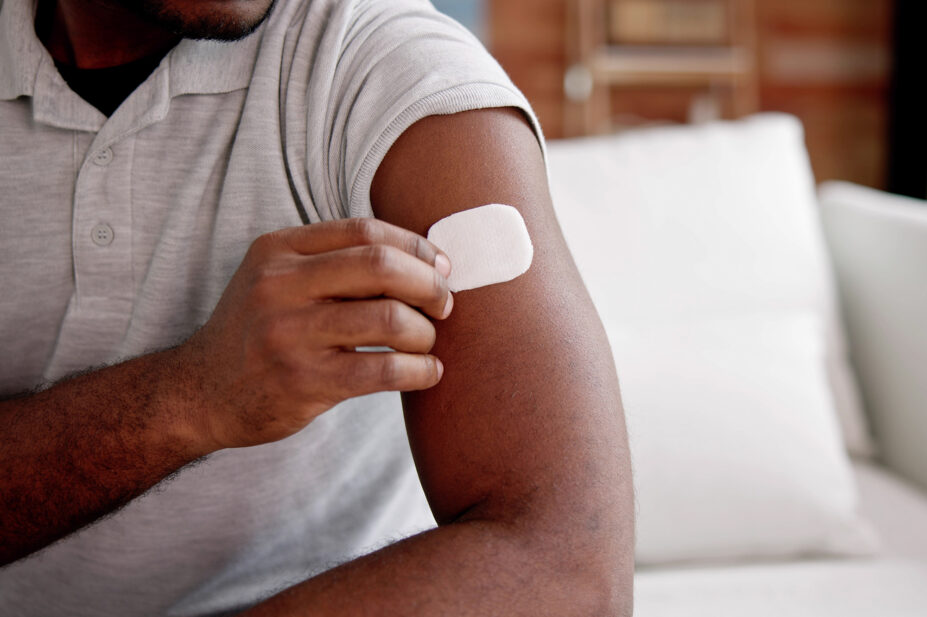
Transdermal patches should be applied to clean, dry, intact skin that is free from cuts, irritation and skin folds. Hair-free sites are preferred. Where necessary, hair should be trimmed rather than shaved to minimise skin irritation. Creams, lotions, oils and powders should not be applied to the intended site, as these may reduce patch adhesion and potentially affect drug delivery24,25.
Before applying a new patch, patients should be advised to remove any existing patch to avoid inadvertent overdose, particularly with opioid patches3. Hands should be washed before and after application, while the patch should be applied firmly using the palm of the hand to ensure good contact with the skin, paying particular attention to the edges24,25. Application sites should be rotated according to the manufacturer’s recommendations to reduce the risk of local skin reactions, and overlapping patches should be avoided unless specifically directed24.
If a patch becomes loose, detached or is forgotten, patients should follow the manufacturer’s instructions and seek advice if unsure. Additional patches should not be applied unless specifically instructed24–26.
Patients should avoid excessive heat exposure (e.g. heating pads, electric blankets, hot water bottles and saunas), as this may increase drug absorption for some products3,24.
Most patches can remain in place during bathing or showering; although, product-specific advice should be checked24,25. Some patches contain metallic components and should be removed before magnetic resonance imaging owing to the risk of skin burns, while the patient information leaflet or summary of product characteristics should always be consulted24.
Used patches should be folded in half with the adhesive sides together before disposal. In addition, unused and used patches should be stored securely out of the sight and reach of children, particularly fentanyl patches, which, as discussed earlier, retain clinically significant amounts of drug after use3,13–15.
Transdermal gel and spray application
Transdermal gels and sprays require different counselling to patches. Following application, the formulation dries on the skin surface, allowing the medicine to diffuse across the skin into the systemic circulation2,9. Patients should apply the prescribed dose to clean and dry intact skin at the recommended application site. Application techniques vary between products — for example, testosterone gel is spread gently over the skin, whereas estradiol spray (Lenzetto; Gedeon Richter) should not be rubbed in. Patients should also follow any instructions for priming metered-dose pumps before first use27,28.
Patients should allow the product to dry before dressing, avoid washing the application site for the recommended period and wash their hands after application, where appropriate. Patients should follow product-specific instructions for missed doses and avoid applying medicines to sites not recommended by the manufacturer. Alcohol-based preparations may be flammable until dry, so contact with naked flames and other ignition sources should be avoided27,28.
Secondary transfer through skin-to-skin contact is a particular concern with transdermal hormone preparations. The results of a study published in 2025 demonstrated measurable transfer of estradiol following contact with treated skin and recommended avoiding direct contact for at least 60 minutes after application21. However, precautions vary between products and treated areas should be covered with clothing once dry where recommended27,28.
Particular care is required where children may be exposed to transdermal hormone preparations used by parents or carers. In a drug safety update published in 2023, the MHRA reported premature puberty and genital enlargement in children following repeated accidental exposure to testosterone gel29. Unintentional transfer of estradiol spray has also been associated with breast development and other signs of early sexual maturation in children28.
Patients should therefore be advised to prevent children coming into contact with treated skin. If accidental contact occurs, the affected skin should be washed with soap and water, and medical advice sought if signs of hormonal exposure develop28,29.
Where transdermal gels are prescribed to children, additional consideration should be given to accurate dosing and the suitability of available formulations. Many preparations are designed for adult use, and fixed-dose pumps may not allow the smaller doses required in paediatric practice27,30.
Absorption may also vary between products and individuals, meaning formulations should not be assumed to be interchangeable. Specialist advice and appropriate clinical and biochemical monitoring are therefore important, particularly when these medicines are used off label30.
Patch manipulation and clinical decision-making
Limited patch strengths can make dose titration challenging. Clinicians may therefore occasionally consider manipulating patches, particularly in paediatric or palliative care, or in patients susceptible to adverse effects25,26,31–33.
Patch manipulation most commonly involves cutting the patch or masking part of its surface to reduce the area in contact with the skin. However, both approaches are usually outside the manufacturer’s licence and should only be considered following an individualised risk–benefit assessment when suitable licensed alternatives are unavailable, see Box 126.
Box 1: Key considerations when considering cutting or masking patches
- Type of patch (i.e. matrix versus reservoir);
- Availability of alternative strengths. Consider whether multiple patches can be used;
- Consider if an alternative drug/route can be used;
- Asses the risk of toxicity. Avoid cutting patches of potent drugs because of the increased risk of toxicity.
- Assess whether variation in drug levels will impact the patient’s clinical condition. Cutting patches may disrupt the release profile of the drug and may result in fluctuating symptom control. Adhesion to the skin may also be impaired along the edge that has been cut, resulting in reduced drug absorption or loss of the patch. Similar issues may occur when masking part of the patch because the dressing moves.
Whether a patch can be manipulated safely depends largely on its design. Reservoir patches should not be cut because damaging the rate-controlling membrane may result in unpredictable drug release and dose dumping2,10. Micro-reservoir patches should also generally not be manipulated because cutting may alter their release characteristics2. Matrix patches differ, in that the drug is distributed throughout the matrix or adhesive layer. Although some matrix patches have been shown to maintain relatively uniform drug distribution after cutting, recommendations vary between products and manipulation remains off label unless specifically supported by the manufacturer10,11,26.
The evidence supporting patch manipulation remains limited and is based largely on laboratory studies, pharmacokinetic data and clinical experience rather than robust comparative trials26. Clinical decision-making should therefore consider the medicine involved, patch design, therapeutic index, patient factors and the availability of alternative treatment options. Particular caution is required when manipulating potent opioids, as even small changes in drug delivery can have clinically significant consequences3,4.
Table 3 summarises the evidence and practical considerations for selected medicines commonly encountered in clinical practice3,26,31–40.
Table 3: Evidence and practical considerations for selected medicines commonly encountered in clinical practice
Where manipulation is considered appropriate, the rationale, product used, method of manipulation and counselling provided should be documented26. Patients should be informed that patch manipulation is usually off label and should only be undertaken following advice from the clinical team. Where cutting is recommended, patches should be cut immediately before application using clean, sharp scissors and any unused portion discarded unless product-specific guidance advises otherwise. Patients should also be counselled that cutting may reduce patch adhesion and alter drug delivery26.
Box 2: Useful resources when checking suitability for cutting patches
- Summary of product characteristics of individual products will provide information on that patch type;
- Medicines for Children provides parent-friendly information leaflets, including various patches;
- Specialist Pharmacy Services provides practical advice on manipulating patches;
- Association of Paediatric Palliative Medicine formulary provides practical advice on the safety of using part-patches in the palliative care setting.
Best practice for pharmacists
- Patch design (e.g. reservoir, matrix and micro-reservoir) will affect drug release, absorption and whether manipulation may be appropriate, taking into account available evidence, manufacturer recommendations and individual patient factors;
- Patients and carers should receive clear counselling on patch application, site rotation, storage, disposal and managing detached or missed patches. Patches should be dated at the time of application;
- Application site, skin integrity and temperature can significantly affect transdermal drug absorption;
- Pharmacy professionals play an important role in identifying and mitigating risks associated with transdermal patch use, which may arise from application of multiple patches, accidental exposure, failure to remove old patches and inappropriate disposal.
Conclusion
Transdermal medicines, including patches, gels and sprays, are common across many areas of practice and offer important therapeutic benefits when used correctly. Pharmacy professionals play a central role in ensuring their safe and effective use through appropriate product selection, patient counselling and recognition of potential safety risks. Understanding the principles of transdermal drug delivery, the differences between formulations and the evidence surrounding patch manipulation enables informed clinical decision-making and helps minimise avoidable patient harm.
- 1.Prausnitz MR, Langer R. Transdermal drug delivery. Nat Biotechnol. 2008;26(11):1261-1268. doi:10.1038/nbt.1504
- 2.Crasta A, Painginkar T, Sreedevi A, et al. Transdermal drug delivery system: A comprehensive review of innovative strategies, applications, and regulatory perspectives. OpenNano. 2025;24:100245. doi:10.1016/j.onano.2025.100245
- 3.Transdermal fentanyl patches: life-threatening and fatal opioid toxicity from accidental exposure, particularly in children. Medicines and Healthcare products Regulatory Agency. 2018. https://www.gov.uk/drug-safety-update/transdermal-fentanyl-patches-life-threatening-and-fatal-opioid-toxicity-from-accidental-exposure-particularly-in-children
- 4.Mshari E, Copeland CS, Richards GC. Safety concerns reported by coroners following fentanyl patch fatalities in England, Wales and Northern Ireland between 1997 and 2024. Br J Clin Pharmacol. Published online March 17, 2026. doi:10.1002/bcp.70525
- 5.Cheema E, McGuinness K, Hadi MA, et al. <p>Causes, Nature and Toxicology of Fentanyl-Associated Deaths: A Systematic Review of Deaths Reported in Peer-Reviewed Literature</p> JPR. 2020;Volume 13:3281-3294. doi:10.2147/jpr.s280462
- 6.Hilado MA, Getz A, Rosenthal R, Im DD. Fatal Transdermal Fentanyl Patch Overdose in a Child. Cureus. Published online January 23, 2020. doi:10.7759/cureus.6755
- 7.Bakhrushina EO, Shumkova MM, Avdonina YV, et al. Transdermal Drug Delivery Systems: Methods for Enhancing Skin Permeability and Their Evaluation. Pharmaceutics. 2025;17(7):936. doi:10.3390/pharmaceutics17070936
- 8.Zhao L, Chen J, Bai B, et al. Topical drug delivery strategies for enhancing drug effectiveness by skin barriers, drug delivery systems and individualized dosing. Front Pharmacol. 2024;14. doi:10.3389/fphar.2023.1333986
- 9.Iliopoulos F, Sil BC, Evans CL. The role of excipients in promoting topical and transdermal delivery: Current limitations and future perspectives. Front Drug Deliv. 2022;2. doi:10.3389/fddev.2022.1049848
- 10.Pastore MN, Kalia YN, Horstmann M, Roberts MS. Transdermal patches: history, development and pharmacology. British J Pharmacology. 2015;172(9):2179-2209. doi:10.1111/bph.13059
- 11.Singpanna K, Pornpitchanarong C, Patrojanasophon P. Nanocomposite patches for transdermal drug delivery: A review. SEHS. Published online December 31, 2024:24010005. doi:10.69598/sehs.18.24010005
- 12.Lei Y, Yang G, Du F, et al. Formulation and Evaluation of a Drug-in-Adhesive Patch for Transdermal Delivery of Colchicine. Pharmaceutics. 2022;14(10):2245. doi:10.3390/pharmaceutics14102245
- 13.Leenders MEC, Visser CC, Lange DW de. An unexpected place for a fentanyl patch. Clinical Toxicology. 2024;62(11):782-783. doi:10.1080/15563650.2024.2407056
- 14.Teske J, Weller JP, Larsch K, Tröger HD, Karst M. Fatal outcome in a child after ingestion of a transdermal fentanyl patch. Int J Legal Med. 2006;121(2):147-151. doi:10.1007/s00414-006-0137-3
- 15.Stoecker W, Madsen D, Cole J, Woolsey Z. Boys at Risk: Fatal Accidental Fentanyl Ingestions in Children: Analysis of Cases Reported to the FDA 2004-2013. Mo Med. 2016;113(6):476-479. https://www.ncbi.nlm.nih.gov/pubmed/30228537
- 16.Shomaker TS, Zhang J, Ashburn MA. A Pilot Study Assessing the Impact of Heat on the Transdermal Delivery of Testosterone. The Journal of Clinical Pharma. 2001;41(6):677-682. doi:10.1177/00912700122010447
- 17.Hao J, Ghosh P, Li SK, Newman B, Kasting GB, Raney SG. Heat effects on drug delivery across human skin. Expert Opinion on Drug Delivery. 2016;13(5):755-768. doi:10.1517/17425247.2016.1136286
- 18.Riley S. Teresa Bennett: Prevention of future deaths report. Courts and Tribunals Judiciary. 2024. https://www.judiciary.uk/prevention-of-future-death-reports/teresa-bennett-prevention-of-future-deaths-report/
- 19.Nieto P. Wendy Boddington: Prevention of future deaths report. Courts and Tribunals Judiciary. 2026. https://www.judiciary.uk/prevention-of-future-death-reports/wendy-boddington-prevention-of-future-deaths-report/
- 20.Topical testosterone (Testogel): risk of harm to children following accidental exposure. Medicines and Healthcare products Regulatory Agency. 2023. https://www.gov.uk/drug-safety-update/topical-testosterone-testogel-risk-of-harm-to-children-following-accidental-exposure?utm_source=chatgpt.com
- 21.Cao Y, Zhang L, Wei J, Liao J. Avoiding touching until 60 min—contamination of transdermal estradiol gel after physical contact. Front Endocrinol. 2025;16. doi:10.3389/fendo.2025.1524870
- 22.Almuqbil RM, Shaban M, Ali SI. Patient Experiences of Access, Stigma, and Trust and Preferences for Non-Opioid Drug Delivery Systems in Chronic Pain Management. Healthcare. 2026;14(20):3379. doi:10.3390/healthcare14203379
- 23.Karavites LC, Allu S, Khan SA, Kaiser K. Awareness of preventive medication among women at high risk for breast cancer and their willingness to consider transdermal or oral tamoxifen: a focus group study. BMC Cancer. 2015;15(1). doi:10.1186/s12885-015-1893-6
- 24.Using transdermal patches safely. Specialist Pharmacy Service. 2025. https://www.sps.nhs.uk/
- 25.Joint Formulary Committee. British National Formulary for Children . 2026. https://bnfc.nice.org.uk/
- 26.Cutting or masking transdermal patches safely. Specialist Pharmacy Service. 2025. https://www.sps.nhs.uk/articles/cutting-or-masking-transdermal-patches-safely/
- 27.Testogel 16.2 mg/g gel: summary of product characteristics. EMC. https://www.medicines.org.uk/emc/product/8919/smpc?utm_source=chatgpt.com
- 28.Lenzetto 1.53 mg/spray, transdermal spray, solution: summary of product characteristics. EMC. https://www.medicines.org.uk/emc/product/11175/smpc?utm_source=chatgpt.com
- 29.Topical testosterone (Testogel): risk of harm to children following accidental exposure. Medicines and Healthcare products Regulatory Agency. 2023. https://www.gov.uk/drug-safety-update/topical-testosterone-testogel-risk-of-harm-to-children-following-accidental-exposure?utm_source=chatgpt.com
- 30.Vanderniet JA, Neville KA. Risk of transferability and variable absorption of topical testosterone creams in children and adolescents. J Paediatrics Child Health. 2024;60(2-3):69-72. doi:10.1111/jpc.16532
- 31.Hyoscine hydrobromide patches (Scopoderm 1.5 mg Patch or Scopoderm TTS Patch): risk of anticholinergic side effects, including hyperthermia. Medicines and Healthcare products Regulatory Agency. 2023. https://www.gov.uk/drug-safety-update/hyoscine-hydrobromide-patches-scopoderm-1-dot-5mg-patch-or-scopoderm-tts-patch-risk-of-anticholinergic-side-effects-including-hyperthermia
- 32.Brook L. Association for Paediatric Palliative Medicine Formulary. 6th ed. Association for Paediatric Palliative Medicine; 2024. https://www.appm.org.uk/formulary/
- 33.Matthews D, Bath L, Högler W. British Society for Paediatric Endocrinology and Diabetes (BSPED) Guidance Statement: Hormone Supplementation for Pubertal Induction in Girls. British Society for Paediatric Endocrinology and Diabetes . 2025. https://www.bsped.org.uk/media/5sfhncrf/hormone-supp_sept25.pdf
- 34.Versatis 700 mg Medicated Plaster: summary of product characteristics. EMC. 2021. https://www.medicines.org.uk/emc/product/290/smpc
- 35.Morrison F, Fairhurst J, Fairhurst C. Case series: Use of Glyceryl Trinitrate patches to improve peripheral circulation in children with severe neurodisability. European Journal of Paediatric Neurology. 2018;22(3):451-456. doi:10.1016/j.ejpn.2017.12.018
- 36.Gargh K, Baildam EM, Cleary GA, Beresford MW, McCann LJ. A retrospective clinical analysis of pharmacological modalities used for symptomatic relief of Raynaud’s phenomenon in children treated in a UK paediatric rheumatology centre. Rheumatology. 2009;49(1):193-194. doi:10.1093/rheumatology/kep309
- 37.TEH LS, MANNING J, MOORE T, TULLY MP, O’REILLY D, JAYSON MIV. SUSTAINED-RELEASE TRANSDERMAL GLYCERYL TRINITRATE PATCHES AS A TREATMENT FOR PRIMARY AND SECONDARY RAYNAUD’S PHENOMENON. Rheumatology. 1995;34(7):636-641. doi:10.1093/rheumatology/34.7.636
- 38.Zuppa AF, Tejani SM, Cullen EJ, Nadkarni VM. Plasma Concentrations Following Application of Whole versus Cut Transdermal Clonidine Patches To Critically Ill Children. The Journal of Pediatric Pharmacology and Therapeutics. 2004;9(1):43-48. doi:10.5863/1551-6776-9.1.43
- 39.Catapres-TSS Transdermal Prescribing Information. Boehringer Ingelheim. https://docs.boehringer-ingelheim.com/Prescribing%20Information/PIs/Catapres%20TTS/CatapresTTS.pdf
- 40.Position statement Safe Use of Transdermal Clonidine Patches in the Management of Childhood Motor and Movement Disorders. NPPG (Neonatal and Paediatric Pharmacy Group), BACD (British Academy of Childhood Disability), BPNA (British Paediatric Neurology Associatio. 2024. https://nppg.org.uk/wp-content/uploads/2024/10/Clonidine-V1.pdf