

Grammar, syntax and number styles
Active versus passive
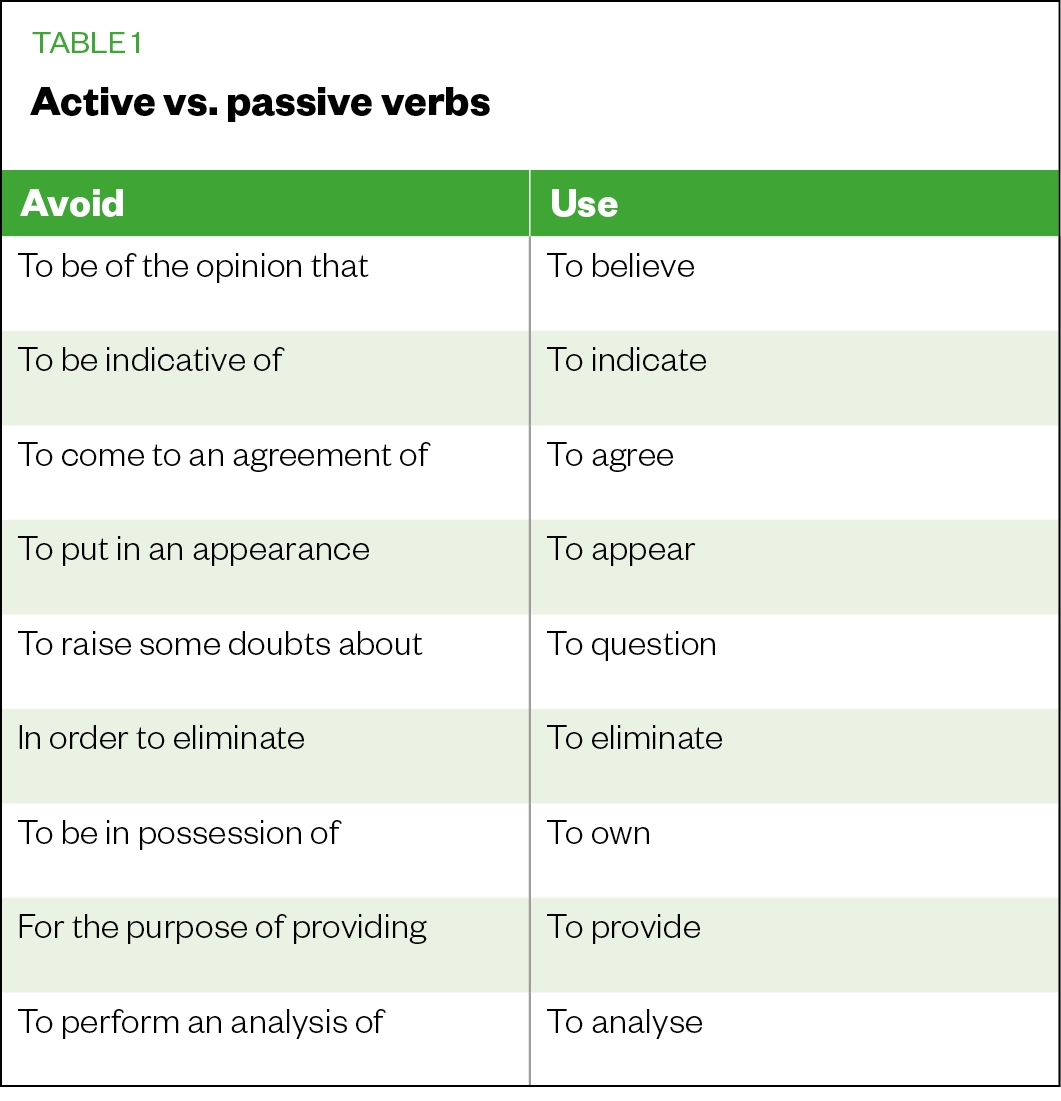
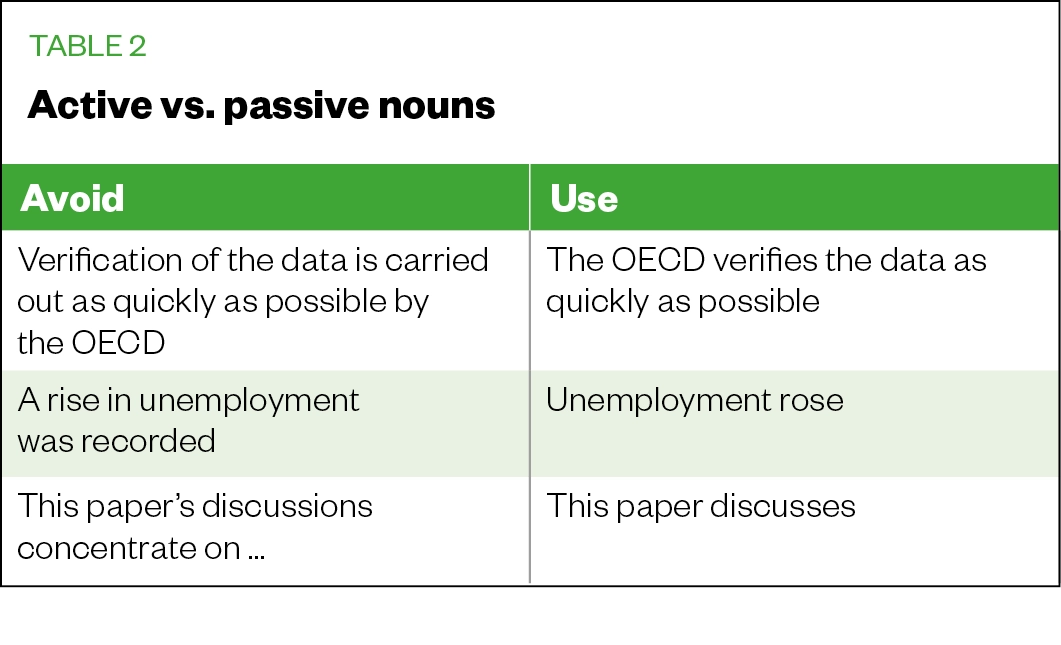
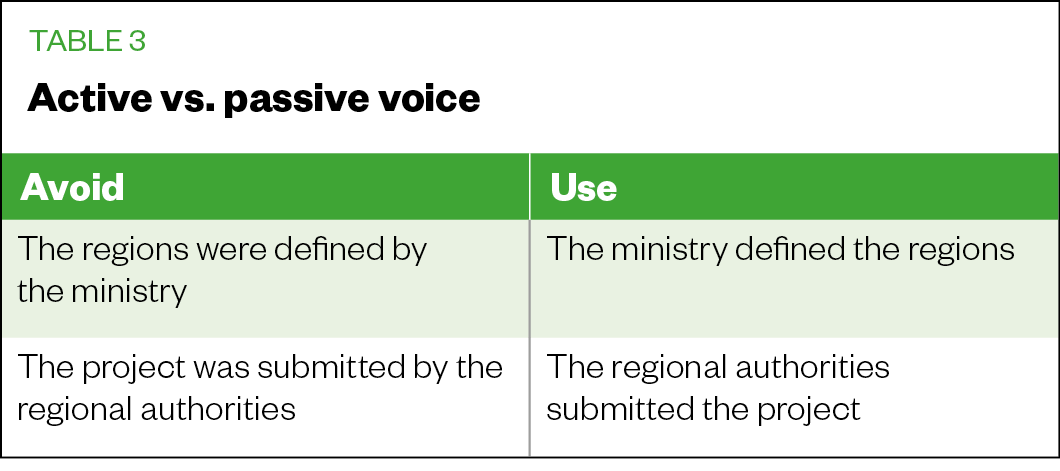
Always use the active voice, whereby the subject of the sentence performs the action. This will make the prose clearer and easier to understand.
Apostrophes
Avoid use of contractions unless it is quoted, or in a less formal, interview-style piece;
Names ending in ‘s’ have an additional ‘s’ after the apostrophe, e.g. RPS’s, Jones’s;
Only for plural possessives do we write the word and an apostrophe without it being followed by an ‘s’, e.g. The boys’ behaviour, the girls’ exams
There should generally be an apostrophe before the word ‘time’ in sentences, e.g. The game will be played in two weeks’ time
Apostrophes are not needed to denote plurals, e.g. MPs, MBEs
Dates do not require apostrophes, unless the century is omitted, e.g. The England squad of ’66? I don’t think she means the 1800s.
Numbers
The numbers one to ten must be spelled out, and the number used for 11 and above, including million/billion. However, consistency must be kept across units in a sentence.
In the study, five dogs ate 500g of biscuits and 5kg of wet food every day
Do not start sentences or headlines with numbers unless they are listicles.
In news articles, large numbers should be rounded up or down as appropriate. Note, this does not apply to any other article types. Million and billion should be spelled out except for use in currency, when ‘m’ and ‘bn’ should be used instead.
£34,957 becomes £35,000 and US$1,235,786 becomes US$1.2m
Fractions should be hyphenated and spelled out in words. If something is being approximated, use ‘around’, not ‘approximately’ or ‘about’.
Telephone numbers
Mobile numbers should be spaced as follows: 07123 456789;
Landline numbers should be spaced as follows: 020 2345 6789 for London numbers, and 01234 567890 for all other area codes.
Dates
Dates must be written in full in print and online using day month year order; e.g. our house style is ‘30 July 2014’, not ‘30th July 2014’, nor ‘30/07/14’
Years should be written in full. When discussing a range or a long period of time, use an en-dash, not a forward slash or a hyphen; e.g. 2009–2013, not 2009–13
Use of Q1–4 is permitted when discussing financial quarters only. Quarter does not need to be spelled out;
Do not add the day of the week unless it is pertinent to the story;
Times should be presented in the 24-hour format with a colon as a separator: 17:00 not 5pm
Ages
Please use “aged over X years”, not “over the age of X years” or “over X years of age”
Avoid ‘X-year-old’
Units
Blood pressure is measured in mmHg. Heart rate is measured in beats/min;
Degrees Celsius should be written in full at first use and then the symbols can be used;
Litre is denoted L, and millilitre is denoted mL;
Microgram, microlitre and other units on this scale are spelled out in full. The same is true of units on the nano and pico scales. However, as per the above, milligram is denoted mg;
There should not be a space between numbers and unit;
Include the dose or percentage after the drug;
Ranges should always have the numbers written out as numbers, not as words. This includes times, such as hours, weeks and even years;
Use the en-dash for ranges (e.g. 2–3mg). If a minus is included, use an en-dash, and spell out ‘to’ when the range includes a negative number; e.g. –3.1 to 4.0
A unit vs per unit — unless something is a direct quote, do not use “a” before a unit — use “per” instead:
John drinks 15 cups of coffee per day
Currency
There is no need to spell out the names of currencies. The symbols € and £ and may be used as they are; however, as several countries use a dollar currency, dollar signs should be preceded by their country. If you do need to spell it out, remember that currencies are not proper nouns.
US$ (US dollars); AUS$ (Australian dollars); CAD$ (Canadian dollars)
Exceptions
Visa tiers are capitalised and the numbers are not written out:
She needed a Tier 2 visa to work in the UK
NHS pay bands do not have the numbers written out: Hyperlink to: https://www.healthcareers.nhs.uk/working-health/working-nhs/nhs-pay-and-benefits/agenda-change-pay-rates/agenda-change-pay-rates
Those reaching band 7 in the 2018/2019 tax year will have an entry rate of £37,570