Artur Widak / NurPhoto / Alamy Stock Photo
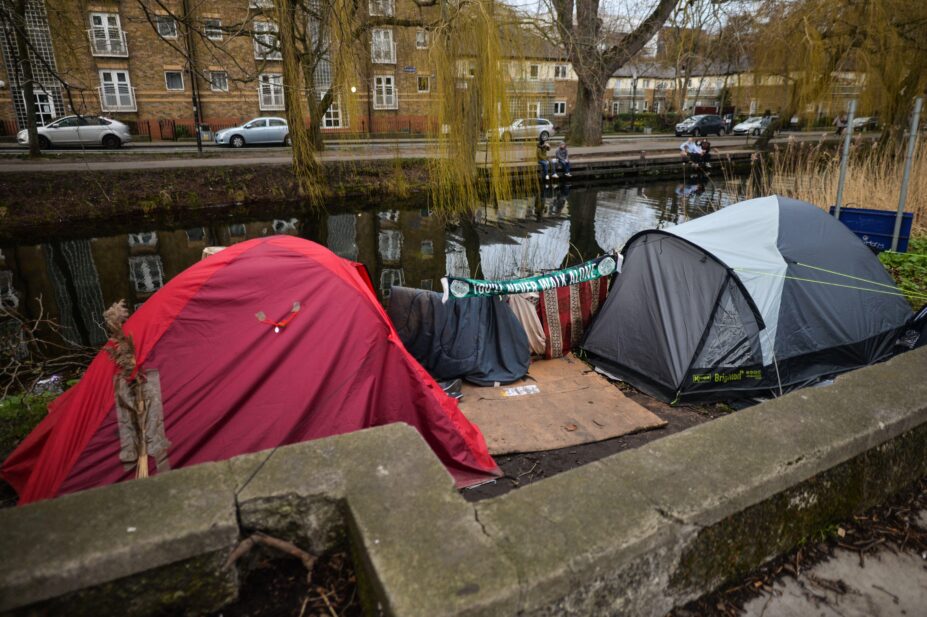
People experiencing homelessness will be added as a cohort to the 2026/2027 flu vaccination programme from October 2026, the government and NHS England have said.
In an update to the national flu immunisation programme letter, published on 9 June 2026, the Department of Health and Social Care, NHS England and the UK Health Security Agency said people aged 16 years and over who are experiencing homelessness will be added to the programme from 1 October 2026.
The update follows advice from the Joint Committee on Vaccinations and Immunisation (JCVI), made in June 2024, that people experiencing homelessness should be offered the vaccine.
In its 2024 advice, the JCVI said the definition covered “rough sleepers and those using homeless hostels or night-shelters, rather than the broader definitions of homelessness”, and people in this cohort aged over 16 years will now be offered a seasonal flu vaccine from October 2026.
“Eligibility of children under that age is outlined in the original version of the annual flu letter and has not changed,” the letter from the government and NHS England added.
The update stated that community pharmacies will continue to be commissioned to deliver a pilot service for vaccinations for children aged two and three years from 1 October 2026, “supplementing the offer in general practice, which will start vaccinating from the 1 September 2026, or as soon as [the] vaccine is available”.
From 1 October 2026, community pharmacies will also be able to vaccinate clinically at-risk under-18s, and from 1 December 2026 the service will expand to cover school-aged children who missed the opportunity to be vaccinated at school.
Around 4,000 pharmacies first offered children’s flu vaccinations as an advanced service during the 2025/2026 flu season, as part of a trial originally agreed for one season.
Community Pharmacy England (CPE) announced on 9 June 2026 that pharmacy owners will be paid £10.06 per children’s vaccination administered, up from £9.58 the previous year.
“This aligns the fee with that paid for vaccination of adults and with the fee offered to general practice for the flu vaccination of children,” it said.
Alastair Buxton, director of NHS services at CPE, commented: “We are pleased to be able to agree this expansion of the advanced service. While it remains a trial, we are confident that it will further demonstrate how community pharmacy teams will be able to support vaccination rates through the provision of a convenient and accessible service offer to parents and their eligible children.
“The expanded cohorts come after lobbying by CPE and other pharmacy bodies to expand the scope of vaccination services that the sector can offer.
“It represents yet another strategically important step forwards for community pharmacies to support the delivery of NHS vaccination programmes in line with our calls for the sector to become a hub for the provision of all NHS vaccinations.”
Mahendra Patel, chair of the Royal College of Pharmacy’s English Pharmacy Advisory Council, said: “The inclusion of people experiencing homelessness in the national flu immunisation programme is an important step towards tackling health inequalities. Individuals in this group often experience poorer health outcomes and are at greater risk of severe illness from flu.
“People experiencing homelessness often face barriers to accessing healthcare, especially if they are not registered with a GP. Recognising the needs of this group and improving their health provides an equitable, population-health approach to prevention.
“Community pharmacists and targeted outreach services have a key role to play in supporting delivery of vaccinations. Commissioning across local services to ensure vaccines reach those who need them most is important to improve health outcomes.”