Andy Catterall
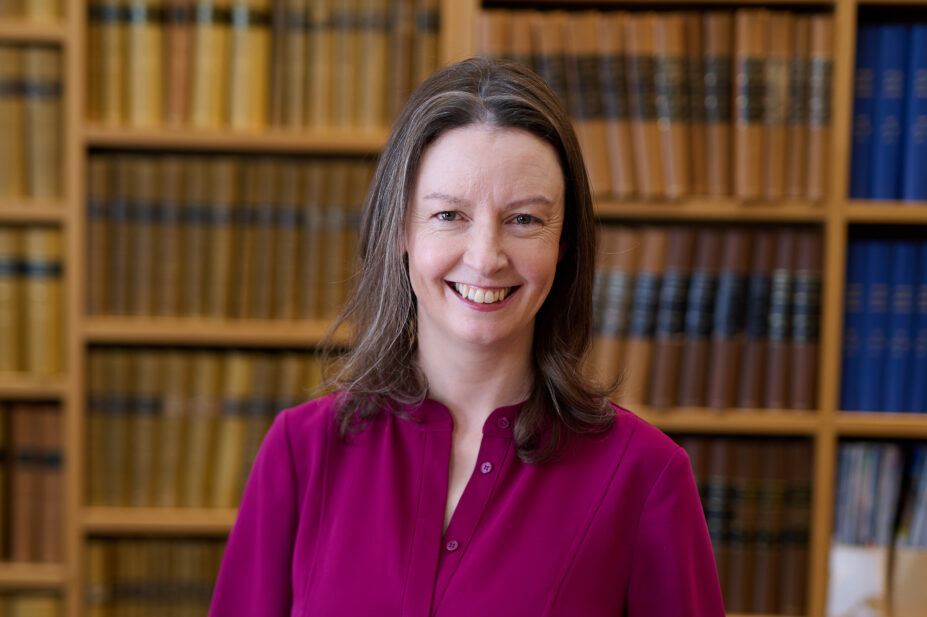
It’s been a busy seven months for Geraldine McCaffrey, director for Wales at the Royal College of Pharmacy (RCPharm). She took up the post in December 2025, when preparations for the transition to royal college status were in full swing. Of course, even now there is still lots to do, but McCaffrey exudes a sense of real optimism about the organisation’s future.
McCaffrey is familiar with governance, having previously sat on the then Royal Pharmaceutical Society’s (RPS) Assembly and as chair of the Society’s Welsh Pharmacy Board. The Pharmaceutical Journal caught up with her early one morning, ahead of a typically busy day, to talk about what’s happening in Wales — with the election of a new government — and her plans for the days and months ahead.
Tell us about your professional background and what attracted you to the role as director for Wales
I started out as a rotational and resident pharmacist in hospital. After completing my PhD at the University of Manchester, I came back into full-time practice and worked through specialist clinical roles into team leadership roles, qualified as an independent prescriber, and then moved into some more strategic roles. I worked as the regional lead pharmacist for research and development within the health board that covers the North Wales region. As part of that role, I was lucky to have the opportunity to work on the digital medicines programme in Wales, initially within my health board.
I work with a great staff team and a great team of elected members. I feel really lucky to be in the role
I was seconded to Digital Health and Care Wales, where I worked on the shared medicines record for Wales and also the digital medicines blueprint for Wales. At the same time, I joined the RPS Welsh Pharmacy Board, before becoming board chair and a member of the RPS Assembly in 2023. That was when the organisation was doing the constitution and governance review. It was a real privilege working with the other elected members, the team and the wider profession to realise the profession’s ambition of transitioning to a royal college.
In 2025, the opportunity came up to apply for the director for Wales role and — given how proud I’ve been to be part of RPS and what it’s achieved, and being really committed to seeing the royal college become a success — it wasn’t a very difficult decision to apply. I was delighted to have been successful in being appointed. I work with a great staff team and a great team of elected members. I feel really lucky to be in the role.
Following the transition to the royal college, what’s the feeling like in the Wales office? Does it feel different?
I think there’s a real sense of pride in what it means for the profession and what it will mean for us as an organisation, and certainly our team is happy to take up that challenge. We’re thinking about how being a royal college will enable us to have greater external authority around our policy and advocacy and standards work, but also what it means in terms of having a clearer definition of our role to colleagues within the wider health sector, and the public.
We already do quite a lot of collaboration in Wales. We work closely with other royal colleges on things like workforce, mental health and pediatric health, but we believe that this is going to open up more opportunities for collaboration. Since I’ve been in the role, which is about six months now, I’ve been meeting with organisations both within and outside of pharmacy to listen to their views on where the RCPharm sits within the healthcare landscape in Wales. What I’m getting back is a lot of expectation, but also real positivity about the role that we can play as a royal college.
What are the priorities for the Wales team over the next 12 months? Is there anything you can say about development of work plans and overall strategy from the Wales perspective?
We’re thinking about areas like workforce, medicines shortages and sustainability. We are also focusing on some new areas, such as AI. A focus across Great Britain, and for us in Wales, is thinking about the cohort of pharmacists who will be qualifying this summer as independent prescribers at the point of registration. That is a significant milestone, so it’s important that we work with the profession to make sure that there are the right structures in place to help those newly qualified pharmacists use their prescribing skills safely and confidently. When I think back to both when I was a newly qualified pharmacist and then a newly qualified pharmacist prescriber, that was what I needed then — and we want to make sure that they feel supported by their colleagues and that patients have assurance and confidence in the care they’re providing.
We’ve also been asked by Welsh government to undertake an independent review of pharmacy professionals working in general practice across Wales. That follows from a review we did a couple of years ago in hospital pharmacy, and the recommendations from that hospital pharmacy review are currently being implemented across the system. With the primary care/general practice one, we’re at the final stages now, and we’ll be submitting that shortly to Welsh government.
And then, obviously, the Senedd election: engaging with the new government and members of the Senedd will clearly be a priority.

Andy Catterall
What can you tell us about work towards the new royal college strategy?
There’s a transition strategy that’s being finalised with the trustee board. Alongside that, there are plans to do more deep engagement with members, and the wider pharmacy community, to help inform our longer term royal college strategy. We did do some engagement work on that in autumn 2025, so we’ve got a solid foundation for that already, but we are continuing to deepen that work.
The recent election in Wales has led to a change of government. What plans does the college have for advocacy with the new Senedd members coming in?
This is significant: a new government for the first time in 27 years in Wales. This time the Senedd will be larger, so more Senedd members than previously, and there’s a high proportion who are new to the Senedd. So, we really need to build understanding of the pharmacy profession’s role from the outset.
One positive thing for us is that the new health minister, Mabon ap Gwynfor, previously held the health brief in opposition. We’ve had the opportunity to meet with him then, so we’ve got a good understanding of his priorities. As an initial step, the RCPharm in Wales has written to congratulate him on that appointment and to set out how the profession can support the new government’s ambitions for health and social care, and their plan for the first 100 days. In that letter we’ve highlighted things like what the profession needs to deliver on those ambitions, and one of those things is clearly sustainable and fair funding for community pharmacy. All our members will be aware of the significant issues that community pharmacists are facing, but it’s very early days, so we’re not expecting big policy shifts immediately.
What we are expecting is that there will be a series of consultations later in the year and it will be important that we respond to those as the government begins to shape its programme for government. What we want to do is bring in the pharmacy perspective to those discussions and explain how the skills of pharmacists can improve patient care across different areas. Alongside that, we will also be looking to engage with individual members of the Senedd. We’ve done quite a lot of that in previous years, so what we try to do is build their awareness and understanding of pharmacy issues, the pressures facing the profession and also what the opportunities are around what we can do to help improve patient care, and the work we’ve done in that space.
When is the first meeting of the Welsh Pharmacy Advisory Council?
The first meeting was in June 2026. We’ve already started a structured induction process with the new members and we’ve been having regular touch points with the council already, as we support them into their role.
In terms of what the new council looks like, we’ve got a nice balance. Three new members have joined us and we’ve got six members who are continuing from the previous board. So, a balance of fresh perspectives and continuity, and a strong group in terms of their experience.
Going forward, it’s important that we focus on the role of council members in informing our policy and practice work
It’s always hard to say goodbye to previous members. We had several of our previous board members step away this year, including Richard Evans, who was the longest serving member of the Welsh Pharmacy Board. I have to say that we’re incredibly grateful for all the contributions of the members of the Welsh Pharmacy Boards over the years: so absolutely vital to our work.
How different does the council meeting feel?
It does feel different. We’re a registered charity now, so particularly for those who are members of the trustee board, that brings on additional responsibilities and a new way that we operate. Going forward, it’s important that we focus on the role of council members in informing our policy and practice work, helping us to have that influential voice within each nation, but also across Great Britain. They have a really important role in championing pharmacy, helping us do what we can to make sure that pharmacy helps to improve outcomes, and in the role of the college in the safe and effective use of medicine.
Is there anything else that you would like to share?
I guess a big thank you to people across the profession who I’ve met and spoken to. I’ve really appreciated how warmly welcomed I’ve felt to the role, and the encouragement around the creation of the royal college. That’s been really positive and it feels like there’s a lot of real excitement: not just within the profession, but also within the wider healthcare system.
I want people to feel like they can share their views openly with me, whatever they may be
I think what comes across to me is that people in the profession really value having a professional home that supports them in their practice, helps them keep the focus firmly on their patients and helps strengthen their sense of professional pride.
That would be my message — and just to say that I’m very much still in listening mode. The early conversations that I’m having now, and will continue to have, are helping shape how we’ll develop our work in Wales going forward. I want people to feel like they can share their views openly with me, whatever they may be. We need to understand what’s working well for them, what they feel needs to change and where they feel that royal college can make the biggest impact.
You may also be interested in

Tase Oputu: ‘Be part of the conversation. Nobody’s opinions are invalid’

‘We’re in our early days’: the Royal College of Pharmacy’s first national advisory council chairs on their priorities