Maria Symchych / Shutterstock.com
- Explain how diabetic kidney disease develops and progresses, and describe when dialysis is indicated;
- Interpret the limitations of HbA1c in end-stage kidney disease (ESKD) and identify which patients should be offered continuous glucose monitoring (CGM);
- Describe how insulin and other glucose-lowering requirements change as estimated glomerular filtration rate falls, including recognition of “burnt-out” diabetes;
- Apply UK guidance to reduce hypoglycaemia risk and review medicines safely in people receiving dialysis.
Introduction
Kidney failure is among the most serious outcomes of diabetes mellitus. Diabetes is the leading cause of kidney failure, both worldwide and in the UK1,2. In 2022, nearly 520,000 people in the UK were living with chronic kidney disease (CKD) as a complication of diabetes1. Of the 8,556 adults who began renal replacement therapy (RRT) during 2023, diabetic kidney disease (DKD) — kidney damage caused by diabetes — was the recorded cause in 30.6% of cases, ranking above every other identifiable cause2.
People living with diabetes and are on dialysis have higher morbidity and mortality than those without. All-cause mortality is 40% higher, while cardiovascular mortality is 63% higher than in people on dialysis without diabetes3. A study involving individuals with type 1 diabetes receiving RRT demonstrated improved survival over recent decades; however, it remains substantially below that of the general population4.
Complications of diabetes also present differently in people on dialysis. Autonomic neuropathy can mask the typical symptoms of myocardial ischaemia, delaying recognition of coronary events5. Diabetes is an independent risk factor for stroke in people receiving haemodialysis6. Infection is a leading cause of death, with septicaemia occurring more frequently and carrying higher mortality in people with diabetes on haemodialysis than in those without7. The Joint British Diabetes Societies (JBDS) classify all people with diabetes on dialysis as being at high risk of foot ulceration and amputation8.
Managing diabetes in people on dialysis requires a multidisciplinary approach5,8. Glucose homeostasis is substantially altered in this setting. Reduced kidney function, the uraemic environment and the dialysis procedure itself all contribute to the alteration of glucose homeostasis, producing both hyperglycaemia and hypoglycaemia5. Routine glycaemic monitoring is less reliable in end-stage kidney disease (ESKD) because of associated laboratory abnormalities and comorbidities8.
Glycaemic targets, therefore, must be set individually, balancing reduction of long-term complications against the risk of hypoglycaemia3,8. Pharmacists in primary and secondary care are well placed to contribute to this multidisciplinary care through medication review, deprescribing of unsafe agents and insulin dose adjustment.
Diabetic kidney disease
DKD is progressive glomerular and tubulointerstitial injury caused by diabetes. It is identified by persistently raised albuminuria, reduced estimated glomerular filtration rate (eGFR), or both, with no alternative cause9,10. Over time, this injury destroys nephrons, the functional filtering units of the kidney, and their loss drives the decline in kidney function9,10.
Figure 1: Mechanism of glomerular hyperfiltration in diabetes
Hyperglycaemia also drives non-enzymatic glycation of structural proteins. The resulting advanced glycation end products cross-link collagen and thicken the glomerular basement membrane9,10. Inflammatory and fibrotic injury follows. Oxidative stress and pro-inflammatory mediators promote mesangial matrix expansion and podocyte depletion, producing albuminuria. Glomerulosclerosis and tubulointerstitial fibrosis are the result. These changes are irreversible and each scarred glomerulus represents a nephron lost9,10.
On testing, DKD typically follows a recognisable sequence. Hyperfiltration occurs first, followed by albuminuria and then a declining eGFR9,11. Two measurements are used to detect DKD and to monitor its progression. The eGFR is calculated from serum creatinine and estimates the volume filtered by the glomeruli each minute, reflecting filtration capacity. The urine albumin-to-creatinine ratio (ACR) measures the albumin leaking into the urine, reflecting damage to the glomerular filtration barrier9,11.
Progression can be slowed by targeting each underlying cause with medication (see Table 19–12).
Table 1: Medicines that slow the progression of diabetic kidney disease
ACE inhibitors, ARBs and SGLT2 inhibitors all produce a small fall in eGFR on initiation, reflecting the intended reduction in intraglomerular pressure rather than deterioration9–11.
These interventions slow the rate of nephron loss. They do not restore nephrons already lost. The kidney does not generate new nephrons after birth, so once a glomerulus has been replaced by scar tissue, no mechanism exists to rebuild it9.
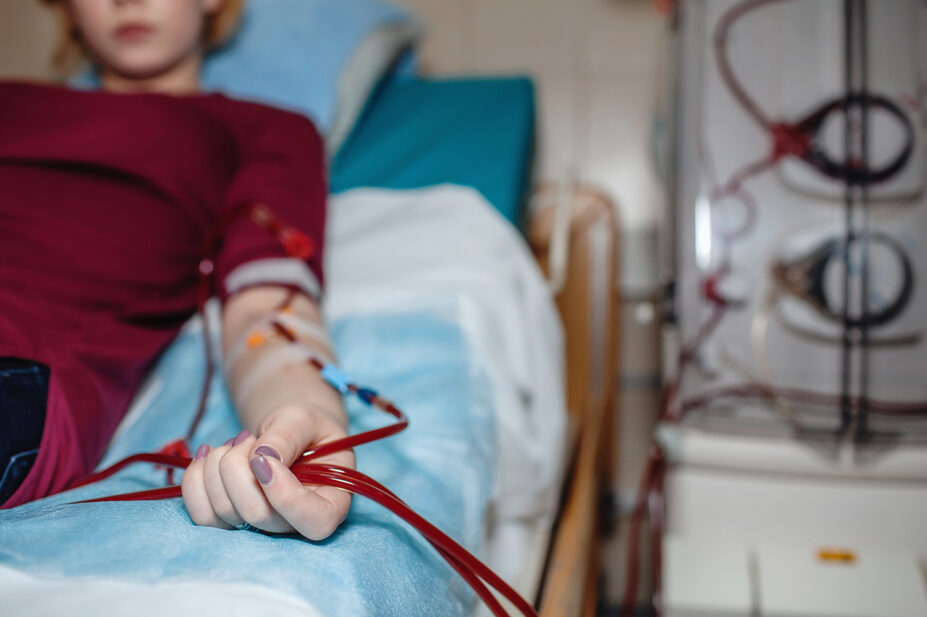
When nephron loss is sufficient, uraemic solutes and fluid accumulate beyond residual clearance capacity. NICE recommends considering dialysis when uraemic symptoms (e.g. reduced energy, loss of appetite, unexplained weight loss) affect daily living, when biochemical measures indicate it, when fluid overload is uncontrollable, or at an eGFR of about 5 to 7mL/min/1.73m² in the absence of symptoms13,14. Biochemical indications include acid-base or electrolyte abnormalities that do not respond to medical treatment14.
NICE recommends that assessment for RRT begins at least one year before it is likely to be needed13. This allows time for shared decision-making about the type and timing of treatment, including conservative management, and for psychosocial preparation and planning of dialysis access13. For example, an arteriovenous fistula should be created about six months before haemodialysis is expected to start, to allow it to mature13.
Challenges of managing diabetes on dialysis
Dialysis changes the pharmacology, the physiology and the delivery of diabetes care. The kidney is a principal site of insulin degradation, so reduced renal clearance prolongs the half-life of exogenous insulin5,15. Hepatic insulin clearance also falls in CKD5. Reduced nephron mass diminishes renal gluconeogenesis, removing a source of endogenous glucose production during fasting5,15. By the time a person starts dialysis, their insulin requirement is commonly lower than it was earlier in the course of their kidney disease5,15.
Burnt-out diabetes
In some people these changes go further. Hyperglycaemia resolves spontaneously and HbA1c falls into the range seen in people without diabetes, irrespective of therapy. This is termed burnt-out diabetes15,16. Up to one third of people with diabetes on maintenance dialysis have an HbA1c below 42mmol/mol (6.0%)16. For comparison, NICE recommends an HbA1c target of 48 or 53mmol/mol for most adults with type 2 diabetes17, and a value below 42mmol/mol lies below the range used to identify non-diabetic hyperglycaemia18. These changes may appear to indicate improved glycaemic control. They are instead a cause for concern. Burnt-out diabetes is associated with recurrent hypoglycaemia and mortality is higher at the lowest HbA1c values in this population3,16. Several factors contribute. Renal and hepatic insulin clearance are reduced. Renal gluconeogenesis is lost. Protein-energy wasting and malnutrition reduce substrate availability. Diabetic gastroparesis produces erratic carbohydrate absorption. Accumulated uraemic solutes exert biguanide-like effects, meaning they lower glucose in a manner similar to metformin, which acts mainly by suppressing hepatic glucose production15,16. Burnt-out diabetes does not occur in type 1 diabetes, in which lifelong insulin therapy remains necessary8.
Hypoglycaemia is more frequent and more dangerous in these patients. Counter-regulatory defences are impaired. Reduced renal gluconeogenesis limits the glucose response to falling concentrations5,15. For example:
- Autonomic neuropathy blunts the adrenergic warning symptoms that normally prompt a person to eat5;
- Awareness of hypoglycaemia is commonly reduced. Episodes may therefore go unrecognised until neuroglycopenia develops, meaning impaired brain function caused by an inadequate supply of glucose5,19;
- The first indication may therefore be confusion or loss of consciousness rather than sweating or tremor. People on dialysis treated with insulin have a 32% higher risk of hypoglycaemia than those on non-insulin agents3.
Additional dialysis considerations
To further complicate management, dialysis sessions introduce their own glycaemic swings. With glucose-free dialysate, 20g to 40g of glucose is lost per haemodialysis session, producing a catabolic state comparable to fasting19. Glucose concentrations are consequently lower on dialysis days than non-dialysis days, with the lowest readings usually post-dialysis19. On non-dialysis days, glucose accumulates despite unchanged medication, so concentrations run higher19. Meal timing and insulin administration around the session compound this8,19. It should be noted that peritoneal dialysis increases the risk of hyperglycaemia, as it uses a glucose-based dialysate that is absorbed systemically; therefore, insulin requirements may be increased3,8.
Detecting these swings is difficult, because numerous factors that commonly present in ESKD render HbA1c less reliable (see Table 23,16,20). HbA1c reports mean glycaemia over the lifespan of circulating erythrocytes (about two to three months), which is abnormal in kidney failure20.
Table 2: Factors distorting HbA1c in ESKD
These factors can act in opposing directions and, in most cases, more than one is present. The net effect in any individual cannot therefore be predicted from the HbA1c result alone3,20.
Another consideration is HbA1c reports a single averaged value. It cannot describe within-day variability (i.e. fluctuation over 24 hours) or between-day variability (i.e. differences from one day to the next)8,19. Both types of variability are characteristic of dialysis.
JBDS therefore advises that HbA1c is used with caution in all people with diabetes on dialysis, as it may not reflect prevailing glucose control and may not identify those at high risk of hypoglycaemia8. Glycated albumin and fructosamine are not recommended as alternative measures, since data on their use in people on dialysis are inadequate8. No HbA1c target has been established for the dialysis population, and KDIGO and other guideline bodies decline to specify one3,10. JBDS instead proposes a glucose target range of 6 to 12mmol/L, with more than 70% of time spent within this range, and notes that an HbA1c above 80mmol/mol (9.5%) is likely to reflect uncontrolled diabetes8. Despite these limitations, HbA1c remains the principal biomarker recommended in guidance for assessing long-term control in people on dialysis3,8.
When interpreting HbA1c in a person on dialysis, pharmacists should consider:
- Whether anaemia, iron replacement, erythropoiesis-stimulating agents, recent blood transfusion or malnutrition may be distorting the result (see Table 23,16,20);
- Whether a low or falling value reflects burnt-out diabetes or recurrent hypoglycaemia rather than improved control8,16;
- Whether the result agrees with capillary glucose or CGM data, which measure glucose directly and are unaffected by erythrocyte factors3,8.
Continuous glucose monitoring
Unlike HbA1c, continuous glucose monitoring (CGM) reveals short-term glycaemic change around the time of dialysis, and its results are unaffected by urea concentration, erythrocyte lifespan or erythrocyte production3,8. It measures interstitial glucose directly, so none of the distorting factors above apply. It captures within-day and between-day variability, and distinguishes dialysis-day from non-dialysis-day patterns3,8.
CGM eligibility is dependent on both national eligibility and individual risk. NICE recommends CGM for all adults with type 1 diabetes21, and intermittently scanned CGM for adults with type 2 diabetes on multiple daily insulin injections who have recurrent or severe hypoglycaemia, impaired hypoglycaemia awareness, or who would otherwise need to self-measure at least eight times daily17. NICE also recommends it for adults with insulin-treated type 2 diabetes who would otherwise need help from a care worker or healthcare professional to monitor their glucose17. The NICE criteria do not name ESKD or dialysis specifically. Given how common hypoglycaemia and impaired awareness are in this group, many people on dialysis will meet these criteria. JBDS is the UK guidance that addresses CGM in people on dialysis specifically, and recommends that CGM is offered with training and support for its optimal use8.
JBDS suggests three further positions relating to CGM:
- Real-time CGM is suggested for anyone on insulin with recurrent hypoglycaemia or loss of hypoglycaemia awareness;
- Long-term CGM should be considered for anyone treated with insulin or a sulfonylurea, unless practical difficulties prevent continuous use, in which case 6–12 monthly diagnostic CGM can guide dose adjustment;
- For those not eligible for intermittently scanned CGM, periodic diagnostic CGM is triggered by any of four findings: more than 5% of self-monitored readings below 4mmol/L, more than 20% above 14mmol/L, inability to self-monitor twice daily for 1-to-2-week periods, or HbA1c below 42mmol/mol (6.0%) or above 80mmol/mol (9.5%)8.
Capillary blood glucose self-monitoring remains necessary alongside CGM. JBDS recommends that all people on dialysis treated with insulin or sulfonylureas have access to capillary self-monitoring, whether or not they use CGM8. Meters using glucose oxidase or glucose dehydrogenase pyrroloquinoline quinone (GDH-PQQ) methods should not be used in people on dialysis8. GDH-PQQ meters, for example, can give falsely elevated readings in people using iodextrin peritoneal dialysis solutions, which may prompt excessive insulin dosing and hypoglycaemia8.
Reviewing medicines safely in people receiving dialysis
In individuals living with diabetes who are receiving dialysis, insulin requirements fall, renally cleared agents accumulate, hypoglycaemia is more frequent and less readily recognised, and HbA1c is unreliable. The JBDS guideline on the management of adults with diabetes on dialysis responds by restricting therapeutic options and specifying how the remaining agents should be used8.
JBDS does not recommend sulfonylureas, glinides, acarbose, metformin or SGLT2 inhibitors in people receiving dialysis, none of which are licensed in this setting8. Sulfonylureas present the clearest hazard, as both the parent compounds and their active metabolites accumulate with declining clearance, and they stimulate insulin secretion independently of prevailing glucose concentration5,8.
A regimen established earlier in CKD may therefore become unsafe once dialysis starts. For example, at an eGFR of 30mL/min/1.73m², KDIGO supports metformin at a reduced dose and continuation of an SGLT2 inhibitor10. Neither is recommended once dialysis begins8. Exposure to sulfonylureas and insulin rises as clearance falls, increasing the risk of hypoglycaemia5,8. A full review of glucose-lowering therapy is therefore required when dialysis starts.
Opportunities for pharmacist review arise at several points in care. These include medicines reconciliation when dialysis starts or when the dialysis modality changes, hospital admission and discharge, and requests for repeat supplies of agents that are no longer recommended8. A low or falling HbA1c, reported hypoglycaemia, weight loss, and changes to iron or erythropoiesis-stimulating agent therapy are further triggers, since each may signal a need to adjust treatment or to reinterpret glycaemic data3,8,16.
Dipeptidyl peptidase 4 (DPP-4) inhibitors are the principal exception. Linagliptin, sitagliptin, vildagliptin and alogliptin are all licensed for use in dialysis and are recommended by JBDS8. DPP-4 inhibitors increase insulin secretion only when glucose concentrations are normal or raised, which limits their risk of hypoglycaemia when used alone22,23. Sitagliptin, vildagliptin and alogliptin are eliminated mainly by the kidneys, so they accumulate in kidney failure and require dose reduction8,23. Linagliptin is eliminated mainly in the faeces, with about 5% excreted in the urine, so no dose adjustment is required22.
Caution is advised in the following instances. Pioglitazone is licensed to an eGFR of 4mL/min/1.73m² and has been used safely in maintenance haemodialysis, although it is not licensed in dialysis8. Glucagon-like peptide 1 (GLP-1) receptor agonists are unlicensed below an eGFR of 15mL/min/1.73m² but have been safely used in this population. JBDS recommends their use with caution8. Gastrointestinal intolerance is a particular consideration, since 70–90% of people receiving dialysis report gastrointestinal symptoms, and incretin-induced weight loss may be detrimental where nutritional status is already compromised3.
Insulin in patients receiving dialysis
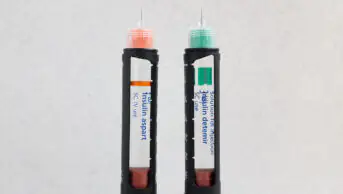
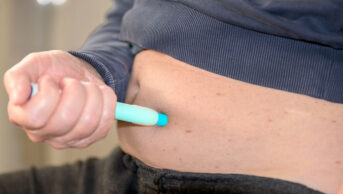
JBDS states that the aim of insulin therapy in this population is to improve quality of life and to avoid extremes of hyperglycaemia and hypoglycaemia8. Dosing should reflect the dialysis schedule. JBDS suggests reducing insulin doses by 25% on haemodialysis days and basal insulin requirement has been shown to fall by about 25% on the day following haemodialysis3,8. CGM provides a more reliable guide than any fixed adjustment8.
Basal bolus regimens are suggested as best suited to the glycaemic variability observed in this group8. Where a person cannot manage such a regimen, a once-daily longer-acting insulin should be considered8. This may apply, for example, where cognitive impairment, reduced dexterity or visual impairment limits self-administration, or where a carer or community nurse administers insulin. Conversion from neutral protamine Hagedorn (NPH) to analogue insulin may be appropriate where hypoglycaemia is troublesome8. In peritoneal dialysis, insulin should be administered subcutaneously only. JBDS does not recommend intraperitoneal administration, because efficacy data are lacking and the route carries known risks8.
Hypoglycaemia
Prevention of hypoglycaemia requires attention to the dialysis session itself. JBDS recommends that capillary glucose is measured before and after haemodialysis. Where pre-dialysis glucose is below 7mmol/L in a person treated with insulin, 20g to 30g of low glycaemic index carbohydrate should be provided at the start of the session8.
Treatment of hypoglycaemia must accommodate fluid, potassium and phosphate restrictions. Glucose should be reassessed 15 minutes after treatment, and where it remains below 4mmol/L, a further 15g of rapid-acting glucose should be given, followed by 10g to 20g of complex or low glycaemic index carbohydrate. Rapid-acting glucose for treating hypoglycaemia should always be accessible, including during travel to and from the dialysis unit. Both patients and staff should receive education in the recognition and management of hypoglycaemia8.
JBDS recommends specialist diabetes input for any person receiving dialysis with acute or chronic glycaemic instability, or established on insulin therapy, and that all such individuals have access to a named diabetes specialist nurse8.
Best practice
- Undertake a full review of glucose-lowering therapy at the point dialysis is initiated, and at each subsequent medication review. A regimen appropriate at an eGFR of 30mL/min/1.73m² may cause harm once dialysis has commenced8,10.
- Discontinue sulfonylureas, glinides, acarbose, metformin and SGLT2 inhibitors in people receiving dialysis, none of which are licensed or recommended in this setting8.
- Verify DPP-4 inhibitor dosing. Sitagliptin, vildagliptin and alogliptin require dose reduction; linagliptin does not8.
- Interpret a low HbA1c as a warning rather than an indication of good control. A value below 42mmol/mol (6.0%) should prompt assessment for burnt-out diabetes and recurrent hypoglycaemia8,16.
- Interpret any HbA1c result in the context of haemoglobin concentration, iron status and erythropoiesis-stimulating agent use, before acting upon it3,20.
- Establish whether insulin doses differ between dialysis and non-dialysis days. Where they do not, review is indicated8,19.
- Identify individuals eligible for CGM. Recurrent hypoglycaemia and impaired hypoglycaemia awareness are common in this population, and both constitute NICE eligibility criteria17,21.
- Enquire directly about hypoglycaemia. Autonomic neuropathy blunts adrenergic warning symptoms, so the absence of reported symptoms does not indicate the absence of episodes5.
- Confirm that rapid-acting glucose for treating hypoglycaemia is always accessible, including during travel to, and from, the dialysis unit8.
- Confirm that the annual diabetes review, retinal screening and foot check have been undertaken, and refer where they have not8.
- Escalate to the specialist diabetes team where glycaemic instability or insulin therapy is present, in accordance with JBDS8.
- 1.UK diabetes and kidney charities team-up to establish key research and healthcare recommendations for diabetic kidney disease. Kidney Research UK, Diabetes UK. 2025. Accessed October 7, 2026. https://www.kidneyresearchuk.org/2025/03/05/uk-diabetes-and-kidney-charities-team-up-to-establish-key-research-and-healthcare-recommendations-for-diabetic-kidney-disease/
- 2.UK Renal Registry 27th Annual Report: data to 31/12/2023. UK Renal Registry. 2024. Accessed October 7, 2026. https://www.ukkidney.org/audit-research/annual-report/27th-annual-report-data-31122023
- 3.Klein KR, Lingvay I, Tuttle KR, Flythe JE. Glycemic Management and Individualized Diabetes Care in Dialysis-Dependent Kidney Failure. Diabetes Care. 2024;48(2):164-176. doi:10.2337/dci24-0081
- 4.Haapio M, Helve J, Groop PH, Grönhagen-Riska C, Finne P. Survival of Patients With Type 1 Diabetes Receiving Renal Replacement Therapy in 1980–2007. Diabetes Care. 2010;33(8):1718-1723. doi:10.2337/dc10-0030
- 5.O’Toole SM, Fan SL, Yaqoob MM, Chowdhury TA. Managing diabetes in dialysis patients. Postgraduate Medical Journal. 2012;88(1037):160-166. doi:10.1136/postgradmedj-2011-130354
- 6.Sanchez-Perales C, Vazquez E, Garcia-Cortes MJ, et al. Ischaemic stroke in incident dialysis patients. Nephrology Dialysis Transplantation. 2010;25(10):3343-3348. doi:10.1093/ndt/gfq220
- 7.Jaar BG, Hermann JA, Furth SL, Briggs W, Powe NR. Septicemia in diabetic hemodialysis patients: Comparison of incidence, risk factors, and mortality with nondiabetic hemodialysis patients. American Journal of Kidney Diseases. 2000;35(2):282-292. doi:10.1016/s0272-6386(00)70338-6
- 8.Frankel AH, Wahba M, Ashworth V, et al. Management of adults with diabetes on dialysis: Summary of recommendations of the Joint British Diabetes Societies guidelines 2022. Diabet Med. 2022;40(4). doi:10.1111/dme.15027
- 9.Qaz M, Sawaf H, Ismail J, Qazi H, Vachharajani T. Pathophysiology of Diabetic Kidney Disease. EMJ Nephrol. Published online June 30, 2022:102-113. doi:10.33590/emjnephrol/22-00060
- 10.KDIGO 2022 clinical practice guideline for diabetes management in chronic kidney disease. Kidney Disease: Improving Global Outcomes (KDIGO) Diabetes Work Group. 2022. https://kdigo.org/wp-content/uploads/2022/10/KDIGO-2022-Clinical-Practice-Guideline-for-Diabetes-Management-in-CKD.pdf
- 11.Chronic kidney disease: assessment and management. National Institute for Health and Care Excellence. 2021. https://www.nice.org.uk/guidance/ng203
- 12.Finerenone for treating chronic kidney disease in type 2 diabetes. National Institute for Health and Care Excellence. 2023. https://www.nice.org.uk/guidance/ta877
- 13.Renal replacement therapy and conservative management. National Institute for Health and Care Excellence. 2018. https://www.nice.org.uk/guidance/ng107
- 14.Chan CT, Blankestijn PJ, Dember LM, et al. Dialysis initiation, modality choice, access, and prescription: conclusions from a Kidney Disease: Improving Global Outcomes (KDIGO) Controversies Conference. Kidney International. 2019;96(1):37-47. doi:10.1016/j.kint.2019.01.017
- 15.Rhee CM, Leung AM, Kovesdy CP, Lynch KE, Brent GA, Kalantar‐Zadeh K. Updates on the Management of Diabetes in Dialysis Patients. Seminars in Dialysis. 2014;27(2):135-145. doi:10.1111/sdi.12198
- 16.Kalantar-Zadeh K, Derose SF, Nicholas S, Benner D, Sharma K, Kovesdy CP. Burnt-Out Diabetes: Impact of Chronic Kidney Disease Progression on the Natural Course of Diabetes Mellitus. Journal of Renal Nutrition. 2009;19(1):33-37. doi:10.1053/j.jrn.2008.11.012
- 17.Type 2 diabetes in adults: management. National Institute for Health and Care Excellence. 2026. https://www.nice.org.uk/guidance/ng28
- 18.Type 2 diabetes: prevention in people at high risk. National Institute for Health and Care Excellence. 2017. https://www.nice.org.uk/guidance/ph38
- 19.Abe M, Kalantar-Zadeh K. Haemodialysis-induced hypoglycaemia and glycaemic disarrays. Nat Rev Nephrol. 2015;11(5):302-313. doi:10.1038/nrneph.2015.38
- 20.De M, Cecchin E, Camurri C, et al. Origin of glycosylated hemoglobin A1 in chronic renal failure. Int J Artif Organs. 1983;6(2):77-82. https://www.ncbi.nlm.nih.gov/pubmed/6840896
- 21.Type 1 diabetes in adults: diagnosis and management. National Institute for Health and Care Excellence. Published online 2022. https://www.nice.org.uk/guidance/ng17
- 22.Linagliptin 5 mg film-coated tablets (Trajenta): summary of product characteristics. Boehringer Ingelheim. 2026. https://www.medicines.org.uk/emc/product/4762/smpc
- 23.Scheen AJ. Pharmacokinetics and Clinical Use of Incretin-Based Therapies in Patients with Chronic Kidney Disease and Type 2 Diabetes. Clin Pharmacokinet. 2014;54(1):1-21. doi:10.1007/s40262-014-0198-2