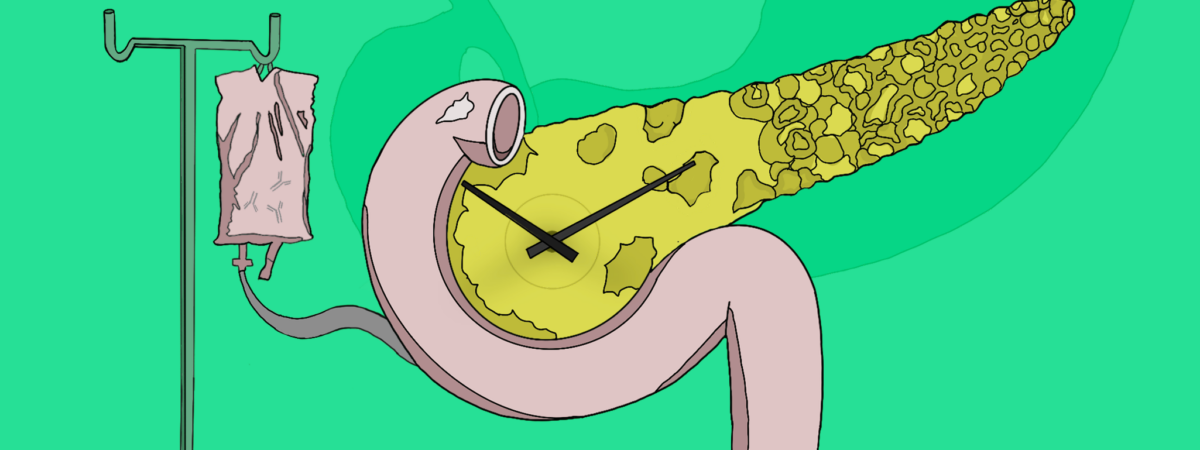
When most people are diagnosed with type 1 diabetes, a clock has been counting down inside them for several years. Autoantibodies have been silently attacking insulin-producing beta cells in the pancreas until too few remain to keep blood glucose levels under control.
By the time symptoms — such as extreme thirst, tiredness and the frequent need to urinate — appear, it’s too late: the damage has already been done. Between 6% and 21% of UK adults are in diabetic ketoacidosis (DKA)1, a potentially fatal condition characterised by a build-up of toxic acids in the blood, at the point of diagnosis. For children, that figure is one in four2, while for children aged under five years old, the figure is even higher3.
However, this is beginning to change. In June 2026, the National Institute for Health and Care Excellence (NICE) approved teplizumab (Tzield; Sanofi) — the first disease-modifying treatment for type 1 diabetes — for use in patients in the early stages of developing the condition. The immunotherapy treatment delays the onset of symptoms and the need for insulin treatment by an average of three years4. Teplizumab has been hailed by experts as a medical landmark.
It also offers a glimpse of a future in which the clock could be stopped on type 1 diabetes or, perhaps, eventually reversed.
“This is the biggest breakthrough since the discovery of insulin over 100 years ago,” says Faye Riley, research communications manager at Diabetes UK.
“Teplizumab completely flips the approach by targeting the underlying root cause of type 1 diabetes, rather than just dealing with the problem of not being able to make insulin. But what’s most exciting is that this is the first immunotherapy for type 1 [diabetes], not the last… the hope is this will lead to a functional cure for type 1 diabetes.”
Insulin: an imperfect treatment
Until the discovery of insulin in 1922, a diagnosis of type 1 diabetes was a virtual death sentence. In January that year, 14-year-old Leonard Thompson became the first person with the condition to be successfully treated with insulin. The emaciated boy had been close to death, but soon after treatment he began to recover as his blood sugar levels fell5.
Even with the amazing technology we have today, it can still be very difficult for people with type 1 [diabetes] to keep blood sugars in target range
Faye Riley, research communications manager at Diabetes UK
Insulin treatment has since saved millions of lives. “But it’s far from perfect,” says Riley. “It keeps people with type 1 [diabetes] alive, but it asks an awful lot of them. Managing type 1 [diabetes] with insulin is a relentless, full-time job. Even with the amazing technology we have today, it can still be very difficult for people with type 1 [diabetes] to keep blood sugars in target range.”
It can take a heavy toll on mental health. Depression and anxiety are twice as prevalent among people with type 1 diabetes, while fear of hypoglycaemia affects up to 10% of adults, according to a 2021 joint consensus report from the American Diabetes Association and European Association for the Study of Diabetes6. Meanwhile, the results of a 2026 global meta-analysis of 72 studies revealed that 39% of people with type 1 diabetes experience elevated diabetes distress, which is the psychological burden associated with living with and managing the condition7. Complications from type 1 diabetes can include retinopathy, neuropathy, kidney disease, cardiovascular disease and early death. Life expectancy for people with diabetes is about 20 years below average8.
Unlike insulin, which treats the consequences of the defective immune response that causes type 1 diabetes after the damage had been done, teplizumab can intervene in the autoimmune process before it destroys the pancreatic beta cells (see Box).
Screening challenges
However, challenges remain. In the UK, teplizumab is only cleared for treatment of people in stage 2 of type 1 diabetes9 — defined by abnormal blood glucose levels and the presence of autoantibodies in the blood but no physical symptoms — yet the NHS does not routinely screen for the condition, making identification of patients that would benefit from the drug problematic.
“Of course, teplizumab is significant because this is the first disease-modifying therapy for type 1 diabetes but you have to remember that this is a medicine that doesn’t currently have a screening pathway,” says Philip Newland-Jones, consultant pharmacist and honorary associate professor in diabetes and endocrinology at the University of Southampton.
If you were screening people whose relatives have type 1 [diabetes], it’s estimated that the hit rate would be about 1 in 15
Philip Newland-Jones, consultant pharmacist and honorary associate professor in diabetes and endocrinology at the University of Southampton
“The Department of Health has a limited pot of money. If they were screening the general population for type 1 [diabetes], the hit rate would be about 1 in 400, which is very low when you are competing against other conditions for that money,” he says. “If you were screening people whose relatives have type 1 [diabetes], it’s estimated that the hit rate would be about 1 in 15, but you’re still not going to pick everyone up because most people who have type 1 [diabetes] do not have a family history of it.”
Estimated detection rates for national screening for certain kinds of cancer are far higher. The CAP trial — the UK’s largest for prostate screening — which looked for prostate-specific antigens in men’s blood, diagnosed prostate cancer in about 1 in 23 men aged 50–69 years10, for example. In addition, the NHS breast screening programme reports a detection rate of 1 in 111 women screened11.
Opt-in screening research studies remain the most feasible pathways to teplizumab treatment. The two biggest are ELSA (Early Surveillance of Autoimmune diabetes) — a joint initiative by Diabetes UK and Breakthrough T1D that screens children aged two to 17 for the early stages of type 1 diabetes — and T1DRA (Type 1 Diabetes Risk in Adults), which was run by the University of Bristol.
Benefits of early detection
Detection of type 1 diabetes at stage 2 is crucial. Not only is it prerequisite for teplizumab treatment in the UK — although in June 2026, it was also cleared for use on people at stage 3 in the United States12 — and vital in delaying the onset of symptomatic stage 3, it provides what Riley describes as a “soft landing” by giving patients time to digest their diagnosis and prepare.
“What we mean is not having to figure out what is type 1 diabetes, how is it treated, what is carbohydrate counting and all the rest of it is when you’re being diagnosed in a medical emergency,” she says. “If you can detect it early, you’re giving a young child more of a childhood that’s free from diabetes.”
Being part of the ELSA study has helped us as a family to prepare for the future in a way we never expected
Amy Norman, whose 12-year-old daughter, Imogen, was treated with teplizumab at Birmingham Children’s Hospital
Families that have taken part in the ELSA study appear to agree. “When I was diagnosed with type 1 [diabetes] at 13 [years], I had no warning — I ended up quite poorly in hospital with DKA,” says Amy Norman, whose 12-year-old daughter, Imogen, was treated with teplizumab at Birmingham Children’s Hospital in March 2025 after taking part in the ELSA study.
She adds: “Being part of the ELSA study has helped us as a family to prepare for the future in a way we never expected. Knowing what’s coming — rather than being taken by surprise — has made an enormous difference to our confidence and peace of mind. When Imogen’s diagnosis arrives, we hope that having this awareness will reduce her chances of experiencing DKA and the added trauma that comes from a sudden illness.”
Administering teplizumab
For families such as Norman’s, treatment is a substantial two-week commitment. “My husband and I arranged to take time off work and stay nearer the hospital,” says Norman. “Imogen coped brilliantly throughout — she’s so resilient. Midway through the course, her white blood cells did drop. It looked like we might need to delay the next day’s dose, but fortunately they came back up again quite quickly. If anything, boredom was the hardest part.”
Teplizumab is administered as an intravenous infusion once per day for 14 consecutive days. Each infusion takes at least 30 minutes, but the overall hospital visit is longer because of premedication, blood tests and monitoring. The dose is gradually increased in the first 5 days before reaching the maintenance dose for days 6 to 14. Teplizumab has a UK list price of £10k per 1 mg vial, although the NHS pays a confidential price agreed with the manufacturer, Sanofi.
“At £10k a vial, you clearly don’t want it to go wrong — so pharmacists play a key part in its delivery, making the medicine up in technical services, producing the right volume and concentration for each patient, supervising and supporting the nursing staff and ensuring there is a second check,” says Newland-Jones.
“The doses have to be calculated on a per-patient basis. Pharmacists will often be the ones drawing up the protocols and writing the dosing schedules. There’s a model where teplizumab is administered for the first five days in hospital and the second nine days in a home-care scenario. Home care goes through pharmacy, so that requires pharmacists’ input, too.”
The future
Many regard teplizumab as the beginning of a new phase in diabetes treatment. Researchers are already testing other ways of modifying the immune response responsible for the condition, including several medicines already used for other conditions. These include baricitinib, which is used to treat conditions such as rheumatoid arthritis and alopecia.
The results of a 2025 trial showed that baricitinib preserved more of the body’s insulin production in young people newly diagnosed with type 1 diabetes, although the benefit faded after treatment stopped13. The findings of other studies have shown promising results for anti-thymocyte globulin — an immunosuppressive used in transplantation — and verapamil; although, further research is needed for both. Combination studies are now investigating if different approaches can work better together.
I think we’ll end up similar to what we have in MS, where we have multiple agents that are now given in a particular order to try and delay, delay, delay, and hopefully pause the development of symptomatic disease
Philip Newland-Jones, consultant pharmacist and honorary associate professor in diabetes and endocrinology at the University of Southampton
Newland-Jones expects treatment to evolve in much the same way as it has in multiple sclerosis (MS). “I think we’ll end up similar to what we have in MS, where we have multiple agents that are now given in a particular order to try and delay, delay, delay, and hopefully pause the development of symptomatic disease,” he says.
NICE lists several disease-modifying therapies for MS, including ocrelizumab, ofatumumab, natalizumab, cladribine and alemtuzumab, with treatment choices depending on disease activity and previous treatment. Rheumatoid arthritis has followed a similar path, with conventional disease-modifying antirheumatic drugs followed, where necessary, by targeted biological or synthetic treatments including tumor necrosis factor inhibitors, rituximab, abatacept and Janus kinase inhibitors.
Unlike other autoimmune conditions, type 1 diabetes has an unusually narrow therapeutic window: the autoimmune attack can progress for years without obvious symptoms. By the time they’re experienced, the damage has been done. “It takes 90% of your pancreas being gone before you end up with symptoms of high sugars,” Newland-Jones says. “So, we often miss the window.”
Ultimately, the goal is not simply to postpone type 1 diabetes but to prevent it. For those who already have the condition, the aim is to reverse it with stem-cell-derived beta cells and other replacement therapies in conjunction with immunotherapies to prevent the same autoimmune attack destroying the replacement cells14.
“You need to bring back the beta cells and protect them again because the immune system is still going to be primed,” says Riley. “There’s lots of research going looking into how we could combine beta-cell replacement with immunotherapy to create a cure for type 1 [diabetes]. We’ll have a range of treatments to match people with the right treatment at the right time.”
Box: What is teplizumab?
Teplizumab is a monoclonal antibody that targets CD3, a protein found on the surface of T cells. In the early stages of type 1 diabetes, autoreactive T cells mistakenly attack the insulin-producing beta cells in the pancreas. By binding to CD3, teplizumab alters the activity of these T cells, including reducing the activity of cells thought to drive beta-cell destruction.
The result is a slowing of the immune attack and preservation of some remaining beta-cell function. Teplizumab is given as a 14-day course of daily intravenous infusions. In people with stage 2 type 1 diabetes, a single course has been shown to delay progression to symptomatic stage 3 by an average of 3 years.
- 1.Umpierrez GE, Davis GM, ElSayed NA, et al. Hyperglycemic Crises in Adults With Diabetes: A Consensus Report. Diabetes Care. 2024;47(8):1257-1275. doi:10.2337/dci24-0032
- 2.Tragic death highlights need for greater understanding of T1D. Breakthrought 1d. 2025. https://breakthrought1d.org.uk/news/tragic-death-highlights-urgent-need-for-greater-understanding-of-type-1-diabetes/
- 3.Elding Larsson H, Vehik K, Bell R, et al. Reduced Prevalence of Diabetic Ketoacidosis at Diagnosis of Type 1 Diabetes in Young Children Participating in Longitudinal Follow-Up. Diabetes Care. 2011;34(11):2347-2352. doi:10.2337/dc11-1026
- 4.Sims EK, Bundy BN, Stier K, et al. Teplizumab improves and stabilizes beta cell function in antibody-positive high-risk individuals. Sci Transl Med. 2021;13(583). doi:10.1126/scitranslmed.abc8980
- 5.Banting F. Leonard Thompson and the First Sustained Insulin Treatment, 1922. Historia Medica . 2021. https://historiamedica.org/timeline/first-use-of-insulin-in-a-patient/
- 6.Holt RIG, DeVries JH, Hess-Fischl A, et al. The Management of Type 1 Diabetes in Adults. A Consensus Report by the American Diabetes Association (ADA) and the European Association for the Study of Diabetes (EASD). Diabetes Care. 2021;44(11):2589-2625. doi:10.2337/dci21-0043
- 7.Peprah Osei E, Ekpor E, Akyirem S, et al. Global prevalence and correlates of diabetes distress in type 1 diabetes: A systematic review and meta-analysis. Diabetes Research and Clinical Practice. 2026;239:113452. doi:10.1016/j.diabres.2026.113452
- 8.Diabetes Life Expectancy . Diabetes.co.uk. 2019. https://www.diabetes.co.uk/diabetes-life-expectancy.html
- 9.Teplizumab for delaying the onset of stage 3 type 1 diabetes in people 8 years and over with stage 2 type 1 diabetes. The National Institute for Health and Care Excellence . 2026. https://www.nice.org.uk/guidance/TA1176
- 10.Martin RM, Donovan JL, Turner EL, et al. Effect of a Low-Intensity PSA-Based Screening Intervention on Prostate Cancer Mortality. JAMA. 2018;319(9):883. doi:10.1001/jama.2018.0154
- 11.Breast screening: reporting, classification and monitoring of interval cancers and cancers following previous assessment. NHS England . 2020. https://www.gov.uk/government/publications/breast-screening-interval-cancers/breast-screening-reporting-classification-and-monitoring-of-interval-cancers-and-cancers-following-previous-assessment
- 12.FDA Approves New Indication for Tzield (teplizumab) for Certain Pediatric Patients with Recently Diagnosed Stage 3 Type 1 Diabetes. U.S. Food and Drug Administration . 2026. https://www.fda.gov/news-events/press-announcements/fda-approves-new-indication-tzield-teplizumab-certain-pediatric-patients-recently-diagnosed-stage-3
- 13.Three existing drugs show promise to slow type 1 diabetes in people newly diagnosed. Diabetes UK. 2025. https://www.diabetes.org.uk/about-us/news-and-views/three-existing-drugs-show-promise-slow-type-1-diabetes-people-newly
- 14.Passerini L, Forlani A, Gregori S. Advances in Regulatory Cell Therapy for Type 1 Diabetes: Emerging Strategies and Future Directions. Eur J Immunol. 2025;55(5). doi:10.1002/eji.202451722
You may also be interested in
Patient safety alert issued as insulin treatment switching lags behind discontinuation deadline

Triple agonist drug retatrutide shows 21% weight loss in patients with diabetes