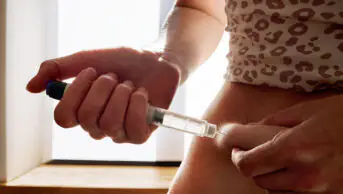
Figures from the Crime Survey for England and Wales have shown an increase in recreational ketamine use among people aged 16–59 years in England and Wales from 0.5% to 0.8% between the years ending March 2015 and March 20251.
While the overall increase is just 0.3 percentage points, users appear to be getting younger. In September 2026, the UK’s first specialist clinic for children and young people with complications from ketamine use — the Ketamine Induced Uropathy Clinic at Alder Hey Children’s Hospital in Liverpool — published findings from its first year, showing that the average age at referral was 14.5 years, with ketamine use often starting at age 132.
It also highlighted the results of a 2023 NHS England survey, which showed that the proportion of pupils aged 11–15 years in England who reported using ketamine in the past year had more than doubled over the previous decade, from 0.4% in 2013 to 0.9% in 2023.
Alison Downey, a consultant urologist at Mid Yorkshire Teaching NHS Trust, tells The Pharmaceutical Journal: “Ketamine addiction is currently a crisis. It has been increasing for the past 10 years but there has been a massive increase in the past 5 years. Patients are now using it when they are 12, 13, 14 — one girl was using it at 11.”
In a press release published on 23 October 2026, Harriet Corbett, consultant paediatric urologist at Alder Hey Children’s Hospital Trust, said: “The damage caused by ketamine can be devastating. Ketamine-induced uropathy is a very serious bladder problem associated with chronic ketamine use. It can lead to significant pain and long-term health consequences.”
Ketamine-induced uropathy — also known as ‘ketamine bladder’ or, by the British Association of Urological Surgeons, ‘ketamine urinary tract syndrome’3 — has been likened by sufferers to “peeing a jellyfish”4.
In the most severe cases, when the damage cannot be repaired, the bladder has to be surgically removed and replaced with an ileal conduit, or urostomy, which attaches the ureters to a piece of small bowel, creating a stoma through which urine drains into a bag5, Downey explains.
Pharmacists are often the first port of call for health issues and could be instrumental in tackling ketamine bladder. Roz Gittins, past president of the College of Mental Health Pharmacy, tells The Pharmaceutical Journal: “Community pharmacy teams should ensure that their signposting resources are up to date and consider potential ketamine misuse if the person presents with urinary tract issues.”
What is ketamine?
Ketamine is an anaesthetic used in medicine to induce sleep and provide pain relief. It blocks N-methyl-D-aspartate receptors in the brain and spinal cord that are essential in the transmission of central pain signals6. In addition, ketamine is a schedule 2 controlled drug7, subject to strict controls and record keeping8.
There is an additional uncertainty when ketamine is obtained through the illicit market because people cannot be certain about the concentration or composition of what they are taking
Amira Guirguis, chief scientist at the Royal College of Pharmacy
In the 1990s, ketamine gained popularity as a recreational drug for its dissociative effects9.
Amira Guirguis, chief scientist at the Royal College of Pharmacy, points out the dangers of illicit ketamine (see Box): “There is an additional uncertainty when ketamine is obtained through the illicit market because people cannot be certain about the concentration or composition of what they are taking. Recent UK evidence has shown substantial variation in the purity of samples identified as ketamine, and some have contained other psychoactive or adulterating substances.”10
Why do people use ketamine?
Annie McCloud, consultant addictions psychiatrist at the addiction rehabilitation charity the Kenward Trust, says: “Ketamine misuse has become common because it occupies an unusual position: it produces relatively rapid, predictable and sought-after psychological effects, is comparatively easy to obtain in some settings and can be used repeatedly before the user necessarily recognises that dependence is developing.”
“Some people describe a pleasant dissociative or dream-like state. It can temporarily reduce anxiety, emotional distress or psychological pain,” she adds.
However, larger doses can have more negative effects. Rachel Britton, head of clinical at First Databank, a provider of drug and medical device databases, notes: “If taken in larger doses it is hallucinogenic. People describe going down a ‘k hole’. It distorts the reality of the situation. If you are not expecting it, it can be frightening.”
Guirguis also warns that using ketamine alongside other drugs, “particularly depressants such as alcohol, opioids or benzodiazepines, can significantly increase the risk of adverse effects”.10
What does ketamine do to the bladder?
Prolonged use can lead to ketamine bladder. Guirguis explains: “Ketamine and its metabolites can damage the urothelium — the tissue lining the urinary tract — and repeated exposure is associated with inflammation and cellular injury. With continued exposure this can progress to fibrosis, reduced bladder capacity and, in severe cases, damage involving the ureters, upper urinary tract and kidneys.”11
Ketamine is metabolised into norketamine, which causes suburothelial inflammation and urothelial cell death. The superficial urothelial cells — also called umbrella cells — protect the deeper layers of the bladder. When they are damaged, the lamina propria, which contains nerve cells, is exposed to urine, leading to inflammation, vascular changes and bladder fibrosis5. As a result, the bladder becomes sore and stiff, cannot hold much urine and may hurt as it fills, while the tubes that carry urine from the kidneys to the bladder can become blocked3.
Can ketamine bladder be reversed?
The best way to avoid or reverse ketamine-induced uropathy is to stop using ketamine early. Downey says: “They need to get to cessation services such as ‘Change, Grow, Live’ or ‘Talk to Frank’.
“It’s very reversible. If they stop using, most can reverse the damage, or they could have Botox injections and bladder instillations.”
She also points out that “you have to tackle the reasons they are using it”.
Ketamine has an anaesthetic or numbing effect, and when people get those symptoms, this effect can lead them to take more ketamine, and it masks the problem
Rachel Britton, head of clinical at First Databank
But stopping is not always easy. Mark Holmes, head of addiction treatment and development at the Kenward Trust, explains: “One of the main challenges is that people affected by ketamine use tend to be very young and have not experienced the decades of consciousness and loss that typically drive people to the desperation that drives recovery, which of course is one of the cruel things about addiction.
“This can make it difficult for them to relate to peers not in recovery from ketamine and, despite the extensive physical consequences and damage, still experience very strong craving, either to relieve pain and/or due to believing they will ‘get away with it’.”
Britton also highlights: “Ketamine has an anaesthetic or numbing effect, and when people get those symptoms, this effect can lead them to take more ketamine, and it masks the problem.”
If ketamine is helping someone manage depression, “it will come back if you stop it”, so it is important to link young people to mental health services or therapy, she adds.
With the right help, young people can and do come off ketamine12.
Andy Kenneth Edwards
What are the symptoms of ketamine-induced uropathy?
Ketamine damages the whole urinary tract, not just the bladder. Symptoms include urgency and frequency of urination, waking at night to pass urine, incontinence, a burning sensation when passing urine, blood in the urine and bladder pain. It can also cause chronic abdominal pain — often called ‘K-cramps’ — sometimes with vomiting, as well as abnormal liver function11.
In severe cases, ketamine can cause bilateral hydroureteronephrosis (i.e. swelling of both kidneys and both ureters) and the bladder can shrivel13.
The results of a 2012 report, published in BMJ Case Reports, revealed that the “intensity of symptoms correlated with quantity and frequency of ketamine consumption”. It also cited estimates that more than 20% of ketamine users experience urinary tract symptoms — although it is thought this could be a lot higher. The report stressed the importance of early detection and acknowledged that “early recognition of the syndrome remains limited”14.
This is where pharmacists can come in.
What can pharmacists do?
Britton points out: “Over a period of time, people who use ketamine may notice symptoms that are similar to cystitis.”15
These symptoms can include pain when passing urine, needing to pass urine more frequently and, sometimes, loin pain. Pharmacists should consider sensitively asking about ketamine use when people present with these symptoms, she says. “Illicit drug use is something that most community pharmacists have seen. Community pharmacists are a trusted source of advice, and it is important to find a way to ask about ketamine.”
Britton suggests asking young people something like: “Sometimes the symptoms can be caused by ketamine use, would you like any more information about this?”
It is all about “phrasing the conversation well”, she explains. Some young people may not have interacted with a drug service before and may say they do not have a problem, but “you may open the door to that young person seeking advice in the future”.
How can pharmacists support people using ketamine?
McCloud suggests a four-stage approach: identify drug use; assess the level of use and its effects; give personalised advice; and signpost or refer to a GP or local drug and addiction service.
It is really important that pharmacy teams are able to provide effective harm reduction advice, including educating people about the risk of taking ketamine at the same time as other medicines or substances
Roz Gittins, past president of the College of Mental Health Pharmacy
“Give brief intervention rather than simply saying ‘you should stop’,” she says. “Tell them ‘I’m not here to judge you or tell you what to do. I’m concerned because ketamine can cause quite serious bladder and urinary problems, and the risk increases with regular use. Would you be willing to talk about how much you’re using and what support might be useful?’”
Gittins adds: “It is really important that pharmacy teams are able to provide effective harm reduction advice, including educating people about the risk of taking ketamine at the same time as other medicines or substances that can increase the risk of overdose, such as benzodiazepines, opioids and alcohol.”
Britton advises pharmacists to “familiarise yourself with the local community services” to signpost effectively. She said social media can also be used to reach young people, adding that “young people often learn about these drugs from social media, but it can also be a way of reaching people with harm reduction messages and signposting advice”.
What is the government doing about ketamine use?
The Department of Health and Social Care (DHSC) says it ran a national media campaign on ketamine in 2025 and has sent local authorities a briefing on the drug’s dangers. It is also providing £3.4bn between 2026/2027 and 2028/2029 to improve drug and alcohol prevention, treatment and recovery systems through the public health grant16.
A DHSC spokesperson told The Pharmaceutical Journal: “We have worked on dedicated interventions for ketamine abuse, and by investing an extra £680m in mental health services [in 2026] we will help get to the root of the problems that lead some young people to drug use.”17
The Home Office is reviewing whether to reclassify ketamine from a class B to a class A drug18. In January 2026, the Advisory Council on the Misuse of Drugs (ACMD) recommended it remain class B, concluding that reclassification alone would not substantially reduce use and that the disadvantages — including stigma that could deter people from seeking help — outweighed any advantages19.
A Home Office spokesperson says: “The government is considering the ACMD’s recommendations and will respond in due course.”
In March 2026, Labour MP Grahame Morris tabled an early day motion — a formal motion MPs use to draw attention to an issue — calling on the government to “raise awareness of ketamine-related harms and promote the expansion of education, treatment and support services”20.
Raising awareness seems vital to curbing the ketamine crisis, while pharmacists can play their part, starting with talking to the young people who come through their doors.
Box: Where does illicit ketamine come from?
According to the European Union Drugs Agency’s ‘European drug report 2024: trends and developments’, much of the illicit ketamine that reaches the UK is initially exported legitimately — often from India — before being diverted to the illegal market.
It is also made in clandestine laboratories in Southeast Asia and imported into Europe. Some illicit ketamine is produced in Europe, but the report noted that this is a minor route of supply21.
- 1.Drug Misuse in England and Wales . Office for National Statistics. 2023. https://www.ons.gov.uk/peoplepopulationandcommunity/crimeandjustice/articles/drugmisuseinenglandandwales/latest
- 2.One year on: First UK specialist clinic for children and young people at Alder Hey reveals new insights into ketamine use. Alder Hey Children’s Hospital Trust. 2026. https://www.alderhey.nhs.uk/one-year-on-first-uk-specialist-clinic-for-children-and-young-people-at-alder-hey-reveals-new-insights-into-ketamine-use/
- 3.Ketamine Bladder (Known as Ketamine Urinary Tract Syndrome) – What You Need to Know. British Association of Urological Surgeons Limited. 2025. https://www.baus.org.uk/_userfiles/pages/files/patients/leaflets/BAUS%20Ketamine%20Bladder.pdf
- 4.Roberts M. ‘Peeing a jellyfish’: Children’s ketamine injuries revealed. BBC News. 2026. https://www.bbc.co.uk/news/articles/cqgk52ln68xvo
- 5.Ketamine uropathy. Urology & Continence Care Today . 2025. https://www.ucc-today.com/journals/issue/launch-edition/article/ketamine-uropathy
- 6.Richards ND, Howell SJ, Bellamy MC, Beck J. The diverse effects of ketamine, jack-of-all-trades: a narrative review. British Journal of Anaesthesia. 2025;134(3):649-661. doi:10.1016/j.bja.2024.11.018
- 7.The Misuse of Drugs Regulations 2001. UK Government . https://www.legislation.gov.uk/uksi/2001/3998/schedule/2
- 8.Controlled drugs: Safe Use and Management. The National Institute for Health and Care Excellence . 2016. https://www.nice.org.uk/guidance/NG46/chapter/Recommendations
- 9.The History of Ketamine . Barnsley Recovery Steps. 2025. https://barnsleyrecoverysteps.org.uk/advice/the-history-of-ketamine/
- 10.ACMD autumn 2026 work programme update. Advisory Council on the Misuse of Drugs. 2026. https://www.gov.uk/government/publications/acmd-autumn-2026-work-programme-update/acmd-autumn-2026-work-program-update-accessible-version
- 11.Belal M, Downey A, Doherty R, et al. British Association of Urological Surgeons Consensus statements on the management of ketamine uropathy. BJU International. 2024;134(2):148-154. doi:10.1111/bju.16404
- 12.Clegg R. Ketamine helped me escape my negative thoughts – then nearly killed me. BBC News. 2025. https://www.bbc.co.uk/news/articles/c70r1xdyy59o
- 13.Lamers G, Van Dyck J, Schapmans S, De Coster K, Mortier D, Zabegalina N. Ketamine-induced uropathy: A diagnostic pitfall in an increasing healthcare issue in youngsters. Urology Case Reports. 2022;42:102019. doi:10.1016/j.eucr.2022.102019
- 14.Srirangam S, Mercer J. Ketamine bladder syndrome: an important differential diagnosis when assessing a patient with persistent lower urinary tract symptoms. BMJ Case Reports. 2012;2012:bcr2012006447. doi:10.1136/bcr-2012-006447
- 15.Cystitis symptoms and treatments. NHS Inform . 2024. https://www.nhsinform.scot/illnesses-and-conditions/kidneys-bladder-and-prostate/cystitis/
- 16.Public health ring-fenced grant financial year 2026 to 2027: local authority circular. Department of Health and Social Care. 2026. https://www.gov.uk/government/publications/public-health-grants-to-local-authorities-2026-to-2027/public-health-ring-fenced-grant-financial-year-2026-to-2027-local-authority-circular
- 17.Funding boost for young people’s mental health services. Department of Health and Social Care. 2026. https://www.gov.uk/government/news/funding-boost-for-young-peoples-mental-health-services
- 18.Home Office requests review of ketamine classification. Home Office . 2025. https://www.gov.uk/government/news/home-office-requests-review-of-ketamine-classification
- 19.Ketamine: an updated review of use and harms. Advisory Council on the Misuse of Drugs. 2026. https://www.gov.uk/government/publications/ketamine-an-updated-review-of-use-and-harms
- 20.Morris G. Early day motion 2943. UK Parliament . 2026. https://edm.parliament.uk/early-day-motion/65394/ketamine
- 21.European Drug Report 2024: Trends and Developments . The European Union Drugs Agency . 2024. https://www.euda.europa.eu/publications/european-drug-report/2024_en