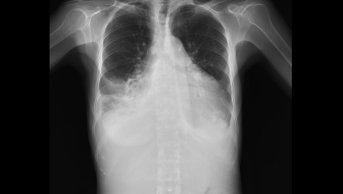
The UK’s heart health crisis is accelerating1, with hospitalisations for heart failure having increased by 52% in the past decade, according to the British Heart Foundation’s CVD Observatory data platform2.
As the population ages and hospital care improves, the number of people living with heart failure is set to double by 2040, the British Heart Foundation suggests.
On 7 July 2026, the government launched a cardiovascular disease (CVD) modern service framework (MSF) to tackle the growing issue3.
“This is not another strategy that sits on the shelf gathering dust, this is an action plan. There will be a relentless focus on delivery,” wrote Sharon Hodgson, the then parliamentary under-secretary of state for public health and prevention, in her foreword to the plan3.
Among the roadmap’s priorities for the next three years is “driving treatment to target”, including improving uptake of sodium-glucose cotransporter-2 inhibitors (SGLT-2is) and “rapidly increasing uptake of four pillar therapy (see Box 1) for eligible people with heart failure with reduced ejection fraction (HFrEF) with early initiation and timely optimisation”3.
Box 1: What is four pillar therapy?
Patients with heart failure with reduced ejection fraction should be offered an angiotensin-converting enzyme inhibitor, a beta-blocker, a mineralocorticoid receptor antagonist and a sodium-glucose cotransporter-2 inhibitor4.
Key to the success of these initiatives are several changes that removed structural barriers to SGLT-2i prescribing since August 2025: the introduction of generic dapagliflozin, which was estimated to save the NHS more than £560m over two years5, new heart failure guidance published by the National Institute for Health and Care Excellence (NICE) that removed the requirement for specialist initiation of SGLT-2is4 and changes to the Quality and Outcomes Framework (QOF) for GP surgeries in England that broadened the definition of heart failure treatment that qualifies for incentive payments6, see Figure 13–6.
Figure 1: Structural barriers to SGLT-2i prescribing were removed over 2025/2026
“By removing that restriction, and by it getting cheap all in the same year, suddenly every single patient now has access to SGLT-2is,” says Vicky Ruszala, specialist pharmacist in cardiology and heart failure at North Bristol NHS Trust.
National guidance has all moved forward, but maybe local prescribing practices haven’t necessarily caught up everywhere
Roy Jogiya, a consultant cardiologist and chief medical advisor at Heart Research UK
However, Roy Jogiya, a consultant cardiologist and chief medical advisor at Heart Research UK, is more cautious.
“National guidance has all moved forward, but maybe local prescribing practices haven’t necessarily caught up everywhere,” he says.
This delay is partly evidenced by variation in how SGLT-2is are categorised in local formularies, with some integrated care boards (ICBs) allowing primary care initiation of the drugs in heart failure while others require specialist advice or initiation, see Figure 2.
“There are still these traffic light systems for drugs within certain regions… patients shouldn’t have to wait for specialist appointments to access the evidence-based treatments when you know that we could probably do it safely in primary care,” says Jogiya.
Analysis of local formularies by The Pharmaceutical Journal reveals that the specialist requirement has been removed in half (18 out of 36) the ICBs in England, see Figure 27–50.
In the rest, there are still some requirements for specialist advice or initiation by a specialist team.
There is also some variation within ICBs — for instance, where several formularies exist as a result of historic boundaries — or within cities such as London.
A spokesperson for NHS North East London ICB said: “Local formulary recommendations reflect specialist interpretation of relevant NICE guidance and its application within north-east London. Work is actively underway to review and align local formulary classifications with the single national formulary as this national work progresses.”
Some ICBs are beginning to adopt new categorisations that will be used for the single national formulary.
Figure 2: Where do local formularies allow dapagliflozin prescribing for heart failure in primary care?
However, formulary status does not seem to be the only main factor in whether a drug is widely prescribed.
The Pharmaceutical Journal found no correlation when formulary status was compared with the percentage of eligible population prescribed SGLT-2is, see Figure 37–51.
Figure 3: Formulary status and SGLT-2i prescribing for heart failure
Rachel Howard, deputy chief pharmacist for NHS Hampshire and Isle of Wight, notes: “[The formulary] is not intended to replace the clinical judgement of an individual prescriber, who remains responsible for prescribing decisions for their patients based on their individual clinical circumstances and relevant national guidance.
“Following the recent update to NICE guideline NG106 on the management of chronic heart failure, we have received reassurance from our heart failure specialists that dapagliflozin is routinely being prescribed for eligible patients with heart failure in line with the updated NICE recommendations, and that prescribers are well informed about the four pillars of heart failure management.”
“I think secondary care maybe think that [formularies] is the biggest barrier — actually it’s about education,” says Clare Thomson, lead clinical pharmacist at the Nelson Medical Practice and chair of the UK Clinical Pharmacy Association’s heart failure group.
“Honestly, on a day-to-day basis, a clinician in primary care is not at the time of seeing a patient always thinking, ‘Oh, can I prescribe this? Can I not?’ It’s always, ‘What’s the best for the patient?’ And even if it wasn’t on the formulary, we can go outside of that.”
Instead, she suggests that a lack of confidence in this area among primary care clinicians may be limiting prescribing.
A GP may only see a patient with a new diagnosis of heart failure “a few times a year”, Thomson adds.
Workforce and capacity
To be diagnosed with heart failure, a patient should receive an echocardiogram and see a specialist within two to six weeks of a blood test, depending on the results.
Poppy Brooks, a senior cardiac nurse with the British Heart Foundation, explains that access to cardiology can be “really variable” across the country, despite clear referral pathways.
In fact, she suggests that some areas may have retained the specialist requirement for prescribing to ensure that people with symptoms of heart failure see a specialist to confirm their diagnosis, understand what might be causing it and rule out other conditions.
“What we don’t want is people to think they don’t need a cardiologist at all… in ensuring wider access to these important medicines, we also need to make sure that access to a specialist remains, so that this step does not fall through the net,” she tells The Pharmaceutical Journal.
In primary care, there’s massive potential for pharmacists managing all these heart failure reviews, optimising patients
Clare Thomson, lead clinical pharmacist at the Nelson Medical Practice and chair of the UK Clinical Pharmacy Association heart failure group
Once a diagnosis is made, “patients don’t want to go to the hospital for their appointments. They want to be seen more locally”, says Thomson.
Some of the formularies analysed by The Pharmaceutical Journal said that SGLT-2is could be prescribed in primary care by a clinician with heart failure expertise.
As a primary care pharmacist with experience of working in specialist heart failure teams, Thomson conducts heart failure medication reviews within her practice.
“In primary care, there’s massive potential for pharmacists managing all these heart failure reviews, optimising patients,” she adds.
“It does probably need a bit more expertise than just being a prescriber. It does require a bit more of examining the patient, speaking to them about signs and symptoms. A lot of these patients are quite complex; they’ve got lots of other medicines and comorbidities as well. But [as] with any prescribing, it comes with practice and experience and appropriate supervision.”
The prevalence of heart failure is supposed to increase by 92% by 2040
Poppy Brooks, a senior cardiac nurse with the British Heart Foundation
Jogiya agrees. “Much of the ongoing management, like medication initiation, monitoring, optimisation, can be delivered safely in primary care and with appropriate specialist overview,” he says.
But while Thomson has good relationships with local community heart failure teams, nationally, the picture is “patchy”. “There’s lots of variation in services,” she continues.
And her own capacity is limited. “I’m just a single person who may not have the capacity to review all of those,” Thomson notes.
She adds: “To carve out time in primary care to work out innovative pathways and stuff is actually really difficult.”
In addition, Brooks explains: “The prevalence of heart failure is supposed to increase by 92% by 204052. And as far as I’m aware, I don’t think we’ve got a workforce plan to double the specialists. As it stands, not everybody has access to a specialist heart failure nurse or pharmacist53.
“That’s something that needs to be looked at very carefully when we look at the models of neighbourhood care and moving as much care as we can out into the communities, what’s that balance between specialist and generalist? If we want to get patients treated adequately, it does involve everybody.”
Local leadership
Where treatment optimisation is working well, it is driven by local clinical leadership and proactive clinicians, Ruszala says.
In Bristol, Ruszala trained primary care network pharmacists and nurses in good heart failure care several years ago.
“In the areas where perhaps that foundation doesn’t exist, they’re now starting to build it, whereas other places like Bristol, where they invested in those foundations, are able to act very quickly and crack on with it,” she adds. “People who are proactive are really going for it.”
And in south London, Jogiya and colleagues ran a CVD fellowship for 250 primary care clinicians, including pharmacists, GPs and nurses. This consisted of education webinars, which clinicians then applied to a heart failure project at their primary care centre.
“We found from about 10,000 patients, a vast majority were optimised, and actually, only 2% needed referral into secondary care,” says Jogiya.
Ruszala highlights that if pharmacists are proactive and undertake training, “heart failure is a brilliant neighbourhood health project.
“Acute care are very committed to it because of the cost of heart failure admissions. Patients are very committed to it… because heart failure is such a hard thing to live with. Healthier, more activated patients are the ones who don’t get admitted to the hospital, they don’t present in an emergency in primary care, they don’t require constant monitoring,” she adds.
“I think it’s a really good place for people to be able to start focusing and going, actually, we can have a huge benefit across a big population very quickly if we just get on and do this together.”
Ruszala also notes that while lifestyle changes are a vital part of tackling cardiovascular and related conditions, if medication is required, the area “fits beautifully” in pharmacists’ wheelhouse, owing to the need for titration, medication switches, polypharmacy and monitoring side effects.
“I think is a really good place where pharmacists can lead,” she says.
Box 2: How to upskill in heart failure
Clare Thomson, lead clinical pharmacist at the Nelson Medical Practice and chair of the UK Clinical Pharmacy Association heart failure group, says that “practice and gaining experience is key”. She also suggests that shadowing specialists and upskilling with resources from the Primary Care Cardiovascular Society, Primary Care Pharmacy Association and Centre for Pharmacy Postgraduate Education.
You can also listen to The PJ Pod episode, entitled ‘New chronic heart failure guidance: what does it mean for practice?’ .
- 1.British Heart Foundation . British Heart Foundation. https://www.bhf.org.uk/
- 2.Blake I. Heart failure hospital visits rise to record high, finds CVD Observatory . British Heart Foundation. 2026. https://www.bhf.org.uk/what-we-do/news-from-the-bhf/news-archive/2026/november/uk-heart-failure-hospital-visits-rise-record-high
- 3.Cardiovascular disease modern service framework. Department of Health and Social Care and NHS England. 2026. https://www.gov.uk/government/publications/cardiovascular-disease-modern-service-framework
- 4.Chronic heart failure in adults: diagnosis and management (NG106). National Institute for Health and Care Excellence. 2025. https://www.nice.org.uk/guidance/ng106
- 5.Optimising prescribing of SGLT-2 inhibitors: generic dapagliflozin. Letter to ICBs. NHS England. 2025. https://devonformularyguidance.nhs.uk/documents/Formulary-Documents/Formulary-Chapters/6-Endocrine/NHSE-Letter-Oct-2025-Optimising-prescribing-of-SGLT2-inhibitors-generic-dapagliflozin.pdf
- 6.Quality and Outcomes Framework guidance for 2026/27 . NHS England. 2026. https://www.england.nhs.uk/wp-content/uploads/2026/03/prn02356-quality-and-outcomes-framework-guidance-for-2026-27-nov-update.pdf
- 7.Bedfordshire and Luton Joint Formulary . Bedfordshire and Luton Joint Formulary . https://www.bedsformulary.nhs.uk/
- 8.Milton Keynes Formulary . Milton Keynes Formulary . https://www.formularymk.nhs.uk/
- 9.Cambridgeshire and Peterborough Formulary . Cambridgeshire and Peterborough Formulary . https://www.cambridgeshireandpeterboroughformulary.nhs.uk/
- 10.Hertfordshire and West Essex adult (age≥18 years) treatment pathway SGLT-2 inhibitors for treating chronic heart failure. NHS Hertfordshire and West Essex Integrated Care Board. https://www.hweclinicalguidance.nhs.uk/all-clinical-areas-documents/download?cid=3167&checksum=20c86a628232a67e7bd46f76fba7ce12
- 11.Mid and South Essex Formulary. Mid and South Essex Formulary. https://midandsouthessexformulary.nhs.uk/
- 12.Norfolk and Waveney Formulary . Norfolk and Waveney Formulary . https://www.nhsnorfolkandwaveneyicbformulary.nhs.uk/
- 13.Suffolk and North East Essex ICB Formulary . Suffolk and North East Essex ICB Formulary . https://www.ipswichandeastsuffolkformulary.nhs.uk/default.asp
- 14.North Central London Joint Formulary . North Central London Joint Formulary . https://www.ncl-jointformulary.nhs.uk/default.asp
- 15.North East London Joint Formulary . North East London Joint Formulary . https://www.nel-jointformulary.nhs.uk/
- 16.South East London Joint Medicines Formulary . South East London Joint Medicines Formulary . https://www.selondonjointmedicinesformulary.nhs.uk/default.asp
- 17.South West London Formulary . South West London Formulary . https://www.swljointmedicinesformulary.nhs.uk/
- 18.Formulary incorporating the BSSE APC . Birmingham and Solihull Integrated Medicines Optimisation Committee. https://www.birminghamandsurroundsformulary.nhs.uk/
- 19.Dapagliflozin for Heart Failure Information Sheet . Black Country Formulary. https://www.blackcountryformulary.nhs.uk/docs/files/Dapagliflozin%20for%20Heart%20Failure%20Information%20Sheet-%20final%20comments.pdf?UNLID=6223
- 20.Management of chronic heart failure guidance (short version) . Coventry and Warwickshire Area Prescribing Committee. https://www.covwarkformulary.nhs.uk/docs/chapter02/CG047-CW%20Management%20of%20Chronic%20Heart%20Failure%20guidance%20short%20version.pdf?UNLID=20367
- 21.Dapagliflozin. Derbyshire Medicines Management. https://www.derbyshiremedicinesmanagement.org.uk/medicines-management/full_traffic_light_classification/show_drug/dapagliflozin/
- 22.Herefordshire and Worcestershire ICS Formulary . Herefordshire and Worcestershire ICS Formulary . https://www.hereworcsformulary.nhs.uk/chaptersSubDetails.asp?FormularySectionID=6&SubSectionRef=06.01.02.03&SubSectionID=D100&drugmatch=3716#3716
- 23.Dapagliflozin. Leicester, Leicestershire and Rutland Area Prescribing Committee . https://www.areaprescribingcommitteeleicesterleicestershirerutland.nhs.uk/search/?_search_terms=Dapagliflozin
- 24.Lincolnshire Formulary . Lincolnshire Formulary . https://lincolnshirejointformulary.nhs.uk/chaptersSubDetails.asp?FormularySectionID=6&SubSectionRef=06.01.02.03&SubSectionID=D100&drugmatch=3489#3489
- 25.Formulary. Integrated Care Northamptonshire. https://www.icnorthamptonshire.org.uk/mo-formulary
- 26.Nottinghamshire Joint Formulary . Nottinghamshire Joint Formulary . https://www.nottinghamshireformulary.nhs.uk/chaptersSubDetails.asp?FormularySectionID=6&SubSectionRef=06.01.02.03&SubSectionID=F100&drugmatch=4366#4366
- 27.Shropshire, Telford and Wrekin Integrated Care System Formulary . Shropshire, Telford and Wrekin Integrated Care System Formulary . https://www.shropshireandtelfordformulary.nhs.uk/
- 28.Staffordshire and Stoke-on-Trent ICS Formulary . Staffordshire and Stoke-on-Trent ICS Formulary . https://www.staffordshireandstokeontrentformulary.nhs.uk/default.asp
- 29.Humber and North Yorkshire Integrated Care System Formulary . Humber and North Yorkshire Integrated Care System Formulary . https://www.humberandnorthyorkshireformulary.nhs.uk/chaptersSubDetails.asp?FormularySectionID=2&SubSectionRef=02.05.05&SubSectionID=B100&drugmatch=4914#4914
- 30.North East and North Cumbria Formulary . North East and North Cumbria Formulary . https://www.northeastnorthcumbriaformulary.nhs.uk/
- 31.Prescribing guidelines for the use of SGLT-2 inhibitors in the management of chronic heart failure. NHS South Yorkshire Integrated Medicines Optimisation Committee. https://mot.southyorkshire.icb.nhs.uk/south-yorkshire/files/South%20Yorkshire%20Guideline%20Prescribing%20Guidelines%20For%20The%20Use%20Of%20%20SGLT2%20Inhibitors%20in%20the%20Management%20of%20Chronic%20Heart%20Failure.pdf
- 32.NHS West Yorkshire Integrated Care System Area Prescribing Committee . NHS West Yorkshire Integrated Care System Area Prescribing Committee . https://www.wyicsapc.co.uk/
- 33.NHS Cheshire and Merseyside Formulary . NHS Cheshire and Merseyside Formulary . https://www.cheshireandmerseysideformulary.nhs.uk/
- 34.Greater Manchester Formulary . Greater Manchester Formulary . https://www.greatermanchesterformulary.nhs.uk/default.asp
- 35.Lancashire and South Cumbria ICB Formulary . Lancashire and South Cumbria ICB Formulary . https://www.lancashireandsouthcumbriaformulary.nhs.uk/
- 36.SGLT-2i in heart failure and CKD guidelines . Thames Valley ICB. https://thamesvalley.icb.nhs.uk/media/4982/sglt2i-in-heart-failure-and-ckd-guidelines.pdf
- 37.Frimley ICS Medicines Optimisation Board Formulary . Frimley ICS Medicines Optimisation Board Formulary . https://www.frimleyhealthformulary.nhs.uk/
- 38.NHS Hampshire and Isle of Wight Formulary . NHS Hampshire and Isle of Wight Formulary . https://www.hiowformulary.nhs.uk/
- 39.SGLT-2 inhibitor heart failure guidance . Kent and Medway Formulary. https://www.kentandmedwayformulary.nhs.uk/therapeutic-sections/cardiovascular-system/heart-failure/sglt2-inhibitor-heart-failure/
- 40.SGLT-2 inhibitors (gliflozins) . The Sussex Formulary. https://www.sussexformulary.nhs.uk/therapeutic-sections/2-cardiovascular-system/26-heart-failure/266-sglt2-inhibitors-gliflozins/
- 41.Formulary search – SASH Formulary . Surrey Heartlands . https://surrey.res.services/PAD/Search?atozindex=D
- 42.Dapagliflozin and empagliflozin in heart failure guidance . Bath and North East Somerset, Swindon and Wiltshire Joint Formulary. https://bswtogether.org.uk/medicines/wp-content/uploads/sites/3/2026/06/Dapagliflozin-and-empagliflozin-in-HF-guidance-June-2026.pdf?UNLID=20577
- 43.Bristol, North Somerset and South Gloucestershire Formulary . Bristol, North Somerset and South Gloucestershire Formulary . http://www.bnssgformulary.nhs.uk/
- 44.Cornwall Joint Formulary . Cornwall Joint Formulary . https://eclipsesolutions.org/cornwall/?run=yes&search=dapagliflozin&bnf=False¬es=False
- 45.South & West Devon Formulary and Referral Website . South & West Devon Formulary . https://southwest.devonformularyguidance.nhs.uk/formulary/chapters/6-endocrine/6-1-drugs-used-in-diabetes/6-1-2-antidiabetic-drugs
- 46.North & East Devon Formulary and Referral Website . North & East Devon Formulary. https://northeast.devonformularyguidance.nhs.uk/formulary/chapters/6-endocrine/6-1-drugs-used-in-diabetes/6-1-2-antidiabetic-drugs
- 47.Dorset Formulary . Dorset Formulary . https://www.dorsetformulary.nhs.uk/
- 48.Gloucestershire Joint Formulary . Gloucestershire Joint Formulary . https://www.gloshospitals.nhs.uk/healthcare-professionals/gloucestershire-joint-formulary/cardiovascular-system/#section-92455d2d-40e2-4216-bba0-69b40d0287b2
- 49.NHS Somerset Joint Formulary . NHS Somerset Joint Formulary . https://www.somersetformulary.nhs.uk/
- 50.Heart failure referral and treatment guideline . NHS Somerset. https://nhssomerset.nhs.uk/wp-content/uploads/sites/2/Somerset-HF-referral-and-treatment-guidline_V4-MPB-Jul-2025-with-Coding-update-13052026.pdf
- 51.CVDP004HF: Percentage of patients with GP-recorded heart failure currently treated with an SGLT-2 inhibitor, June 2026 . CVD Prevent. https://data.cvdprevent.nhs.uk/data-explorer
- 52.Projected patterns of illness in England . The Health Foundation. 2023. https://www.health.org.uk/sites/default/files/upload/publications/2023/Projected%20patterns%20of%20illness%20in%20England_WEB.pdf
- 53.ZHENG J, MEDNICK T, HEIDENREICH PA, SANDHU AT. Pharmacist- and Nurse-Led Medical Optimization in Heart Failure: A Systematic Review and Meta-Analysis. Journal of Cardiac Failure. 2023;29(7):1000-1013. doi:10.1016/j.cardfail.2023.03.012