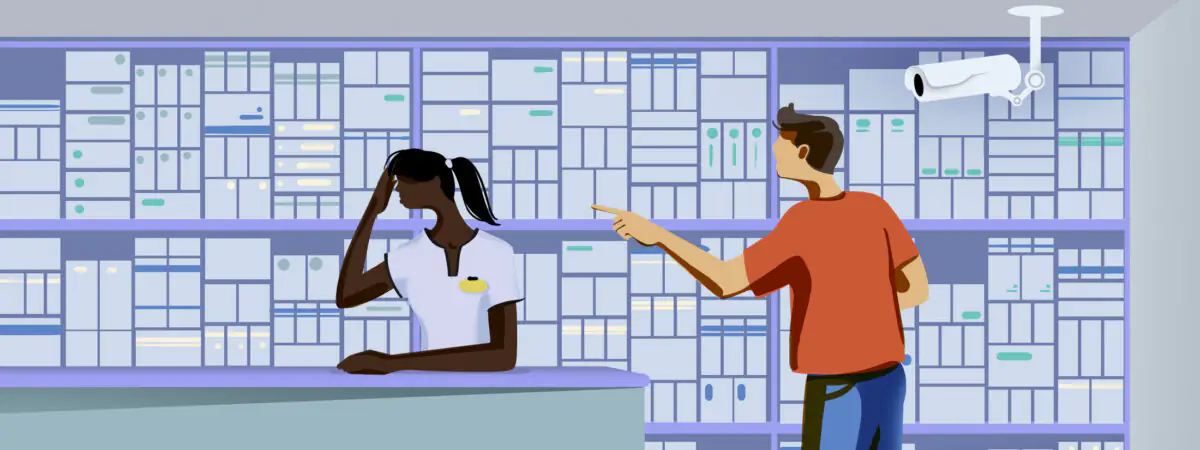
A suburban pharmacy in leafy Warwickshire may not seem like an obvious target for abuse; however, Caroline Harvey, owner of Leyes Lane Pharmacy in Warwickshire, says her team have been pushed to breaking point by distressing encounters with patients.
Customers will shout at the team when medicines are not immediately available or when they are dissatisfied with the three-day turnaround time for repeat prescriptions.
“The staff are broken and have been for quite some time,” she tells The Pharmaceutical Journal. “I think if they had any other choice, they would walk out tomorrow.”
What’s more, Harvey is aware she’s one of the lucky ones. The results of a survey of pharmacy staff representing 3,074 pharmacy premises by Community Pharmacy England (CPE), conducted in February 2026 and released on 26 March 2026, revealed verbal abuse is just the tip of the iceberg (see Figure 1)1.
Figure 1: Abuse faced by pharmacy teams
Pharmacy teams reported being attacked when challenging theft, having shelves and counters smashed, doors kicked in and items, such as medicine bottles and sharp objects, thrown as weapons.
The findings were “deeply shocking”, says Janet Morrison, chief executive of CPE.
“The volume and severity of incidents reported, many accompanied by distressing personal accounts, underline just how exposed pharmacy teams have become,” she adds.
The results have sparked a debate around working conditions in community pharmacy, the drivers of abuse and what must be done to protect staff.
Threats of violence
Verbal abuse remains the main form of aggravation pharmacy teams face. Over half (55%) of respondents to the CPE survey reported experiencing at least one incident in the preceding six months. Of those, just over one-fifth (21%) of respondents reported daily encounters, while three-quarters (75%) said it happened at least weekly.
In particular, we have heard of a rise in racist abuse directed towards pharmacy teams
Henry Gregg, chief executive of the National Pharmacy Association
That abuse can be highly distressing in nature. CPE notes that discriminatory abuse, intimidation and threats of violence were “widely reported” in its survey. That picture is backed up by the National Pharmacy Association (NPA).
“In particular, we have heard of a rise in racist abuse directed towards pharmacy teams,” says Henry Gregg, chief executive of the NPA.
In some cases, the abuse turns physical. According to the results of the CPE’s survey, 6% of pharmacies reported being on the end of physical assaults in the preceding six months, ranging from strangulation, pushing and punching, to objects being thrown and attacks after closing time.
NPA board member Ashley Cohen spoke out about the violence directed towards his Yorkshire pharmacy chain — Pharm-Assist — on Good Morning Britain in April 20262.
“I’ve had a brick thrown through my window, which narrowly missed staff,” he reported. “A week after we had that repaired, they threw another brick. It feels targeted and intimidating.”
In another incident, a patient spat at one of Cohen’s team after being told they were ineligible for an NHS COVID-19 vaccination. Spitting was also repeatedly “cited and experienced” by respondents to the survey conducted by CPE3 — an act that was deemed “both physically abusive and deeply distressing for staff”.
Anxious and burnt out
It comes as no surprise to Leyla Hannbeck, chief executive of the Independent Pharmacies Association, who hears reports of abuse from members “every week”. She details one particularly harrowing incident, which occurred after the pharmacy team was unable to fill a prescription for pregabalin.
“The patient waited until the pharmacy was closed and attacked the pharmacist,” she tells The Pharmaceutical Journal. “The pharmacist was hospitalised and was so traumatised that they retired from the profession.”
Being subjected to abuse can leave pharmacists feeling unsafe, anxious and emotionally drained, and that can affect both their wellbeing and their confidence at work
Danielle Hunt, chief executive of charity Pharmacist Support
Incidents do not have to be as severe as that to leave their mark. Faced with regular verbal attacks, the findings of the CPE’s survey revealed widespread reports of staff feeling emotionally exhausted and demoralised, leading to a reluctance to engage with patients, burnout and retention challenges3.
“Even isolated experiences can have a profound impact,” says Danielle Hunt, chief executive of charity Pharmacist Support.
“Being subjected to abuse can leave pharmacists feeling unsafe, anxious and emotionally drained, and that can affect both their wellbeing and their confidence at work.”
Indeed, Harvey has questioned her career in the wake of the constant verbal abuse. “If I could give up my NHS contract and do just private services, I would do it in a heartbeat,” she says.
It’s no surprise, given that the results of CPE surveys indicate a long-running problem. Its latest study is the first to focus specifically on abuse, but others have pointed to the widespread nature of the issue. The results of CPE’s ‘Pharmacy pressures survey 2025‘ showed that more than half (54%) of staff cited patient abuse as a pressure point, while the ‘Pharmacy pressures survey 2024‘ revealed that more than half of respondents mentioned patient abuse as a major reason for difficulties coping at work.
Box: What can community pharmacists do if they experience abuse?
Community Pharmacy England’s advice on personal safety says that community pharmacists should not feel like they have to tolerate any kind of abuse from patients. It suggests that pharmacy teams should consider:
- Calling the police — please report instances to the police who can provide appropriate support and take action where appropriate;
- Refusing to dispense the prescription — the pharmacy regulations permit this if a pharmacy owner, their staff or others at the premises are threatened with or subject to violence or other criminal behaviour.
Drivers of abuse
For Harvey, community pharmacy is facing a perfect storm of abuse and funding constraints, which are directly linked. “We’re regularly dispensing at a loss, which has a direct effect on how many staff you can afford,” she explains.
The lack of staff results in longer waiting times, which can lead to abuse, and in turn creates a less attractive working environment.
Incidents are frequently associated with medicine shortages, service pressures and extended waiting times
Alison Jones, director of policy and communication at the Pharmacists’ Defence Association
There are also issues outside of the pharmacy’s control, such as medicine shortages or a lack of communication from the patient’s GP surgery. CPE identified problems with prescriptions — not being issued, not transmitted or not being ready when patients expect — as the “single most dominant driver of abuse”3.
That combination of factors is summed up by the Pharmacists’ Defence Association (PDA). “Incidents are frequently associated with medicine shortages, service pressures and extended waiting times, all of which can heighten tensions and lead to unacceptable behaviour,” says Alison Jones, director of policy and communication at the PDA.
The union wants employers to do more to protect their teams. “We continue to urge all employers to conduct robust risk assessments and implement appropriate safety measures,” says Jones. “The PDA also advocates for decisive action against offenders when incidents occur.”
It’s an understandable position — the union tells The Pharmaceutical Journal that results of its soon-to-be-published ‘Safer pharmacies charter survey’ have revealed that only one-quarter (25%) of pharmacists reported always feeling physically safe at work. Furthermore, around one-third indicated physical safety was upheld only half of the time or less, which is a “significant area of concern”, reports Jones.
Increasing security
Pharmacy contractors have a duty to protect their employees from work-related violence, according to the Health and Safety at Work Act 1974. These concerns are spurring on some companies to invest in proactive security measures, with body-worn cameras emerging as a particularly popular tool.
In June 2025, Boots revealed the technology was used in 390 of its 1,800 stores as a deterrent against abuse4. When devices were used consistently, stores reported around a 45% reduction in incidents, said Iona Blake, security and incident manager at Boots, at the time.
Lincolnshire Co-op is another chain to use the technology. In 2024, it equipped staff in its estate — which spans nearly 100 food stores and 43 pharmacies — with body-worn cameras. It has found that “activating these cameras can help to de-escalate incidents”.
The inclusion of pharmacies in the rollout was important, given “around 20% of threats and abuse incidents we reported in 2025 were towards pharmacy colleagues”, says Jock Watt, security lead at Lincolnshire Co-op. With that in mind, its pharmacies also have CCTV and panic alarms installed.
In a further step, Hannbeck knows of one pharmacy in Wales where security guards stand outside the door.
However, there are downsides to installing too much security. Cohen is wary of creating an intimidating environment for patients. “I don’t really want to put security guards at the door, I don’t want to put grills up, and I also don’t really want to be wearing body cameras,” he told Good Morning Britain on 26 March 2026. For him, it’s something pharmacy teams will only do reluctantly “out of fear for their own safety”.
Plus, these measures do not come cheap. Lincolnshire Co-op spent £200,000 on the body cameras alone. On an individual basis, bodycams are more affordable, at between £85 and £500 each, but it’s still a hard cost to swallow at a time when funding is tight.
“There’s no money in community pharmacy to invest in anything,” says Hannbeck.
Lacklustre policing
There’s a strong argument for dealing with the issue at a higher level than pharmacy employers. First, there’s the issue of police response. In the National Business Crime Centre’s ‘Retail Crime Action Plan’5, unveiled in October 2023, the police committed to tackling shoplifting and prioritising attendance in violent incidents.
The National Police Chiefs’ Council claimed progress on those measures in 2024, based on a dip sample of 31 police forces in December 2023. Its review of over 1,500 crimes in retail found police attended nearly two-thirds (60%) of those involving violence6.
Yet community pharmacies, which fall under that retail definition, are yet to report any meaningful improvement. Even in cases of violence, “the standard line is ‘Here’s your crime reference number for your insurance’”, Cohen told Good Morning Britain. Both CPE and the NPA have raised the issue of a poor police response.
CPE says: “Police forces must consider pharmacies as priority healthcare settings rather than retail environments.” It has written to the National Police Chiefs’ Council, as well as the chief pharmaceutical officer for England, to make its case.
“Addressing abuse in community pharmacies requires a co-ordinated response across employers, the NHS, policing and government,” stresses Morrison.
Greater parity needed
As part of that work, CPE wants community pharmacy to be a priority for police dispatch to incidents, in line with other healthcare settings. Morrison calls for “strengthened regulatory provisions in the pharmacy terms of service” that are consistent with the wider NHS zero-tolerance approach.
We need the NHS to offer pharmacies similar support given to other colleagues in primary care, to protect their staff and their premises
Henry Gregg, chief executive of the National Pharmacy Association
As it stands, community pharmacies “do not receive the same level of system support as other parts of primary care”, she says.
“This lack of parity leaves pharmacy teams feeling isolated at precisely the moments when support matters most,” Morrison adds. “Incidents that would trigger a coordinated response elsewhere in the NHS often result in little or no follow-up.”
The NPA also hammers home the need for parity with other parts of the NHS. “We need the NHS to offer pharmacies similar support given to other colleagues in primary care, to protect their staff and their premises,” says Gregg.
Unless that happens, one of the most accessible parts of the NHS may be forced to make itself less so. Or community pharmacies may decide to close their doors altogether. Because for now, the rising tide of abuse shows no sign of stopping.
As Harvey puts it: “Community pharmacy has got to be up there with one of the most stressful jobs now. An NHS contract has become a poisoned chalice.”
- 1.Racist, hostile, verbal and physical abuse of pharmacy teams now a regular occurrence. Community Pharmacy England . 2026. https://cpe.org.uk/our-news/racist-hostile-verbal-and-physical-abuse-of-pharmacy-teams-now-a-regular-occurrence/
- 2.Pharmacies call for stronger protections against “escalating” abuse. Youtube. April 2026. https://www.youtube.com/watch?v=ibDVkSM4Hxw
- 3.Briefing 005/26: What pharmacy owners told us in February 2026. Community Pharmacy England . 2026. https://cpe.org.uk/briefings/briefing-005-26-what-pharmacy-owners-told-us-in-february-2026/
- 4.Body cameras used by staff in one in five Boots stores. Pharmaceutical Journal. Published online 2025. doi:10.1211/pj.2025.1.359655
- 5.Retail Crime Action Plan. National Business Crime Centre . https://nbcc.police.uk/business-support/retail-crime-action-plan
- 6.Policing Retail Crime Action Plan shows early impact. National Police Chiefs’ Council . 2024. https://news.npcc.police.uk/releases/policing-retail-crime-action-plan-shows-early-impact
You may also be interested in

Community pharmacists can prescribe outside of existing Pharmacy First age limits, NHS England confirms

Negotiator says there is ‘very little evidence’ of pharmacy involvement in neighbourhood health plans