Tatiana Dyuvbanova / Alamy Stock Images
After reading this article, you should be able to:
- Recognise patients at increased risk using symptoms, exacerbation history and prescribing patterns;
- Explain how a suggestive clinical history and objective testing inform asthma diagnosis;
- Explain anti-inflammatory reliever therapy and maintenance and reliever therapy, including practical prescribing and counselling checks;
- Identify and address modifiable contributors to poor asthma control, including inhaler technique, adherence, tobacco dependence, environmental exposures and barriers to care associated with health inequalities;
- Support personalised self-management, safe discharge and appropriate referral.
Introduction
More than one decade after the ‘Why asthma still kills: the national review of asthma deaths’ identified substantial preventable failures in care, asthma continues to cause avoidable harm1,2. Despite being a treatable condition, the UK has one of the highest asthma mortality rates in Europe, while many people with asthma still do not receive basic recommended care, including annual reviews, inhaler technique checks and personalised asthma action plans3. The National Respiratory Audit Programme’s ‘Room to breathe: clinical audit report 2024/25’2, published in August 2026, describes persistent variation in respiratory care in England and Wales, with limited progress in adult asthma indicators and inconsistent delivery of discharge care2. Effective treatment exists but its benefit depends on accurate diagnosis, access to care, correct inhaler use and timely intervention when control deteriorates4.
The 2018 Asthma UK report — entitled ‘On the edge: how inequality affects people with asthma’5 — highlighted higher asthma prevalence in deprived communities and an association between area deprivation and emergency asthma admission rates in England. It also described unequal exposure to triggers, variation in access to basic care and barriers to self-management5. These findings underline why effective asthma care must address patients’ living circumstances alongside medicines. Providing asthma services alone is not enough — patients must also be able to access, understand and benefit from the care offered.
The joint British Thoracic Society (BTS)/National Institute for Health and Care Excellence (NICE)/Scottish Intercollegiate Guidelines Network (SIGN) guideline, NG245, represents a fundamental change in asthma treatment for people aged 12 years and over. The updated pathway uses inhaled corticosteroid (ICS)/formoterol to provide rapid symptom relief and deliver anti-inflammatory treatment whenever reliever doses are taken. As-needed anti-inflammatory reliever (AIR) therapy and maintenance and reliever therapy (MART) are central to this approach. Short-acting beta-2 agonist (SABA) should not be prescribed to people of any age with asthma without concomitant ICS. Younger children follow separate age-specific treatment pathways4.
Translating these recommendations into practice requires accessible services, appropriately trained healthcare professionals and effective communication across care settings4. Pharmacists, pharmacy technicians and other appropriately trained pharmacy team members can support implementation across community, general practice and hospital settings through medicines optimisation, patient education, risk identification and timely escalation of concerns. A request for additional reliever doses, an early inhaler collection or a discharge prescription provides an opportunity to recognise increased risk and address gaps in care. This article explores how pharmacy teams can use these opportunities to help prevent avoidable harm.
Recognition and diagnosis
Asthma is a heterogeneous disease characterised by chronic airway inflammation, variable respiratory symptoms (e.g. wheeze, breathlessness, chest tightness and cough) and variable expiratory airflow limitation6. Symptoms may fluctuate, disturb sleep or worsen with exercise, allergens, infections or occupational exposure. A normal examination between episodes does not exclude asthma4.
Assessment begins with a structured clinical history to establish the likelihood of asthma and consider alternative diagnoses. Explore symptom variability, night-time and seasonal patterns, triggers, and personal or family history of asthma or allergic disease. Asthma should not be confirmed without a suggestive clinical history and supporting objective evidence, where age permits4.
Type 2 inflammation — driven by cytokines, including interleukins 4, 5 and 13 — is often associated with raised blood eosinophils or fractional exhaled nitric oxide (FeNO). These biomarkers can support diagnosis; although, values may fluctuate and can be suppressed by corticosteroid treatment6.
In adults (≥17 years) with a suggestive history, objective testing starts with blood eosinophils or FeNO, while a FeNO level of ≥50 ppb supports an asthma diagnosis4. In children aged 5–16 years, testing starts with FeNO, while a level of ≥35 ppb supports diagnosis4. If initial testing is inconclusive, proceed through the age-specific NG245 diagnostic pathway, including bronchodilator reversibility testing and, where spirometry is unavailable or delayed, twice-daily peak expiratory flow (PEF) measurements over two weeks. Further investigations and specialist assessment may be required when diagnostic uncertainty persists4.
Diagnosis in children aged under five years is more challenging because recurrent wheeze is common, and routine objective testing is often impractical. Where asthma is suspected, an age-appropriate, time-limited ICS trial may be indicated; however, treatment response alone does not establish a diagnosis. Objective testing should be attempted when feasible and preschool children admitted to hospital, or attending an emergency department at least twice for wheeze within 12 months, should be referred for paediatric respiratory assessment4.
ICS treatment may normalise FeNO and spirometry results, so treatment at the time of testing should be recorded. However, necessary treatment should not be delayed in an acutely unwell patient to obtain diagnostic evidence4.
Pharmacists can support PEF technique and recording, identify incomplete investigations and encourage attendance at diagnostic appointments. The Asthma + Lung UK PEF variability calculator and IPCRG Desktop Helper 18 provide practical support7,8.
Ask adults with new or worsening symptoms whether they improve away from work or on holiday. Suspected occupational asthma requires specialist investigation and should not be managed simply by advising trigger avoidance4,9.
Identifying patients at increased risk
Patients experiencing barriers to obtaining or using asthma treatment may be at increased risk of poor asthma control and exacerbations. Pharmacists should explore these barriers early in the consultation and use what they learn to guide a realistic, individualised management plan. Barriers may include prescription costs, difficulty ordering or collecting medicines, limited understanding of treatment instructions, language or literacy needs, competing work or caring responsibilities, and difficulties attending appointments5,10. Rather than interpreting missed reviews or gaps in prescription collection as unwillingness to engage, ask what is making treatment difficult.
A non-judgemental opening, such as ‘Many people find it difficult to follow their treatment plan every day’ and ‘How does taking your inhaler fit into your usual routine?’, can encourage patients to discuss missed doses or changes they have made themselves10. Practical support may include checking eligibility for prescription-cost exemptions or the NHS Prescription Prepayment Certificate, arranging accessible collection or delivery options where available, helping patients contact their GP practice to request a suitable appointment, or signposting to welfare and housing support. For example, a patient repeatedly running out of preventer treatment because they cannot collect prescriptions during working hours may benefit from an alternative collection arrangement or a delivery service.
Risk stratification should account for health inequalities and be viewed as an ongoing process rather than a one-off classification11. Risk may change over time owing to worsening symptoms, development of comorbidities, exacerbations, poor adherence, inhaler technique problems, environmental exposures or changes in social circumstances. Regular review is therefore essential, with annual assessment for all patients and more frequent follow-up when additional risk factors are identified11.
Assess current symptom control and future attack risk separately. Patients with few symptoms can still experience severe attacks. Previous exacerbations, inadequate ICS treatment, SABA overuse, poor adherence and incorrect inhaler technique can increase risk even when symptoms are well controlled6. Elevated FeNO, raised blood eosinophils, FEV₁ less than 60% predicted and persistently reduced peak expiratory flow are also associated with increased exacerbation risk11. Ask about night waking, activity limitation, missed work or school, urgent consultations, oral corticosteroid (OCS) courses and hospital attendance4.
NG245 recommends actively identifying people with non-adherence, more than two SABA inhalers per year, two or more OCS courses per year, two or more asthma-related emergency department visits or any hospital admission for asthma4. These markers should prompt review and risk assessment. Practices can support this through coded asthma risk registers, automated electronic health record searches, alerts and recall systems to identify high-risk patients and enable timely follow-up11. GP pharmacists, practice pharmacists and primary care network respiratory leads are well placed to support case-finding, review prescribing patterns and coordinate recall of patients at increased risk.
The Medicines and Healthcare products Regulatory Agency’s (MHRA) April 2025 safety update reinforces the need to act on SABA overuse. Patients requiring SABA more than twice weekly, requesting increasing quantities or failing to collect maintenance treatment require review because excessive SABA use may mask deterioration and is associated with severe attacks and increased mortality12.
Prescription records require careful interpretation. Community pharmacists are often the first healthcare professionals to identify markers of increased risk, including frequent requests for reliever medication, repeated OCS courses, delayed collection of ICS-containing treatment or changes in inhaler use. These encounters provide opportunities for risk assessment, patient education and referral for clinical review. Frequent SABA requests or repeated OCS courses should not be viewed as routine asthma treatment. They should prompt review of adherence, inhaler technique, triggers, asthma control and overall treatment strategy4,12. Dispensing records show medicines supplied rather than actual use, so prescribing patterns should be discussed with the patient before conclusions are drawn10.
AIR and MART require different interpretation. As-needed AIR has no scheduled maintenance doses, so infrequent collection does not automatically indicate non-adherence. Conversely, early collection of an ICS/formoterol inhaler may reflect frequent additional reliever doses, excessive dosing or inadequate supply4,10,13. Ask how many inhalations are being taken and why. The PCRS online asthma slide rule is a visual tool that pharmacists can use to illustrate SABA prescribing patterns and support conversations about asthma control and exacerbation risk14.
Acute deterioration requires immediate assessment and escalation. Severe breathlessness, inability to complete sentences in one breath, exhaustion, confusion, cyanosis or inadequate response to reliever treatment are warning signs of a severe or life-threatening asthma attack12,15. Urgent emergency assessment is required — call 999 and follow the appropriate acute asthma protocol. Do not delay escalation to obtain a PEF measurement or await a routine medicines review. Chronic asthma management is covered by NG245, whereas acute attacks should be managed according to the relevant acute asthma pathway15.
AIR and MART in practice
SABA relieves bronchoconstriction but does not treat airway inflammation. By contrast, ICS/formoterol combines anti-inflammatory treatment with rapid bronchodilation, so each reliever dose also delivers ICS12,13. Evidence supporting current guidance shows that this approach reduces severe exacerbations compared with reliance on SABA alone4,16. AIR and MART therefore link symptom relief with anti-inflammatory treatment, helping address a common problem in asthma care: repeated treatment of symptoms without adequate ICS exposure. Pharmacists can support implementation by identifying SABA reliance and ensuring patients understand their treatment rationale and can use their prescribed regimen effectively4,12,16.
As-needed AIR uses an appropriate ICS/formoterol inhaler for symptom relief without scheduled maintenance doses. In MART, the same ICS/formoterol inhaler is used for both maintenance and symptom relief, replacing a separate SABA reliever4,13. A summary of counselling questions and supply checks to ask patients is provided in Table 14,13.
Ask about patients’ beliefs and concerns when discussing treatment changes10. For example, explore whether they feel reassured by a blue inhaler or have concerns about symptom relief. Explain that ICS/formoterol provides rapid symptom relief, while treating underlying inflammation, and clarify when they should seek further help13.
Explain the difference between AIR and MART, emphasising that as-needed AIR involves taking an appropriate ICS/formoterol inhaler only when symptoms occur, without scheduled maintenance doses, whereas MART requires regular maintenance doses alongside additional doses for symptom relief. Use the ‘teach-back’ method by asking patients to explain when and how they would use their inhaler, including what they would do if symptoms worsened17.
Not all ICS/LABA inhalers are suitable for AIR or MART. Check the exact ICS/formoterol product, licensed age, strength, device, indication and dosing instructions against the current summary of product characteristics (SmPC) and local formulary4. A licence for MART does not automatically include AIR, while any off-label prescribing should follow local governance arrangements4.
Explain the product-specific dose limits and when increased reliever requirements should prompt medical review. For MART, both scheduled maintenance doses and additional reliever doses count towards the maximum total daily inhalations13. When initiating or changing treatment, confirm:
- The prescribed brand, strength, device and intended regimen;
- Maintenance and reliever directions, including maximum daily doses;
- The patient’s ability to use the device and understand the regimen;
- An action plan that matches the treatment;
- Adequate supply and a plan for replacement;
- Reconciliation of discontinued inhalers and repeat prescriptions, as well as follow-up arrangements and advice on deterioration.
Do not discontinue a previous reliever until the patient has the replacement inhaler, understands its role and can use it correctly. Changes in inhaler use should prompt consideration of clinical review4.
Treatment sequencing and review
When a patient is identified as being at increased risk of an asthma attack or having suboptimal asthma control, a treatment review is needed to determine whether progression to the next treatment sequence is appropriate. Before escalating treatment, establish why asthma control is inadequate by assessing symptoms, exacerbation history, frequency of reliever doses, adherence, observed inhaler technique and diagnostic evidence. Consider the impact of smoking or vaping, occupational and environmental exposures, comorbidities, including anxiety and depression, and psychosocial or seasonal factors. Review concurrent medicines for potential contributors to worsening asthma, including beta-blockers — particularly non-selective agents and ophthalmic preparations — and non-steroidal anti-inflammatory drugs in susceptible patients.
Anxiety may amplify breathlessness and symptom perception, while depression can affect motivation and adherence to treatment4. For people aged 12 years and over, the NG245 treatment pathway progresses from as-needed low-dose ICS/formoterol (i.e. AIR) to low-dose MART and then moderate-dose MART if control remains inadequate4. For newly diagnosed patients aged 12 years and over who present with marked symptoms or a severe exacerbation, NG245 recommends starting low-dose MART alongside appropriate treatment of the acute episode. Product-specific licensing and dosing requirements must still be checked4,13.
If asthma remains uncontrolled despite good adherence to moderate-dose MART, measure FeNO — if available — and check blood eosinophils4. Raised results should prompt referral to a specialist in asthma care. If neither marker is raised, NG245 recommends considering an 8–12-week trial of either a leukotriene receptor antagonist (LTRA) or long-acting muscarinic antagonist (LAMA) alongside moderate-dose MART. Continue treatment if control is achieved. If the response is inadequate, consider a trial of the alternative medicine, stopping ineffective treatment as appropriate. Refer patients whose asthma remains uncontrolled despite trials of both treatments, or who remain uncontrolled on high-dose ICS-containing treatment4.
Montelukast is the most commonly used LTRA18. Discuss potential sleep, mood and behavioural changes with patients and carers. The MHRA advises discontinuing treatment and seeking medical advice if new or worsening neuropsychiatric symptoms occur19. For LAMAs, check product licensing, inhaler technique and antimuscarinic cautions20. Triple ICS/LABA/LAMA inhalers should not be assumed suitable for AIR or MART, even when they contain formoterol. Always check the SmPC and prescribe a separate reliever where required21.
Children require age-specific treatment pathways. Those aged 5–11 years generally start with twice-daily paediatric low-dose ICS and as-needed SABA. MART may be considered if control remains inadequate, and the child can manage the regimen, subject to licensing. Do not extrapolate adult doses or reliever limits to children4.
Review response within 8–12 weeks of starting or changing treatment, or sooner if symptoms or risk factors require it4. Agree treatment goals such as fewer symptoms, better sleep, improved activity and fewer attacks. Once good control is sustained, step down to the lowest effective treatment through planned review and an updated action plan4.
Inhaler technique and device choice
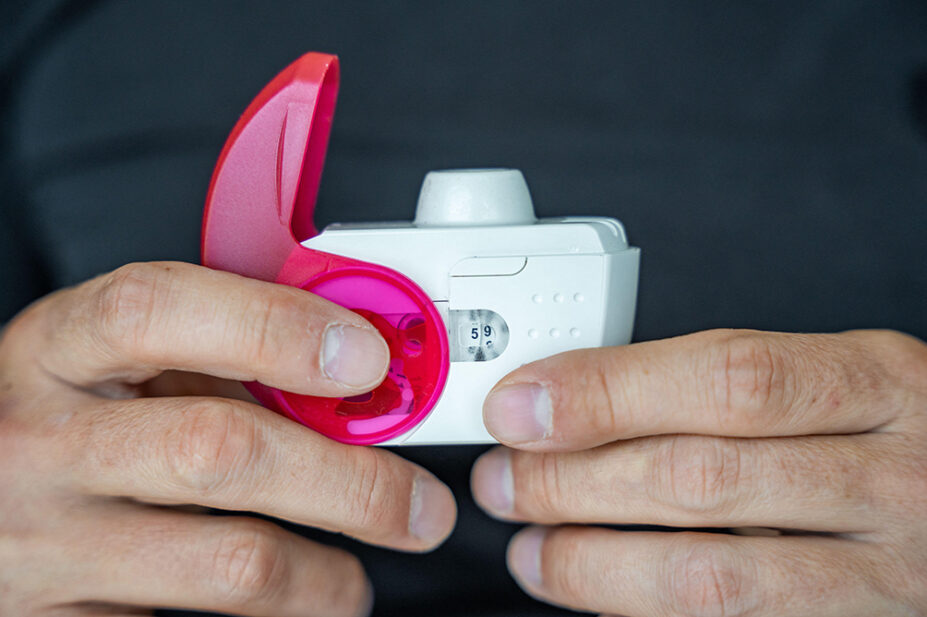
Poor inhaler technique can reduce lung deposition and contribute to poor asthma control. Observe patients using their own inhaler and spacer, where applicable, at routine reviews, after a device change and whenever control deteriorates4. Explain that technique can change over time — even in experienced inhaler users — and present repeat checks as a routine part of asthma care rather than a response to suspected errors. Correct errors using device-specific instruction, request a repeat demonstration and reassess technique22. Videos may supplement, but should not replace, direct observation4.
The UK Inhaler Group’s seven-step framework provides a structured approach to technique assessment:
- Prepare the device;
- Load the dose;
- Breathe out away from the inhaler;
- Seal the lips around the mouthpiece;
- Inhale using the correct manoeuvre;
- Hold the breath;
- Repeat if required22.
If the technique assessment identifies inhaler difficulties, practical steps should be taken to address these with the patient. A selection of common inhaler challenges and possible responses are shown in Table 24,20,22.
Dry powder inhaler (DPI) suitability depends on device resistance and the patient’s ability to generate the required inspiratory effort, rather than age or diagnosis alone23. Acute deterioration may affect inhalation ability, so ensure the action plan remains workable during exacerbations23.
Device choice should take account of dexterity, cognition, patient preference, inspiratory ability and access. Check spacer compatibility, cleaning requirements, dose counters and expiry dates, and counsel on mouth rinsing after ICS use4,13. Many pressurised metered-dose inhaler contain hydrofluoroalkane propellants, which contribute to their carbon footprint, whereas DPIs do not require propellants and generally have a lower environmental impact24. Discuss environmental considerations where appropriate, while prioritising clinical suitability, treatment effectiveness and patient preference. Do not switch inhaler devices without first discussing the change with the patient. Explain the reason for the switch, check that they feel confident using the new device and ask them to demonstrate correct technique. Advise patients to return unwanted or expired inhalers to a pharmacy for safe disposal25. Asthma + Lung UK and RightBreathe provide device-specific resources for patients and healthcare professionals.
Understanding and supporting adherence
Establishing a patient’s level of adherence should represent the start of a conversation, not a judgement. Ask: ‘Many people find it difficult to fit inhalers into daily life. How have you been using yours recently?’ This type of phrasing prevents patient’s from feeling criticised or defensive and creates a platform for a more productive discussion. You can then explore ideas, beliefs, routines, adverse effects, prescription access and practical barriers10.
Every patient has a unique perspective. Some patients intentionally avoid ICS because their symptoms have settled and they no longer believe they need treatment, while others may have concerns about steroids. Some might forget doses, struggle with devices, misunderstand instructions or cannot reliably collect prescriptions10. Consider wider barriers to care, including health literacy, safeguarding concerns and the need for community or social support11.
Explain the role of anti-inflammatory treatment, address concerns about harms, and review side effects, inhaler technique and spacer use where appropriate10. Agree practical solutions, such as linking doses to a routine, improving prescription access or involving a carer with consent. Reminder strategies should match the regimen: daily reminders may support maintenance treatment, whereas AIR relies on recognising symptoms and having prompt access to the prescribed ICS/formoterol inhaler4,13.
Arrange a follow-up rather than assuming that the advice will resolve the problem. Where cost, language, transport, digital exclusion or appointment access create barriers, help patients access appropriate support and services.
In England, the new medicine service can provide structured support for patients newly prescribed eligible asthma medicines, offering an opportunity to explore concerns, check understanding and address medicine-taking difficulties, with referral to the prescriber where appropriate26.
Treating tobacco dependence and addressing exposures
Always ask about smoking, vaping and household smoke exposure without judgement. Smoking can worsen asthma control and reduce responsiveness to inhaled corticosteroids, so tobacco dependence should be actively addressed rather than simply documented27,28.
Use very brief advice (VBA) following the ‘Ask, Advise, Act’ framework: ask and record smoking status, advise on the benefits of stopping smoking, and act by offering cessation support or referral29. For further guidance on behavioural support and pharmacological treatment, see ‘A pharmacy guide for smoking cessation consultations’.
Review medicines affected by changes in smoking status, including theophylline where prescribed, as stopping smoking can increase drug exposure and require dose adjustment or monitoring28.
Assess environmental exposures at home and work4. Where damp or mould is present, support access to appropriate housing advice30. Refer patients with suspected occupational asthma to an occupational asthma specialist4,9. In patients with persistently poor asthma control, assess for comorbidities and other contributing factors, including rhinitis, obesity, symptomatic reflux and dysfunctional breathing31.
Personalised self-management and monitoring
Supported self-management combines education, a personalised action plan and regular review32. Explain the purpose of each medicine, demonstrate inhaler technique and confirm how the patient recognises deterioration. The action plan should include usual treatment, symptom or PEF changes, potential triggers, regimen-specific actions and when to seek urgent help4,32. Patients at increased risk should have their personalised asthma action plan reviewed and updated regularly to reflect current treatment, risk factors and self-management needs, using accessible formats where required11. Agree to goals that matter to the patient, such as sleeping without symptoms, exercising comfortably or reducing disruption to work or school, and revisit these at subsequent reviews17. Patients can also be signposted to the Asthma + Lung UK helpline for advice and support with asthma-related questions.
Action plans should match the prescribed regimen4. For AIR, explain when to use the ICS/formoterol inhaler for symptom relief. There are no scheduled maintenance doses. For MART, explain both regular maintenance doses and additional symptom-driven doses4,13. Include product-specific dose limits and advice on when to seek medical help and update any existing SABA-based plan when reliever treatment changes4,13.
Where appropriate, consider adherence and self-management support tools, including NICE-approved digital apps, to support symptom monitoring and treatment adherence10. Ask patients to explain what they would do if symptoms worsened or their inhaler ran out and offer non-digital alternatives when needed17.
At review, assess symptoms, sleep quality, activity, frequency of reliever doses, exacerbations, OCS exposure and urgent care attendance. Explore whether patients may be under-recognising or under-reporting symptoms, particularly if they have adapted or reduced their daily activities because of asthma. Validated tools, such as ACT or ACQ, can support assessment but do not replace exacerbation history and risk evaluation4. Annual review is a minimum, while attacks, deteriorating control and treatment changes require additional follow-up. PEF monitoring should be individualised rather than routine4.
Uncontrolled, difficult-to-treat and severe asthma
Uncontrolled asthma involves poor symptom control and/or frequent exacerbations at any treatment level33. Difficult-to-treat asthma remains uncontrolled despite medium- or high-dose ICS with an additional controller, usually a LABA, or maintenance OCS, or requires high-dose treatment to maintain control. Contributory factors include poor inhaler technique, non-adherence, smoking, comorbidities and incorrect diagnosis33.
Severe asthma is a subset of difficult-to-treat asthma that remains uncontrolled despite optimised high-dose ICS/LABA and management of contributory factors or worsens when treatment is reduced. Specialist assessment is required to confirm the diagnosis33.
Under BTS/NICE/SIGN NG245, people aged 12 years and over with uncontrolled asthma despite moderate-dose MART should be referred for specialist assessment if FeNO or blood eosinophils are raised, or if control remains inadequate following trials of an LTRA and LAMA4. Recurrent exacerbations, including two or more OCS courses annually, or an asthma-related hospital admission warrant prompt review and consideration of referral4,33.
Specialist asthma care may be provided in primary, community or secondary care, depending on local pathways. Suspected severe asthma or the need for advanced treatment warrants specialist referral, with patients being considered for biologics referred to a severe asthma service11,33,34. Refer suspected occupational asthma to an occupational asthma specialist4,10.
Referrals should document diagnostic evidence, exacerbation and OCS history, treatment, adherence, inhaler technique and relevant investigations. Continue addressing modifiable factors while referral is arranged. The Accelerated Access Collaborative uncontrolled asthma consensus pathway provides additional guidance34.
Safe discharge following asthma attack and transitions of care
Discharge following an asthma attack is an opportunity to reduce the risk of recurrence. Alongside confirming recovery, review factors contributing to the attack and address treatment, adherence, inhaler technique and self-management needs15.
The National Respiratory Audit Programme continues to report variation in discharge care2. BTS Asthma 4 care bundle provides a structured approach to care following an asthma attack, including medicines and adherence review, inhaler technique assessment, a personalised asthma action plan, tobacco dependence support where appropriate and follow-up arrangements. Hospital pharmacists can support implementation by ensuring appropriate ICS-containing treatment, adequate medicine supply and clear communication of the discharge plan4,15.
Pharmacists in general practice can support medicines reconciliation by resolving discrepancies between discharge information and the GP medication record and documenting treatment changes35. Ensure AIR or MART directions, discontinued inhalers, OCS courses and follow-up arrangements are clearly recorded and communicated.
Arrange primary care follow-up within two working days and confirm any specialist respiratory follow-up in line with BTS/SIGN guidance15. Patients should know when review is planned and how to access help if symptoms worsen.
In England, patients can be referred to community pharmacy through the NHS Discharge Medicines Service for medicines reconciliation and post-discharge support36. Community pharmacists can provide a safety net by checking medicine access, inhaler technique and understanding of the discharge plan. Repeated post-discharge request for reliever medication should prompt enquiry about recovery and follow-up arrangements, with concerns communicated to the clinician responsible for ongoing care36.
Conclusion
Pharmacists play a pivotal role in preventing avoidable asthma harm through proactive risk stratification, medicines optimisation, inhaler technique assessment and support for self-management. These interventions are most effective when combined with personalised action plans, timely follow-up and coordinated care across healthcare settings. Addressing health inequalities and barriers to access is equally important, because effective treatment only improves outcomes when patients can obtain it, understand it and use it. Each contact should be viewed as an opportunity to identify risk, intervene early and reduce the likelihood of future exacerbations, hospital admission and preventable death.
- 1.Why asthma still kills: the National Review of Asthma Deaths. Royal College of Physicians. 2014. https://www.rcp.ac.uk/improving-care/resources/why-asthma-still-kills/
- 2.Room to breathe: clinical audit report 2024/25. Royal College of Physicians. 2026. https://www.rcp.ac.uk/improving-care/national-clinical-audits/national-respiratory-audit-programme-nrap/current-nrap-reports/. See also https://www.hqip.org.uk/report/nrap-691/
- 3.Ten years gone: asthma care in the UK since the National Review of Asthma Deaths. Asthma + Lung UK. 2024. https://www.asthmaandlung.org.uk/ten-years-gone-asthma-care-uk-national-review-asthma-deaths-nrad-2024
- 4.Asthma: diagnosis, monitoring and chronic asthma management. NG245. The National Institute for Health and Care Excellence . 2024. https://www.nice.org.uk/guidance/ng245/chapter/recommendations
- 5.On the edge: how inequality affects people with asthma. Asthma UK. 2018. https://www.asthmaandlung.org.uk/sites/default/files/2023-03/auk-health-inequalities-final.pdf
- 6.Global strategy for asthma management and prevention. Global Initiative for Asthma. 2026. https://ginasthma.org/2026-gina-strategy-report/
- 7.Peak flow variability calculator. Asthma + Lung UK. https://www.asthmaandlung.org.uk/healthcare-professionals/adult-asthma/diagnosis-testing/perf-calc
- 8.Desktop Helper 18: Usefulness of peak expiratory flow in everyday clinical practice for asthma. International Primary Care Respiratory Group. https://www.ipcrg.org/desktop-helper-18
- 9.Barber CM, Cullinan P, Feary J, et al. British Thoracic Society Clinical Statement on occupational asthma. Thorax. 2022;77(5):433-442. doi:10.1136/thoraxjnl-2021-218597
- 10.Medicines adherence: involving patients in decisions about prescribed medicines and supporting adherence. Clinical guideline CG76. The National Institute for Health and Care Excellence . 2009. https://www.nice.org.uk/guidance/cg76
- 11.Risk stratification to prevent poor asthma outcomes. Position statement, July 2026. Primary Care Respiratory Society . 2026. https://www.pcrs-uk.org/resource/current/pcrs-position-statement-risk-stratification-prevent-poor-asthma-outcomes#
- 12.Short-acting beta 2 agonists (SABA) (salbutamol and terbutaline): reminder of the risks from overuse in asthma and to be aware of changes in the SABA prescribing guidelines. Medicines and Healthcare products Regulatory Agency. 2025. https://www.gov.uk/drug-safety-update/short-acting-beta-2-agonists-saba-salbutamol-and-terbutaline-reminder-of-the-risks-from-overuse-in-asthma-and-to-be-aware-of-changes-in-the-saba-prescribing-guidelines
- 13.Symbicort Turbohaler 200/6 inhalation powder: summary of product characteristics. Electronic Medicines Compendium. https://www.medicines.org.uk/emc/product/1327/smpc
- 14.Online asthma slide rule. Primary Care Respiratory Society. https://www.pcrs-uk.org/online-asthma-slide-rule
- 15.British guideline on the management of asthma. SIGN 158. British Thoracic Society. 2019. https://www.brit-thoracic.org.uk/about-us/news/2019/btssign-british-guideline-on-the-management-of-asthma-2019/
- 16.NG245 evidence reviews: drug classes for initial asthma management and drug combinations and sequencing. The National Institute for Health and Care Excellence . 2024. https://www.nice.org.uk/guidance/ng245/evidence
- 17.Shared decision making. National Institute for Health and Care Excellence. 2021. https://www.nice.org.uk/guidance/ng197/chapter/recommendations
- 18.Montelukast 10 mg film-coated tablets: summary of product characteristics. Electronic Medicines Compendium. https://www.medicines.org.uk/emc/product/14561/smpc
- 19.Montelukast: reminder of the risk of neuropsychiatric reactions. Medicines and Healthcare products Regulatory Agency. 2024. https://www.gov.uk/drug-safety-update/montelukast-reminder-of-the-risk-of-neuropsychiatric-reactions
- 20.Spiriva Respimat 2.5 microgram, inhalation solution: summary of product characteristics. Electronic Medicines Compendium. https://www.medicines.org.uk/emc/product/407/smpc
- 21.Trimbow pMDI 172 micrograms/5 micrograms/9 micrograms pressurised inhalation, solution: summary of product characteristics. Electronic Medicines Compendium. https://www.medicines.org.uk/emc/product/13816/smpc
- 22.Inhaler standards and competency document. UK Inhaler Group. 2016. https://www.ukinhalergroup.co.uk/uploads/iYf51ixS/ukig-inhaler-standards-january-2017.pdf
- 23.When is a dry powder inhaler suitable or not? . NHS Scotland Right Decisions. https://www.rightdecisions.scot.nhs.uk/respiratory-quality-prescribing-strategy-a-guide-for-improvement/environmental-impact-of-inhalers/prescribing-issues-to-consider/when-is-a-dry-powder-inhaler-dpi-suitable-or-not/
- 24.Respiratory conditions quality prescribing strategy improvement guide 2024 to 2027: environmental impact of inhalers. Scottish Government. 2024. https://www.gov.scot/publications/quality-prescribing-strategy-respiratory-guide-improvement-2024-2027/pages/12/
- 25.Asthma. NHS. https://www.nhs.uk/conditions/asthma/
- 26.Community pharmacy advanced service specification: NHS New Medicine Service. NHS England . 2025. https://www.england.nhs.uk/long-read/community-pharmacy-advanced-service-specification-nhs-new-medicine-service/
- 27.Lazarus SC, Chinchilli VM, Rollings NJ, et al. Smoking Affects Response to Inhaled Corticosteroids or Leukotriene Receptor Antagonists in Asthma. American Journal of Respiratory and Critical Care Medicine. 2007;175(8):783-790. doi:10.1164/rccm.200511-1746oc
- 28.Tobacco: preventing uptake, promoting quitting and treating dependence. NG209. National Institute for Health and Care Excellence . https://www.nice.org.uk/guidance/ng209/chapter/treating-tobacco-dependence
- 29.Very Brief Advice (VBA+). National Centre for Smoking Cessation and Training. https://www.ncsct.co.uk/publications/category/vba-briefings
- 30.Housing toolkit for patients whose health is affected by poor housing. Asthma + Lung UK. 2026. https://www.asthmaandlung.org.uk/healthcare-professionals/supporting-patients-indoor-pollution
- 31.Khan J, Moran B, McCarthy C, Butler MW, Franciosi AN. Management of comorbidities in difficult and severe asthma. Breathe. 2023;19(3):230133. doi:10.1183/20734735.0133-2023
- 32.Pinnock H. Supported self-management for asthma. Breathe. 2015;11(2):98-109. doi:10.1183/20734735.015614
- 33.Difficult-to-treat and severe asthma in adolescent and adult patients: diagnosis and management. Global Initiative for Asthma. 2026. https://ginasthma.org/2026-gina-severe-asthma-guide/ [
- 34.Consensus pathway for the management of uncontrolled asthma in adults. Accelerated Access Collaborative. https://www.healthinnovationoxford.org/clinical-priorities/respiratory/asthma-biologics-toolkit/aac-consensus-pathway-for-management-of-uncontrolled-asthma-in-adults/
- 35.Medicines optimisation: the safe and effective use of medicines to enable the best possible outcomes. NICE guideline NG5. National Institute for Health and Care Excellence . 2015. https://www.nice.org.uk/guidance/ng5
- 36.NHS Discharge Medicines Service—Essential Service: Toolkit for pharmacy staff in community, primary and secondary care. NHS England. 2021. https://www.england.nhs.uk/publication/nhs-discharge-medicines-service-essential-service-toolkit-for-pharmacy-staff-in-community-primary-and-secondary-care/