

Alexander Korzh / Alamy Stock Photo
After reading this article, you should be able to:
- Describe the different types of oral hormonal contraception, including mechanisms of action, efficacy, benefits and risks;
- Apply evidence-based guidance to support initiation of oral contraception in clinical practice, including patient assessment and counselling;
- Recognise appropriate monitoring and review requirements for patients using oral hormonal contraception;
- Advise patients on stopping or switching oral contraception and provide practical counselling on common clinical scenarios including missed-pills.
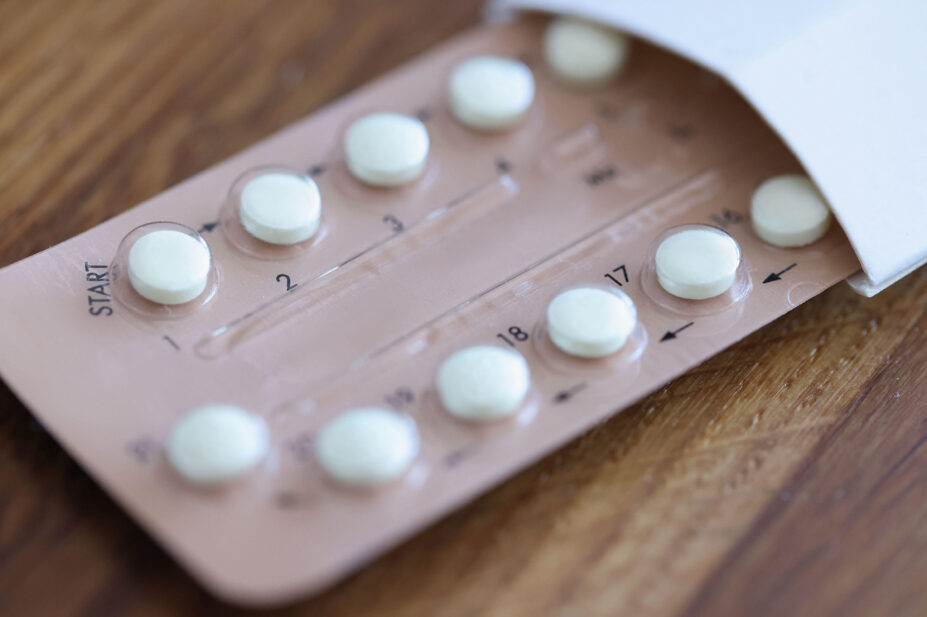
Despite availability of newer, more effective and longer-acting methods, such as hormonal intrauterine devices (IUDs), implants and injectables, oral hormonal contraception remains one of the most widely used methods of contraception in the UK1,2. The term encompasses two main categories: combined oral contraception (COC), which contains both an oestrogen and a progestogen, and progestogen-only pills (POP), which contain a progestogen alone. These preparations are highly effective when used correctly and offer additional non-contraceptive benefits for some users, including menstrual management3,4. However, their use requires careful assessment, counselling, strict adherence and follow-up to ensure safety and effectiveness3,4.
UK oral contraception use appears to be shifting away from traditional GP/specialist sexual and reproductive healthcare prescribing towards pharmacy access; however, total use of oral contraception is hard to measure because these datasets are not currently linked. In recent years, the role of pharmacists in contraception prescribing has expanded significantly. In England, the introduction of the NHS pharmacy contraception service in April 2023 has enabled community pharmacists to supply oral contraception for ongoing use, aligning with the ‘NHS long-term plan’, which outlined aims to improve access and reduce health inequalities5,6.
Similar developments are under way across the rest of Great Britain, reflecting a broader shift towards pharmacy-led provision of sexual and reproductive healthcare. In Scotland, some pharmacies can provide an initial three-month supply of the POP as ‘bridging contraception’, which is a supply to ensure protection against pregnancy before obtaining long-term contraception7. In Wales, services mirror that of England, while some pharmacies provide both ‘bridging contraception’ as well as routine long-term oral contraception8.
Pharmacists are well placed to support the safe use of oral contraception owing to their accessibility, medicines expertise and frequent contact with patients. Their role includes supporting informed contraceptive choice, identifying contraindications, managing drug interactions and monitoring ongoing use. This article provides a practical, evidence-based overview of oral hormonal contraception, with a focus on eligibility assessment, initiation and monitoring.
What are the different types of oral contraception?
Combined oral contraception
COC contains both oestrogen (usually ethinylestradiol) and a progestogen. The primary mechanism of action of COC is suppression of ovulation via action on the hypothalamic-pituitary-ovarian axis by suppressing luteinising hormone (LH) and follicle-stimulating hormone (FSH), with additional effects on cervical mucus and the endometrium3. When taken consistently and correctly, COCs are highly effective, with a perfect-use failure rate of approximately 0.3% but a typical-use failure rate of around 9.0%9.
COC is available as either monophasic (constant dose) or phasic (variable-dose) preparations3. Monophasic COC contain the same dose of ethinylestradiol (typically 20–35 μg) and the same dose of progestogen in each active pill3. They are often still used in standard 21-day regimens followed by a seven-day pill-free interval (or placebo tablets for everyday formulations designed to help adherence). However, they can also be used in extended (shortened pill-free interval regimens) or continuous regimens (active pills are taken consecutively over several cycles)3,10. While off license, these tailored regimens are supported by the College of Sexual and Reproductive Healthcare (CoSRH) with evidence that extended use may improve adherence, reduce contraceptive failure, and decrease hormone-withdrawal bleeding and menstrual-related symptoms (see Figure 1)3,10.
Figure 1: Combined oral contraception dosing regimens
Phasic COC contain different doses of oestrogen and/or progestogen across the cycle3. These preparations were designed to mimic endogenous hormonal fluctuations; however, they have not been shown to offer improved contraceptive efficacy nor tolerability compared with monophasic pills3. Owing to variation in hormone dose across the cycle, phasic preparations offer less flexibility; tailored regimens are not recommended, missed-pill advice is more complex, and they are less commonly used3.
COCs may confer non-contraceptive benefits, including improved cycle control, helping to reduce heavy menstrual bleeding and dysmenorrhoea, and improving acne symptoms. However, they are associated with specific risks including an increased risk of venous thromboembolism (VTE), stroke and myocardial infarction, particularly in individuals with additional risk factors such as smoking, obesity, immobility or older age11. As a result, careful assessment using the UK Medical Eligibility Criteria (UKMEC) is essential before initiation11. The UKMEC categorises the safety of contraceptive methods according to an individual’s medical conditions and risk factors. Categories range from UKMEC 1 (where there is no restriction to use) to UKMEC 4 (where the method presents an unacceptable health risk and should not be used). The clinical focus is on identifying UKMEC 4 and UKMEC 3 (where the risks outweigh the benefits and specialist clinical judgement may be required). While UKMEC 2 indicates that benefits generally outweigh the risks, careful consideration should be given where multiple category 2s exist for the same individual owing to concurrent characteristics or conditions11.
Hormonal side effects are commonly reported by patients taking COCs, but may be short-lived (See Table 1)3,4,9,12.
Progestogen-only pills
By contrast, POPs contain synthetic progestogen only. The contraceptive effect of desogestrel and drospirenone POPs relies primarily on inhibition of ovulation. Levonorgestrel and norethisterone (often referred to as ‘traditional’ POPs) do not reliably suppress ovulation. They act on cervical mucus, endometrium and tubal motility4. All POPs are taken daily without a pill-free interval; however, in the drospirenone progestogen-only pills (DRSP POP) (Slynd), there are 24 active, followed by four placebo pills. The aim of the four hormone-free days is to try to establish a more predictable bleeding pattern, while maintaining contraceptive effectiveness4[3]. When taken correctly, POPs have a similar failure rate as COC9. POPs are generally safe and are suitable for individuals who cannot use oestrogen-containing contraception, including those with a history of VTE, migraine with aura or hypertension. Common side effects include altered bleeding patterns, headaches, breast tenderness and acne, although many are temporary (see Table 1)3,4,9,12.
Table 1: Oral contraceptive pills: characteristics and clinical considerations
Initiation of oral hormonal contraception
When initiating oral hormonal contraception, pharmacists must adopt a patient-centred approach, accounting for reproductive intentions, experience and preferences, medical history and relevant lifestyle factors. Shared decision-making, supported by clear, unbiased, evidence-based information, improves satisfaction and continuation rates13.
Medical history
A comprehensive medical history must be obtained, including current and past medical conditions (e.g. migraine history and conditions with known risk for VTE), relevant personal characteristics (e.g. age, BMI, smoking status) and relevant family history (e.g. VTE, breast cancer). Medical eligibility should then be assessed in line with the UKMEC11. For COC, blood pressure measurement is mandatory prior to initiation, and BMI should be recorded, as obesity is a known VTE risk factor. POPs require fewer baseline assessments. However, documentation of baseline weight and blood pressure is considered good practice4. Refer to UKMEC guidance for specific information on blood pressure measurements11.
Pregnancy and breastfeeding
Pharmacists involved in initiation should ensure that postpartum status and breastfeeding are routinely assessed and documented, with eligibility assessed via the UKMEC11. Contraception is generally required from day 21 after childbirth if pregnancy is not desired. VTE risk is significantly elevated during pregnancy and the postpartum period; this risk is most pronounced in the first three weeks after delivery, declining to near baseline levels by 42 days postpartum14.
The evidence regarding the effects of COC on milk supply is limited and conflicting, therefore women who are breastfeeding are advised to wait until six weeks after childbirth before initiating a COC11.
POPs can be started at any time after childbirth, including immediately after delivery and the evidence indicates no adverse effects on lactation, infant growth or development4,14.
Drug history
Healthcare professionals providing hormonal contraception should take a detailed drug history including current and previous drug use, which covers prescription, online, over-the-counter (OTC), herbal, recreational drugs and dietary supplements11. Potential drug interactions must be assessed, particularly with enzyme-inducing medicines (such as certain antiepileptics, antiretrovirals and antibiotics, as well as herbal OTC medicines available, e.g. St John’s wort) or glucagon-like peptide-1 (GLP-1) agonists, which may reduce contraceptive efficacy15,16. Effective contraception is recommended during use of GLP-1 agonists, owing to a lack of safety data available for use of GLP-1 agonists in pregnancy. For individuals using tirzepatide with oral contraception, a switch to a non-oral method or additional barrier contraception is advised for four weeks after initiation and after each dose increase16.
Patient preference
A tailored discussion of side effects is important. Some individuals may prefer regular withdrawal bleeding, while others may favour reduced bleeding or amenorrhoea. Previous experiences with hormonal contraception — including tolerability and side effects — should inform shared decision-making. It is helpful to explain that side effects with oral hormonal contraception are often short lived and may usually settle within the first few months. Reproductive intentions should be reviewed, including short- and long-term pregnancy plans, desire to avoid pregnancy and expectations regarding return to fertility after stopping contraception. Patients should be counselled regarding the relative efficacy of methods and advised that fertility typically returns rapidly following discontinuation of oral hormonal contraception3,4.
The individual’s ability to maintain daily dosing, work patterns, travel, shift work and the need for privacy or discretion is relevant. Where daily adherence is likely to be challenging, alternative methods, including long-acting reversible contraception (LARC), may be preferred. Travel considerations, including time zone changes and access to supplies abroad, should be discussed. Clear written information can reinforce verbal counselling and support adherence. The consultation should address sexual health and safeguarding considerations. As oral contraception does not protect against sexually transmitted infections (STIs), patients should be advised about condom use and signposted to STI testing. Pharmacists should remain alert to safeguarding concerns, including coercion, difficulties accessing contraception or challenges with follow-up, and act in accordance with local safeguarding policies.
Timing of initiation
COC can be initiated up to and including day five of the menstrual cycle without the need for additional contraceptive precautions, provided pregnancy can be excluded. See Box 1 of the CoSRH guideline on combined hormonal contraception for criteria for reasonably excluding pregnancy3. If COC is initiated after day five of the menstrual cycle, a “quick start” approach may be used. In this scenario, additional barrier contraception is required for the first seven days of pill use, and a follow-up pregnancy test is recommended three weeks after the last unprotected sex if there is a risk of conception prior to initiation3.
Traditional and desogestrel POPs provide immediate contraceptive protection when initiated between days one and five of the menstrual cycle. If initiated at any other time in the cycle, additional barrier contraception is required for 48 hours4. DRSP POP must be started on day one of the menstrual cycle for immediate contraceptive protection4,7. If started at any other time additional barrier contraception is required for seven days17 (see Figure 2).
Figure 2: Timing of initiation of oral hormonal contraception
How to take
COCs are taken daily and consistent timing is important to maintain contraceptive efficacy. The standard regimen for monophasic COCs is 21 consecutive active pills followed by a seven-day hormone-free interval (HFI) before starting the next pack. The seven-day break can be either pill-free days or placebo tablets, depending on the product3. However, tailored (extended or continuous) regimens are safe, effective and increasingly preferred10. It should be advised to women that a withdrawal bleed does not represent physiological menstruation and has no health benefits3.
POPs are taken daily without a pill-free interval, and consistent timing is again important to maintain contraceptive efficacy4,7.
Missed-pill rules
A COC pill is considered missed if it is more than 24 hours late. Missing a single COC pill is insufficient to reverse ovarian suppression; however, missing two or more, or extending the HFI, by missing pills at the end of a packet or forgetting to restart the new packet on time, increases the risk of ovulation3.
For further guidance on missed-pill rules with COC, follow CoSRH guidance18.
Traditional POPs are considered missed if taken more than three hours late, a desogestrel POP if it is taken more than 12 hours late, and a DRSP POP if more than 24 hours late.
Recommended actions after incorrect POP use are set out in Table 1, Appendix 2 and Appendix 3 of CoSRH guidance4. Recommendations for DRSP POP differ from those for other POPs.
Missed pill guidance varies between different formulations but when doing an initial ‘pill teach’ with patients, the following simplified common rules can be used:
- Take the last missed pill as soon as remembered;
- Take the next one when it was due (even if that means taking two in one day);
- Continue to take future pills daily at the usual time;
- Use condoms for seven days (CHC or DRSP POP) or 48 hours (traditional and desogestrel containing POP);
- Omit the HFI “break” or placebo pills (CHC or DRSP POP) if missed pills in the seven days before any scheduled break;
- If you’ve had sex and are unsure what to do, seek advice regarding emergency contraception and bring your pill packets with you if possible18.
Women using oral contraception should also follow the instructions for missed pills if vomiting occurs within two to three hours of taking or severe diarrhoea occurs for over 24 hours and consider non-oral contraception if diarrhoea or vomiting persist3,4.
Additional considerations
Monitoring and review
After initiation, patients should be reviewed at about three months. Thereafter, annual review is recommended for most users, although more frequent review may be required if clinical circumstances change3.
A routine review should assess tolerability, adherence and satisfaction. Changes in medical history, new medications, side effects and any concerns should be discussed and alternative methods considered as appropriate. Blood pressure measurement is required for each COC review. Pharmacists should also reinforce key counselling messages and ensure that the chosen method continues to align with the patient’s preferences and lifestyle3,4.
Stopping oral contraception may occur for a variety of reasons, including side effects, running out of supply, changing reproductive intentions or medical contraindications. If considering stopping, pharmacists should discuss alternative contraceptive options to prevent unintended pregnancy, including transition to another method. Individuals who have stopped hormonal contraception suddenly may need emergency contraception. Individuals planning pregnancy should be advised that fertility returns rapidly after stopping oral contraception and offered preconception counselling, including folic acid supplementation and optimisation of management of medical conditions, where appropriate3,4.
Best practice points for pharmacists
- Use UKMEC to assess safety and suitability before initiation and on review;
- Use trusted digital decision aids to support informed contraceptive choice through shared decision-making or signpost to patients for further reading after the appointment. For example, The College of Sexual and Reproductive Healthcare’s Contraception Choices website, which provides clear, evidence-based information on all contraceptive methods, including oral hormonal contraception12.
- Document contraceptive counselling and choice, medical and drug history, blood pressure, BMI and smoking status and exclusion of relevant contraindications/any red flags or complexity*.
- Provide emergency contraception when indicated;
- Arrange timely follow-up (about three months) and annual review;
- Actively signpost to local sexual and reproductive health clinics for sexually transmitted infection prevention/screening, complex method selection, long-acting reversible contraception or safeguarding assessment/support;
- Refer to the GP for broader medical optimisation, where applicable (e.g. uncontrolled hypertension, medication reviews, anticoagulation);
- Refer to same-day urgent care or the emergency department, if there are symptoms suggesting pregnancy complications, severe pelvic pain, heavy bleeding or other acute red flags.
*For more medically complex individuals pharmacists should assess safety using UKMEC, supply an interim method if within the scope of the commissioned service/patient group direction where appropriate (often a progestogen-only method is safer than COC), and actively signpost or refer when the patient’s needs fall outside safe pharmacy management.
- 1.French RS, Gibson L, Geary R, Glasier A, Wellings K. Changes in the prevalence and profile of users of contraception in Britain 2000–2010: evidence from two National Surveys of Sexual Attitudes and Lifestyles. BMJ Sex Reprod Health. 2020;46(3):200-209. doi:10.1136/bmjsrh-2019-200474
- 2.Sexual and Reproductive Health Services, England (Contraception) 2021/22: Part 2 — Methods of contraception. NHS Digital. 2022. Accessed June 2026. https://digital.nhs.uk/data-and-information/publications/statistical/sexual-and-reproductive-health-services/2021-22/methods-of-contraception
- 3.CoSRH guideline: Combined hormonal contraception. College of Sexual and Reproductive Healthcare . 2023. Accessed June 2026. https://www.cosrh.org/Common/Uploaded%20files/documents/fsrh-guideline-combined-hormonal-contraception-october-2023.pdf
- 4.CoSRH guideline: Progestogen-only pills . College of Sexual and Reproductive Healthcare . 2023. Accessed June 2026. https://www.cosrh.org/Common/Uploaded%20files/documents/fsrh-ceu-clinical-guideline-progestogen-only-pills-aug22-amended-11july-2023-.pdf
- 5.NHS Pharmacy Contraception Service. NHS England. 2025. Accessed June 2026. https://www.england.nhs.uk/long-read/nhs-pharmacy-contraception-service/
- 6.Ten-Year Health Plan for England: fit for the future. Department of Health and Social Care . July 2025. Accessed June 2026. https://www.gov.uk/government/publications/10-year-health-plan-for-england-fit-for-the-future
- 7.Bridging (short-term) contraception. NHS Inform. Accessed June 2026. https://www.nhsinform.scot/campaigns/bridging-short-term-contraception
- 8.Contraception services: How can your local pharmacy in Wales help you? NHS Wales. 2024. Accessed June 2026. https://cpwales.org.uk/wp-content/uploads/2024/09/48968-2-page-A4-Contraception-E.pdf
- 9.Trussell J. Contraceptive failure in the United States. Contraception. 2011;83(5):397-404. doi:10.1016/j.contraception.2011.01.021
- 10.Nash Z, Thwaites A, Davies M. Tailored regimens for combined hormonal contraceptives. BMJ. Published online February 3, 2020:m200. doi:10.1136/bmj.m200
- 11.UK Medical Eligibility Criteria for Contraceptive Use . College of Sexual and Reproductive Healthcare . 2025. Accessed June 2026. https://www.cosrh.org/Common/Uploaded%20files/documents/UKMEC_2025.pdf?utm_source=chatgpt.com
- 12.Contraception Choices. College of Sexual and Reproductive Healthcare . Accessed June 2026. https://www.contraceptionchoices.org/
- 13.Dehlendorf C, Grumbach K, Schmittdiel JA, Steinauer J. Shared decision making in contraceptive counseling. Contraception. 2017;95(5):452-455. doi:10.1016/j.contraception.2016.12.010
- 14.Faculty of Sexual & Reproductive Healthcare guideline: Contraception After Pregnancy. Faculty of Sexual & Reproductive Healthcare. January 2017. Accessed June 2026. https://www.cosrh.org/Common/Uploaded%20files/documents/contraception-after-pregnancy-guideline-oct2020.pdf
- 15.Clinical Guidance: Drug Interactions with Hormonal Contraception. The Faculty of Sexual and Reproductive Healthcare. 2022. Accessed June 2026. https://www.cosrh.org/Common/Uploaded%20files/documents/drug-interactions-with-hormonal-contraception-5may2022.pdf
- 16.FSRH Statement: Glucagon-like peptide-1 (GLP-1) agonists and oral contraception. The Faculty of Sexual and Reproductive Healthcare. February 2025. Accessed June 2026. https://www.cosrh.org/Public/Public/Documents/FSRH-statement-Glucagon-like-peptide-1-agonists-and-oral-contraception-Feb-2025.aspx
- 17.How to take the progestogen-only pill. NHS . February 2024. Accessed June 2026. https://www.nhs.uk/contraception/methods-of-contraception/progestogen-only-pill/how-to-take-it/?utm_source=chatgpt.com
- 18.FSRH CEU Guidance: Recommended Actions after Incorrect Use of Combined Hormonal Contraception. The Faculty of Sexual and Reproductive Healthcare. 2021. Accessed June 2026. https://www.cosrh.org/Common/Uploaded%20files/documents/fsrh-ceu-recommended-actions-after-incorrect-use-of-chc-march-2020-amended-jul-2021-.pdf
1 comment
You must be logged in to post a comment.
You might also be interested in…
Call to reclassify morning-after pill as general sales list item

Provision of progestogen-only pill with emergency contraception in community pharmacy improves ongoing contraception use
An excellent and informative article that addresses the common issues encountered. It provides a very good basis for making decisions on this important topic.