


Yurii Yarema / Alamy Stock Photo
After reading this article, you should be able to:
- Describe the clinical features, classification and impact of trigeminal neuralgia (TN) to support earlier recognition and differentiation from common dental pain;
- Explain evidence‑based pharmacological management of TN with a focus on carbamazepine, including the initiation, monitoring, management of adverse effects, as well as clinically important drug interactions relevant to pharmacy practice;
- Identify practical ways in which pharmacists can optimise holistic care for adults with TN, including counselling, supported self‑care strategies, mental health support and effective signposting to specialist services and patient support organisations.
Introduction
Trigeminal neuralgia (TN) is a severe chronic condition that causes neuropathic facial pain. It can have a profound impact on quality of life, including nutrition, employment, mental wellbeing and social functioning1. It is classically characterised by sudden, brief episodes of intense, electric shock–like pain affecting one or more divisions of the trigeminal nerve, often triggered by routine activities such as talking, chewing, brushing the teeth, washing the face or exposure to light touch or cold air2–4.
Although TN is relatively uncommon, the results of UK primary care studies suggest that it is diagnosed in around 8 to 27 per 100,000 people each year, with a lifetime prevalence of approximately 0.7 per 1,0005. Delayed recognition and misdiagnosis of TN are common, particularly in primary care and dental settings, leading to prolonged suffering and inappropriate treatment6,7. Pharmacists across all sectors can contribute to earlier recognition, medicines optimisation and patient support.
Additional insight for this article was sought from members of the Trigeminal Neuralgia Association (TNA). Patients shared their experiences of diagnosis, treatment and day-to-day challenges, as well as their views on how pharmacy professionals could better support them as part of multidisciplinary care. Anonymised quotations are included throughout to illustrate important themes and ground recommendations in patient lived experience.
The condition affects far more than the face. It can affect routine, nutrition, work, relationships and mental wellbeing
Anonymous member of the Trigeminal Neuralgia Association UK
Epidemiology and risk factors
TN usually affects people aged over 50 years and is more common in women5,6. Underlying neurological conditions — particularly multiple sclerosis — significantly increase risk and are an important cause in younger patients5,8. Although rare, cases in children and adolescents have been described9.
An interplay of biological (e.g. neurovascular compression, multiple sclerosis, genetics), environmental (e.g. climatic triggers, vascular comorbidities) and epidemiological factors (e.g. population ageing, better recognition) is thought to contribute to the rising prevalence of TN1,2.
Pathophysiology and classification
The trigeminal nerve is the fifth cranial nerve and provides sensory innervation to the face (see Figure 1). TN can be classified as idiopathic, classical and secondary subtypes based on clinical and imaging findings10.
Figure 1: Trigeminal nerve distribution
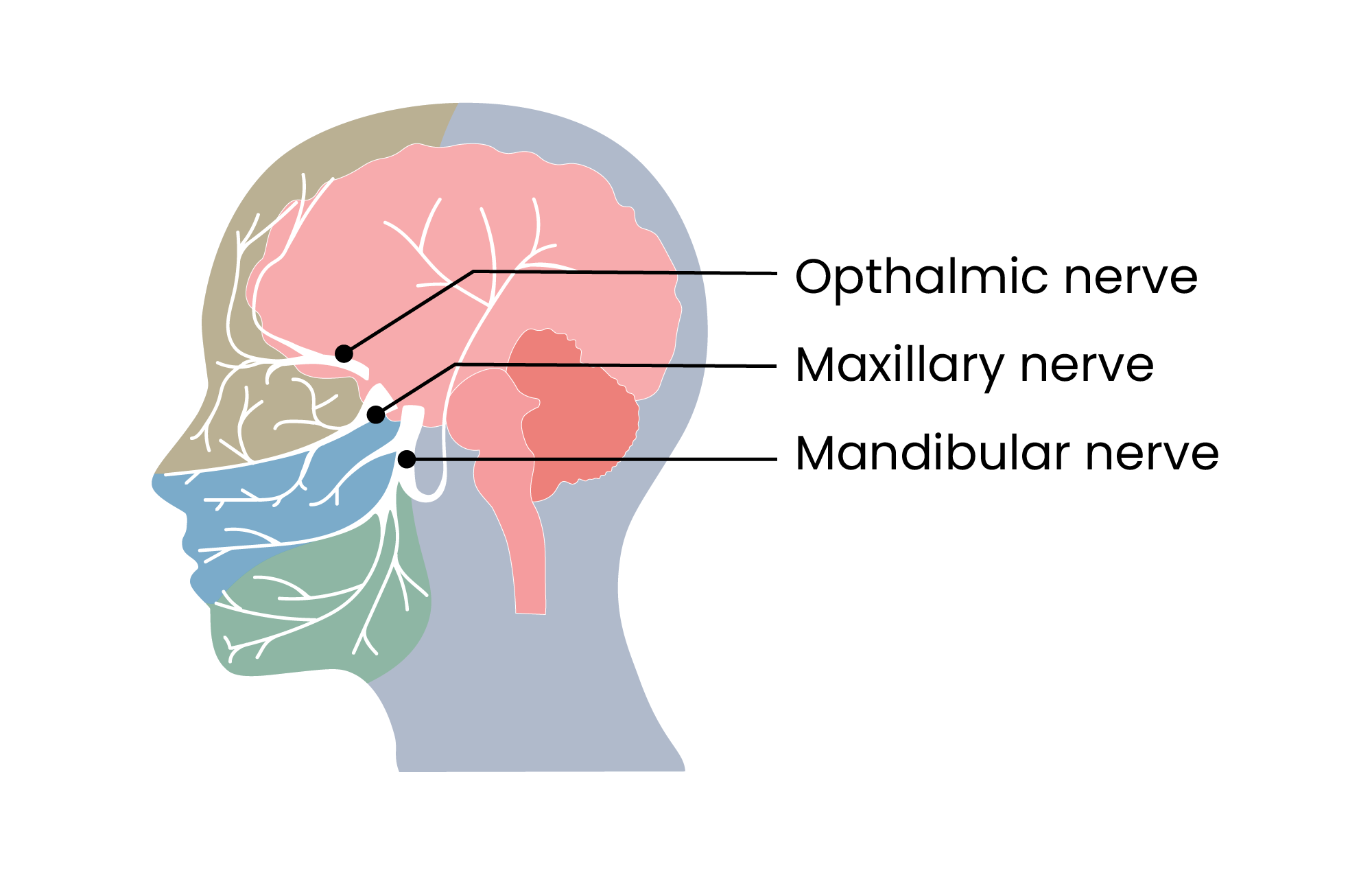
Idiopathic TN is where no underlying structural or secondary cause can be identified on clinical assessment or imaging. It presents with the typical pattern of sudden, severe, unilateral, electric shock‑like facial pain attacks in one or more trigeminal nerve divisions but without demonstrable neurovascular compression, demyelinating disease or other pathology3,11.
Classical TN, which is the most common type, is thought to result from neurovascular compression of the trigeminal nerve root near the brainstem, leading to focal demyelination and increased nerve excitability. This mechanism is believed to explain the paroxysmal, shock‑like nature of the pain12.
Secondary TN arises from identifiable underlying pathology such as multiple sclerosis-related demyelination or structural lesions such as tumours. These mechanisms differ from classical TN and have important implications for investigation and management. This is why neuroimaging is recommended when presentations are atypical or red‑flag features are present2,3,13.
Clinical features and differential diagnosis
TN is primarily a clinical diagnosis based on a characteristic symptom pattern2. The National Institute for Health and Care Excellence defines TN as recurrent, unilateral paroxysms of facial pain that last from a fraction of a second up to two minutes, affecting one or more trigeminal divisions5. The pain is severe, stabbing or electric in quality, triggered by stimuli, stereotyped for the individual and occurs in the absence of neurological deficit11.
Diagnosis can be challenging because TN shares features with other conditions affecting the face and oral cavity2. Some of the important differentials include dental pain, post‑herpetic neuralgia, temporomandibular disorders, sinus disease, cluster headache and atypical facial pain3,14.
Too many people with trigeminal neuralgia are first told they have dental pain — that delay matters
Anonymous member of the Trigeminal Neuralgia Association UK
Practical screening questions for a pharmacist
Using national TN guidance with peer‑reviewed descriptions of dental pain5,15–17, important historical features typical of each condition can be determined. Although no single TN screening tool has been identified for use in primary care18, these features can be used to develop practical screening questions that may support pharmacists in community, urgent care or telephone triage settings. Examples are summarised in Table 15,15–17.
Table 1: Screening questions to differentiate trigeminal neuralgia from dental pain
Red‑flag features requiring urgent specialist referral and neuroimaging include sensory loss, motor weakness, bilateral symptoms, pain persisting between attacks, onset before the age of 40 years, progressive symptoms or features suggestive of secondary causes such as multiple sclerosis or neoplasia1,3,11.
A pharmacist may be the first to recognise that symptoms do not fit routine dental pain
Anonymous member of the Trigeminal Neuralgia Association UK
Pharmacological management
Management of TN is primarily pharmacological, with escalation to surgical intervention considered when medicines are ineffective or poorly tolerated2,19. Treatment decisions are usually specialist‑led, but pharmacists play an important role in optimisation and monitoring.
National guidelines identify anticonvulsants as first‑line therapy3,5,13. Carbamazepine and oxcarbazepine are recommended initially, with alternatives, such as lamotrigine, gabapentin and pregabalin, used as add‑on or second‑line options. Baclofen and botulinum toxin A may be considered in selected cases3,11,19.
Oxcarbazepine is a structural analogue of carbamazepine. It is not licensed for use in the UK but is used off label if contraindications to carbamazepine exist3,15.
For the purposes of this article, focus is placed on carbamazepine, which remains the only licensed treatment for TN in the UK.
Carbamazepine may be the gold standard, but for many patients, the real question is whether they can live with the side effects
Anonymous member of the Trigeminal Neuralgia Association UK
Carbamazepine: safety and monitoring
Carbamazepine is an effective drug but presents several challenges for long‑term management3. At initiation, it has a narrow therapeutic range and undergoes autoinduction, with enzyme induction reducing serum concentrations during the first two to four weeks of treatment20. As a strong enzyme inducer, carbamazepine can reduce the effectiveness of hormonal contraceptives, anticoagulants and many other medicines21–23. Therefore, pharmacists should routinely ask about all prescribed, over-the-counter and herbal products, warn patients about contraception failure risk and encourage them to seek advice before starting any new medicine or supplement24.
The results of a study published in 2021 suggest that while carbamazepine is effective for most people with TN, adverse effects are common — for example, in one cohort of 354 patients, 43.6% experienced side effects, while almost 30% required dose reduction or treatment interruption owing to tolerability issues25.
Before starting treatment, a baseline assessment must be undertaken, including full blood count and liver function tests, particularly in patients with a history of liver disease and in older patients. Baseline renal function, serum sodium and BMI should also be checked. In patients with known cardiac history, an ECG should be considered20. Genetic screening for the HLA‑B*1502 allele is recommended in individuals of Han Chinese or Thai origin owing to the risk of severe cutaneous adverse reactions such as Stevens–Johnson syndrome20,22. Based on clinical judgement, clinicians may also consider baseline screening of serum creatinine, iron, reticulocytes and vitamin D levels for patients with pre-existing conditions, insufficient calcium intake or who are housebound23,26.
Although carbamazepine carries a lower teratogenic risk than valproate and is not currently subject to a formal pregnancy prevention programme, females of childbearing potential should still receive structured counselling about pregnancy risks and contraceptive interactions27–29. Patients should also be signposted to seek specialist advice regarding highly effective, non‑interacting contraception, such as an IUD, IUS or contraceptive injection30,31. Medicines and Healthcare products Regulatory Agency safety alerts highlight risks relating to suicidal ideation32, pregnancy exposure29 and switching between manufacturers23.
For the management of paroxysmal pain in TN, carbamazepine should be started at 200mg daily and increased at a minimum of three-day intervals as per national guidance or the British National Formulary22,23. Slower dose increases may be indicated depending on patient response. A guide, published in Practical Neurology, recommends a maximum dose for paroxysmal pain in TN as 1,200mg per day3. Once pain is stable, the dose may be tapered to the lowest tolerable level and increased again when needed5.
Monitoring
Routine carbamazepine plasma concentration monitoring is not recommended unless clinically indicated. Hyponatraemia occurs in around 26% of patients and may be mistaken for medication side effects. It is usually mild, but close monitoring is advised, as dose reduction or withdrawal may be required depending on symptom severity, duration and hydration status33. Common adverse effects include drowsiness, dizziness, diplopia, hyponatraemia and cognitive impairment, all of which may affect safety and adherence20,23. Therefore, patients should be counselled regarding driving and machinery use, particularly during titration22.
Monitoring should include a follow‑up at two weeks after starting the medication, then monthly for the next three months. The Specialist Pharmacy Service advises sodium checks in patients with renal impairment or those taking diuretics, which are known to lower sodium levels. Patients who struggle with tolerability may benefit from switching to a modified‑release formulation or dose splitting20.
Brain fog is not a minor issue — it can affect thinking, safety, confidence, work and daily life
Anonymous member of the Trigeminal Neuralgia Association UK
Follow‑up and long-term management
When counselling patients with TN, it is essential to take a holistic approach and address oral health, diet, mental wellbeing and access to support alongside medication management34,35. Psychological distress is common in TN, with high rates of anxiety, depression and suicidal ideation reported6,32. The biopsychosocial model may provide a more comprehensive framework than a purely biomedical approach, as pain is shaped not only by biological pathology but also by psychological factors, such as mood, expectations and coping strategies, and by social circumstances including isolation, work pressures and availability of support36–38.
This is particularly important for patients experiencing low mood or anxiety, which may contribute to social withdrawal and increase the risk of suicidal ideation or suicidal behaviour6,34,39. When combined with potential adverse effects of carbamazepine, these factors warrant careful monitoring.
Ongoing review should include the assessment of pain control, adverse effects and potential drug interactions. This is especially important in secondary TN, where patients may already be taking multiple medicines for conditions such as multiple sclerosis5.
Patient counselling and support
Acute TN flare ups differ from other pain presentations, and paracetamol, non‑steroidal anti‑inflammatory drugs and opioids are frequently ineffective during severe attacks40. During these episodes, patients may be unable to speak, so it may be helpful to advise them to carry a notebook and pen to communicate symptoms4. An alternative is an alert card, such as the sunflower lanyard card available through the TNA41, which can be used to communicate emergency care needs, including urgent dental or emergency department referral. In some settings, interventions, such as local anaesthetic nerve block, may also be available4.
Anticipation of pain attacks can heighten anxiety and may itself act as a trigger, creating a cycle that contributes to social withdrawal34,36. For individuals whose pain is provoked by light touch or close contact, intimacy may become difficult, affecting relationships and overall wellbeing6,13,42.
Non‑pharmacological approaches, such as mindfulness and meditation, may help reduce stress and improve emotional regulation. Those approaches can be useful adjuncts for some patients36,37,39. Complementary therapies, such as acupuncture, have also been explored. Although evidence remains limited, the results of several studies suggest potential benefit when used alongside standard treatment43.
Practical adaptations can also help reduce symptom burden4. Pharmacists can advise on modified dental care, such as soft‑bristled toothbrushes and non‑irritating toothpaste or mouthwash, to minimise oral stimulation and reduce triggers44.
Patients should also be signposted to supportive resources. In the UK, the TNA offers specialist‑led education, a helpline and local peer groups, which can be invaluable for individuals who feel isolated and may help improve coping and engagement with care41.
Future therapies
Research continues to expand future treatment options. Agents, such as vixotrigine, have shown early promise but have not progressed to phase III trials45, while compounds, such as basimglurant, are currently in phase II studies46.
The role of pharmacy professionals
Although TN is usually managed within specialist services, pharmacists play an important role in optimising patient care across primary and secondary settings. Main responsibilities include the early identification of red‑flag symptoms requiring referral, medicines optimisation and management of drug–drug interactions, as well as support with safe dose titration and adherence. Pharmacists are also well placed to monitor and manage adverse effects, address the psychological impact of chronic facial pain, and signpost patients to appropriate specialist services and patient support organisations.
The pharmacist is not just dispensing medication — they are often a lifeline
Anonymous member of the Trigeminal Neuralgia Association UK
Conclusion
By combining clinical vigilance with patient‑centred care, pharmacy professionals can make a meaningful difference for people living with this debilitating condition.
As emphasised by Aneeta Prem, chief executive of TNA UK: “TN is not only about pain control. It is about whether a person can function, stay safe and maintain daily life. That is why awareness in pharmacy matters.”
People with trigeminal neuralgia do not need their pain minimised — they need to be heard early, treated seriously and supported properly
Anonymous member of the Trigeminal Neuralgia Association UK
Best practice points for pharmacists
Understanding the condition
TN causes sudden, severe, electric‑shock-like facial pain — usually unilateral — and triggered by light touch, eating, talking or cold air.
Medicines: counselling and monitoring
First‑line therapy is usually carbamazepine, which is an anticonvulsant.
Key counselling points:
- Take regularly, not just during attacks; doses are usually increased gradually;
- Carbamazepine commonly causes nausea, vomiting, drowsiness, dizziness and unsteadiness. These effects are dose‑related and tend to occur early in treatment, especially in older adults. Using a modified‑release formulation may help reduce central nervous system effects such as sedation;
- Do not stop abruptly unless advised by a clinician;
- Some people taking antiepileptic medicines have experienced thoughts of self‑harm. Anyone prescribed carbamazepine should be informed about this possible risk and advised to seek help promptly if such thoughts occur;
- Carbamazepine has multiple drug–drug interactions, and starting new prescription or over-the-counter medicines may reduce efficacy or increase toxicity. Encourage patients to check with a pharmacist before adding anything new.
Monitoring for serious adverse effects
Advise patients to report these symptoms promptly:
- Hyponatraemia (i.e. low sodium) — watch for confusion, headaches, unsteadiness, nausea or seizures;
- Blood, such as signs of leukopenia, hepatic or skin disorders — look for sore throat, mouth ulcers, thrush, fever, bruising, or bleeding, including rare but serious reactions such as Stevens–Johnson syndrome.
Other considerations
- If housebound or with limited sunlight exposure, vitamin D supplementation may be appropriate (general wellbeing and bone health);
- For people of childbearing potential discuss effective contraception as carbamazepine is teratogenic.
Optimising medicine timing
- Some patients may benefit from adjusting dose timing, so peak effect aligns with activities that trigger pain such as eating or washing. This should be done cautiously and with clinical guidance.
Medicines to avoid for acute attacks
- Do NOT recommend paracetamol, non-steroidal anti-inflammatory drugs or opioids, such as codeine, for TN flare‑ups because they are ineffective;
- Instead, advise patients to seek urgent dental or specialist review if pain worsens or changes.
Red‑flag symptoms requiring urgent referral
- Bilateral symptoms, progressive neurological deficits, persistent numbness or atypical continuous pain;
- In terms of carbamazepine, symptoms indicative of blood, hepatic, or skin disorders (for example fever, sore throat, rash, mouth ulcers, bruising, or bleeding) and suicidal thoughts are considered red flags.
Adjunctive non‑pharmacological strategies
- Mindfulness, relaxation, and stress‑reduction techniques may help coping and reduce distress;
- Acupuncture has limited but emerging evidence of benefit for some individuals;
- Encourage exploring reputable self‑management resources such as Live Well With Pain (for pacing, mindfulness and coping strategies).
Signposting to support
- Trigeminal Neuralgia Association UK provides tailored resources, peer support groups and webinars;
- Encourage patients and carers to access national and regional support networks to reduce isolation and improve self‑management confidence.
- 1.Cruccu G, Di Stefano G, Truini A. Trigeminal Neuralgia. Ropper AH, ed. N Engl J Med. 2020;383(8):754-762. doi:10.1056/nejmra1914484
- 2.Maarbjerg S, Di Stefano G, Bendtsen L, Cruccu G. Trigeminal neuralgia – diagnosis and treatment. Cephalalgia. 2017;37(7):648-657. doi:10.1177/0333102416687280
- 3.Lambru G, Zakrzewska J, Matharu M. Trigeminal neuralgia: a practical guide. Pract Neurol. 2021;21(5):392-402. doi:10.1136/practneurol-2020-002782
- 4.Trigeminal neuralgia. American Association of Neurological Surgeons. https://www.aans.org/patients/conditions-treatments/trigeminal-neuralgia/
- 5.Trigeminal neuralgia: clinical knowledge summary. National Institute for Health and Care Excellence. 2024. https://cks.nice.org.uk/topics/trigeminal-neuralgia/
- 6.Zakrzewska JM, Wu J, Mon-Williams M, Phillips N, Pavitt SH. Evaluating the impact of trigeminal neuralgia. Pain. 2017;158(6):1166-1174. doi:10.1097/j.pain.0000000000000853
- 7.Antonaci F, Arceri S, Rakusa M, et al. Pitfals in recognition and management of trigeminal neuralgia. J Headache Pain. 2020;21(1). doi:10.1186/s10194-020-01149-8
- 8.Trigeminal neuralgia. MS Trust. https://mstrust.org.uk/a-z/trigeminal-neuralgia
- 9.Yu F, Yin J. Young-onset trigeminal neuralgia: a clinical study and literature review. Acta Neurochir. 2021;163(6):1617-1621. doi:10.1007/s00701-021-04848-6
- 10.Headache Classification Committee of the International Headache Society (IHS) The International Classification of Headache Disorders, 3rd edition. Cephalalgia. 2018;38(1):1-211. doi:10.1177/0333102417738202
- 11.Bendtsen L, Zakrzewska JM, Abbott J, et al. European Academy of Neurology guideline on trigeminal neuralgia. Euro J of Neurology. 2019;26(6):831-849. doi:10.1111/ene.13950
- 12.Love S. Trigeminal neuralgia: Pathology and pathogenesis. Brain. 2001;124(12):2347-2360. doi:10.1093/brain/124.12.2347
- 13.Di Stefano G, Maarbjerg S, Nurmikko T, Truini A, Cruccu G. Triggering trigeminal neuralgia. Cephalalgia. 2017;38(6):1049-1056. doi:10.1177/0333102417721677
- 14.Acosta-Ortíz R. Differential diagnosis of orofacial pain III: associated with neuropathic disorders. Revista Facultad de Odontología Universidad de Antioquia. Published online 2001. https://revistas.udea.edu.co/index.php/odont/article/view/343849
- 15.Guidelines for the management of trigeminal neuralgia. The Royal College of Surgeons of England. 2021. https://www.rcseng.ac.uk/-/media/files/rcs/fds/guidelines/trigemina-neuralgia-guidelines_2021_v4.pdf
- 16.Allison JR, Stone SJ, Pigg M. The painful tooth: mechanisms, presentation and differential diagnosis of odontogenic pain. Oral Surgery. 2020;13(4):309-320. doi:10.1111/ors.12481
- 17.Renton T. Dental (Odontogenic) Pain. Reviews in Pain. 2011;5(1):2-7. doi:10.1177/204946371100500102
- 18.Teshima T, Zakrzewska J, Potter R. A systematic review of screening diagnostic tools for trigeminal neuralgia. British Journal of Pain. 2023;17(3):255-266. doi:10.1177/20494637221146854
- 19.Cruccu G, Truini A. Refractory Trigeminal Neuralgia. CNS Drugs. 2012;27(2):91-96. doi:10.1007/s40263-012-0023-0
- 20.Carbamazepine monitoring. Specialist Pharmacy Service. 2026. https://www.sps.nhs.uk/monitorings/carbamazepine-monitoring/
- 21.Patsalos PN, Fröscher W, Pisani F, Van Rijn CM. The Importance of Drug Interactions in Epilepsy Therapy. Epilepsia. 2002;43(4):365-385. doi:10.1046/j.1528-1157.2002.13001.x
- 22.Carbamazepine: summary of product characteristics. Electronic Medicines Compendium. 2026. https://www.medicines.org.uk/emc/product/1040/smpc
- 23.Carbamazepine. British National Formulary. 2024. https://bnf.nice.org.uk/drugs/carbamazepine/
- 24.Fong SYK, Gao Q, Zuo Z. Interaction of Carbamazepine with Herbs, Dietary Supplements, and Food: A Systematic Review. Evidence-Based Complementary and Alternative Medicine. 2013;2013:1-15. doi:10.1155/2013/898261
- 25.Di Stefano G, De Stefano G, Leone C, et al. Real‐world effectiveness and tolerability of carbamazepine and oxcarbazepine in 354 patients with trigeminal neuralgia. European Journal of Pain. 2021;25(5):1064-1071. doi:10.1002/ejp.1727
- 26.Antiepileptics: adverse effects on bone. Medicines and Healthcare products Regulatory Agency. 2014. https://www.gov.uk/drug-safety-update/antiepileptics-adverse-effects-on-bone
- 27.Antenatal and postnatal mental health: clinical management and service guidance. National Institute for Health and Care Excellence. 2020. https://www.nice.org.uk/guidance/cg192/chapter/Recommendations
- 28.Tomson T, Battino D, Bonizzoni E, et al. Comparative risk of major congenital malformations with eight different antiepileptic drugs: a prospective cohort study of the EURAP registry. The Lancet Neurology. 2018;17(6):530-538. doi:10.1016/s1474-4422(18)30107-8
- 29.Antiepileptic drugs in pregnancy: updated advice following comprehensive safety review. Medicines and Healthcare products Regulatory Agency. 2021. https://assets.publishing.service.gov.uk/media/5ff5bc82d3bf7f65d550563c/AED-PAR-PDF-FINAL-Jan21.pdf
- 30.Carbamazepine. NHS. https://www.nhs.uk/medicines/carbamazepine/
- 31.Bhakta J, Bainbridge J, Borgelt L. Teratogenic medications and concurrent contraceptive use in women of childbearing ability with epilepsy. Epilepsy & Behavior. 2015;52:212-217. doi:10.1016/j.yebeh.2015.08.004
- 32.Antiepileptics: risk of suicidal thoughts and behaviour. Medicines and Healthcare products Regulatory Agency. 2014. https://www.gov.uk/drug-safety-update/antiepileptics-risk-of-suicidal-thoughts-and-behaviour
- 33.Berghuis B, van der Palen J, de Haan G, et al. Carbamazepine‐ and oxcarbazepine‐induced hyponatremia in people with epilepsy. Epilepsia. 2017;58(7):1227-1233. doi:10.1111/epi.13777
- 34.Fishbain DA, Lewis JE, Gao J. The Pain Suicidality Association: A Narrative Review. Pain Med. 2014;15(11):1835-1849. doi:10.1111/pme.12463
- 35.Chronic pain (primary and secondary) in over 16s: assessment of all chronic pain and management of chronic primary pain. National Institute for Health and Care Excellence. 2021. https://www.nice.org.uk/guidance/ng193
- 36.Gatchel RJ, Peng YB, Peters ML, Fuchs PN, Turk DC. The biopsychosocial approach to chronic pain: Scientific advances and future directions. Psychological Bulletin. 2007;133(4):581-624. doi:10.1037/0033-2909.133.4.581
- 37.Pinto BM, Tavares I, Pozza DH. Enhancing Chronic Non-Cancer Pain Management: A Systematic Review of Mindfulness Therapies and Guided Imagery Interventions. Medicina. 2024;60(5):686. doi:10.3390/medicina60050686
- 38.Health Survey for England 2024: chronic pain. NHS Digital. https://digital.nhs.uk/data-and-information/publications/statistical/health-survey-for-england/2024/chronic-pain
- 39.Williams AC de C, Eccleston C, Morley S. Psychological therapies for the management of chronic pain (excluding headache) in adults. Cochrane Database of Systematic Reviews. Published online November 14, 2012. doi:10.1002/14651858.cd007407.pub3
- 40.Pinto MJ, Gomes A, Pinto M, Abreu P, Costa A. Treatment of acute exacerbations of trigeminal neuralgia in the emergency department: A retrospective case series. Headache. 2022;62(8):1002-1006. doi:10.1111/head.14373
- 41.Support and resources for people with trigeminal neuralgia. Trigeminal Neuralgia Association UK. https://www.tna-uk.org.uk
- 42.Wu TH, Hu LY, Lu T, et al. Risk of psychiatric disorders following trigeminal neuralgia: a nationwide population-based retrospective cohort study. J Headache Pain. 2015;16(1). doi:10.1186/s10194-015-0548-y
- 43.Liu H, Li H, Xu M, Chung K, Zhang S. A systematic review on acupuncture for trigeminal neuralgia. Altern Ther Health Med. 2010;16(6):30-35. https://www.ncbi.nlm.nih.gov/pubmed/21280460
- 44.Trigeminal neuralgia: patient information leaflet. BMJ Best Practice. 2023. https://bestpractice.bmj.com/patient-leaflets/en-gb/download/1585646128055/Trigeminal%20neuralgia.pdf
- 45.Kotecha M, Cheshire WP, Finnigan H, et al. <p>Design of Phase 3 Studies Evaluating Vixotrigine for Treatment of Trigeminal Neuralgia</p> JPR. 2020;Volume 13:1601-1609. doi:10.2147/jpr.s247182
- 46.LIBRA Study Explores mGluR5 Modulation as Novel Approach for Trigeminal Neuralgia. NeurologyLive. 2026. https://www.neurologylive.com/view/libra-study-explores-mglur5-modulation-novel-approach-trigeminal-neuralgia
1 comment
You must be logged in to post a comment.
You might also be interested in…

Non-pharmacological interventions should be first step in managing chronic pain, guidance says

SIGN rejects opioids and medicinal cannabis for chronic pain in draft guidance

Excellent article Michalina, a worthwhile read for all of us