When the 2022 revision to EU GMP Annex 1 came into effect in August 2023, it heralded a shift away from traditional manual methods of decontaminating isolators towards automated and validated bio-decontamination systems, the most prevalent method for this being vaporised hydrogen peroxide (VHP).
For many NHS aseptic facilities, the replacement of isolators is not only impractical but financially impossible. As such, alternative solutions to ensure compliance are required, one potential solution is the use of portable VHP generators. These devices come at a lower cost, are compatible with already owned isolators and are advertised as providing the same level of bio-decontamination as integrated VHP systems.
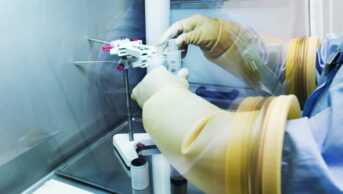
In 2025, pharmacy technical services (PTS) within Betsi Cadwaladr University Health Board (BCUHB) purchased one of these devices — the Devea Phileas Genius — for use in their licensed manufacturing facility at Wrexham Maelor Hospital.
Usage requirements
Prior to commencing validation work on the portable VHP device, it was imperative to clearly identify the intended usage of the device. Within BCUHB, it was determined that this device (coupled with a manual detergent clean) would be implemented for use in monthly cleans of the isolators, whereby the isolators could be decontaminated overnight (12-hour dwell time).
Validation considerations
Further consideration is given to the validation process itself. Biological indicators (BIs) are available to demonstrate both a log4 and a log6 bio-decontamination. While the manual process in use by most facilities is generally regarded to provide a log3 bio-decontamination, it may therefore be appropriate to use log4 BIs. However, a log6 bio-decontamination is still regarded as the gold standard.
Owing to the differing methods of VHP generation, the aerosol particles produced by the portable VHP generator are larger than those of an integrated system. The BI envelopes must be opened prior to use in a way that would maximise the permeation of the VHP.
The number of validation cycles and BIs to be used can be determined. Triplicate BIs can be utilised during a single run, or single BIs can be used across multiple validation cycles. Within BCUHB, three validation cycles per isolator were carried out using a single BI in each location, as it was determined the economic advantages outweighed the probability of a false positive.
Validation methodology
Within BCUHB PTS there are two types of isolators in use: two Envair and four Atlas (2-glove configuration) positive/negative pressure isolators. All isolators have about equivalent internal volumes, but contain numerous structural or internal differences that cause differences in the internal surface areas.
A risk assessment was carried out and it was determined that a single cycle would be validated. The cycle was designed to provide adequate bio-decontamination in each type and variation of isolator. While this would result in an overage of VHP being used in some isolators, it would lead to a more user-friendly experience once the technology was adopted.
The determined hydrogen peroxide gassing cycle was then validated in the ‘worst case’ variation of each isolator type (i.e. those with the highest internal volume and surface area). This validation was conducted using log6 BIs, with a single BI placed in 17 locations around the isolator. These positions were determined to demonstrate complete coverage within the isolator, workspace and hatch corners, and in locations that would provide a challenge to the vapour (e.g. under hatch trays). Additionally, hydrogen peroxide chemical indicators were placed alongside the BIs to provide real-time information on the permeation of the VHP throughout the isolator.
During the aeration stage, a digital hydrogen peroxide detector was placed in the aseptic suite to determine whether safe working levels were breached.
Conclusion
With the methodology outlined, BCUHB PTS could successfully validate the Devea Phileas Genius to achieve a log6 bio-decontamination within all isolators at the Wrexham aseptic facility. The device has been adopted into the routine cleaning schedule and the data continues to be assessed to determine whether the perceived benefits have been realised.
Christopher Goodwin, senior QC analyst, North Wales Pharmaceutical Quality Assurance