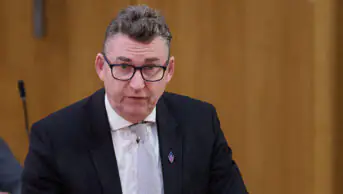
John Eveson/ Alamy Stock Photo
MPs voted against the Terminally Ill Adults (End of Life) Bill at its second reading in the House of Commons.
The Bill, which was introduced as a private member’s Bill by Lauren Edwards, Labour MP for Rochester and Strood, on 17 June 2026, would have allowed terminally ill adults with capacity to decide to end their life, providing that they can take the substance themselves.
A previous version of the Bill, which was introduced by Labour MP Kim Leadbeater in October 2024, was supported by MPs through all three of its required readings in the House of Commons but was defeated in the House of Lords, where peers tabled more than 1,200 amendments.
Edwards’ Bill incorporated two amendments. Speaking during the House of Commons debate, held on 11 September 2026, Edwards said that she would ask MPs to send the Bill back to the Lords so they “can continue their important work of amending and scrutinising legislation”.
However, at the end of a House of Commons debate, 286 MPs voted against the Bill, while 270 MPs voted for it.
Sadik Al-Hassan, Labour MP for North Somerset, told MPs: “I practised as a pharmacist for nearly 20 years before my election. That means I’ve seen the faces behind this debate. I’ve watched people collect prescriptions that offer nothing more than a sticking plaster over terminal illness — pain managed but suffering not ended.
“A safe and legal route at the end of life would not replace good palliative care, it would sit alongside it, offering the small mercy of choice to those who want it.”
However, Zubir Ahmed, Scottish Labour MP for Glasgow South West, told MPs that there were already “many tools” to relieve suffering in palliative care.
Ahmed said he thought the Bill would “create the allure of choice and control but not the agency to pursue either”. He raised concerns about a lack of data on the mechanism of death and patient capacity to administer the drug.
Ahmed also suggested that the safeguard of needing approval from two doctors would not be sufficient to protect patients against coercive control.
“The Bill will not fulfil its aims, it will disappoint many who will crave the total agency and control that they want. But it will expose and disenfranchise further the vulnerable in our society […] Our NHS is a great institution, but in its current form and state, it is not ready, it is not safe, for this conversation [or] for this Bill, in this moment,” Ahmed added.
The results of a survey conducted by The Pharmaceutical Journal in September 2025 revealed that 54% of pharmacists said they supported assisted dying in principle.
Read more: ‘Special report: pharmacists’ views on assisted dying‘