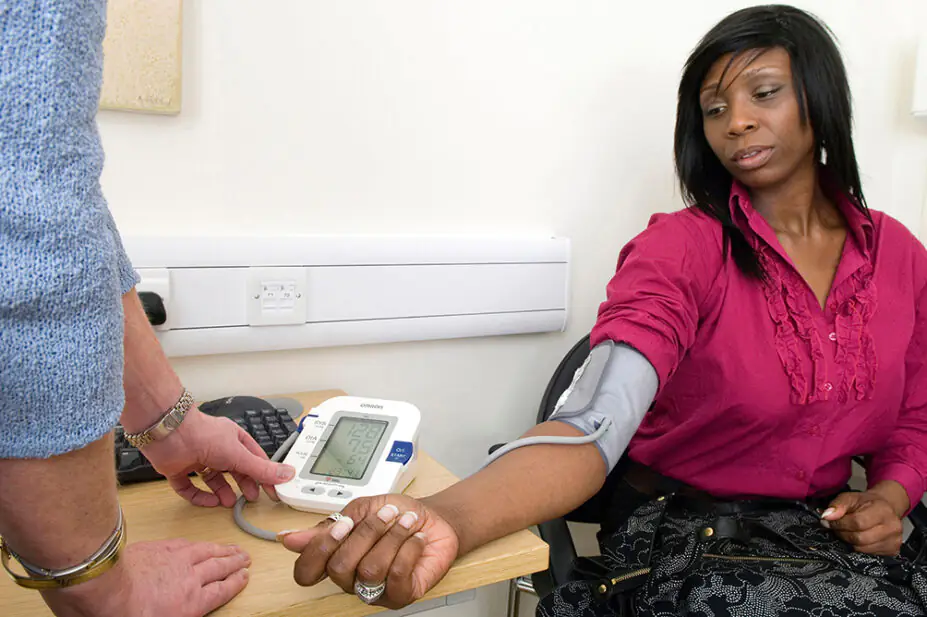
Medicshots/ Alamy Stock Photo
Stroke incidence is increasing, with black people more than twice at risk compared with white people, study results have suggested.
In findings presented at the European Stroke Organisation Conference (ESOC), held in Maastricht, the Netherlands on 6 May 2026, researchers revealed that following a 34% decrease in the risk of stroke between 1995–1999 and 2010–2014, rates increased by 13% in 2020–2024.
However, study results showed that in 2020–2024, stroke incidence was more than twice as high in Black African (incidence rate ratio [IRR] 2.31; 95% CI, 2.03–2.62) and Black Caribbean (IRR 2.00; 95% CI, 1.73–2.31) populations compared with the white population.
Researchers based their findings on the South London Stroke Register, which examined the stroke risk of 333,000 people in South London over a 30-year span, 7,726 of whom had a stroke.
Rates remained consistently higher in these groups across the study period, with the highest incidence observed among those experiencing socioeconomic deprivation, the researchers noted.
Study author Camila Pantoja-Ruiz, a PhD candidate at the Stroke Research Group, Kings College London, said: “This trend may partly reflect the lasting impact of the COVID-19 pandemic, which reduced access to primary care, blood pressure monitoring and prescribing, particularly affecting black and deprived communities.”
According to the study results, compared with white participants, Black African and Black Caribbean populations were more likely to have high blood pressure (47% and 29% higher prevalence, respectively) and diabetes (92% and 123% higher, respectively).
The researchers found that 12% of Black African patients had no diagnosed risk factors prior to stroke, compared with 6.3% of white patients, which suggests gaps in early detection.
In addition, Black African populations were found to experience stroke around 10–12 years earlier than white populations, the researchers observed.
“While the specific mechanisms differ between healthcare systems, a consistent finding is that prevention is not reaching those most at risk. Worsening cardiovascular inequalities have been reported across many settings, and these findings add to growing evidence that this is a widespread problem requiring targeted solutions,” Pantoja-Ruiz added.
In response, community pharmacy representatives have called for pharmacies to play a greater role in managing cardiovascular risk.
Conor Price, chief executive of Community Pharmacy London, told The Pharmaceutical Journal that these findings were “deeply concerning but unfortunately not surprising”.
He added: “We continue to see significant inequalities in cardiovascular outcomes, particularly among black communities and people living in areas of deprivation, despite stroke and hypertension being largely preventable through earlier identification and intervention.
“Community pharmacy has a critical role to play in addressing this gap because pharmacies are often the most accessible part of the NHS, particularly for communities who may face barriers accessing traditional primary care services. This includes people working multiple jobs, those with lower digital access, individuals less likely to engage with routine GP appointments, and communities where trust in wider healthcare systems may be variable.
“Across London and nationally, the NHS community pharmacy blood pressure check service has demonstrated how pharmacies can support opportunistic case finding at scale… However, blood pressure monitoring alone is not enough. The real opportunity is creating stronger pathways between community pharmacy, general practice and wider neighbourhood teams so that patients identified with raised blood pressure are rapidly supported into ongoing management and prescribing where needed. This includes culturally competent engagement, proactive follow-up and reducing friction in referral pathways.”
Commenting on the study, Malcolm Harrison, chief executive of the Company Chemists’ Association, said: “We want to see the blood pressure monitoring service expanded and pharmacies empowered to initiate the supply of medicines for treating hypertension.
“This would remove the delay between identification and treatment, and reduce pressures on general practice. There are approximately 600,000 new cases of hypertension each year. Half of these could be managed in community pharmacy.
“Naturally, any expansion of this or any other community pharmacy service would need appropriate funding to ensure its sustainability, particularly given the perilous financial position the sector finds itself in.”
Tase Oputu, president of the Royal College of Pharmacy, said: “The rise in stroke rates among black and socioeconomically deprived communities highlights the urgent need to improve access to early detection and treatment of high blood pressure.
“Community pharmacies are often the most accessible healthcare setting, offering convenient blood pressure checks and reaching people who may not routinely engage with other services. Pharmacists can support earlier identification of hypertension, optimise medicines and work with GPs and other healthcare professionals to improve uptake of treatment.
“With the right support and integration into neighbourhood health services, community pharmacy can play a key role in tackling inequalities and preventing avoidable strokes.”