MK Photo/Alamy Stock Photo
Community pharmacies in Leicestershire and London will receive funding to set up programmes aimed at making obesity care more accessible, the government has announced.
In a statement published on 27 June 2026, the Department for Science, Innovation and Technology (DSIT) said that the pharmacy schemes will be part of an Obesity Pathway Innovation Programme, which is designed to “simplify access to a range of weight-loss interventions, including lifestyle wraparound services, such as nutritionists, psychologists, social prescribing, and, where clinically appropriate, pharmaceutical obesity treatments”.
The funding for the programmes was first announced in August 2025.
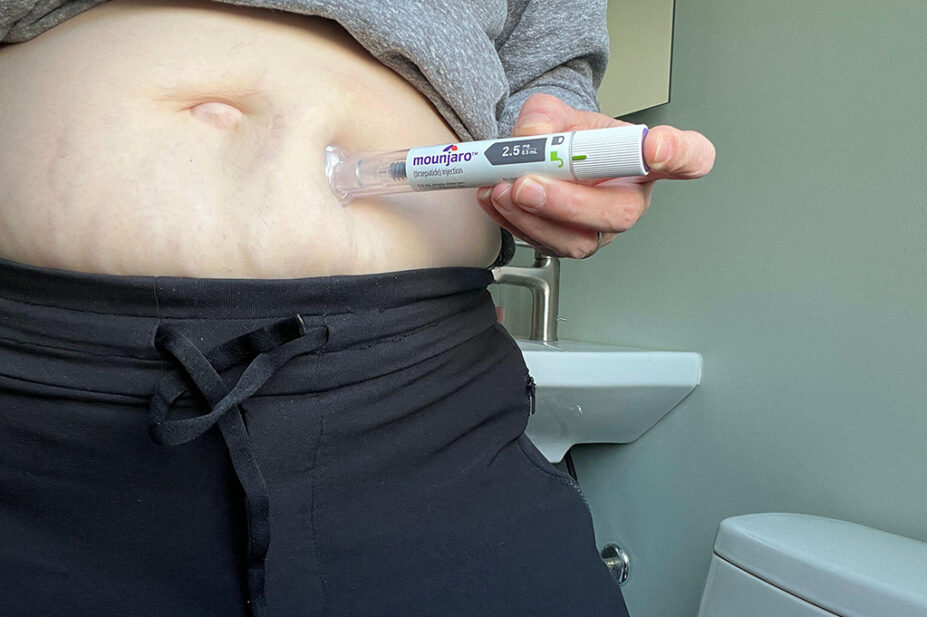
Money for the projects includes £50m from the DSIT and up to £35m fromEli Lilly, which manufactures Mounjaro (tirzepatide).
The statement said the projects are expected to begin “imminently” and will run until March 2029. It continued that the funded projects will be led by NHS integrated care boards in England and NHS boards in Wales and Scotland.
The DSIT added that in Leicester, Leicestershire and Rutland, six new neighbourhood hubs will be established, which will be hosted in community pharmacies and gyms, to offer weight management services.
These hubs will offer outreach into communities least likely to seek help and will offer support including healthy living and lifestyle advice, behavioural support programmes and medication, where appropriate, it said.
The government also noted that in South London, a high-street pharmacy will offer access to obesity care under the programme, alongside exercise groups and dietary advice.
The funding will also support an integrated national obesity care pathway in Wales, with a bilingual digital entry point linked to NHS systems, it said.
“[This] will create a simple way for people to find help and connect to support that fits around their daily lives, whether online or close to home.”
Commenting on the scheme, Rajshri Owen, chief officer of Community Pharmacy Leicester, Leicestershire and Rutland, said: “Any investment that explores new ways of supporting people living with obesity is welcome, particularly where it recognises the important role community pharmacy can play within neighbourhood-based healthcare.
“Community pharmacies are among the most accessible healthcare settings, with highly skilled clinical teams who already support patients with healthy lifestyle advice, medicines optimisation and the management of long-term conditions. They are therefore well placed to contribute to integrated weight management services alongside other healthcare professionals.
“If initiatives such as these demonstrate improved patient outcomes, they could provide valuable evidence of the wider contribution community pharmacy can make to tackling obesity when supported by appropriate commissioning and sustainable funding.”
Malcolm Harrison, chief executive of the Company Chemists’ Association, said the funding was “a welcome recognition of the important role community pharmacy can play in delivering accessible, neighbourhood-based weight management support”.
“These pilots will make a real difference locally and provide valuable evidence for how community pharmacy can support people living with obesity,” he added.
“The public health benefits of weight-loss services cannot be underestimated, and a national, pharmacy-led pathway should be commissioned to provide the needed access and capacity. To deliver lasting impact and enable wider rollout, any services must be backed by sustainable, long-term funding.”
Heidi Wright, practice and policy lead for England at the Royal College of Pharmacy, said: “We welcome the inclusion of community pharmacy in these obesity care pilots. Pharmacists are highly accessible healthcare professionals and medicines experts who are well placed to support people living with obesity through healthy lifestyle advice, the safe and effective use of weight management medicines and ongoing care.
“If these pilots improve access and outcomes for patients, they could provide valuable evidence for expanding community pharmacy’s role in obesity services. Any future rollout should be backed by sustainable funding and clear referral pathways within the wider NHS.”
Sukhi Basra, vice chair of the National Pharmacy Association, who also runs a weight-loss clinic, said: “This is the announcement community pharmacy has been waiting for. The South London and Leicester projects, placing the pharmacy at the centre of an integrated obesity pathway, are exactly the right architecture.”
“What matters now is that the evidence these pilots generate is acted upon. If they demonstrate, as I believe they will, that community pharmacy can safely initiate, monitor and support patients on weight management pathways, including medication where clinically appropriate, then DHSC [Department of Health and Social Care] and NHS England must be ready to commission at scale. The infrastructure is there. The clinical capability is there. What community pharmacy has too often lacked is a funding and commissioning framework that takes that seriously. These projects are the chance to build that case permanently.”