Miguel AF/Shutterstock.com
A coroner has said an integrated care board (ICB) should consider remedies for patients prescribed high-dose opioids over long periods “on a regional basis”.
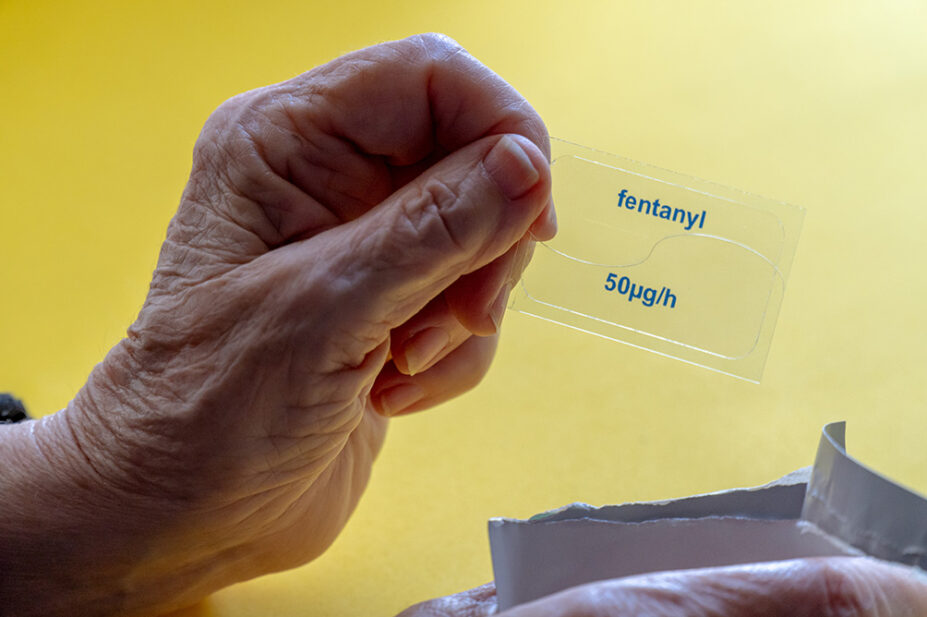
Peter Nieto, senior coroner for Derby and Derbyshire, wrote to NHS Derby and Derbyshire ICB in a ‘Prevention of future deaths’ report, published on 3 March 2026, following the death of Wendy Boddington in March 2025 from a higher than prescribed dose of fentanyl, with prescribed codeine adding to the toxicity.
Boddington, aged 56 years, had applied two fentanyl patches to her body rather than the single patch prescribed, the coroner said.
The report also noted that post-mortem examination with toxicology showed the patient had a high level of fentanyl in her system, which was recognised to be in the fatal range, and codeine would have added to that toxicity.
Boddington had been prescribed the medications for chronic pain since 2011, after an accident had resulted in amputation of her arm, the coroner highlighted.
The coroner added that the initial dose of fentanyl was “increased over a short period”.
“At that time, GP awareness of the complications of fentanyl was more limited, but in 2014 and 2015, GPs at the practice had attempted to address Wendy’s level of opiate and opioid medication, although Wendy was not in agreement,” the coroner said.
Although Boddington had received annual medication reviews, the coroner said there were “no clear plans” in the evidence to address her level of medication since 2015.
“There was also a missed opportunity for the specialist hospital pain clinic to raise the fentanyl prescription with the GP practice in 2021,” the report said.
“There is no positive evidence that Wendy had placed two fentanyl patches on herself to deliberately harm herself, and it is noted that she had fallen and injured her ankle just days before her death and she was probably experiencing increased pain because of that.”
The coroner also noted that the court heard that stopping or reduce opioid doses can be difficult, and that Boddington had expressed objections to this.
In addition, he said that while the risks of dependence and tolerance with opioids is now recognised and guidance is against long-term prescriptions, “there are many people who have been taking these medications for a long time for whom stopping or reducing the medications is very challenging”.
“My specific concern is that there appear to be a significant number of people who are being prescribed opiate and opioid medications for chronic pain, often at high doses and for long periods, but may not be receiving support to reduce, stop, or substitute those medications. It appears to me that the ICB is in a position to consider this problem and potential remedies on a regional basis, and feed into national strategies,” the coroner wrote.
He added that the inquest heard that Boddington’s GP practice has started a programme — involving two pharmacists and two GPs — to identify patients who have been receiving long-term opioid prescriptions to review and agree planned reduction, stoppage or substitution of medications but that no national programmes exist.
Commenting on the report, Cathy Stannard, clinical lead for the pain transformation programme at NHS Gloucestershire ICB, said: “The report demonstrates the hazards of high-dose opioid prescribing but also acknowledges challenges encountered when trying to support deprescribing for people established on opioids for many years.
“There are many influences on the experience of pain and the likelihood of being prescribed an opioid that may well have been at play in this case. It’s clear that the deceased’s prescribers were anxious about her opioid load and had made efforts to deprescribe. To ask that prescribers unilaterally deprescribe opioids for people who continue using them (usually because life is intolerable without them), is naive and impractical.
“High-dose opioid use is always an indicator of underlying complexity of the pain experience, including the patient’s environmental and social context, degree of support, early life experiences and beliefs about what might help.
“The lack of any evidence-based medical interventions as an alternative to opioids makes everything harder,” she added.
A spokesperson for NHS Derby and Derbyshire ICB said: “We extend our sincere sympathies to the family and friends of Wendy Boddington following their tragic loss. We will consider the findings of the Prevention of Future Deaths report carefully and reflect on any lessons identified.”
In January 2026, the Medicines and Healthcare products Regulatory Agency announced that packaging and patient information leaflets for opioids and z-drugs would be updated to include the warning “may cause addiction, dependence and withdrawal reactions”.