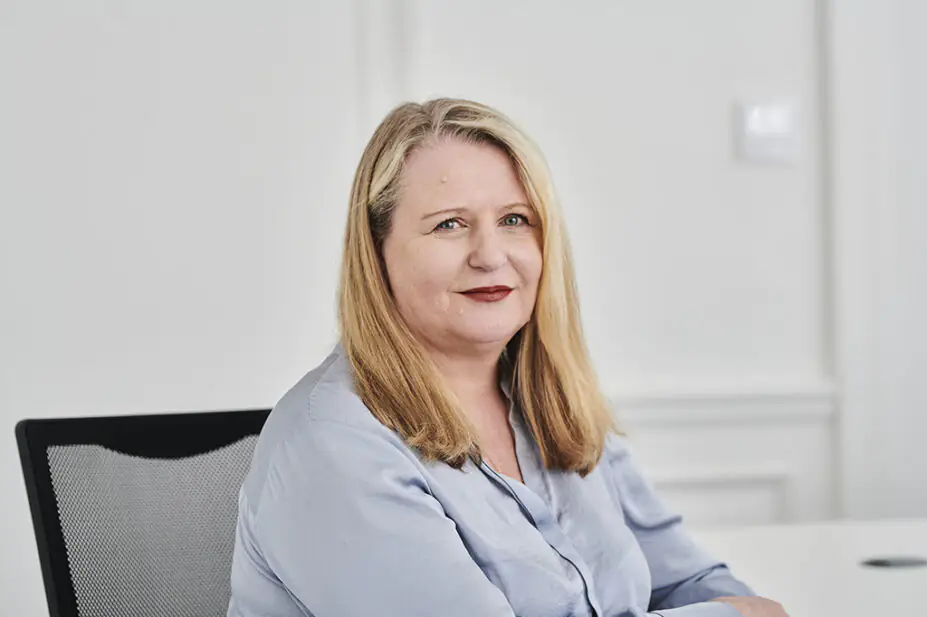
Paul Stuart / The Pharmaceutical Journal
An initial meeting to set the agenda for work on reforming community pharmacy’s operating model is expected to take place before the end of June, Janet Morrison, chief executive of Community Pharmacy England (CPE), has said.
Work on contract reform was a commitment in the Community Pharmacy Contractual Framework for 2026/2027 and CPE said that it agreed to the one-year contract “on condition of a shared programme of reform with government and NHS England”.
Speaking to The Pharmaceutical Journal on 8 June 2026, Morrison said she would be meeting pharmacy minister Stephen Kinnock “straight after” receiving input from the CPE committee at its June meeting, taking place on 24–25 June 2026.
“We’re meeting him before the end of June,” she added.
At the meeting, CPE and the Department of Health and Social Care (DHSC) will “pin down” the terms of reference and what needs to be covered by the programme of work on reform, Morrison said.
“We’re in conversation with them about how to design that work programme and we will have deadlines attached to it,” Morrison said. “It seems clear it needs to be covering: what kind of future community pharmacy sector do we need, what kind of network do we need to deliver it, what’s its role, and what will that look like?
“Then we need to also look at margin medicine supply and the issues around that, and then also the funding and contract and regulatory environment you need to enable that to happen. So it’s very broad ranging.
“The challenge will be really in terms of what elements are quick wins that could be achieved before we get into negotiations, [and] what elements are more fundamental and will take longer, and getting that commitment to work it through. Plus, having the capacity within the department and NHS England and ourselves in terms of being able to really make good progress.”
In the previous pharmacy contract, for 2023/2024 and 2024/2025, the government said it was “committed to working with the sector over the coming years to: stabilise community pharmacy, build on what we have achieved to date, [and] lay the foundations for an independent prescribing service to harness its full potential in the future”.
However, Morrison suggested progress on stabilising the sector’s operating model had been hindered by the abolition of NHS England and restructures within the DHSC.
“Some of the key people that we were negotiating with last year in the Department of Health aren’t there anymore. They’ve left, so we’ve got a new team there,” she said.
“I think their capacity has been hugely constrained by the merger with NHS England… I [also] think there’s an element of, we do negotiations, and then there’s implementation to be done, and those bigger conversations don’t happen. We’ve got to make sure they do happen now, though.
“We’re going to agree that work programme and the timelines involved, and I think the minister will be very keen to back that up and to make commitments to that process,” Morrison added.
In terms of how far reforms could go, Morrison said: “That’s all up for debate.”
“I think almost anything can be on the table, but it’s not to say that [proposing reforms is] easy for the sector either, because there’s such a variety of views,” she added.
Morrison also suggested that other stakeholders, such as manufacturers and wholesalers, could be invited to feed into discussions around medicines supply.