Zapylaieva Hanna / Shutterstock.com
Children in the UK could be offered screening for type 1 diabetes mellitus (T1DM), according to researchers looking into how finger-prick testing could potentially identify the condition in its earliest stages before symptoms appear.
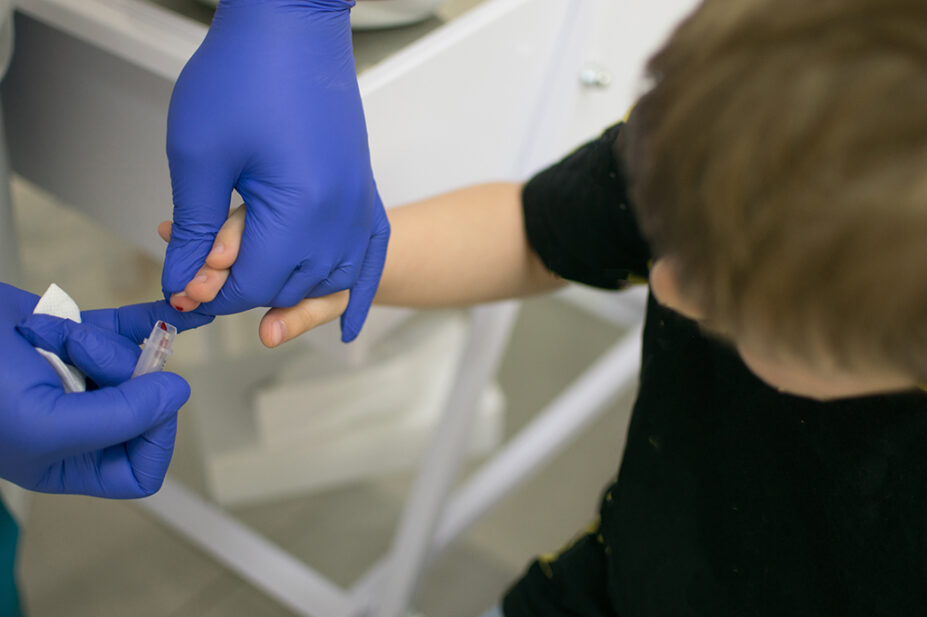
The first phase of the ‘Early surveillance for autoimmune diabetes’ (ELSA) study — which was co-funded by diabetes research charity Breakthrough T1D and Diabetes UK, and published in The Lancet on 20 January 2026 — offered families a finger-prick blood test for auto-antibodies (which are markers of T1DM that can appear years before symptoms appear), before escalating them for further tests if needed.
Among the 17,283 children aged 3–13 years who were screened for T1DM risk at the time of analysis, 75 had one auto-antibody, signalling increased future risk; 160 had two or more auto-antibodies but did not yet require insulin therapy, indicating early-stage T1DM; and 7 were found to have undiagnosed T1DM with all needing to start insulin immediately.
The University of Birmingham research team said that several countries are moving towards implementing a national screening programme for T1DM, with Italy becoming the first nation to mandate paediatric screening.
They said that the study showed that the dried blood spot method they used “was both feasible and acceptable” in the UK.
The second phase of the research, ‘ELSA 2’, due to launch on 21 January 2026, will expand screening to all children in the UK aged 2–17 years, with a focus on younger children and older teenagers. It is aimed to recruit 30,000 additional children across these new age groups.
ELSA 2 will also establish new NHS early-stage type 1 diabetes clinics, providing families with clinical and psychological support, creating a clear pathway from screening to diagnosis, monitoring and treatment.
Rachel Connor, director of research partnerships at Breakthrough T1D, said: “This is about rewriting the story of T1DM for thousands of families. Instead of a devastating emergency, we can offer time, choices, and hope.
“By finding children in the earliest stages, we’re not just preparing families, we’re opening the door to treatments that can delay the need for insulin by years. That extra time means childhoods with fewer injections, fewer hospital visits and more normality managed healthcare process, changing the course of T1DM for the better.”
Commenting on the study, Shareen Forbes, professor of diabetic medicine, University of Edinburgh, said: “This research matters as T1DM usually is not detected until symptoms appear. ELSA supports a future where children at risk are identified early and families are prepared. Complications at diagnosis are reduced. T1DM becomes a condition that can be anticipated and monitored, not just reacted to.”
Nick Thomas, academic clinical lecturer in diabetes and endocrinology at the University of Exeter, said: “This ground-breaking UK study provides a feasible and acceptable blueprint for identifying children in the early stages of T1DM.
“Early detection has never been more important, as new drugs are now available that can delay the onset of the disease, but only if they are given before symptoms develop.”