Antony Robinson/ Alamy Stock Photo
Almost four in five people have self-monitored some aspect of their health, according the results of a study funded in part by the National Institute for Health and Care Research (NIHR).
The findings, published in press in the Archives of Public Health, were uncovered as part of a YouGov survey carried out between 1 July 2025 and 13 August 2025.
As part of the survey, 4,270 respondents were asked about their experiences of, and attitudes towards, self-monitoring of 12 aspects of health, which included blood pressure, blood sugar, body composition, cholesterol, mental/cognitive health, eyesight, diet, fitness/exercise, hearing, heart rate/pulse, menstrual cycle/periods and skin conditions.
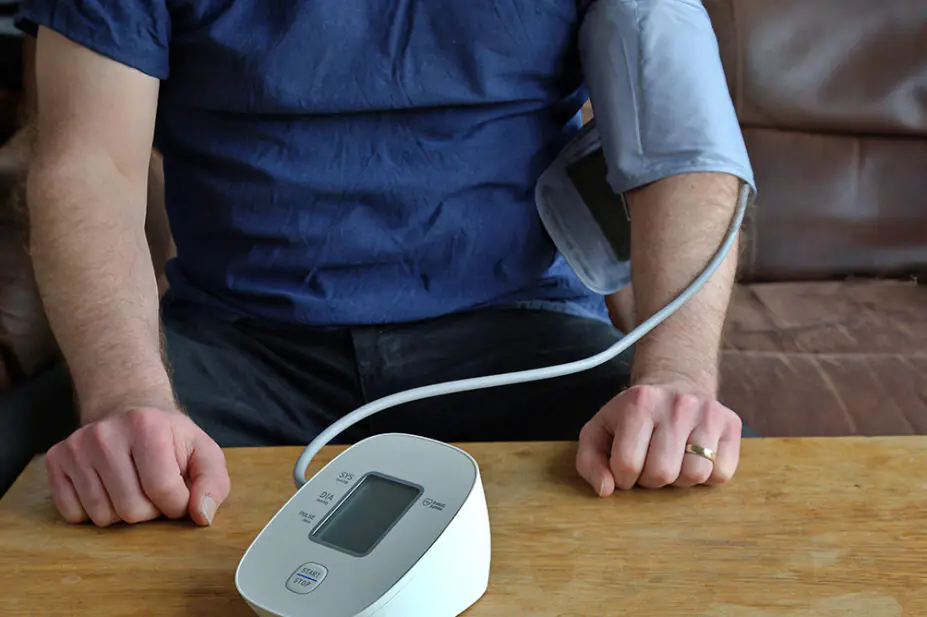
The survey results revealed that more than three-quarters (79%, n=3,354) of respondents said they had monitored at least one of the 12 aspects of health listed, with blood pressure being the health aspect with the highest proportion of respondents (41%, n=1,375) who reported having self-monitored.
The least monitored health aspect was cholesterol, with a small number (3%, n=101) of respondents reporting that they had self-monitored it, the survey results found.
They also highlighted that more than eight in ten (86%, n= 3,678) respondents would be willing to monitor at least one of the 12 health aspects if it was recommended by the NHS. Of these, more than two-thirds (71%, n=3,045) would be willing to monitor at least blood pressure and/or blood sugar, while more than half (58%, n=2,488) would be willing to monitor fitness/exercise and/or diet.
More than three-quarters of respondents (78%, n=3,331) said they would be happy for their results to be sent to their GP, the study results showed.
However, the survey results also revealed that not everyone took action if self-monitoring indicated a potential problem. Six out of ten (61%, n=616) of those respondents whose blood pressure monitoring indicated a problem spoke to a GP, while more than one in ten (12%, n=123) spoke to another healthcare professional and a similar proportion (15%, n=152) said they took no action.
Some respondents also reported feelings of anxiety around self-testing, obsessive testing and confusion about results.
The survey results also found some demographic variation in experience of, and willingness to engage with, self-monitoring, with males, older adults, people in areas of high deprivation and people with lower levels of education being less willing to self-monitor their health.
The study authors noted: “Incorporating self-monitoring results into NHS records presents an opportunity to identify health concerns early and aligns with government initiatives for preventative action to promote population health.”
“Challenges may arise if results are unreliable or misunderstood by users and could potentially lead to workload/capacity concerns if users seek follow-up professional support,” they added.
Lead author Kevin Munro, professor of audiology at the University of Manchester and senior investigator at the NIHR, said: “Our findings show that self-monitoring of health is already a normal part of life for many people across the UK and that there is strong public enthusiasm for doing more of it in the future.
“Self-monitoring has huge potential to support earlier detection of problems, encourage preventative action and help people take greater control of their health. However, we must ensure that nobody is left behind and that these technologies are introduced in ways that are accessible, understandable and equitable for all sections of society.”
Commenting on the study, Laura Wilson, director for Scotland at the Royal College of Pharmacy, said: “Self-monitoring can help people take a more active role in their health, but more information is not necessarily better. People need to understand what they are measuring, how reliable the result is and what they should do if something looks concerning.
“Pharmacists can help people understand information about their health and know when they need further advice, but this should not mean pharmacy teams are expected to assess every result people generate themselves.
“If self-monitoring is to play a greater role in preventative care, there needs to be clarity about which information is clinically useful, how it fits into a patient’s overall care and treatment plan and who is responsible for acting on it. This needs to be considered alongside the capacity and workload pressures already facing pharmacy teams.”
Wilson added: “If self-monitoring plays a greater role in preventative care, we need to ensure it doesn’t widen existing health inequalities. More research is needed to understand the differences in how self-monitoring is used and what this means for different groups.
“Pharmacy can help make health advice accessible, but self-monitoring should complement professional support rather than become a barrier to it.”