Company Chemists' Association
The low price paid by the UK for medicines could potentially cause risks to long-term supply security, health minister Zubir Ahmed has acknowledged.
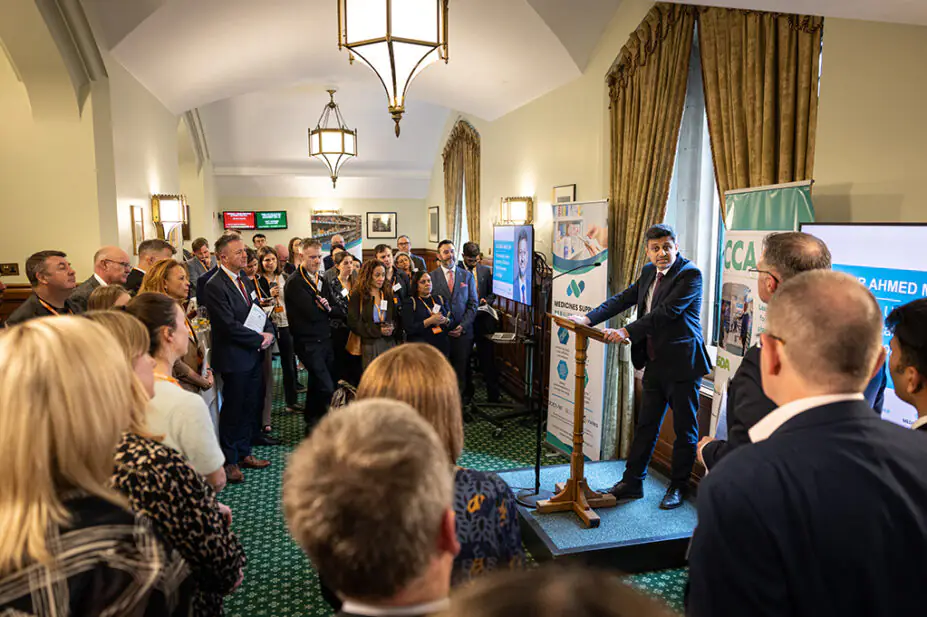
During a speech at a parliamentary reception on medicines resilience held on 14 April 2026, Ahmed said: “The UK rightly takes pride in achieving some of the lowest medicines prices internationally, but I also appreciate this is a challenge, and we therefore must remain alert to the risk this potentially can cause in undermining long-term supply security.”
”Our approach is focused on properly valuing medicines according to the benefits they deliver to patients and health systems while supporting strong market competition,” he told attendees.
The event was hosted by Sadik Al-Hassan, chair of the All-Party Parliamentary Group on Pharmacy, on behalf of the Medicines Supply Resilience Group, which is hosted by the Company Chemists’ Association.
According to NHS Business Services Authority data, 81% of all drugs used in primary care in England are generic medicines.
Medicines UK, the trade association for generics manufacturers, said that thousands of pharmacies are driving competition between suppliers, so that the UK pays the “lowest prices in Europe”, saving the NHS more than £20bn each year.
Also speaking at the event, Al-Hassan said: “We need to invest in medicines pricing. For decades, medicines prices have been driven down, and now they are too low. This is coming at the expense of resilience. When the UK pays less than other countries, global manufacturers will continue to prioritise supply elsewhere.
“We need the UK to be a more attractive market, so that our patients can reliably access the medicines they need. But that price needs to drive shorter and stronger supply chains, building more local capacity and recognising the true value for our health system,” he continued.
Al-Hassan also called for additional funding for the community pharmacy network in England, which he said was “necessary to keep pharmacies open, stocked and able to serve patients”.
“Every time a medicine cannot reach a patient, there is a cost — to the individual, to the system, and to the taxpayer. Building resilience today will save money tomorrow,” he added.
Ahmed also noted: “The UK as a whole, and I mean all four nations, relies on a highly complex global medicine supply chain, where shortages rarely have a single cause. Disruption can arise from manufacturing issues, sudden shifts in demand or global events far beyond our borders.
“Take, for example, the current conflict in the Middle East. This has not caused shortages of medicines to date, but has impacted on global shipping prices, alongside the potential to affect access to raw materials involving the production of medicines and also medical technologies.
“Dedicated teams across the government, the NHS industry and the wider supply chain are working tirelessly behind the scenes so patients can receive the medicines that they need.”