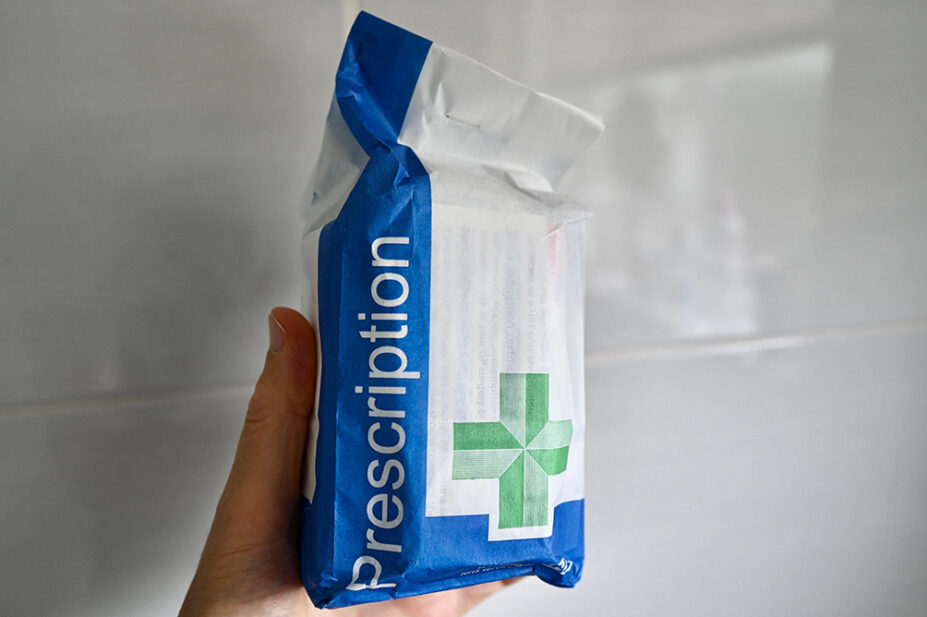
Michael Melia/ Alamy Stock Photo
Polling commissioned by the National Pharmacy Association (NPA) has found that more than one in ten patients (12%, n=214) in England went without a medicine they needed over the past year owing to cost concerns.
Results of the NPA poll, published on 22 October 2026, also revealed that nearly half (41%, n=730) of respondents said that they were worried about being able to afford their NHS prescriptions.
In response, the NPA, the Royal College of Pharmacy (RCPharm) and Community Pharmacy England (CPE) have called on the government to abolish prescription charges at the Budget, which will be announced on 28 October 2026.
The survey, which was carried out by Savanta, received responses from 1,781 adults in October 2026.
Prescription charges do not exist in Wales, Scotland or Northern Ireland, having been scrapped between 2007 and 2011.
In England, exemptions apply based on age, benefits or specific conditions, but diseases, such as Parkinson’s disease, asthma, multiple sclerosis, Crohn’s disease and kidney disease, are not automatically exempt.
The NPA estimates that around 11.6 million patients paid prescription charges in 2025, with a further 3.3 million using pre-payment certificates.
None of the revenue goes to pharmacies, but charges raised £732m for the Treasury in 2025.
The NPA said that pharmacists had been left in an “impossible position”, with some patients asking which of their medicines was most important to take. It also urged the chancellor to use the Budget to scrap the charges to ease the cost of living.
Amandeep Doll, director for England at RCPharm, said: “These findings are worrying and reflect what pharmacists know all too well. Every day, pharmacists are asked by patients who cannot afford all the medicines on their prescription which ones they could ‘do without’. Patients should not have to make choices which involve rationing their medicines.
“Prescription charges are an unfair tax on health. They risk exacerbating health inequalities by creating financial barriers to accessing essential medicines, particularly for people on lower incomes and those managing long-term conditions.
“There is no good reason why patients in England should face this barrier when prescriptions are already free in Scotland, Wales and Northern Ireland. With the Budget next week, the government has an opportunity to put an end to this outdated and complex system and abolish prescription charges in England.”
James Davies, director of research and insights at CPE, said the charges added to the workload of “already stretched community pharmacy teams who have to collect those charges and check for exemptions”.
“Scrapping prescription charges would remove a barrier to essential medicines, while also simplifying the system for both patients and pharmacy teams,” he added.
Olivier Picard, chair of the NPA, commented: “Pharmacists are health professionals, not tax collectors. They should spend their time helping patients, not administering an unfair tax on illness.”
Charities representing patients with Parkinson’s disease, asthma, Crohn’s disease and kidney disease also backed the call, with several noting that the exemptions list was outdated and urgently needed reviewing.
Fiona Loud, policy director at patient support charity Kidney Care UK, said: “Dialysis patients (over 30,000 people) are particularly disadvantaged as they are at the mercy of whether their GP classes their dialysis access as a medical exemption to qualify for free prescriptions, and they need dialysis to stay alive.
“People who have had a kidney transplant — a treatment, not a cure for kidney disease — are not exempt despite the fact they have to take an average of 10–15 different medications (between 20–30 tablets) every day including those that stop their body rejecting the transplanted kidney.”
Marianne Radcliffe, chief executive officer at Crohn’s & Colitis UK, said: “No one should have to make difficult choices between paying their bills and getting the treatment they need to stay well.”