richardjohnson / Shutterstock.com
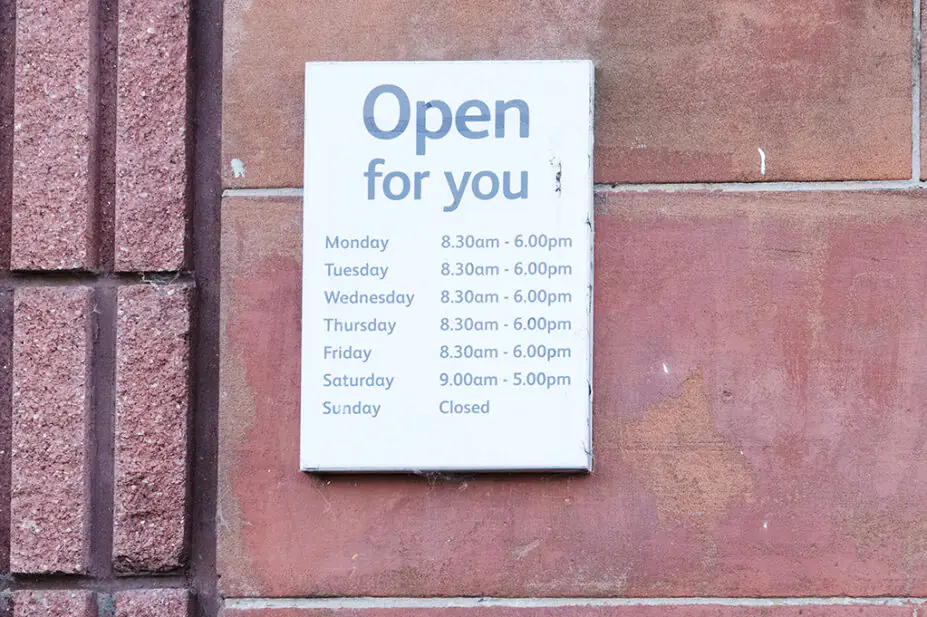
Fewer than one in five pharmacies in England open to patients on a Sunday, according to data analysis by the National Pharmacy Association (NPA).
Using NHS data on pharmacy opening hours, the NPA concluded that one in six pharmacies (around 1,600) have reduced weekend opening hours, in a move the NPA has attributed to “chronic underfunding”.
Data show that less than one-fifth (17%) of pharmacies open to patients on Sundays, while 8% do not open over the weekend at all.
Publishing its findings on 13 March 2026, the NPA said the biggest drop in Sunday opening hours was in Cornwall, with 34% fewer pharmacies opening on a Sunday compared to 2022.
“The NPA have had reports of patients facing journeys of nearly an hour to reach their nearest pharmacy on a Sunday in some parts of Cornwall,” the NPA said.
The findings also show that weekend opening hours in Kent, Birmingham and Lancashire have dropped by almost 30% since 2022.
Olivier Picard, chair of the NPA, commented: “This is yet more evidence that the pharmacy network in England is creaking at the seams after facing deep cuts over a number of years.
“Sadly the real losers are the millions of patients these pharmacies serve, particularly those in rural areas, who are forced to travel long distances or even go to hospital if they need a prescription or advice for a minor health issue on a Sunday or late at night.”
On 18 February 2026, a letter coordinated by the NPA and sent to health secretary Wes Streeting warned that without an increase to funding, pharmacy services faced being cut or pharmacy businesses closed altogether.
“Pharmacists have huge potential to take away pressure from the rest of the health system but the reality is that they hanging on by their fingertips, raiding pension pots or remortgaging homes to stay open,” Picard added.
“Although we recognise the government took a step forwards last year, much of the uplift disappeared to cover increasing costs including national insurance and national living wage contributions.
“Like the government, we want to expand NHS services to patients but this can only happen with sustained and significant investment.”
Leyla Hannbeck, chief executive of the Independent Pharmacies Association (IPA), said the NPA findings “highlight the growing pressures facing the sector”.
“Community pharmacies are a vital front door to the NHS, but years of chronic underfunding have made it increasingly difficult for many businesses to maintain extended opening hours.
“When pharmacies are forced to reduce their hours, it ultimately impacts patient access to essential healthcare and advice,” Hannbeck continued.
“The reality is that the current funding model is simply not sustainable if pharmacies are expected to continue delivering the level of service patients rely on.
“The government must use the ongoing pharmacy funding negotiations to provide meaningful financial support to the sector. Without a fair and sustainable settlement, we risk seeing further reductions in opening hours and, ultimately, more pharmacies closing down and unavailable to serve their communities.”
Malcolm Harrison, chief executive of the Company Chemists’ Association (CCA), said: “Without additional funding, more pharmacies will be forced to scale back hours or close altogether. This would make it harder for patients to get medicines and everyday health advice locally, especially at weekends and late at night, and would push more people towards already overcrowded urgent care and A&E services.
“The government recently acknowledged that funding for pharmacies today is £800m less in real-terms than it was a decade ago. If the NHS wants patients to be able to access pharmaceutical services in the evenings, late nights, and at weekends, it must be prepared to fund it.”
On 27 February 2026, Community Pharmacy England announced that negotiations on the next community pharmacy contractual framework (CPCF) had begun, and would cover “funding, service changes and other arrangements for pharmacies in 2026/2027, as well as presenting an opportunity to consider longer-term plans for the sector”.
A written parliamentary answer from pharmacy minister Stephen Kinnock, published on 24 February 2026, showed that the real-terms value of the CPCF had decreased from £3.9bn to £3.1bn over the past decade.