Charlotte Gurr
Wouldn’t it be amazing if we could stop talking about pain and start creating a nation of well beings? That question has quietly followed me through every patient consultation since I became a prescriber. It has shaped how I talk, listen and prescribe — or more often, how I deprescribe.
Pain isn’t just a physical sensation. It is perception — deeply personal, influenced by emotions, environment, stress, trauma, connection and hope (or the lack of it). And when we treat pain as purely physical, we often reach for quick solutions. For decades, those quick solutions have been opioids and benzodiazepines.
We started out with good intentions but these medicines can quietly steal lives — not always dramatically, but bit by bit, as people lose clarity, energy and hope. In the UK, we are perilously close to walking the same path the United States did before their opioid epidemic exploded.
In the United States, more than 80,000 people die each year from opioid overdose1. Many stories start the same way, with a single, well-intentioned prescription. A repeat review missed, a tolerance slowly built, followed by a life quietly narrowed by dependence.
In the UK, prescribing patterns are looking eerily similar to the early stages of the American crisis
In the UK, prescribing patterns are looking eerily similar to the early stages of the American crisis; for example, In England, prescribing of high-dose and long-acting opioids increased by 457% between 1998 and 20182. If we don’t act now, we risk the same devastating outcome as the United States.
As pharmacists, we see this reality every day. We notice when prescriptions keep rolling. This gives us a unique opportunity — and responsibility — to do something about it.
The turning point
Courtesy of Shilpa Patel
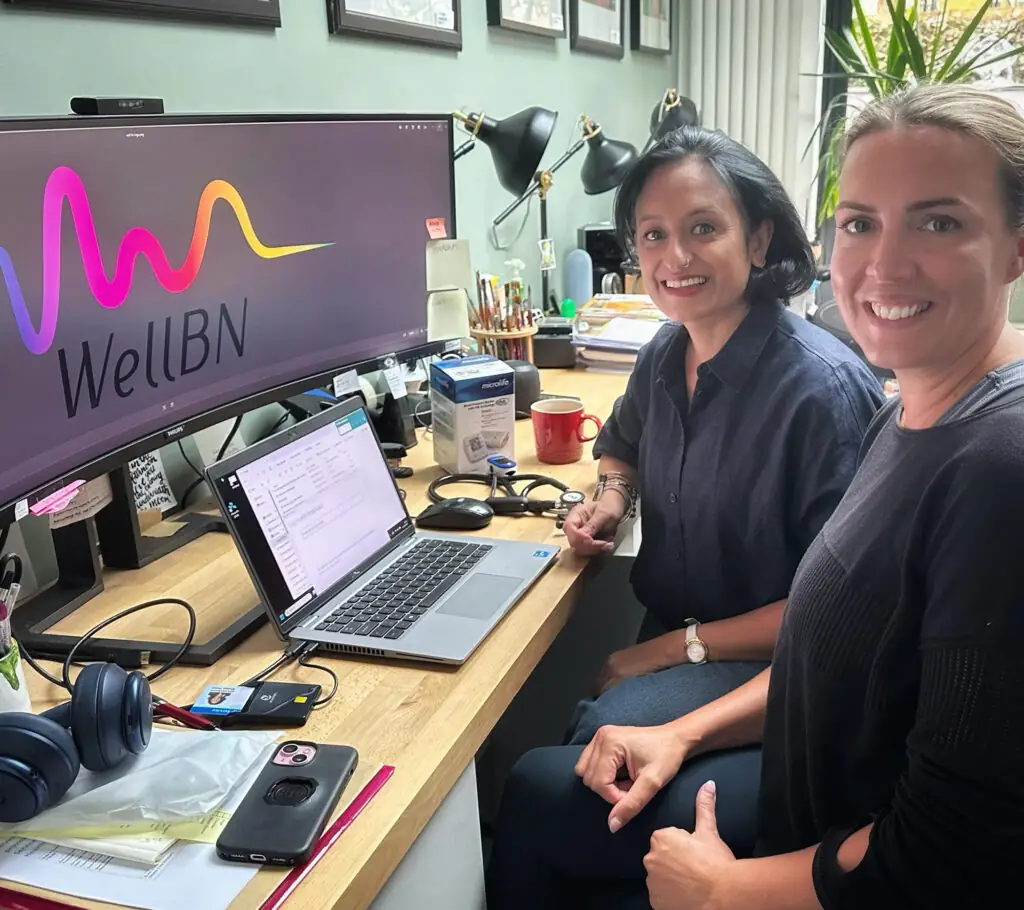
At WellBN GP Practice in Brighton, East Sussex, we decided to change this. In 2019, I met a physiotherapist who shared the same fire about tackling this problem. We decided to stop talking about it and start acting.
We ran a search on our GP system and identified all patients on long-term opioids; patients who had often just drifted into long-term use without clear clinical justification. Then we made a bold decision: we would review every single one.
The physiotherapist created individualised treatment plans focusing on movement, pacing and strength. A health coach joined us to work with patients on pain perception; helping them understand the difference between hurt and harm, how emotions and environment shape pain and how to take back control.
My role was safe, structured deprescribing. I tapered doses slowly, kept in close contact with patients, and made sure no one experienced withdrawal symptoms.
This wasn’t about stripping medication away, it was about building something new in its place — knowledge, tools, confidence and hope.
Impact on patients
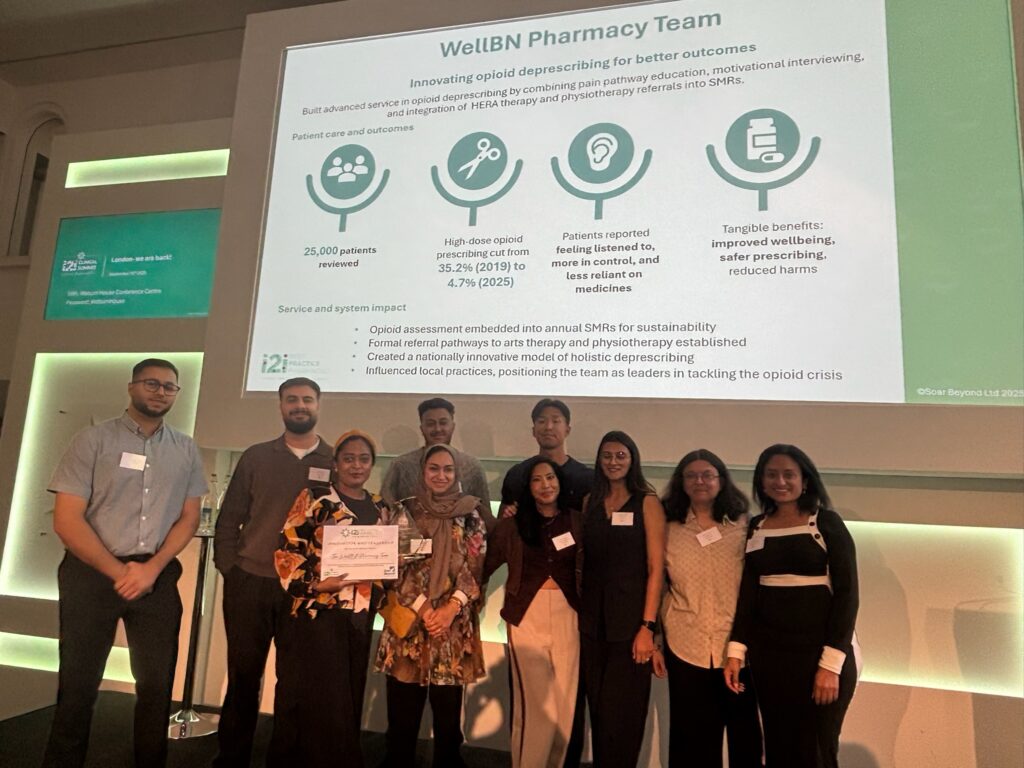
After starting our work in 2019, we were able to decrease our high-dose opioid prescribing from much higher than national average to below national average. Moreover, we have been able to maintain it below national average after we completed the initial work.
We reviewed our 25,000 patients and found that 35.2% were on high-dose opioids. This proportion was reduced to 4.7% following our work.
The benefits were also personal. There were fewer emergency callouts related to high doses and more meaningful reviews. Most importantly, patients started to reclaim their lives.
If pain can be amplified by stress, isolation and fear, then it can also be eased by connection, movement and mindset
The change was remarkable. Patients who had been stuck on the same dose for years began to rediscover movement. Some joined walking groups, while others took up physiotherapy exercises or creative pursuits, such as singing or photography. Their confidence grew as their dependence on medication shrank.
One woman told me she hadn’t felt this “clear” in a decade. Another said she’d “stopped feeling like her pain was in charge of her”. Many had believed, deep down, that they’d be on opioids for life. They were wrong, and joyfully so.
Pain is subjective
One of the most important things we teach patients is that pain is subjective. Two people can have the same injury, but completely different experiences of pain. That subjectivity is not a weakness; it’s a window of opportunity. If pain can be amplified by stress, isolation and fear, then it can also be eased by connection, movement and mindset.
That’s why non-pharmacological strategies matter so much. We tapped into physiotherapy, health coaching, mindfulness, nature walks, social prescribing and even creative arts such as drama and photography. These aren’t extras, they’re core parts of recovery.
The NHS ten-year plan already emphasises personalised care, social prescribing and reducing unnecessary opioid use3. Guidance from the National Institute for Health and Care Excellence is clear that opioids have limited evidence for chronic pain. The direction of travel is set, but policy alone won’t change lives. Implementation will.
Wouldn’t it be amazing if, one day, we didn’t have to talk about pain at all?
This is where pharmacists can shine. We’re embedded in primary care, general practice and community. We build trusted relationships with patients. We can bridge the gap between policy and real-world change, if we choose to.
Wouldn’t it be amazing if, one day, we didn’t have to talk about pain at all? Not because it doesn’t exist, but because we’d built a system that sees the whole person, treats the root causes and empowers recovery without fuelling dependence.
This is not a distant dream. We’re already doing it; one patient, one conversation, one taper, one walk, one choir session at a time. Every healthcare professional has the power to be part of that change.
Courtesy of Shilpa Patel
Do you want to be part of the solution? Follow our opioid deprescribing journey on LinkedIn (@shilpapharmacist).
- 1.US overdose deaths involving prescription opioids, 1999–2023. National Institute on Drug Abuse. Accessed December 2025. https://nida.nih.gov/research-topics/trends-statistics/overdose-death-rates#Fig4
- 2.Roberts AO, Richards GC. Is England facing an opioid epidemic? British Journal of Pain. 2023;17(3):320-324. doi:10.1177/20494637231160684
- 3.Fit for the future: ten-year health plan for England. NHS England. July 2025. Accessed December 2025. https://www.england.nhs.uk/long-term-plan/