

Courtesy of James Pilkington
It was a rainy, dark winter evening in Manchester in November 2021, when I saw an advert pop up via email for a “tropical island pharmacist”. I was about to complete my prescribing course and was looking for the next adventure and some much-needed sunshine.
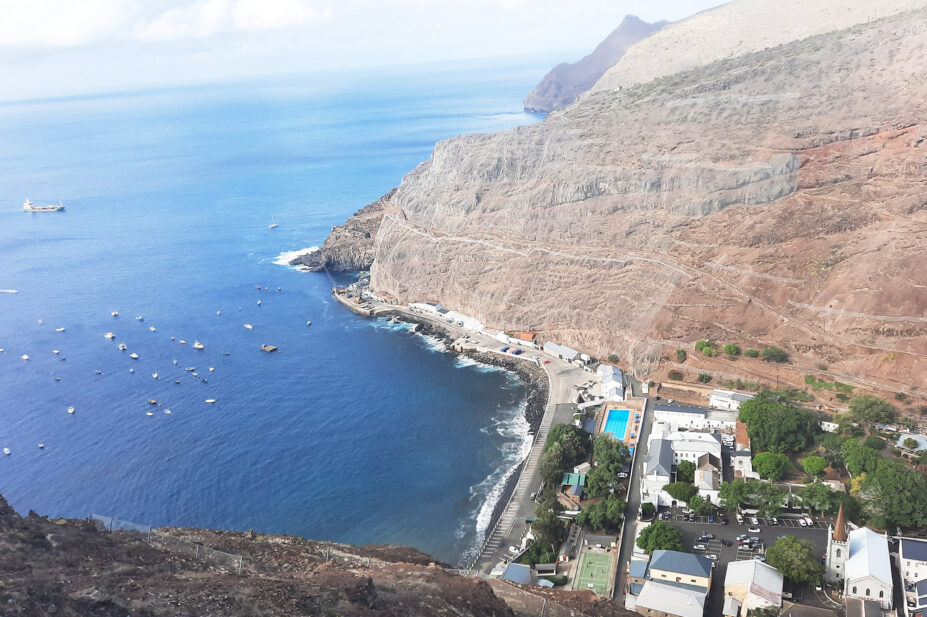
Fast-forward to April 2022. After two days of travelling I was landing on a small runway on St Helena: a tiny island more than 1,000 miles west from Angola in Africa, a dot in the vast Atlantic Ocean. St Helena is a remote UK Overseas Territory (UKOT) just 47 square miles in size and home to around 4,500 people. Until the completion of an airport in 2016, ships provided the only access to the island.
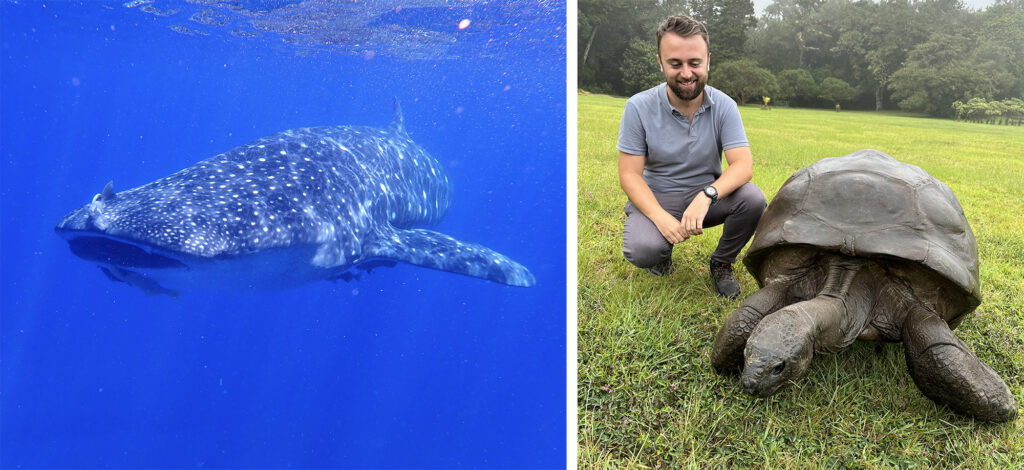
Home to the world’s oldest living land animal — a 193-year-old Seychelles giant tortoise named Jonathan — visited regularly by humpback whales, whale sharks, and containing one-third of the total biodiversity across the entire UK and its territories, it’s a nature lover’s dream.
And I was the only pharmacist on the island.
Courtesy of James Pilkington
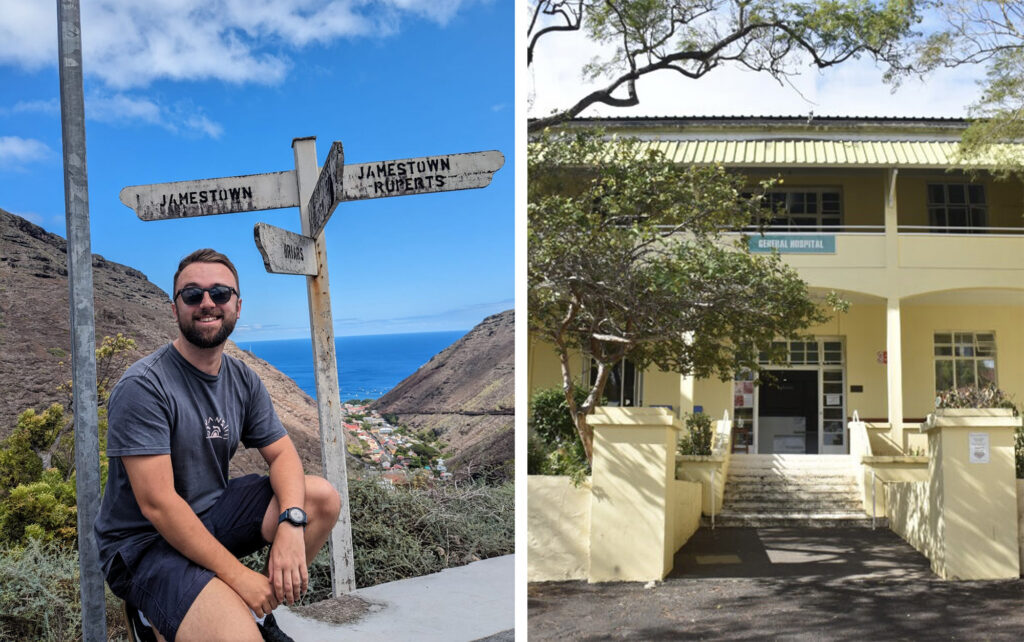
St Helena has a single pharmacy, next to the small general hospital in the capital ‘city’ of Jamestown, home to just a few hundred people. With four dispensary and three store staff members, it’s the Swiss army knife of pharmacies. It deals with all the island’s pharmaceutical needs, including regular community dispensing, minor ailment advice and over-the-counter medicines supply, inpatient drug reviews, discharges, chemotherapy production, procurement and distribution of medicines and medical consumables, supporting the delivery of vaccinations, providing a medicines service to residential homes in social care, supporting a stop-smoking service and much more.
The service also operates a pharmacy bus, which acts as a mini-dispensary, driving across the island to outlying districts to ensure patients in the remote parts of the island get their prescriptions.
It felt like a canyon gap going from a clinical pharmacist in a hospital to leading a pharmacy service to support the entire island’s health needs
The learning curve was huge. It felt like a canyon gap going from a clinical pharmacist in a hospital to leading a pharmacy service to support the entire island’s health needs. Leading change, motivating my team and influencing local health decisions all seemed impossible when we had pressing operational issues.
I found that medical logistics were our main challenge. With a monthly cargo vessel whose timetable was in constant flux, a three-monthly lead time for medicines from the UK to reach the island, and challenging weather conditions for the weekly flight, keeping medicines stocked and available to patients was a constant worry. Mishaps included one big medicines shipment incorrectly being sent by the wholesaler to the Falkland Islands, some 4,000 miles away, and strawberries being sent on the flight instead of urgent chemotherapy medicines. We ended up asking the Royal Air Force to fly the large shipment from the Falkland Islands to Ascension Island for onward shipping to St Helena. This meant we didn’t have to wait another eight months for it to be shipped back the UK, to South Africa and then to St Helena.
After strawberry-gate, the airline, logistics company and I came to an agreement that potentially life-extending chemotherapy was more urgent that someone’s strawberry shortcake. We couldn’t phone a nearby pharmacy or hospital, so self-sufficiency was key to reduce the impact to patients as much as possible.
As with pharmacies across the world, our biggest asset was our people. The dispensary had local pharmacy technicians and dispensers, who brought a wealth of experience and local know-how to avoid problems before they even arose. The stores team managed the daily movement of hundreds of medicines and medical consumables across the health service to keep the theatre operating and ambulances stocked. Everyone played a vital role in ensuring patients had access to their medicines as safely as possible.
Courtesy of James Pilkington
However, that was not the only challenge. Personally, I found St Helena professionally isolating. I could not easily phone a colleague for advice and found it difficult to keep up to date with the constant changes in clinical practice. I thought: “Surely there are other islands having the same challenges?”. This led to the creation of the UKOT Pharmacy Network, linking together pharmacy teams across most of the 14 UKOTs. We discussed issues that affected us all, including outdated legislation, rising medicines shortages and increasing access to newer medicines, like GLP-1 receptor agonists. It was refreshing to hear ideas and solutions from teams on Gibraltar and Bermuda, and how we could work to tackle these issues together. It also provided professional support and an opportunity to highlight the importance of our small teams spread across the world.
Service continuity is vital so this link with a familiar team ensures St Helena has consistent access to pharmacists’ expertise
This network grew with the inclusion of a partnership with St George’s University Hospitals NHS Foundation Trust in London. Working with pharmacist Hannah Hesketh and chief pharmacist Vinodh Kumar, we created a vital link between St Helena and London that allowed me to access support from specialist pharmacists, and access to policies and procedures I could adopt on the island. In turn, it provided pharmacists at St George’s with the opportunity to have a rotation in St Helena and experience island pharmacy up close. In UKOTs that only have one pharmacist, service continuity is vital so this link with a familiar team ensures St Helena has consistent access to pharmacists’ expertise.
Being the only pharmacist for 1,000 miles was a huge responsibility, but it was also incredibly rewarding and highlighted that forming partnerships and collaborative working can make island pharmacy teams feel less isolated. I became a more pragmatic, flexible pharmacist, which comes in handy when providing safe patient care in the face of medicines and staffing shortages that are becoming increasingly prevalent in the UK.
Since I left St Helena in October 2024, I have worked a bit closer to home in the Crown Dependency of the Isle of Man and I currently work in Jersey as a medicines optimisation pharmacist, bringing new treatments to Jersey and working with colleagues across the island to improve medicines safety and availability. It is easy to see that island pharmacy teams are hardy, adaptable and resilient, much like the communities they serve.
In the future, I hope to take the UKOT Pharmacy Network global; the struggles experienced are not all unique to UKOTs and Crown Dependencies. I am sure a pharmacist in the Faroe Islands has just as many challenges with medicines supply as a colleague in Tonga. Our common challenges and shared passion unite us, wherever we are in the world.
My message to pharmacy colleagues who are thinking about taking a leap, uprooting their lives and moving to a random island you have never heard of — do it!
3 comments
You must be logged in to post a comment.



I enjoyed reading your article as I worked for 20 years on the Shetland Islands until I retired in 2024. We twice employed a locum who had worked on St Helena and I also had a colleague who had worked on the Falkland islands. While our situation in Shetland is nowhere as remote as these places we did often struggle with logistics and poor weather makes it impossible for transport of medicines onto the island on a number of occasions. I have also worked in a rural location in East Africa for a number of years earlier in my career and very much appreciate your comments on the professional isolation.
Mary McFarlane
It's interesting to hear your perspective. Even in relatively well connected islands, the physical barrier creates similar issues as more remote ones. Once you work on one island, it's easy to find yourself working on others!
Great to read this James and hope your well! It is quite the challenge moving to other islands and having the unique circumstances to navigate. We definitely benefit from sharing these experiences. You are very right with that reply to Mary too - myself having gone from Shetland when peerie to Scotland and now on the Isle of Man!