Media for Medical SARL/ Alamy Stock Photo
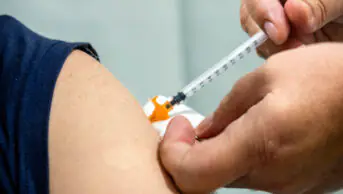
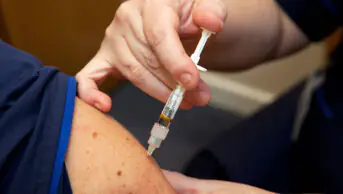
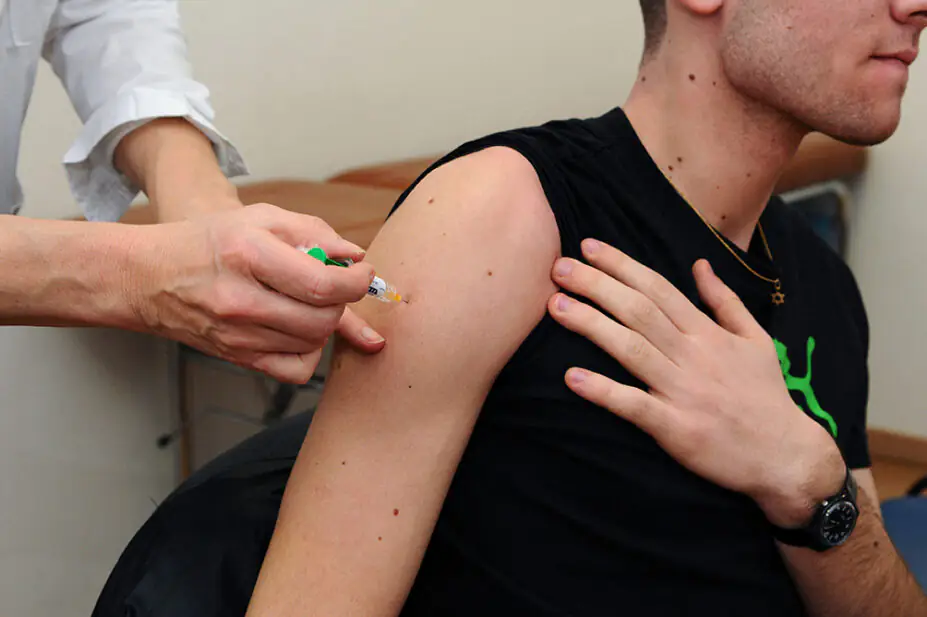
More than 130,000 appointments have been booked through community pharmacies via the NHS England meningitis B vaccination campaign for young people.
However, pharmacy bodies have reported issues with the roll-out so far, while the negotiator for England said vaccine supply was being “bolstered”.
NHS England confirmed to The Pharmaceutical Journal on 27 July 2026 that around 135,000 bookings were made during the first week of the service (20–27 July 2026) through the NHS National Booking Service, with more than 8,200 pharmacies participating.
Following an outbreak of meningitis in Kent in March 2026, pharmacies participated in targeted vaccination efforts for local university students, which was then expanded to a national campaign for 17–18 year olds and those starting university for the first time.
Alastair Buxton, director of NHS services at Community Pharmacy England, said: “Community pharmacy owners and their teams have worked hard to get this new vaccination service up and running in an incredibly short space of time, and it has been great to see the enthusiasm of pharmacy teams for it. The service is important for patients and to the NHS and government, and the decision to commission it only from community pharmacies gives it considerable strategic importance for the sector.
“However, there have been frustrating teething issues, particularly around vaccine ordering and supply, which have added to the burden on already busy pharmacy teams. NHS England is working to iron these out based on the feedback we’ve shared from the sector. Vaccine supply is being bolstered to support walk-in appointment provision and demand that arises after the next week’s order has been placed.
“NHS England has updated their guidance on supply and delivery of the vaccine to reflect this, and we advise pharmacy owners to download the latest version of the guidance from the Futures platform.”
Participating pharmacies must make at least 100 vaccination appointments available per month to receive an initial allocation of vaccine stock and will then receive future stock allocations based on the number of bookings per pharmacy recorded in the national booking system.
The results of a survey conducted by the Independent Pharmacies Association (IPA) and shared with The Pharmaceutical Journal on 26 July 2026, revealed that of 3,000 member pharmacies who responded, the majority (85%, n=2,550) said that there were ongoing difficulties with the MenB vaccination service, including problems with vaccine allocation and the National Booking System.
The IPA carried out the survey during the first week of the national rollout of the service between 20 July 2026 and 24 July 2026.
In addition, the IPA quoted an unnamed pharmacy owner in north west England, who said: “We’ve received no MenB vaccine stock at all, despite patients being told to come to community pharmacies. We’ve had worried parents and frustrated young people contacting us every day, and it’s heartbreaking having to turn them away through no fault of our own.
“It’s a ludicrous situation. We have to open appointments for patients to book despite knowing we won’t have enough vaccine stock to honour them. We’re ready to deliver this programme, but we can’t vaccinate people without vaccines.”
Leyla Hannbeck, chief executive of the IPA, commented: “It is frankly absurd to urge thousands of young people to come forward for this life-saving vaccine, only for many pharmacies to be left without the stock needed to deliver it.”
“[The programme] risks being undermined before it has even got going because pharmacies have not been given the vaccines they need,” she suggested.
The results of a separate survey conducted the same week by the National Pharmacy Association (NPA) and shared with The Pharmaceutical Journal on 27 July 2026 — with respondents representing 420 community pharmacies — suggested that issues with the service began to be resolved as the week went on.
On 20 July 2026, nearly two-thirds (63%) of respondents said they had sufficient stock to start vaccinating patients, which increased to more than eight in ten (83%) respondents by 24 July 2026, the survey results showed.
Olivier Picard, chair of the NPA, said: “We are aware that in a minority of instances, some pharmacies last week were left with insufficient supply to meet initial appointments.
“We’ve escalated these issues urgently with officials at NHS England, and most of our members have told us these initial problems with supply are starting to ease.
“Although this is an important step forwards, there are clearly some lessons to be learned about the logistical arrangements for vaccine campaigns like this.
“We hope these are temporary teething issues, and we would urge patients to continue to come forward for vaccination before the start of the university term.”
Responding to pharmacy bodies’ concerns, a spokesperson for NHS England said: “The NHS has plenty of stock available and is working closely with pharmacies to roll this out quickly, with tens of thousands of appointments available every day.
“This vaccine needs two doses to be most effective, so we’d encourage all eligible young people to come forward and book as soon as possible to give themselves the best protection before the start of the new university year in September [2026].”