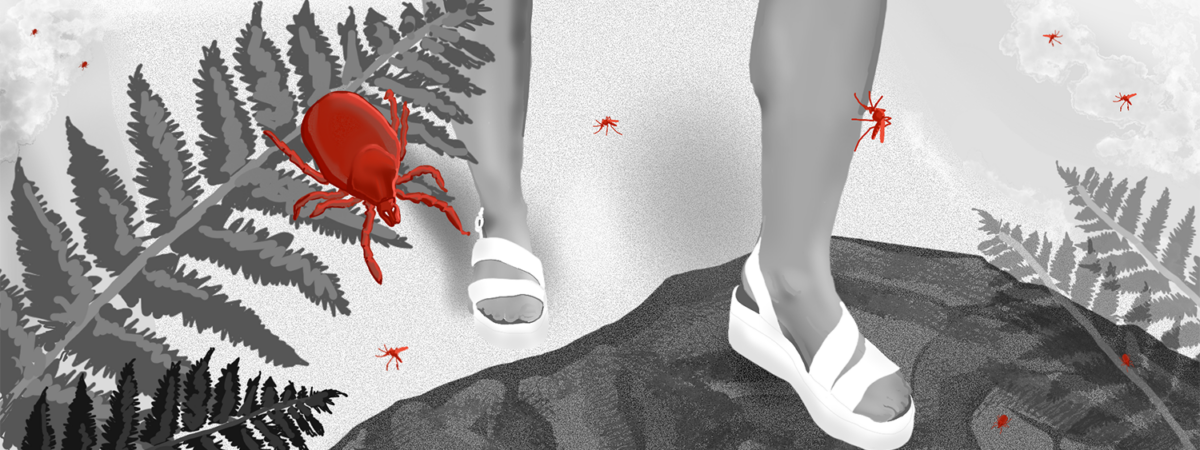
Vector-borne disease — illnesses transmitted to humans by organisms such as mosquitoes and ticks — accounts for over 17% of all infectious diseases and around 700,000 deaths globally1.
From a UK perspective, the risk of vector-borne disease is becoming more palpable as the climate gets warmer. In Europe, cases have risen steadily by year on year. Ticks are becoming active for longer and mosquitoes capable of transmitting disease have already been detected on British soil1.
Climate change and shifting patterns of global travel and trade are all contributing to the risk. Imported cases of malaria to the UK have hit the highest level for 20 years, while other infections, such as dengue fever, are steadily creeping northwards.
In 2025, the UK Health Security Agency (UKHSA) warned that climate change is “significantly altering” the UK’s vector-borne disease landscape by creating favourable conditions for the organisms that carry the diseases2.
“Without decisive action”, these shifts could substantially increase disease burden and put UK healthcare systems under new strain, the agency warned.
Pharmacists are already at the front line of this change, managing insect bites and offering travel health services. Could they become the first port of call for conditions that until now, the UK has not had to consider?
Infected insect bites
In July 2025, Boots reported a doubling of consultations for infected insect bites through the Pharmacy First scheme between April and June 20253.
NHS England data also back this trend, with 91,527 NHS Pharmacy First consultations for infected insect bites peaking in July 2025, 78% of which led to medicine being supplied4. The number of consultations had increased from 52,025 in June 2025.
This compares with a peak of 44,391 consultations in August 2024, with 83% requiring medicine. At that time, the number of consultations had risen from 36,370 in July 20244.
Whether this relates to more people requiring treatment or greater awareness of pharmacy services is not yet known, but warmer temperatures can certainly drive an increase in insect bites and stings. In 2025, there was a 20% increase in traffic to NHS online advice on the topic during periods of hot weather5.
In 2023, research revealed that two-thirds (67%) of people presenting to out-of-hours primary care with insect bites between July 2013 and February 2020 were prescribed antibiotics6. The study also revealed that insect bites accounted for more than one-fifth (21%) of all flucloxacillin prescribing during the summer months6. The researchers concluded that clearer evidence was needed on when antibiotics should be prescribed.
Insects — including wasps, horseflies, mosquitoes and ticks — are particularly active in a warmer British climate because the warmer temperatures enable them to survive, breed and establish. Higher temperatures also mean that people may also be more likely to be outside and wear less clothing, making themselves more susceptible to bites.
In a report published in June 2026, Mojca Kristan, assistant professor in medical entomology at the London School of Hygiene and Tropical Medicine, explains there are around 30 species of mosquito that are native to the UK, but other invasive species that carry viruses, such as dengue fever, are already well-established in Europe.
We have to be alert to the threat of new disease-carrying mosquito species as climate change makes Britain a more attractive place for mosquitoes
Mojca Kristan, assistant professor in medical entomology at the London School of Hygiene and Tropical Medicine
“At the moment there’s a low risk of bites from UK mosquitoes spreading serious illness, but we have to be alert to the threat of new disease-carrying mosquito species as climate change makes Britain a more attractive place for mosquitoes to survive and thrive.”
Lyme disease
Lyme disease — a bacterial infection transmitted through tick bites — is already the most common locally acquired vector-borne disease affecting humans in the UK, and cases are steadily rising.
UKHSA data show that there were 1,168 acute cases of Lyme disease reported in England in 2025 — up from 959 cases in 20241.
Studies have shown that, on average, 5.8% of ticks tested in the UK carry Lyme disease, but this percentage was as high as 30% in some areas including the Yorkshire Dales7.
Research has also concluded that more ticks are found in the north and south of England compared with central England. Ixodes ricinus, the primary vector for Lyme disease, is the most common tick in the UK, and this has been found to be in higher densities in woodlands and where deer are present. It has been suggested that as central England has lower numbers of deer, it consequently has fewer ticks. However, the presence of deer is not believed to mean a higher proportion of infected ticks7.
Warmer weather means ticks can be active for more of the year, which may mean they lay more eggs and the population increases. Those most at risk are those working in forested areas or people walking or hiking through long grass or vegetation.
Claire Nevinson, superintendent pharmacist at Boots, advises that anyone who has been bitten by a tick, or who has been in higher risk areas and develops the telltale “bullseye” rash, to see a GP.
“Look out for a circular or oval-shaped rash around the tick bite, which can appear between one and four weeks after being bitten, although it can sometimes take up to three months,” she says.
“Early symptoms can also include tiredness and fatigue, muscle or joint pain, headaches, a high temperature or chills, and a stiff neck.”
Neurological complications are rarer but may occur days to months after being bitten by an infected tick and include facial palsy or drooping, shooting pains in the arms or legs, and — very rarely — meningitis. In 2025, there were 134 acute neurological cases recorded in the UK1.
However, experts think the real number of Lyme disease cases could be twice as high, because UKHSA figures only include cases confirmed by laboratory testing. In many cases, Lyme disease is diagnosed and treated based on clinical symptoms without further testing1.
The more you come into contact with ticks, the more you increase your risk of getting disease
Marine Petit, lecturer in virology at the University of Surrey
Through the UKHSA’s Tick Surveillance Scheme, which relies on members of the public and healthcare professionals to remove and send in tick samples, officials keep an eye on species and the time of year ticks are most active8.
Marine Petit, lecturer in virology at the University of Surrey, says ticks have spread into new regions, such as parks in cities, such as London and Paris.
“The more you come into contact with ticks, the more you increase your risk of getting disease,” Petit says.
Encephalitis
Tick-borne encephalitis (TBEV), which is transmitted by the same tick species responsible for spreading Lyme disease, was first identified in the UK in 2019. It causes few or no symptoms in most people, but in rare cases, TBEV can spread to the central nervous system, leading to long-term neurological symptoms or, in rare, cases death.
That first case occurred after a tick bite in the New Forest in the south of England, but TBEV-positive ticks have been found in North Yorkshire since then. In 2024, there were two cases thought to have been acquired in the UK, bringing the total to six.
TBEV is endemic in rural and forested areas of central, eastern and northern Europe. The UK government recommends that people travelling to areas of high risk are vaccinated before they go9. Travel health clinics and pharmacies with travel health services can administer the vaccines to people who are visiting countries where the infection is common if they are planning to do outdoor activities when they get there. A highly effective vaccine against TBEV — Ticovac (Pfizer) — is available for adults and children aged over one year (children receive the lower-dose Ticovac Junior). The primary vaccination course comprises three doses: two given at least 14 days apart, followed by a third dose one year later10.
According to the UKHSA, current UK vaccine recommendations for TBEV are under review following the identification of domestically acquired cases.
For tick-borne disease, Petit notes that prevention is crucial, which includes wearing light colours, long sleeves and trousers tucked into socks, and if walking in areas ticks are likely to be, using repellents and carrying out tick checks. It is also vital to check pets.
Ticks attached to the skin should be removed quickly with tick removal tools or tweezers if possible, and the area should be cleaned. It is thought the rapid removal of ticks reduces the risk of infection with Lyme disease11. It is the same with TBEV9. In most cases, a tick must be attached for more than 24 hours for an infection to occur12.
“If someone has been bitten by a tick, I recommend drawing a circle round the bite site so people can monitor if it grows. They should also be advised to look out for the bullseye rash but this isn’t always present,” says Petit.
There are vaccines in clinical trials — including an mRNA vaccine from Moderna and one developed by Pfizer and Valdena. Work is also ongoing to develop faster diagnostic tests9.
Charlotte Gurr
Dengue fever, chikungunya and Zika
Of increasing concern to UK experts are diseases spread by Aedes mosquitoes that have seen “unprecedented” activity in Europe in recent years. This in turn heightens the risk to the UK.
Europe is entering a phase of longer, more widespread and more intense transmission of mosquito-borne diseases
The European Centre for Communicable Diseases
In 2025, the European Centre for Communicable Diseases (ECDC) acknowledged that “Europe is entering a phase of longer, more widespread and more intense transmission of mosquito-borne diseases, which is becoming the new normal”13.
While there has been no local transmission of dengue fever and chikungunya in the UK to date, cases are regularly reported in returning travellers.
Invasive species capable of transmitting viruses, such as dengue fever and chikungunya — including Aedes albopictus, also known as the Asian tiger mosquito, and Aedes aegypti or Egyptian mosquito — are also not yet established in the UK, although they have been detected at UK points of entry in surveillance traps several times14.
Dengue fever is the most common viral disease transmitted by mosquitoes that affects people. With climate change, researchers have predicted that cases could rise as much as 76% across a large swath of Asia and the Americas by 205015.
Dengue fever symptoms can be similar to the flu and cause a high temperature, severe headache, pain behind the eyes, muscle and joint pain, as well as feeling sick.
While not yet endemic to Europe, when “environmental conditions are favourable”, local transmission is seen in some regions including France and Italy16. A UK risk assessment described the spread of Aedes mosquitoes in Europe, and particularly France, as “rapid”14.
Since 2023, there has been a travel vaccine available privately (QDENGA) in the UK for people who have had or may have been exposed to dengue fever in the past and are travelling to sub-tropical parts of the world where it is common, such as the Caribbean, South and Central America.
Graham Thoms, chief executive of Pharmadoctor, signposts people to the TravelHealthPro website NaTHNaC, which provides up-to-date travel health information for destinations worldwide.
He says pharmacists will need to be aware of shifting global patterns so they can advise people accurately and points out that their proprietary software for travel health is linked to this regularly updated information.
“If there is an outbreak in the south of France, and that’s where somebody’s travelling to, and they come in for the consultation, you can have a meaningful conversation about their risk,” he says.
In 2025, there were almost 1,000 locally acquired cases of chikungunya recorded in France and Italy15. For the first time, a locally acquired chikungunya virus disease case was reported in France’s Alsace region.
In the UK, there was a significant increase to 160 travel-associated cases of chikungunya in 2025, up from 104 cases the previous year17.
Symptoms of chikungunya include a sudden onset of fever, usually accompanied by joint pain. Most people recover fully within a couple of weeks but, for some, the joint pain can persist for months or even years. Data show that up to 12% of patients still experience discomfort three years after infection18.
Two vaccines against chikungunya have now been approved for use in the UK for people travelling to high-risk areas. IXCHIQ is available for those aged 18–59 years, while Vimkunya for those aged 12 years and over.
Smaller in number but also rising are cases of Zika virus, with eight cases reported in England, Wales and Northern Ireland in the first half of 2026 compared with seven cases in the whole of 202519. While generally a mild infection, it can cause congenital brain abnormalities during pregnancy. Transmission of Zika virus occurs in parts of Africa, Asia, the Pacific Islands, Central and South America and the Caribbean, meaning that the risk to the UK is very low20.
Pharmacists should advise travellers to reduce the chance of being bitten in the first place, through measures such as covering up, using repellents and nets. Patients should also be advised to check the travel advice for their destination and seek advice from a pharmacist at least four to six weeks in advance21.
West Nile virus and Usutu virus
West Nile virus and Usutu fall into a separate category of vector-borne disease spread by the Culex modestus mosquito but with a significant reservoir in wild birds.
This mosquito has been detected in North Kent, Essex, Suffolk, Hampshire and West Sussex and, more recently, in Cambridgeshire, Northamptonshire and Lincolnshire22.
West Nile virus — which is in the same family as dengue fever and Yellow Fever — is already endemic in many parts of the world but appears to be spreading to more northerly and western regions of mainland Europe in recent years.
In 2025, researchers found fragments of the disease in mosquitoes collected in the UK but have not found any since or evidence to suggest ongoing circulation19.
However, the UKHSA has noted only through surveillance can we can prepare and assess the risk of West Nile virus to human health, which at present is rated as very low22.
In 2020, Usutu virus — also in the same family — was detected for the first time in mosquitoes in England and has since increased in its geographic range across the country20. Data suggest it has been circulating in the south east of England for six years, but it rarely causes symptomatic disease and, therefore, there have been no human cases recorded to date in the UK.
Malaria
In 2024, more than 300 million cases of malaria were reported globally. In 2025, there were 1,629 recorded cases of the mosquito-borne infection in travellers returning to the UK.
It is often forgotten that malaria is thought to have once been endemic to the UK, with the last locally acquired cases recorded in the 1920s23.
Native mosquitoes can carry the disease, yet the risk is not as high as other mosquito-borne infections owing to a reduction in the water-logged marshy habitats where they once thrived24.
Anti-malarials are the mainstay of preventive treatment for people travelling to endemic areas, but pharmacists need to be aware of their effectiveness (breakthrough infections can happen), side effects and drug resistance25.
Role of pharmacy
In its 2020 handbook for pharmacists, the International Pharmaceutical Federation (FIP) noted that many vector-borne diseases are preventable through vector control and other measures — including vaccination and education — as well as optimising treatment. The FIP also emphasised that pharmacists are ideally placed to support this work26.
According to Thoms, public awareness of travel-associated disease and available vaccines is already very low, and this is likely to become a growing issue.
The cost of vaccines and requiring multiple doses can also put people off, he notes.
Vaccinations for TBEV can be £70 and £130 for dengue fever (Qdenga; Takeda UK)27.
Thoms adds: “Pharmacies are already the lead provider of travel clinics in the UK and it is the second biggest service in pharmacy. They are increasingly involved in it.”
Alongside any advice about vaccines, Thoms says pharmacists should always be advising them to use an insect repellent as well — something with DEET or picaridin.
“I can see in the future, if you do start seeing these insect-borne diseases, especially the mosquito-borne diseases, move further north and potentially into the UK in years to come, that we’re going to have to take action,” he adds.
It is an area that is moving quickly, he notes, as three or four years ago, there were no vaccines for dengue fever or chikungunya.
“It might be a different conversation, not just about a jab for traveling to the Maldives or Thailand but maybe about keeping mosquito-borne disease vaccines up to date for the UK.”
Useful resources
- ‘Lyme disease‘; NHS;
- ‘Lyme disease‘; The National Institute for Health and Care Excellence;
- ‘New test could revolutionize Lyme disease diagnosis‘; New York Medical College;
- ‘Invasive mosquito surveillance in the United Kingdom 2020 to 2024: First detection of Aedes aegypti eggs in the UK and further detection of Aedes albopictus‘; PLOS Global Public Health;
- ‘Outbreaks under monitoring: week 40 (week ending 5 October 2025)‘; UK Health
Security Agency; - ‘First detection of West Nile virus in UK mosquitoes‘; UK Health Security Agency;
- ‘Detection of Usutu virus infection in wild birds in the United Kingdom, 2020‘; National Library of Medicine.
- 1.One Health vector-borne disease surveillance report 2025. UK Health Security Agency . May 2026. Accessed August 2026. https://assets.publishing.service.gov.uk/media/6a0c94f0f7c2e79c33db9258/One_Health_VBD_Annual_Surveillance_Report_2025.pdf
- 2.How we protect the UK from vector-borne diseases like dengue and West Nile virus. UK Health Security Agency. May 2025. Accessed August 2026. https://ukhsa.blog.gov.uk/2025/05/21/how-we-protect-the-uk-from-vector-borne-diseases/
- 3.Boots sees pharmacy visits for infected insect bites double as weather heats up. Boots. July 2025. Accessed August 2026. https://www.boots-uk.com/newsroom/news-item/boots-sees-pharmacy-visits-for-infected-insect-bites-double-as-weather-heats-up/
- 4.NHS Pharmacy First Clinical Pathways Data. NHS Business Services Authority . Accessed August 2026. https://www.nhsbsa.nhs.uk/pharmacies-gp-practices-and-appliance-contractors/dispensing-contractors-information/nhs-pharmacy-first-service-pfs/nhs-pharmacy-first-clinical-pathways-data
- 5.Searches for NHS advice on bites and stings soar during summer of heatwaves. NHS England. August 2025. Accessed August 2026. https://www.england.nhs.uk/2025/08/searches-for-nhs-advice-on-bites-and-stings-soar-during-summer-of-heatwaves/
- 6.Finnikin SJ, Wilcock J, Edwards PJ. Presentation and management of insect bites in out-of-hours primary care: a descriptive study. BMJ Open. 2023;13(9):e070636. doi:10.1136/bmjopen-2022-070636
- 7.Gandy SL, Brown F, Yardley J, et al. An update on Borrelia burgdorferi s.l. prevalence and hazard in ticks at recreational areas in England and Wales between 2021 and 2023. Ticks and Tick-borne Diseases. 2025;16(5):102523. doi:10.1016/j.ttbdis.2025.102523
- 8.Send a tick to UKHSA’s Tick Surveillance Scheme. UK Health Security Agency . April 2012. Accessed August 2026. https://www.gov.uk/guidance/tick-surveillance-scheme
- 9.Tick-borne encephalitis: epidemiology, diagnosis and prevention. UK Health Security Agency. August 2019. Accessed August 2026. https://www.gov.uk/guidance/tick-borne-encephalitis-epidemiology-diagnosis-and-prevention
- 10.Tick-Borne Encephalitis Vaccine in Plaistow. Newmans Pharmacy. Accessed August 2026. https://newmanspharmacy.co.uk/tick-borne-encephalitis-vaccine-plaistow/
- 11.Tick-borne encephalitis (TBE). NHS England. Accessed August 2026. https://www.nhs.uk/conditions/tick-borne-encephalitis/
- 12.How Lyme Disease Spreads. Centers for Disease Control and Prevention. Accessed August 2026. https://www.cdc.gov/lyme/causes/index.html
- 13.World Mosquito Day 2025: Europe sets new records for mosquito-borne diseases. European Centre for Disease Prevention and Control. August 2025. Accessed August 2026. https://www.ecdc.europa.eu/en/news-events/world-mosquito-day-2025-europe-sets-new-records-mosquito-borne-diseases
- 14.Qualitative assessment of the risk that Zika virus presents to the UK population. UK Health and Security Agency. April 2026. Accessed August 2026. https://www.gov.uk/government/publications/hairs-risk-assessment-zika-virus/qualitative-assessment-of-the-risk-that-zika-virus-presents-to-the-uk-population#summary-of-risk-assessment-for-zika-virus-in-the-uk-population
- 15.Childs ML, Lyberger K, Harris MJ, Burke M, Mordecai EA. Climate warming is expanding dengue burden in the Americas and Asia. Proc Natl Acad Sci USA. 2025;122(37). doi:10.1073/pnas.2512350122
- 16.Dengue risk assessment for mainland EU/EEA. European Centre for Disease Prevention and Control. November 2025. Accessed August 2026. https://www.ecdc.europa.eu/en/dengue/surveillance-and-updates/risk-assessment
- 17.Travel-associated infections in England, Wales and Northern Ireland: 2025. UK Health Security Agency. March 2026. Accessed August 2026. https://www.gov.uk/government/publications/travel-associated-infections/travel-associated-infections-in-england-wales-and-northern-ireland-2025
- 18.Rise in chikungunya cases in UK travellers returning from abroad. UK Health Security Agency. August 2025. Accessed August 2026. https://www.gov.uk/government/news/rise-in-chikungunya-cases-in-uk-travellers-returning-from-abroad
- 19.Laboratory-confirmed Zika virus disease cases: statistics. UK Health Security Agency. May 2025. Accessed August 2026. https://www.gov.uk/government/publications/laboratory-confirmed-zika-virus-disease-cases-statistics
- 20.Health advice for women returning from areas with a risk of Zika virus. UK Health Security Agency. April 2026. Accessed August 2026. https://www.gov.uk/guidance/health-advice-for-women-returning-from-areas-with-a-risk-of-zika-virus
- 21.Mosquito bite avoidance: advice for travellers. UK Health Security Agency. January 2023. Accessed August 2026. https://www.gov.uk/government/publications/mosquito-bite-avoidance-for-travellers/mosquito-bite-avoidance-advice-for-travellers–2
- 22.Surveillance for Culex modestus. UK Health Security Agency and Centre for Climate and Health Security. March 2025. Accessed August 2026. https://www.gov.uk/guidance/surveillance-for-culex-modestus
- 23.Walker MD. The last British malaria outbreak. Br J Gen Pract. 2020;70(693):182-183. doi:10.3399/bjgp20x709073
- 24.Bowie K. Are deadly mosquitoes, pathogen laden ticks, and waterborne infections being brought to the UK by climate change? BMJ. 2025;391:r2295. doi:10.1136/bmj.r2295
- 25.Malaria, prophylaxis. British National Formulary. Accessed August 2026. https://bnf.nice.org.uk/treatment-summaries/malaria-prophylaxis/
- 26.Vector-borne diseases: a handbook for pharmacists. International Pharmaceutical Federation (FIP). 2020. Accessed August 2026. https://www.fip.org/file/4848
- 27.Travel clinic price list. University College London Hospitals NHS Foundation Trust. Accessed August 2026. https://www.uclh.nhs.uk/our-services/find-service/tropical-and-infectious-diseases/travel-clinic-services/travel-clinic-price-list