Cases of Ebola in the Democratic Republic of the Congo (DRC) and Uganda are rising, and the outbreak has been deemed a “public health emergency of international concern” by the World Health Organization. Meanwhile, the UK Health Security Agency (UKHSA) has urged clinicians to consider Ebola in any patient who is acutely unwell, has a fever and who has travelled from the DRC or Uganda in recent weeks.
There have been relatively fewer reported cases of the strain in question — the Bundibugyo virus — than the Ebola virus, also known as the Zaire virus, which caused the West African pandemic in 2014–2016. With less known about this strain and no approved treatments, here’s how health teams are responding to this crisis.
How the 2026 Ebola outbreak has unfolded
Confirmed cases and deaths
The number of confirmed cases is being monitored by the UKHSA, which says the risk to the UK is low. However, researchers say the true number of cases is likely to be “substantially higher” than the number of laboratory-confirmed cases that have been identified, owing to incomplete data capture. On 16 May 2026, when there were 336 suspected cases in the DRC, researchers at Imperial College London modelled that the true number could have been triple that, at 1,000.
Strains of Ebola
There are six strains of the Ebola virus, all of which have the same appearance under a microscope and can only be differentiated by polymerase chain reaction (PCR) testing of whole blood or plasma.
Transmission and symptoms
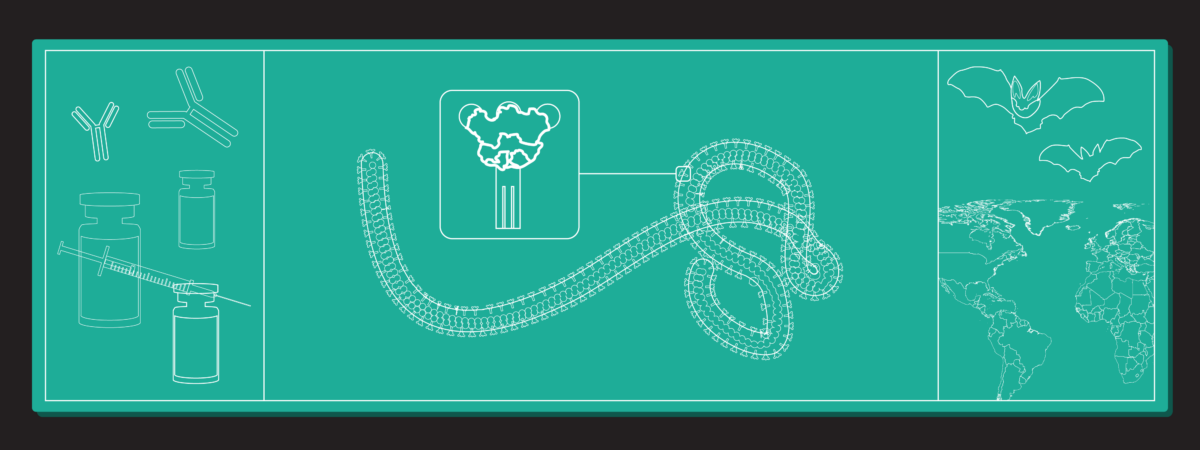
Ebola is spread through close contact with the bodily fluid of an infected or dead person and can only be spread once symptoms have begun. In some cases, people have developed the disease after contact with infected animals such as bats, or by infected needles.
With a reproduction number (R0) of 1.3–2.0, every 10 cases of Ebola will spread to an average of 13–20 people unless transmission is prevented. This is slightly more transmissible than seasonal flu, which has an R0 of 1.28. In comparison, the R0 for measles is thought to be 12–18.
Treatments and vaccines
There have only been two outbreaks of the Bundibugyo strain before the current outbreak began, so there are currently no approved treatments or vaccines, although they are in development.
Although vaccines have been approved for the Ebola, or Zaire, strain, they are not protective against the Bundibugyo strain.
Rebecca Makinson, a postdoctoral researcher from the Oxford Vaccine Group at the University of Oxford, says the two viruses have different amino acid sequences in the glycoprotein on their surface, meaning they are “only around 60% the same in this regard”. The two approved Ebola virus vaccines are both viral vector vaccines that deliver the glycoprotein, meaning that a vaccine that works for one strain may not work for another.
Three vaccines are currently in development by the International Aids Vaccine Initiative (IAVI), the University of Oxford and Moderna. The IAVI vaccine uses a viral vector (recombinant vesicular stomatitis virus) that is similar to the one used in the Ebola virus vaccine. The University of Oxford vaccine uses ChAdOx1, an adenovirus vector which was developed during the COVID-19 pandemic. The Moderna vaccine uses mRNA, similarly developed following COVID-19.
According to WHO, three therapeutics will also be tested to treat Bundibugyo virus disease: monoclonal antibodies MBP134 and Maftivimab, and antiviral remdesivir.
Speaking at a press briefing on 10 June 2026, Maria Van Kerkhove, acting director of the epidemic and pandemic department at WHO, said the potential for therapeutics to treat this strain are “more promising than vaccines at the moment”.
She reported that healthcare teams in the DRC are currently developing protocols to carry out clinical trials on these treatments. On vaccine development, she added: “Vaccines will take somewhere between two, six or nine months, it really depends, but I do think it’s a possibility.”
Van Kerkhove noted that a lack of Bundibugyo-specific therapies should not deter patients from seeking medical help. “Good early clinical care saves lives, even without specific treatment,” she said.
Salim S Abdool Karim, special adviser to the director-general of WHO and chair of the Africa CDC Emergency Consultative Group, said: “I’m hopeful on the treatment front because if remdesivir does work, it’s widely available, there are generic versions and quite cheap. If it’s effective, it could be quite a strong weapon in dealing with Bundibugyo.”
Outbreak history
There have been dozens of Ebola outbreaks since the disease was first recognised in 1976.
Further information
- ‘Outbreaks under monitoring in 2026’, UK Health Security Agency (UKHSA);
- ‘Ebola’, NHS;
- ‘Ebola virus disease: clinical management and guidance’; UKHSA.