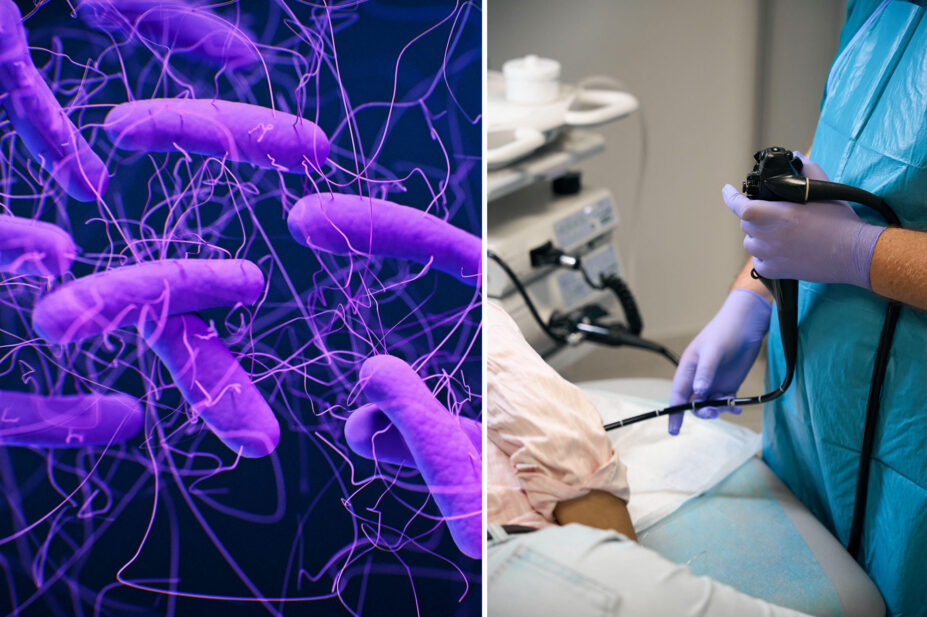
Science Photo Library / Viacheslav Iakobchuk / Alamy Stock Photo
Microbiome-based medicinal products (MBMPs) contain microorganisms as the active product and treat disease by modulating, restoring or replacing the human biome. They also fall under the existing UK medicines regulatory framework as set out in the Human Medicines Regulations 2012.
Despite the absence of UK marketing authorisations for MBMPs, faecal microbiota transplantation (FMT) is available as a treatment as part of clinical trials and as an unlicenced medicine — often for recurrent Clostridioides difficile infection (CDI).
Clinical development of MBMPs is also extending into treatments related to antimicrobial resistance (AMR), inflammatory bowel disease, oncology, transplantation, infection prevention in immunocompromised patients and metabolic disease.
Miriam Martinez Callejas, chief clinical pharmacist and founder of compounding pharmacy services company Roseway Labs, says that recent approvals and late-stage clinical studies have helped establish microbiome therapeutics as a credible medicines category.
“Reported mechanisms include restoration of microbial diversity, engraftment of beneficial organisms and changes in microbial metabolites, although these effects vary by product and indication,” she says, adding that the field is moving “away from broad wellness claims and towards evidence-based product development”.
Why does the regulator want to encourage MBMP development?
No microbiome-based medicine has ever been licensed in the UK, but a position paper from the Medicines and Healthcare products Regulatory Agency (MHRA) — published in August 2026 — sets out how it will regulate this emerging category of treatments to encourage manufacturers to develop products for the UK market.
The MHRA’s position paper is aimed at providing clarity on what these products are and help manufacturers to bring them forward to market “with confidence”.
The regulator adds that it hopes the position paper will help by “encouraging developers to pursue UK licensing pathways for this emerging class of therapies”, signalling that a field dominated by probiotics and faecal transplants “represent[s] a promising new category of therapies with the potential to address areas of significant unmet clinical need”.
How common is MBMP use abroad?
In the UK, microbiome-related products sit across several categories.
“Consumer probiotics and food supplements are widely available, and are generally marketed for digestive health, immune support or general wellness rather than disease treatment,” says Martinez Callejas. “Their evidence base varies widely and most do not carry approved medicinal claims. This pattern is broadly similar across many global markets, where consumer microbiome products are common but regulated medicinal claims remain more limited.”
Some countries rely on hospital services or stool banks, while others are moving towards standardised, manufactured products
Miriam Martinez Callejas, chief clinical pharmacist and founder of compounding pharmacy services company Roseway Labs
FMT is already used in specialist UK clinical settings — particularly for recurrent C. difficile infection — but, as Martinez Callejas explains: “It is generally accessed through specialist services, clinical trial arrangements or unlicensed medicine pathways rather than as a licensed microbiome medicine.”
Internationally, approaches differ. “Some countries rely on hospital services or stool banks, while others are moving towards standardised, manufactured products,” says Martinez Callejas.
“The United States is currently the clearest example of licensed microbiome medicines in routine regulatory use. Rebyota and VOWST are both approved in the United States to help prevent recurrent C. difficile infection in adults following antibacterial treatment.”
Rebyota is a donor-derived microbiota product administered rectally, while VOWST is an oral capsule containing live faecal microbiota spores. VOWST was the first US Food & Drug Administration (FDA)-approved oral microbiome therapeutic, “showing that a microbial product can be manufactured, studied and licensed within a pharmaceutical framework”, says Martinez Callejas.
In Europe, the European Medicines Agency consulted on developing its own framework for regulating MBMPs earlier this year.
The consultation paper acknowledged that “conventional pharmacological and toxicological approaches [to development] are often not fully applicable, particularly regarding biodistribution, safety, and the use of standard in vivo pharmacodynamic models to support dose selection and efficacy evaluation”.
“The absence of tailored guidance may lead to increased uncertainty for developers, inconsistencies in regulatory submissions and evaluation, and potential delays in product development,” it said.
What are the safety concerns around MBMPs?
Donor-derived products carry a documented infection risk when screening fails. In 2019, the FDA issued a safety communication after two immunocompromised patients receiving investigational FMT developed invasive infections from a multi-drug-resistant organism present in unscreened donor stool, with one patient later dying. The agency introduced mandatory donor-screening and stool-testing requirements for investigational FMT use as a result.
A further alert followed in 2020, linking FMT product from a single US stool bank to six infections: four led to hospital admission and two patients later died. Although, the FDA’s own follow-up review did not establish that the infections caused either death.
Manufactured, standardised products are less risky. Rebyota and VOWST are made from donor stool screened for a panel of transmissible pathogens before use. Among their most reported trial side-effects were mild gastrointestinal symptoms. But they are not risk free: a 2024 American Gastroenterological Association guideline recommends against using any faecal microbiota-based therapy in severely immunocompromised patients to prevent recurrent CDI, citing infection risk.
The MHRA’s position paper specifically highlights — as a core consideration for developers — the need for safety assessment of MBMPs with “particular attention to potential contamination with pathological microorganisms or toxins; risk of infection in vulnerable populations; and horizontal gene transfer, especially the potential transfer of AMR genes”.
What is in the UK’s microbiome pipeline?
There are active UK-linked research and commercial development in the area of MBMPs. However, the field is still predominantly at the clinical trial stage, according to Amira Guirguis, chief scientist at the Royal College of Pharmacy.
“For example, EnteroBiotix began a phase IIb study of an investigational oral microbiome therapeutic for irritable bowel syndrome with constipation in July 2026, while Microbiotica has reported phase Ib programmes in advanced melanoma and ulcerative colitis”, says Guirguis.
“These programmes show that there is continuing development and commercial interest in the field, but it is too early to say whether any particular product will ultimately receive a UK marketing authorisation or when that might happen.”
If these requirements can be met, microbiome-based medicines could become an additional treatment option in selected areas of unmet clinical need
Amira Guirguis, chief scientist at the Royal College of Pharmacy
In the coming years, it is possible that the use of MBMPs may move into a wider range of indications if clinical trials show clear benefit, and they could even become part of precision healthcare.
Tim Sharpington is chief executive of Microbiotica Limited, a UK-based biopharmaceutical company specialising in the development of precision live biotherapeutic products (LBPs) with leading products in immuno-oncology and inflammatory bowel disease. He says that the next generation of microbiome products are moving away from donor-derived products, which by their nature are variable, and towards defined bacterial products known as LBPs. These products are manufactured to contain specific bacterial strains in defined quantities to good manufacturing practices specifications.
“These products are based on the increased understanding that the gut microbiome impacts health, disease and treatment outcome in multiple therapeutic areas including immunology, oncology, metabolic disease and neurology,” says Sharpington.
“A number of companies are developing products in these areas, selecting specific groups of bacterial strains which have therapeutic potential in the disease being targeted. There are also a number of LBPs in clinical development in areas such as GI [gastrointestinal], immuno-oncology, paediatric development, GVHD [graft-versus-host disease], and with new guidance emerging in the UK and across the EU, it is hoped that LBPs will emerge as a new therapeutic class with a number of products on the market.”
Nonetheless, Guirguis adds: “It’s difficult to make meaningful predictions about where microbiome-based medicines will be in 5, 10 or 20 years. Their future will depend on whether individual products can demonstrate clear and reproducible clinical benefit, consistent manufacturing and product characterisation, and an acceptable benefit–risk balance.
“If these requirements can be met, microbiome-based medicines could become an additional treatment option in selected areas of unmet clinical need.
“However, how quickly and widely they are adopted will ultimately depend on the evidence for individual products, regulatory assessment, clinical need and how practical they are to implement in healthcare.”