

Virginia Chachati, a pharmacist who works in public health and medical communication, has had her fair share of patients challenging her about vaccines.
“Somebody will come in and say, ‘I don’t think you should be offering the flu vaccine, I think it does more harm than good’.” Her response? “I’ll say, ‘Where have you got your information from?’ Often, they’ll say ‘I got it online’.”
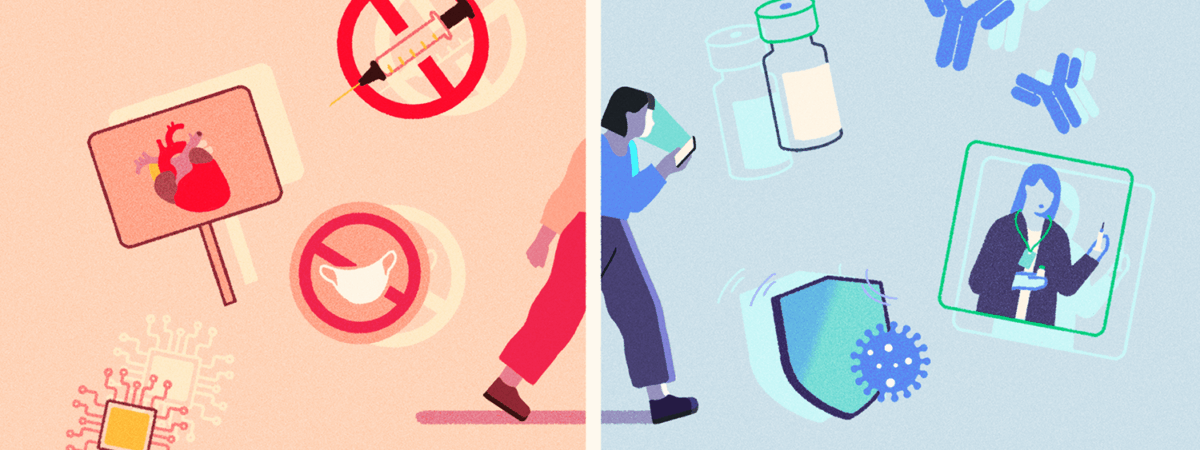
Chachati’s experience illustrates a wider trend: vaccine hesitancy is on the rise (see Figure).
Figure: The proportion of people who think vaccines have hidden harmful effects has increased since 2019
These attitudes may be affecting vaccine uptake in the UK, which has been trending downward. For example, data for April 2024 to March 2025 showed that UK coverage for the pre-school booster (diphtheria, tetanus, pertussis and polio: dTaP/IPV) decreased by 1.2% compared with the previous financial year.
“Childhood immunisation rates have been sliding year on year for about the last decade,” says Alex De Figueiredo, assistant professor at the London School of Hygiene and Tropical Medicine (LSHTM) and statistics lead at the Vaccine Confidence Project.
Notable figures in the United States and UK are sharing vaccine-sceptic views at a time when vaccination rates are decreasing. On 22 September 2025, US president Donald Trump raised concerns about the safety of combined childhood vaccines (during a speech in which he also warned against taking paracetamol in pregnancy, suggesting it was linked to autism). There is no evidence for either claim.
Following Trump’s comments, health secretary Wes Streeting made it clear that he did not agree, saying on ITV’s Lorraine programme: “I trust doctors over president Trump.” However, Trump’s comments hold weight with the public. A snap survey of 500 pharmacies, carried out by the UK’s National Pharmacy Association the day after his speech, revealed that around one-third of pharmacy teams had been told by some patients that they were less likely to get vaccinated or get their children vaccinated in light of Trump’s comments.
“When politicians or anyone in the public eye come out with anything to do with healthcare, then people do have a level of trust regarding that,” says Thorrun Govind, pharmacist and healthcare lawyer.
Even some healthcare professionals have spread unwarranted claims about vaccines. Aseem Malhotra — a cardiologist who is now an adviser to the US health secretary Robert F Kennedy Junior — made a series of claims at the UK Reform party conference in early September 2025 about the supposed harms of mRNA vaccines, including repeating a suggestion that cancer in the royal family was linked to COVID-19 vaccines1. The General Medical Council is considering whether Malhotra’s comments warrant further action.
These comments have the potential to misinform people who are considering having vaccinations or arranging them for their children. However, Liam Smeeth, director of the LSHTM, says the vast majority of children in the UK are still vaccinated: “There hasn’t been a massive drop-off.”
You don’t get anything much more complex than human beliefs and human behaviours, and the links between those two
Liam Smeeth, director of the London School of Hygiene and Tropical Medicine
Unfortunately, for certain diseases, such as measles — which is extremely contagious — even a small decrease in vaccination rates can lead to outbreaks. It is estimated that 95% of people in a community must be vaccinated against measles to suppress the virus enough to protect everybody from infection. UK-wide measles vaccination rates are well below that, with 2023/2024 data showing that 92.3% of children had received their first dose of measles, mumps and rubella (MMR) vaccine, while 84.5% had received both doses.
In 2024, there were 2,911 laboratory-confirmed cases of measles in England, the highest number of cases recorded annually since 2012. In July 2025, a child in Liverpool died of the disease.
When MMR vaccination rates hit a 13-year low in 2024 amid rising cases2, The Pharmaceutical Journal examined vaccine coverage, as well as measles transmission and symptoms.
Spectrum of beliefs
It is hard to know what causes people to be vaccine hesitant and even harder to understand when that translates to refusing a vaccine — multiple factors will be at play.
“You don’t get anything much more complex than human beliefs and human behaviours, and the links between those two,” says Smeeth.
Vaccine uptake stratifies very strongly across sociodemographic lines
Alex De Figueiredo, assistant professor at the London School of Hygiene and Tropical Medicine
Results from multiple studies suggest that vaccine confidence is lower among ethnic-minority populations, particularly Black people, followed by Bangladeshi/Pakistani communities. Lower socio-economic status also seems to correlate with increased hesitancy. Large urban areas, such as Greater London, fare worse than more rural communities. “Vaccine uptake stratifies very strongly across sociodemographic lines,” De Figueiredo says.
However, failure to get vaccinated cuts across all communities, including healthcare professionals. In fact, during the 2024/2025 winter flu season, only 37.8% of all front line healthcare workers received a flu vaccine — a decrease of 5.4% compared with the previous season.
There is evidence that susceptibility to misinformation correlates with vaccine uptake. De Figueiredo recalls a 2023 study in which he and his colleagues exposed 16,477 individuals to a series of news headlines, some of which were true, some false3. Those who were good at distinguishing fake news had a much higher rate of COVID vaccine acceptance than those who struggled to sift out the misinformation. “This isn’t a causal analysis, but certainly there’s a strong relationship there,” De Figueiredo says.
The study also found that people aged 18–24 years are much more susceptible to misinformation than older people in the UK. While this is also only a correlation, it has led De Figueiredo to question whether that younger cohort, aged 18–24 years, might be less likely to vaccinate their children than previous generations, a research question he is investigating.
A 2022 report into the state of vaccine confidence in the EU, published by the Vaccine Confidence Project, found that overall vaccine confidence is declining, but that this is particularly true of younger cohorts, with the gap widening between them and older groups.
Trust issues
Confidence is linked to trust. In the UK, as well as more broadly, trust in both the government and the NHS seems to be in decline.
Although it is hard to disentangle access issues from a lack of vaccine confidence, marginalised groups — such as ethnic and religious minorities, migrants and people with disabilities — may have particularly low trust in institutions.
Younger people are another cohort that may have reason to trust institutions less than their older peers, particularly after the COVID-19 pandemic. It is likely that younger people were disproportionately impacted by the pandemic in several ways, with work and education disrupted at a time of life when these can provide key social networks.
What is more, De Figueiredo cites a 2021 study “where we asked the UK public how they felt about vaccine passports and whether that would change their intention to receive a COVID-19 vaccine”4.
The findings? “Younger age groups, males and some other sociodemographic groups in the UK would be less willing to vaccinate if that policy was introduced,” he says. The vaccine passport policy was then introduced (although it has since been discontinued).
Learning lessons
“One thing that’s really emerged from scientific research is that honesty really matters,” Smeeth says. Although conversations about the risks of vaccines can be difficult, they are important in building trust.
“Eating a bar of chocolate’s not perfectly safe, how could having a vaccine be perfectly safe?” Smeeth adds.
However, messaging around vaccines can be difficult and perhaps this is another lesson to learn from the pandemic. When the COVID-19 vaccine came out, “I think people thought it was going to be like the measles vaccine, you have the jab and, boom, you’re protected,” Smeeth says.
The vaccine, while very effective at preventing severe disease, is less effective at stopping people from catching COVID-19 — a systematic review of over 56 million people found that the vaccine prevented severe outcomes in 87% of cases and prevented infection in 71% of cases5. “That’s quite a nuanced benefit,” he adds.
People tend to fear what they don’t understand
Virginia Chachati, a pharmacist who works in public health and medical communication
The COVID-19 vaccine was a great success: as of March 2023, more than 90% of people aged over 12 years in the UK had received at least one dose, but the perceived speed at which it was developed was a cause of concern for many.
In fact, “the mRNA story had been happening for 15 or 16 years”, Smeeth says. “COVID just came along at the right time.” Now, with more than 100 mRNA treatments in the pipeline, the majority of which are vaccines, clear and effective communication is going to be increasingly important6.
Mediated world
Smeeth is so concerned about the possible impact of misinformation that he, along with colleagues from LSHTM, recently launched a call for universities, health organisations, charities and funders to join a new network aimed at fighting dangerous health misinformation in the UK. One of the challenges is “knowing where people are getting their information from”, he says.
“The problem with social media is that if somebody says something in a confident way and they appear to look like an expert, a lot of people will not question it,” says Chachati. Content creators will also choose topics in order to maximise engagement.
Chachati creates educational health content for social media, including about vaccines. She says that being clear and using simple language is crucial.
“People tend to fear what they don’t understand,” she says. She has found that analogies can be an effective communication tool. For instance, comparing a vaccine to “providing that padding for your body so that if you do get the flu, then you’ve got that cushion”.
Role of pharmacists
Offline, community pharmacies can be a great way of getting tailored information to communities who need it. Nick Thayer, head of policy at the Company Chemists’ Association, recalls an initiative to try to boost COVID-19 vaccine uptake.
“There was a really good local service that was commissioned in Tower Hamlets,” he says.
Tower Hamlets is a borough in east London with a large British–Bangladeshi population and relatively low rates of vaccine uptake. The service rewarded pharmacists for having conversations with those more likely to be vaccine hesitant when they visited the pharmacy. “They saw quite an uplift in people [getting vaccinated],” says Thayer, with 45.2% of patients deciding to get vaccinated against COVID-19 after a consultation with a pharmacist.
Thayer says pharmacists and pharmacy teams are ideally placed to tackle vaccine hesitancy in their communities. “It’s the people who don’t go and see the doctor very often,” he says. “Those are the ones we’re really good at catching.”
Pharmacies are often open evenings and weekends, with pharmacists themselves tending to come from the community they serve, thus having a good understanding of their needs.
Moving forward
Pharmacies are increasingly being commissioned to deliver immunisations in England. In 2024, the NHS commissioned some pharmacies, as part of an early adoption programme, to offer the RSV vaccine. From June 2025, this scheme was widened, although it is still not available throughout the country. In October 2025, the childhood flu vaccine was made available from some pharmacies as an advance service. “That’s been commissioned for a single year and they will be evaluating what impact that makes throughout the season,” says Thayer.
Sudaxshina Murdan, professor of pharmaceutical sciences at University College London, recommends that pharmacies are proactive about displaying vaccine services on their premises. “Just seeing it in a pharmacy will remind lots of people: ‘Oh, I haven’t done mine yet’ or, ‘Oh, actually, I can talk to you’,” she says (for information on how to talk to people about vaccines, see Box).
Box: How to talk to vaccine-hesitant patients
Pharmacists will often be approached by patients with concerns about vaccines.
“The ideal approach is to listen first,” Murdan says. “Listen, acknowledge their concerns, give them time.” Avoid passing judgement.
“There’s no point forcing someone to a point of view,” Govind says.
Next: “Ask the patient why they believe what they believe, where did they get the information?” says Murdan. Then: “Present them with the facts and information,” says Govind. This should be honest and tailored to them. Different communities have different questions and concerns. Religious groups may be worried about the ingredients of the vaccines; for example, whether they are halal.
Before finishing the conversation, signpost to trusted sources of information, such as the NHS website. Chachati says that, if possible, she would also “recommend some people who I know produce educational content” on social media, given that “it’s very unlikely that they’re going to swap videos to just look at the NHS website”.
“Sometimes, people will change their mind because they just needed some reassurance,” Murdan says. Sometimes people need more time. “Offer them to come back and we can continue the conversation.”
For more information, see ‘How to address vaccine hesitancy‘.
Thayer says he would like to see the government commission pharmacy to do the rest of the vaccine programme. “Shingles and pneumonia are the obvious next ones,” he suggests, citing the example of an older patient coming in for their COVID and flu vaccines, who the pharmacist identifies as eligible for shingles and pneumonia vaccines. “I can’t do them so I have to send them to their GP,” Thayer says.
The more pharmacy is involved in vaccine delivery, the more they will be seen as a destination to get immunised. “I do think there’s a little bit of a virtuous cycle,” he adds.
Despite his concerns about vaccine uptake, Smeeth is excited about the new vaccines that are coming online and in development. “Over time, it does mean that infections become rare,” he says. Although preventative medicine can be a hard sell, the history of vaccines is one of extraordinary success.
“In the western world, who’s seen a case or known anyone who’s died of diphtheria?” Smeeth asks. “Probably virtually no one.”
- 1.Iacobucci G. Malhotra: GMC is urged to act after doctor links covid vaccines to cancer in royal family. BMJ. 2025;390:r1896. doi:10.1136/bmj.r1896
- 2.Iacobucci G. Measles: Liverpool “tragedy” must be turning point, says nation’s top paediatrician: Video 1. BMJ. 2025;390:r1528. doi:10.1136/bmj.r1528
- 3.Loomba S, Maertens R, Roozenbeek J, Götz FM, van der Linden S, de Figueiredo A. Ability to detect fake news predicts sub-national variation in COVID-19 vaccine uptake across the UK. Published online May 14, 2023. doi:10.1101/2023.05.10.23289764
- 4.de Figueiredo A, Larson HJ, Reicher SD. The potential impact of vaccine passports on inclination to accept COVID-19 vaccinations in the United Kingdom: Evidence from a large cross-sectional survey and modeling study. EClinicalMedicine. 2021;40:101109. doi:10.1016/j.eclinm.2021.101109
- 5.Zhou G, Dael N, Verweij S, et al. Effectiveness of COVID-19 vaccines against SARS-CoV-2 infection and severe outcomes in adults: a systematic review and meta-analysis of European studies published up to 22 January 2024. Eur Respir Rev. 2025;34(175):240222. doi:10.1183/16000617.0222-2024
- 6.Kutikuppala LVS, Kourampi I, Kanagala RSD, Bhattacharjee P, Boppana SH. Prospects and Challenges in Developing mRNA Vaccines for Infectious Diseases and Oncogenic Viruses. Medical Sciences. 2024;12(2):28. doi:10.3390/medsci12020028
1 comment
You must be logged in to post a comment.



There is an inextricable link in the minds of vaccine-sceptics that vaccines can cause autism. Much effort has been expended on research seeking to demonstrate that the vaccine / vaccination is safe and is not causing autism, but has anyone carried out any research on the possibility that it is the "Calpol" ("the heroin of childhood" - see https://www.manchestereveningnews.co.uk/news/greater-manchester-news/calpol-heroin-childhood-warning-doctor-14698975 ) administered to children at the time of vaccination (and beyond) that is causing neurodevelopmental problems? The answer to this question appears to be "No". Three recent reviews are a good place to start your CPD on this subject: https://doi.org/10.1007/s00431-022-04407-w ; https://doi.org/10.3390/children11010044 ; https://doi.org/10.3345/cep.2022.01319 .
And if paracetamol, a drug that can cross the placenta and can penetrate the blood-brain barrier and inhibit diacylglycerol lipase alpha (DAGLα) in the brain, thereby reducing levels of the endocannabinoid 2-arachidonoylglycerol (2-AG) whilst its metabolite N-arachidonoylphenolamine (AM404) also blocks the reuptake and breakdown of anandamide (AEA; a neurotransmitter in the brain), we should assume that paracetamol can potentially interfere with molecular self-assembly in the brain of the growing foetus, and thereby cause neurodevelopmental problems. Even as simple a molecule as ethanol can cause neurodevelopmental problems in the foetus.
A mother-to-be who regularly self-medicates with paracetamol during pregnancy may well become a mother who regularly medicates / pacifies her child with paracetamol. See https://doi.org/10.1136/archdischild-2011-301150 . And it is notoriously difficult to elicit honest answers to questioning on the use of paracetamol during pregnancy. People decide even before answering that "it's just paracetamol / Calpol; that can't be important; they sell it in Tesco / Asda / Morrisons / my local petrol station, etc; I won't tell them I've been taking / giving the stuff". Any pharmacist who has carried out a medicine use review will know this.