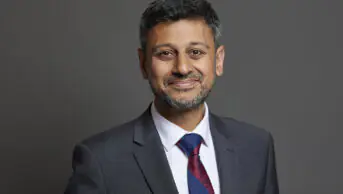
PjrNews/ Alamy Stock Photo
One week after winning the intense Makerfield by-election in June 2026, former health secretary and now prime minister Andy Burnham set out one key part of his vision for the country: devolution.
“The days of Whitehall fighting the devolution of power into the regions and nations are over, for good,” the former Greater Manchester mayor told a room full of journalists and politicians.
As prime minister, Burnham has promised to shift power and resources out of London and into local areas — as has been done in Greater Manchester. A big part of that picture in Manchester has been health and social care.
A unique health model
Greater Manchester agreed its initial devolution deal with the UK government in 2014. This granted the region decision-making and budgetary powers over several services, including housing, transport, further education, employment and policing.
The region was later given the ability to retain a higher proportion of business rates — 100% of rates collected from businesses in the area, compared with 50% previously — and reinvest that revenue into local services.
While not included in the initial deal, health and social care was then devolved to the local government in Manchester in 2016.
Described by researchers as a “completely unique” model, the health devolution deal gave Greater Manchester the power to decide how to spend its £6bn annual health and social care budget. It was also given control over a £450m five-year national sustainability and transformation fund.
When combined with the additional powers over other important services, this gave local leaders the ability to take a more joined-up approach to tackling population health.
After taking over the health and social care budget, Greater Manchester rolled out several initiatives addressing a variety of issues, such as smoking and alcohol harms, tooth decay in children aged under five years, and unemployment among people with health conditions.
The region rolled out increased at-home and community HIV testing, as well as a malnutrition programme for people aged over 65 years, which has reportedly led to 50% more malnutrition cases being identified and a £300,000 reduction in nutrition supplement spend in general practice over three years.
Partnerships and prevention
Pharmacist Luvjit Kandula, director of strategy and pharmacy transformation at Community Pharmacy Greater Manchester, told The Pharmaceutical Journal that early in the devolution journey there was recognition that community pharmacy would be key to improving health outcomes.
“When people talked about primary care, they were normally referring to general practice only. And that’s something we recognised very early on in Greater Manchester,” she says.
To ensure that all parts of primary care — GP, dental, pharmacy and optometry — were given the ability to create and develop services, representatives from each profession formed the Greater Manchester Primary Care Provider Board. Kandula adds that this has led to better conversations and working relationships between the providers.
The advantage of devolution is that it set up a culture of partnership working and there was an openness to be inclusive
Pharmacist Luvjit Kandula, director of strategy and pharmacy transformation at Community Pharmacy Greater Manchester
The collaborative, which has now been running for a decade, has given primary care a “unified voice”, Kandula says.
Greater Manchester has more than 670 community pharmacies , 411 GP practices, 345 optometry providers and about 350 to 400 NHS dentists, serving a population of around 3 million.
“It’s quite difficult for the system to talk to [all of the providers],” Kandula, who chairs the board, notes.
“The advantage of devolution is that it set up a culture of partnership working and there was an openness to be inclusive,” she adds.
“The second part of this journey is that we, as primary care, started to get commissioned to deliver programmes.”
One example of this was the winter pressure schemes for all four disciplines. In 2024, £2m was invested into primary care to meet winter demands. In pharmacy, the additional funding was used to expand the region’s minor ailment service.
Reflecting on the changes brought about since devolution, Kandula says it’s given pharmacists and other health and care leaders the “flexibility to develop services that reflect local population needs”.
“It’s really good to have a national framework, but sometimes the services need to be flexed and adapted in accordance to the gaps or the needs of the local population.”
This is backed by a 2024 study, funded by The Health Foundation and carried out by the University of Manchester, that compared the region with the rest of England across dozens of health measures between 2016 and 2020.
The study results revealed that over that period, there were 11.1% fewer alcohol-related hospital admissions and 14.4% fewer hospital admissions for violence in Greater Manchester, when compared with the control group.
On top of this, same-day GP appointments increased by 1.8%, while unplanned A&E re-attendances dropped by 2.7%. In adult social care, both effectiveness and overall satisfaction improved by 17.6%.
The researchers concluded that the transfer of control did seem to have “enabled greater flexibility in the allocation of health service resources used to prioritise targeted areas”. In contrast, in places where NHS England continued to manage the funds, they were “mainly used to plug provider deficits”, the researchers highlighted.
A holistic response
In theory, the switch from clinical commissioning groups to integrated care systems (ICSs) brought much of England closer to the model in Greater Manchester.
ICSs were introduced in 2022, with the aim of bringing local health and social care organisations across the NHS, local authorities and the third sector together to work towards joint health goals. Greater Manchester’s model has been referred to as one of the inspirations behind the ICS model.
However, one of the main differences remains Greater Manchester’s ability to work across sectors to tackle health outcomes, including through transport, housing and education.
Looking at how devolution in other areas of England could impact community pharmacy, Kandula says it could enable local leaders and communities to better design services around local needs, as well as tackle issues holistically rather than working in silos.
Practice did not veer too far away from NHS policy and strategy for other areas of the UK
Christopher White, senior lecturer in health, mental health and well-being at Wrexham University
“You have to think about the entire problem. Housing, employment, debt relief. Have they got their things fixed? Can they afford their bills? Do they need a food bank? And also the NHS part of the solution,” she says.
“I think the advantage is there’s more likely to be a stronger focus on prevention and reducing inequalities, rather than just meeting targets for the sake of meeting targets.”
However, a study published in the Journal of Public Health in July 2026 analysed dozens of interviews with public health experts working in Greater Manchester — the results of which suggested that prevention work had been deemed “less of a priority than treatment-centred activities”.
Co-author of the study Christopher White, senior lecturer in health, mental health and wellbeing at Wrexham University, told The Pharmaceutical Journal that “despite policy rhetoric suggesting a ‘radical shift’ towards prevention”, the focus on treatment and secondary prevention had “endured” when health powers were devolved.
He suggests that when it came to planning and preparation for devolution, prevention work was neglected and fears over the potential unintended consequences when implementing devolution led people to “retreat towards the norm”.
As such, “practice did not veer too far away from NHS policy and strategy for other areas of the UK”, White says.
Additionally, the results of a study published in the International Journal of Health Policy and Management in September 2025 showed that while the total annual health and care spend increased by £66.58 per capita on average, researchers noted that the increased spending was focused on tackling existing pressures in the healthcare system, rather than in boosting prevention services — a key strategy aim.
Postcode lottery concerns
For its part, Community Pharmacy England (CPE) has stressed that, if devolution happens, national direction for pharmacy must remain a priority.
Janet Morrison, chief executive of CPE, says: “The current contractual framework is complex, and it is likely that the overall direction for community pharmacy will need to continue to be nationally commissioned if there is to be a coherent roadmap for the future.”
However, she acknowledges that there will likely be “an important debate about devolution in primary care, looking at both the purpose and benefits of national commissioning versus the need to reflect population needs in locally commissioned services”.
“Even if more local commissioning emerges, we will need a national framework — perhaps to include National Enhanced Services — to ensure consistency and quality,” she continues.
“Without this continuity, there would be a risk of a ‘crazy paving’ of delivery of pharmaceutical services with no national blueprint.”
Concerns over a postcode lottery were echoed by the Company Chemists’ Association (CCA).
Ultimately, whether services are commissioned nationally or locally, pharmacies need the robust, sustainable funding the sector has long been calling for if they are to continue delivering for patients and the wider NHS
Malcolm Harrison, chief executive of the Company Chemists’ Association
Malcolm Harrison, chief executive of the CCA, says that health devolution could “unlock more agile and responsive ways of delivering care for local populations, allowing local areas to design services around the specific needs of their populations”.
“Community pharmacies are embedded in every community and are ideally placed to support this,” he adds. “However, devolution must not result in unwarranted variation or a postcode lottery in the services patients can access.”
Like Morrison, he stresses the importance of a “consistent national framework that ensures patients receive the same high-quality healthcare wherever they live”.
“Ultimately, whether services are commissioned nationally or locally, pharmacies need the robust, sustainable funding the sector has long been calling for if they are to continue delivering for patients and the wider NHS,” Harrison says.
Even if Manchester’s devolution deal is replicated throughout the country, Kandula emphasises that devolved powers are only the enablers of change.
“ It’s not as simple as the power got devolved and then overnight everything changed,” she says. “It’s basically creating a culture of relationships and partnerships and understanding between health services and public services and local leaders, and incentivising them to be included and work together around shared outcomes.
“ Your power is built through your relationships and your partnerships,” notes Kandula. “That’s what’s going to bring the outcome, the productivity, the efficiency, and it’s not this siloed, kind of pushing-back-responsibility-on-each-other approach.”