Bennett Dean/ Alamy Stock Photo
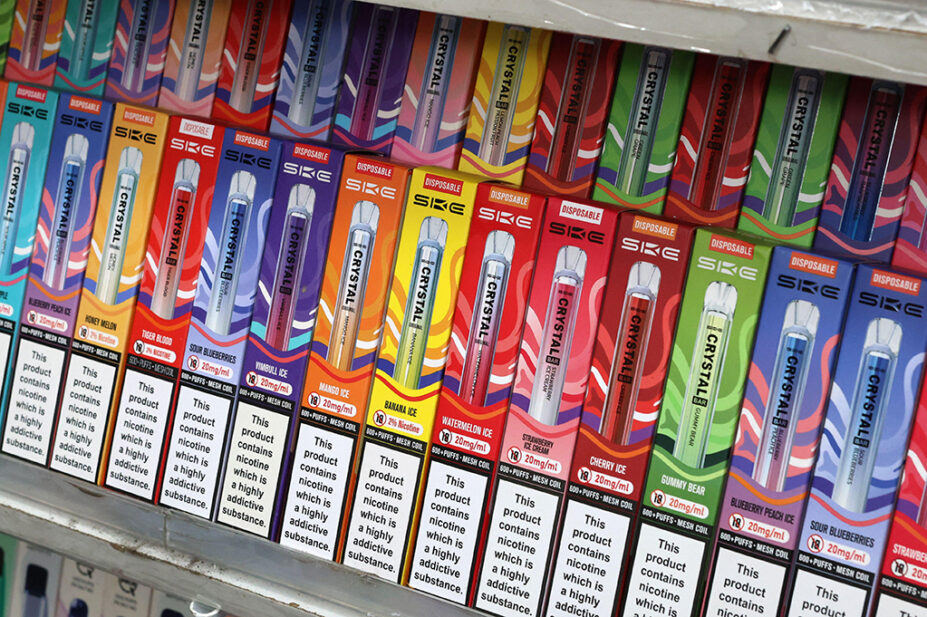
Scotland will become the first UK nation to hold a register of premises selling vaping, tobacco, nicotine and herbal smoking products when it makes registration mandatory from 29 April 2027.
However, the Scottish government has told The Pharmaceutical Journal that registration will not be required for the supply of medically licensed products such as nicotine replacement therapies.
Maree Todd, Scottish minister for mental wellbeing, public health, sport, alcohol and drugs, who was a pharmacist before entering politics, said: “Requiring tobacco and vape retailers to register their business to sell nicotine and herbal smoking products, will also provide a strong foundation for effective regulation and enforcement of the sale of these products in Scotland.
“I want to thank all of the retailers who have already registered and remind others they must to do so before the deadline next April.”
Across the UK, new measures to reduce vaping and tobacco use among young people came into force on 29 October 2026, as part of the phased implementation of the Tobacco and Vapes Act.
The sale of nicotine-containing vapes to people aged under 18 years was already illegal, but the latest measures extended the ban to the sale of nicotine-free vapes and nicotine pouches, strips and pearls to under-18s.
The new UK-wide measures also prohibit adults from buying — or attempting to buy — a vaping or nicotine product on behalf of someone aged under 18 years. However, medicinally licensed products are subject to separate medicines legislation.
In a press release published on 29 October 2026, the government noted that while the Tobacco and Vapes Act places a ban on promotional giveaways of vaping and nicotine products, “local authority stop smoking services can continue providing products to help adult smokers to quit”.
Public Health Scotland data has revealed that community pharmacies accounted for over two-thirds (70.4%; n=21,888) of quit attempts made in Scotland in 2024/2025.
Hazel Cheeseman, chief executive of Action on Smoking and Health, said: “With no age of sale for nicotine pouches or limits on free handouts, children have been exposed to potentially harmful marketing. Today’s regulation brings the law up to date and will protect children.
“However, striking a balance is important with regulations. These nicotine products are less harmful than smoking and may have a role in helping people to quit.
“It is welcome to see carve outs for stop smoking services to continue to provide free nicotine alternatives for those who need them.”
Gordon Winter, policy pharmacist at Community Pharmacy Scotland (CPS), commented: “This is a vital step in preventing children and young people from starting to use nicotine products, and the potential nicotine addiction and the resultant health harms which can follow.
“This is also a major step forward for public health in Scotland. Community pharmacy teams play a leading role in helping people to quit smoking, supporting over 20,000 quit attempts each year through NHS smoking cessation services. However, with over 650,000 people in Scotland still smoking, there is still a huge opportunity to help more people quit and improve their health.
“Community pharmacy has an increasingly important role in delivering preventative healthcare and supporting population health. As NHS Scotland continues to focus on prevention, early intervention and reducing health inequalities, community pharmacies are well placed to expand their contribution to public health programmes and wider healthcare priorities.
“CPS continues to work with government and NHS partners to ensure future service development recognises the accessibility, expertise and impact of community pharmacy teams.”
The Tobacco and Vapes Act also bans the vending machine sale of vapes or nicotine products, but there is a limited exemption allowing sale in adult inpatient areas of mental health hospitals in England and Wales. This exemption applies to vape vending machines in areas that are wholly or mainly for inpatients, the Act states.
Further measures under the Act will follow. From 1 January 2027, it will be illegal to sell tobacco products, herbal smoking products or cigarette papers to anyone born on or after 1 January 2009.