simon hark/Shutterstock.com
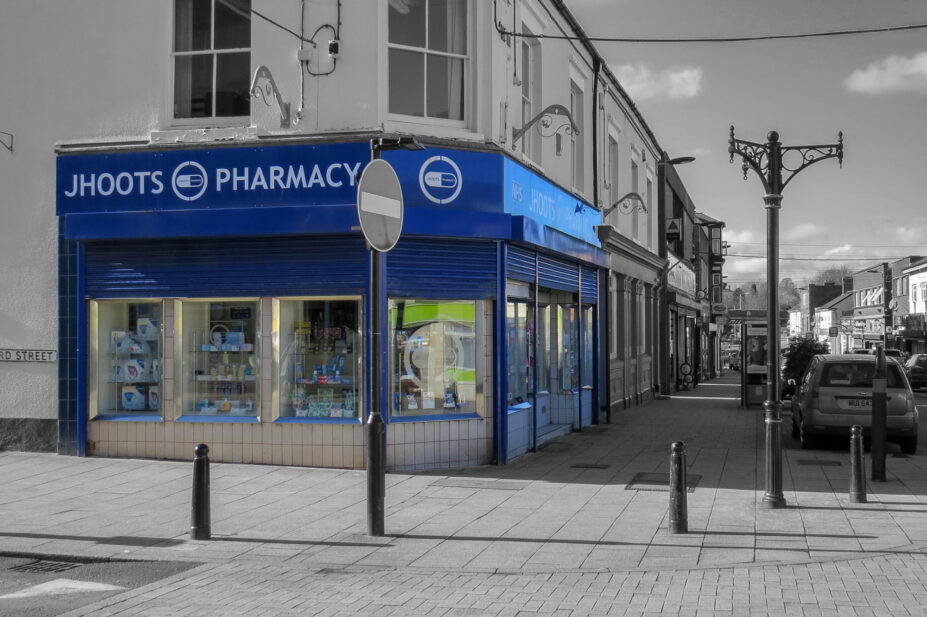
Jhoots Pharmacies, owned and operated by Sarbjit Jhooty and Nilam Patel, grew to become one of the UK’s largest pharmacy groups following the acquisition of more than 100 former LloydsPharmacy premises in 2023.
The public demise of Jhoots, culminating in the appointment of administrators at the end of 2025, has revealed a litany of issues at the organisation, including staff wages not being paid and NHS contracts being breached.
While the branches have now been bought by independent pharmacy group Allied Pharmacies, supermarket chain Morrisons has since announced divestment of its pharmacy portfolio — raising questions about the viability of the community pharmacy sector.
The Pharmaceutical Journal examines what led to the Jhoots administration, speaks to Allied Pharmacies about their plans for the group and asks what needs to change to make the community pharmacy contract more viable in the future.
Who owns Jhoots pharmacies?
Until recently, more than 100 pharmacies operated under the Jhoots brand name, but they were owned by separate operators: two brothers, Sarbjit and Manjit Jhooty.
While the brothers had jointly owned and directed pharmacy businesses in the past, by 2023 Manjit Jhooty was operating 21 NHS pharmacies in England, under companies Pasab and Jhoots Healthcare Limited (JHL), while Sarbjit Jhooty and Nilam Patel operated pharmacies primarily owned by Jhoots Pharmacy Limited (JPL) and SNJ Health Limited.
Both JPL and SNJ Health greatly expanded their pharmacy portfolio in 2023, acquiring around 60 pharmacies between them from LloydsPharmacy, when the multiple sold all its community pharmacy premises.
The majority of SNJ pharmacies were sold to Allied in late 2025, followed by those owned by JPL — with the exception of a few branches where sales had already been agreed with other operators.
Rise and fall
On 7 January 2026, the administrators’ report concerning SNJ highlighted indicators of “severe financial distress”, including critical wholesalers putting the companies “on stop” for several months. It also focused on “numerous county court judgements” registered against related companies, as well as a lack of employee records and confusion about which pharmacies were owned by the group.
Five days later, on 12 January 2026, the administrators’ report about JPL said: “[JPL] has been subject to the financial challenges affecting the industry, which was exacerbated by the purchase of additional pharmacies in 2023 without the appropriate structures in place to maintain operations.
Micro-economic challenges … have directly contributed to the current financial performance resulting in all sites being closed
Administrators’ report about JPL
“Micro-economic challenges — such as increased staff costs and higher rents, as well as stagnated NHS pricing and increased drug costs — have directly contributed to the current financial performance resulting in all sites being closed.”
The timeline below provides an overview of the events leading up to the administration of the companies and sale of the pharmacies. Unless otherwise stated the information included in this timeline comes from the JPL and SNJ administrators reports, available on Companies House.
Figure: Timeline of the events leading up to the administration of JPL and SNJ
Can Allied Pharmacies do things differently?
In an interview with The Pharmaceutical Journal on 5 February 2026, the five brothers who run Allied Pharmacies — chief executive Suhaib Abdullah, finance director Suhail Sharief, chief operating officers Abdul Sharief and Bilal Sharief, and chief commercial officer Mussab Sharief — said they plan to re-open the former Jhoots premises, although they may consolidate branches that exist very close together.
Abdullah said the company was in a “perfect” position to take on the expansion, with experience from working in their own pharmacies, opening new pharmacy contracts and more recently, taking on acquisitions including former LloydsPharmacy branches.
Many of Allied’s acquisitions have been self-funded or partner-funded and this low loan ratio also allows them the space to invest in pharmacies over the longer-term, “because this way there’s no pressure of a loan and also less pressure on us if there’s a partner involved that would lead that project”, Abdullah said.
However, he suggested that the group may consider selling branches with lower prescription volumes in the future.
A key priority for the group will be renegotiating leases or relocating branches, where necessary. Suhail Sharief, finance director at Allied Pharmacies, said Jhoots had inherited “historical problems with leases”.
When I look at some of these [leases], I’m actually surprised [Jhoots] lasted as long as it did
Suhail Sharief, finance director at Allied Pharmacies
“They’re massively inflated in terms of the rent they’re paying. Just not viable,” he explained.
“When I look at some of these, I’m actually surprised [Jhoots] lasted as long as it did.”
In particular, Sharief said higher rates were being paid on sites in “premium” locations such as near health centres — but he suggested that the payoff from this investment was less relevant now that surgeries have to respect patient choice of pharmacy nominations.
However, Allied’s acquisition of the pharmacies under administration means the group is “not committed to those leases”, and so is looking at renegotiating or relocating where necessary, he said.
A challenging landscape
While there were particular issues faced by Jhoots, Sharief said operating under the current pharmacy funding contract in England was “challenging for anybody”.
“There’s no doubt that there is some management failures [with Jhoots], but the major issue is more to do with the overall global sum and the NHS funding that is actually make it challenging for anybody,” he told The Pharmaceutical Journal.
Abdullah said he’s “the most optimistic” of the five brothers.
“When we started years ago, people then were complaining about the funding and it was amazing… Yes, years ago, 3,000 [items] was break even, [now] you need to do more prescriptions, more services, but it’s just moved the line really.
“We’re a strong group, because we have a lot of strong pharmacies in our group. So viability, profitability is amazing. And this way, you know, we can afford to have some in our portfolio that aren’t profitable… because, unfortunately, there is a certain number that aren’t profitable,” he said.
But Bilal Sharief raised concerns about operators of single pharmacies who could not offset losses with income from higher-performing premises.
“We love the challenge. But there’s a lot of people out there that have pharmacies that are struggling. There’s people out there doing 5,000, 6,000 [items]… you think they’re making any money? I don’t think so,” he explained.
We want to be more service driven. We want pharmacy to be more service driven
Abdul Sharief, chief operating officer at Allied Pharmacies
In the long term, the Allied brothers said they wanted to see pharmacies rewarded more for doing services rather than dispensing prescriptions.
“I think maybe the transition from rewarding pharmacies for doing items to rewarding them for doing services hasn’t been as smooth or as fast as possible. That needs to improve,” Abdul Sharief said.
“We want to be more service driven. We want pharmacy to be more service driven.”
Large groups like Allied may be able to hold out until this happens and the pharmacy contract rewards their investment but, until then, many pharmacies continue to provide NHS services at a loss.
With the National Pharmacy Association warning that two-thirds of pharmacies “are at real risk of imminent closure”, larger operators selling off less well-performing branches and some providers significantly divesting their portfolio, the community pharmacy landscape seems to be shifting once again.
Even small changes could have consequences for patients, including widening health inequalities, particularly if access to medicines is lost in more remote areas where pharmacies are less viable.
- This article was changed on 20 February 2026 to clarify the latest available ownership details of the Jhoots pharmacy businesses