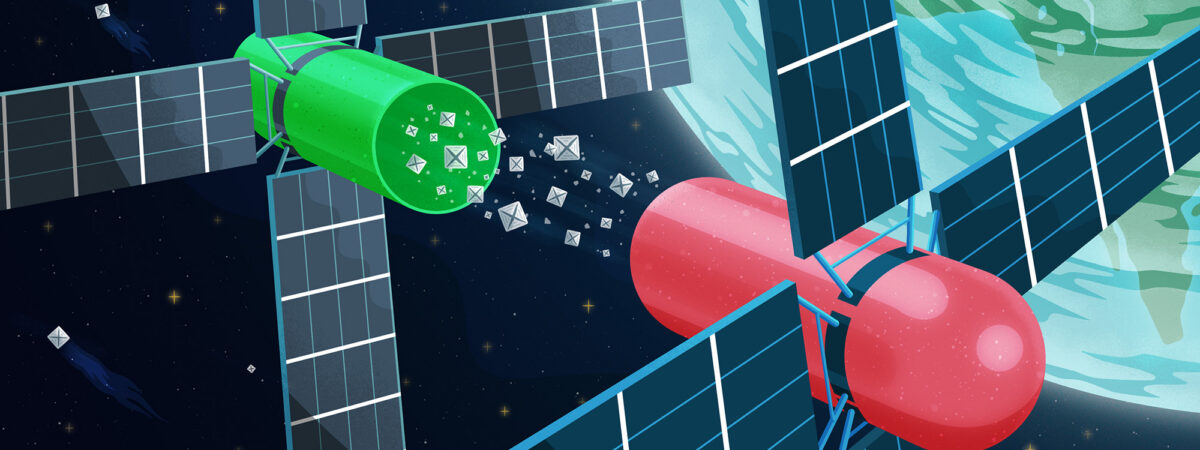
A small group of companies will have watched with interest as Elon Musk’s company SpaceX debuted its cargo-carrying spacecraft Starfall in June 2026. This is because it could be the perfect vehicle for carrying equipment to manufacture medicines in space. After being launched via a rocket, Starfall can travel in low-Earth orbit, which could allow drugs to form in a particular way in microgravity, before coming back down to Earth with its cargo.
Starfall is not the first and only spacecraft to present such an opportunity, but it marks what could be the start of greater accessibility to space for manufacturers. The UK is striving to lead the way in manufacturing drugs in space and has started the process of providing regulatory clarity to help companies working in this area, which could lead to drugs for cancer and rare diseases with improved efficacy1.
Already, the UK government has given thousands of pounds of funding for companies to consider manufacturing advanced materials in space, including drugs2.
Commenting in March 2026, Lord David Willetts, then chair of the UK Space Agency, said: “The UK is open for business in space-enabled pharmaceuticals, with the ambition and capability to lead globally.”1
Drugs that are crystallised in microgravity form in a more uniform way, creating medicines that allow patients to inject themselves subcutaneously. For someone with cancer, for example, this would mean they no longer need to travel to a hospital to receive chemotherapy, which is typically administered intravenously.
Experiments to improve drug formulations have been carried out for more than a decade on the International Space Station (ISS), which continually orbits above the Earth at about 250 miles altitude. Merck Sharp & Dohme (MSD) developed a new subcutaneous injectable formulation of the cancer drug pembrolizumab (Keytruda) — a monoclonal antibody that treats solid tumours — on the ISS. The new formulation was approved for use in Europe in November 2025, while the NHS started to use it in May 20263.
The pharmaceutical company has been experimenting on the ISS to build crystals in microgravity for more than 14 years. Its experiments were led by Paul Reichert, a former associate principal scientist at Merck Research Laboratories, who is now a microgravity drug formulation consultant.
He says the crystals that were developed had a much lower viscosity in suspension than the very heterogeneous crystals produced on Earth, which then “translated into a more easily injectable product”.
Indeed, drugs manufacture in space at scale could be the future. More companies are recently designing their own miniature labs, as it might become easier and more affordable to transport them into orbit for weeks or months, then bringing them down with their drug payloads safely to Earth.
Boldly going
One of those companies — London-based BioOrbit — was founded in 2023 by nanoscientist Katie King and cancer researcher at Leonor Teles, which has received £250,000 from the government to design an ‘end-to-end’ mission to manufacture drugs in microgravity1. The firm is building what it hopes will be the world’s first operational in-orbit drug manufacturing platform: Box-E. It will be the size of a standard microwave and allow biological drugs to be crystallised in microgravity.
The firm has started with a smaller shoe box-sized version of their space manufacturing unit called ‘Baby Box-E’, which King says, even at this size, will be “the largest scale production of protein crystals that’s ever been done in the space environment by one, if not two orders of magnitude”.
Baby BOX-E went up with the mission SpaceX-34 to the ISS in May 2026 and safely ‘splashed down’ three weeks later after it had achieved its objectives, which King says is “very exciting”.4
She explains that a lot of effort is going into manufacturing biologic medicines in microgravity because “it’s very difficult to get these crystals in a uniform and reproducible manner on Earth”.
However, in space, “you can get the right quality”, she adds.
Biologics are large protein medications derived from living organisms that are used to treat cancers and other conditions such as rheumatoid arthritis, Crohn’s disease and psoriasis.
On Earth, biologics are genetically engineered in large bioreactors before being purified and crystallised in suspension, using a variety of methods and conditions. Sometimes salts are added or temperature or pH adjusted to achieve crystallisation. Normal gravity affects how these crystals grow — as crystals in suspension become denser than the surrounding fluid, they start to sink, and any temperature change causes convection currents, which tend to move molecules. Both effects will interrupt crystal growth5.
Without gravity, drug molecules move only by diffusion. “You end up with crystals grown in microgravity, which tend to be larger, but more importantly, tend to be more uniform, and that has real benefits,” explains Phil Williams, professor of biophysics from the School of Pharmacy at the University of Nottingham.
Many biologics need to be administered intravenously because in concentrated solution, they become too viscous to inject subcutaneously and can be prone to irreversible aggregation. As mentioned above, the advantages of crystallising them in space means where the drugs become more uniform, they are suitable for subcutaneous injection6.
Galactic ambitions
While a lot of experimentation to date has been carried out on the ISS, this is likely to be decommissioned by 2030. With Box-E, BioOrbit wants to offer the pharmaceutical industry an alternative route to manufacturing improved biologic formulations in orbit.
Space infrastructure is changing so rapidly
Katie King, nanoscientist and cancer researcher at Leonor Teles
The company’s ultimate ambition is to launch its microwave-sized Box-E pharmaceutical factory so that it goes “from small-scale development up to mass manufacture,” says King. “Space infrastructure is changing so rapidly.”
Baby Box-E was on a capsule designed to survive re-entry into the Earth’s orbit, so it returned intact. However, King points out that many cargo-only spacecraft are designed to burn up on re-entry, which limits the possibilities for bringing back drug crystals.
“There are about 20 to 30 space technology companies working on that problem [of space craft burning on re-entry] and there are about six that are doing their first flight this year, and another six next year. So the infrastructure is coming online very quickly,” she adds.
King also says that so far, test flights are showing incredible abilities to keep biological payloads safe and at a temperature of less than 30 degrees.
BioOrbit is not alone in trying to manufacture drugs in space. Swiss–Israeli company SpacePharma, founded in 2012, has flown 14 flights to space since 2017 for more than 50 biotech and pharmaceutical customers. SpacePharma is now developing a drug-making facility for space that is 40x30x20cm in size, which they are calling the ‘Spactory’7.
Paul Kamoun, chief executive of SpacePharma’s European branch, says that the Spactory ‘box’, which is co-funded by the EU, will be in orbit by early 2028. It is designed to remain on board a future spacecraft or station permanently so only the drug material itself would be transported to and from space.
“In space, you will have different polymorphs of crystals, which are just impossible to do on Earth,” Kamoun says.
He believes the advantages to pharma companies are that they will also be able to beat the ‘patent cliff’ — the decline in revenue when a product’s patent expires — by developing new patentable forms of existing drugs in space.
Back down to Earth
While manufacturing drugs in space may be feasible, not everyone is convinced it will be cost effective or necessary. MSD’s microgravity experiments on pembrolizumab yielded useful results and have also led to a formulation that included an enzyme to enhance dispersion and permeability. Pembrolizumab was also found to reduce treatment time from up to two hours of IV infusion to approximately one minute every three weeks8.
However, Reichert says this only “showed us the direction to go in”, as the experiments eventually came up with a method to make smaller uniform crystals with excellent injectability and stability properties on Earth — with no need to go to space.
Most “experienced bioprocess formulation groups’ in pharmaceutical companies would be capable of designing a process to make a specific type of formulation once they know the required specification”, he suggests.
“I know people like to jump to the idea of doing manufacturing in space,” says Reichert.
However, he adds that in the near term, it’s more likely to continue to be a research tool to better understand crystallisation processes.
King estimates that for already high-value drugs, the price could increase by about 10%, owing to manufacturing costs in space, although she notes the cost of administering the drug will be reduced.
“Through using this more expensive drug, you do not need to pay for the nurse time, the bedtime, the transport time [to get to hospital],” she adds.
The likes of BioOrbit and the others are developing the technology to allow us to continue to do those experiments much more cheaply
Phil Williams, professor of biophysics from the School of Pharmacy at the University of Nottingham
Williams thinks the costs for regular manufacture in space will be prohibitive. He says various methods, such as rotating vessels to stop sedimentation or controlling temperature gradients during the crystallisation process on Earth, can achieve the crystals you want.
“As MSD showed, once you’ve shown that something is possible, then it’s very likely, if not certain, that you’ll be able to find a way to reproduce it without having to go through the enormous environmental and financial costs of sending things up and down,” he explains.
Although, Reichert admits that “there may be certain processes that can only be made in space”.
Daniel Campbell, UK managing director of SpacePharma, agrees. Unlike Keytruda, there will be more complex biological molecules, and “you actually need to crystallise the end product in space, otherwise it would either collapse as a structure or not gain the right purity [or] uniformity”, he says.
Campbell adds: “I’m not saying that it doesn’t cost but it’s not something that is unusually disruptive.
“It’s about bringing these, ‘bags of diamonds’ back to Earth, and then feed them into the big manufacturing line that will create the end product, the injection, the drug itself.”
The actual costs of getting cargo to space have changed significantly over the past 20 years, and Kamoun says, with the introduction of craft such as Starfall, this could be reduced further9.
“20 years ago, it was probably US$1m per kilogramme. Today, we are around US$50,000 per kg for going to space and back,” he explains. “It’s expected that the cost might come down to US$5,000 per kg, and even some people are claiming US$1,000 per kg.”
Given that Spactory will weigh about 50kg, Kamoun says the transportation costs could become a negligible part of a project.
Starfall is specifically designed to carry up to 1,000kg of payload to Earth’s orbit. It is not published how much it would cost per kg of cargo, but some believe it will considerably reduce the costs. SpaceX’s website currently says that it can carry payload at US$7,000 per kg10.
Some space commentators say Starfall, and craft like it, will reduce the current problem of ‘down-mass bottleneck’, which is the limitations of bringing cargo back down to Earth affordably and safely11.
However, Williams says: “I don’t think it will ever be scale manufacturing.” But, while he believes large-scale manufacture of drugs in space does not look viable, he thinks there is still much that can be learnt from experimenting in microgravity.
“The ISS is on its final orbit, it won’t be there for too much longer, and so the likes of BioOrbit and the others are developing the technology to allow us to continue to do those experiments much more cheaply,” he explains.
King feels that for most biologics, scale could be achieved in space, even though the manufacturing units that BioOrbit and others are designing are still relatively small. The firm’s Box-E will produce from 0.5–5.0kg of crystals, which she says could make 2,500 to 25,000 doses of a drug like pembrolizumab.
As a blockbuster drug, Reichert says MSD makes one tonne of pembrolizumab each year, but King estimates 400–500kg is “doable”.
“Do that a couple of times a year, and you can hit the quantities that are needed,” she says.
Jacob Stead
Making the case for change
For drug manufacturing in space to truly ‘take off’, pharmaceutical companies will need to be convinced of its value, but there may still be some way to go.
King thinks perceptions still lag behind reality. “There’s a bit of scepticism over using space in a sustainable manner, which I understand but, again, this infrastructure is changing very quickly, and it is possible,” she says.
In the end, it’s really about making sure that the next question that we are being asked is not, ‘Can you get up and down [from space]?’ but ‘Did the crystals go to the NHS?’
Daniel Campbell, UK managing director of SpacePharma
Kamoun agrees that many pharma companies are not aware of the future potential, which may leave opportunities for smaller, less conservative biotechs and pharma companies.
The next step is to build the evidence base, with more data and case studies needed to demonstrate the benefits of manufacturing in microgravity, says Reichert. Meanwhile, Campbell notes that he has had conversations with large pharmaceutical companies who are saying that “we need data, we need to see that things actually have an impact in microgravity, and then we can better assess whether there is a potential”.
As noted, the UK is getting ahead and taking a lead on creating the regulatory environment needed to approve drugs made in orbit for market. In March 2026, the UK Space Agency, Medicines and Healthcare products Regulatory Agency and several other government agencies started the collaboration to clarify the relevant regulatory requirements for pharmaceutical manufacturing in orbit, including the feasibility study with BioOrbit12.
According to Campbell: “The UK has a real potential to take a lead here.”
“It’s very exciting because the UK are pushing this, and then it can become a blueprint for global regulation,” King states. However, she estimates that even if drugs do end up being manufactured at scale in space, we are realistically still seven to ten years away from that.
King adds that it is crucial for BioOrbit and others to keep making progress, whatever the challenges.
Campbell concurs: “In the end, it’s really about making sure that the next question that we are being asked is not, ‘Can you get up and down [from space]?’ but ‘Did the crystals go to the NHS?’.
“That’s when we will start winning.”
Other space experiments
While microgravity might assist in making drugs for use on Earth, Williams has another motivation for making drugs in orbit: he is interested in the needs of astronauts embarking on very long space journeys.
“We need to find ways to treat and maintain the health of these astronaut pioneers,” he says, given that drugs brought from Earth will not survive a two-year mission to Mars, for example.
Williams has started several projects to do this, such as developing what he calls an ‘astropharmacy’, which is a compact platform that uses engineered microbes to produce small doses of biologics on demand13,14.
If we can do it on Mars, we can do it in the Antarctic, in a nuclear submarine, in a UNHCR [United Nations High Commissioner for Refugees] camp, wherever
Phil Williams, professor of biophysics from the School of Pharmacy at the University of Nottingham
“We engineer particular cells to make the proteins that we need, and then we’re developing ways to make sure that we can extract and purify, and do both quality control and also quality assurance of those materials,” he explains.
Williams is also developing a cell-free method using a payload containing just the material that the cell uses to make proteins and then add the DNA of the sequence of the protein to synthesise it15.
This could provide a route to the surprisingly harder task of making small molecule drugs in space. “If we can make enzymes, then we can use those enzymes to process and put together small molecules,” he adds.
Williams says they have shown this is possible by making the antibiotic vioacein. “This becomes very complicated, but it’s really exciting,” he says. Williams also hopes his work may have wider benefits on Earth.
“If we can do it on Mars, we can do it in the Antarctic, in a nuclear submarine, in a UNHCR [United Nations High Commissioner for Refugees] camp, wherever,” he says.
“This is the ultimate in personalised medicines.”
- 1.UK sets out world leading pathway for space manufactured drugs. UK Space Agency. 2026. https://www.gov.uk/government/news/uk-sets-out-world-leading-pathway-for-space-manufactured-drugs
- 2.New studies for manufacturing advanced materials in orbit. UK Space Agency. 2026. https://www.gov.uk/government/news/new-studies-for-manufacturing-advanced-materials-in-orbit
- 3.‘1-minute’ immunotherapy jab rolled out on NHS for tens of thousands with cancer. NHS England. 2026. https://www.england.nhs.uk/2026/05/1-minute-immunotherapy-jab-rolled-out-on-nhs-for-tens-of-thousands-with-cancer/
- 4.Baby BOX-E Drug Crystallisation Payload Launches to ISS on SpaceX-34. Space Biotech Hub. 2026. https://spacebiohub.com/news/baby-box-e-launches-to-iss-on-spacex-34-for-drug-crystallisation
- 5.Littke W, John C. Protein Single Crystal Growth Under Microgravity. Science. 1984;225(4658):203-204. doi:10.1126/science.225.4658.203
- 6.Space Station Research Informs New FDA-Approved Cancer Therapy. NASA. 2026. https://www.nasa.gov/missions/station/iss-research/space-station-research-informs-new-fda-approved-cancer-therapy/
- 7.Space Pharma. Spactory. 2025. https://www.spacepharma.health/spactory
- 8.Reichert P, Prosise W, Fischmann TO, et al. Pembrolizumab microgravity crystallization experimentation. npj Microgravity. 2019;5(1). doi:10.1038/s41526-019-0090-3
- 9.Space cargo costs could fall more than 90% by 2040, study suggests. University of Cambridge. 2026. https://www.cam.ac.uk/stories/space-cargo-costs-set-to-plummet
- 10.Smallsat Rideshare Program. SpaceX. https://www.spacex.com/rideshare
- 11.Starodubov D. Starfall Removes Cost Barrier for Space Manufacturing. Linkedin. 2026. https://www.linkedin.com/posts/dmitry-starodubov-18118064_how-existing-starfall-is-finally-removing-activity-7475621793634938880-aNb-/
- 12.Joint Statement from the UK Space Agency, the Medicines and Healthcare products Regulatory Agency, the Regulatory Innovation Office and the Civil Aviation Authority. UK Space Agency. 2026. https://www.gov.uk/government/news/joint-statement-from-the-uk-space-agency-the-medicines-and-healthcare-products-regulatory-agency-the-regulatory-innovation-office-and-the-civil-avia
- 13.Space medicine for the future of space exploration – UK Space Agency blog. VITA. 2024. https://space.blog.gov.uk/2024/02/14/space-medicine-for-the-future-of-space-exploration/
- 14.Williams PM, Shivakumar T, Anyanwu V. Space Medicine and Countermeasures. In‐Space Manufacturing and Resources. Published online July 2022:21-46. doi:10.1002/9783527830909.ch2
- 15.Izcan S, Pushparaj N, Williams PM, Cappelletti C. Teleoperated astropharmaceutical payload for long-duration space missions: Project VITA! Acta Astronautica. 2026;238:187-201. doi:10.1016/j.actaastro.2025.10.020