Alexandros Michailidis / Shutterstock.com
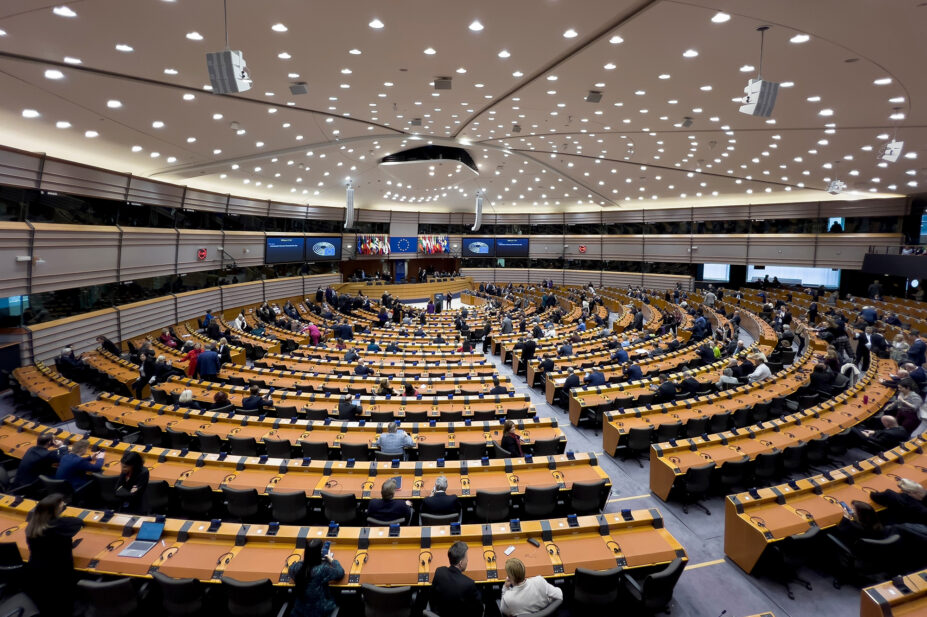
On 11 May 2026, the EU Council and the European Parliament agreed measures that could set into law a raft of new approaches to improve medicines supply across the EU.
The Critical Medicines Act, which was awaiting formal approval at the time of going to press, includes measures to encourage EU-based manufacturing of pharmaceuticals and active pharmaceutical ingredients, aimed to make it easier for member states to work together to procure medicines. The legislation would oblige public procurement procedures to consider valuing the diversity of a manufacturer’s supply chain over price when purchasing critical medicines.
In the face of ongoing shortages of critical medicines across Europe, those working in the pharmacy sector will be only too aware that the UK has also struggled with medicines shortages for many years. As far back as 2015, The Pharmaceutical Journal reported that one in five prescription interventions made by community pharmacists were related to drug shortages. More recently, results of a survey conducted jointly by the then Royal Pharmaceutical Society (RPS) and Pharmacist Support, published in February 2025, found that more than half (56%) of the 6,598 respondents said their mental health had been adversely affected by having to deal with medicines shortages over the past year.
Part of the issue is the global nature of current pharmaceutical supply chains. In its November 2024 report, ‘Medicines shortages: solutions for empty shelves’, the RPS found that “25% of generic medicines used in the UK are manufactured in the UK” with the remainder manufactured in the EU (25%), India (30%) and the rest of the world (20%).
In February 2026, a report from the House of Lords Public Services Committee said that medicines shortages should be considered a national security issue, and called on ministers to take a more proactive, coordinated approach to tackling them. In response, the Department of Health and Social Care (DHSC) said “patients and their wellbeing are at the heart of everything that we do, and we continue to manage supply disruptions in ways that have minimal impact on patients”.
The DHSC and UK-based companies — including Accord Healthcare, Alliance Healthcare Europe, Haleon, Solidsoft Reply — are already members of the European Commission’s Critical Medicines Alliance (CMA), which works to identify areas where action could be taken to strengthen the supply of critical medicines in the EU. The alliance’s 2025 strategic report, published in February 2025, made several recommendations, including assessing medicines for vulnerability in their manufacturing and supply, as well as whether they are considered critical; something the report says is not currently considered.
Falling behind
Despite this involvement with EU efforts, the UK lacks legal assurances for medicines supply security like those set out in the CMA.
“We are falling behind countries that have taken stronger action,” said Mark Samuels, chief executive of Medicines UK, in a statement published on 30 April 2026. “For critical products in short supply, we believe the UK should be on the same footing as [European Free Trade Association] countries in being allowed to participate in and benefit from the provisions of the Critical Medicines Act.”
Off-patent medicines account for 85% of all NHS prescriptions, so policy must focus on strengthening this part of the system
Mark Samuels, chief executive of Medicines UK
In comments made to The Pharmaceutical Journal, Samuels adds: “The recent conflict in Iran has increased pressure on global manufacturers, and the UK needs a strategic plan to ensure the NHS can access the medicines it needs – particularly in times of crisis. Off-patent medicines account for 85% of all NHS prescriptions, so policy must focus on strengthening this part of the system.”
Like the EU, the UK “needs procurement frameworks that weigh resilience alongside price, and better collaboration/data-sharing to anticipate risks before patients are affected”, adds Ross Maclagan, head of supply and distribution policy at the Association of the British Pharmaceutical Industry (ABPI). He says this assurance could come “through legislation or other means”.
“The medicines supply chain in the UK overall is robust, but we believe that earlier, more coordinated communication and longer-term planning across the whole healthcare sector would improve stability further and reduce disruptions,” Maclagan says.
To this end, the European Medicines Agency (EMA) implemented the Critical Medicines List in 2023, with updates made regularly. Medicines are included in the list if they target a serious condition and if there is limited availability of appropriate alternatives. Additional criteria include the number of member states that consider the medicine to be critical. Including a medicine on the list “does not necessarily indicate an imminent shortage, rather it prioritises prevention efforts for these critical medicines”, the European Commission says.
The House of Lords Public Services Committee report on medicines security called for the establishment of a similar list in the UK, based on clinical priority and supply chain vulnerability. It said that while the government does hold a list of medicines which have export restrictions, “inclusion on the list is based on existing shortages or on whether a medicine is at risk of shortage, rather than on patient impact should a shortage transpire”. The DHSC’s list of medicines that cannot be hoarded or exported because they are needed for UK patients was first published in October 2019 and, as of March 2026, includes 31 medicines.
In response to the Public Services Committee’s call for a UK critical medicines list, the DHSC said that, in 2020, it “developed a global risk register which draws on information on medicines licensed in the UK to map manufacturing touchpoints within the supply chain”.
Improving UK resilience
Without legislation similar to the EU’s CMA or a critical medicines list, Samuels says that Medicines UK “believes improved resilience can be achieved in two ways”.
“First, the UK must explore how to further support the manufacturing of medicines. Today, around a quarter of the medicines used by the NHS are manufactured domestically, and that production depends on ingredient supply chains stretching across Europe, India and China.
“Second, building resilience should be an integral part of our international trade relationships. As the UK and EU enter further reset talks, we urge policymakers to prioritise medicines supply within these discussions.”
Boosting the resilience of UK medicines supplies also means engaging with international partners, supporting medicines manufacturing and being a leading destination for life sciences innovation
Alwyn Fortune, pharmacy policy and engagement lead for the Royal College of Pharmacy
This was also noted in a follow-up report — ‘Medicines shortages: solutions for empty shelves — one year on’ — published in November 2025. The RPS wrote that “the UK needs to maintain an international view of medicines shortages and of particular relevance is the EU Critical Medicines Act and Critical Medicines List and their potential impact on supply chains”. An ABPI report, published on 7 May 2026, suggested allowing for “regulatory flexibility so that certain EU packs can be supplied during shortages”, amid several other recommendations to help strengthen UK medicines supply chains.
Alwyn Fortune, pharmacy policy and engagement lead for the Royal College of Pharmacy, says: “Measures being taken by the EU reflect many of the recommendations in our ‘Solutions for empty shelves’ report, which called for cross-sector protocols for life-critical medicines and prioritising supply chain resilience within secondary care contracts.
“Boosting the resilience of UK medicines supplies also means engaging with international partners, supporting medicines manufacturing and being a leading destination for life sciences innovation, to ensure the UK is attractive and competitive in a disruption-prone global market,” he explains.
In March 2026, the UK Mission to the EU hosted a roundtable that discussed medicines supply chains, and how stakeholders internationally can help make them more resilient within and outside of Europe.
A spokesperson for the DHSC said: “We actively engage with international partners, including the EU, to collaborate on supply chain risks and build greater resilience in medicines supply chains.
“As a member of the EU’s Critical Medicines Alliance, we are working with the EU on the upcoming Critical Medicines Act and international cooperation on medical supply chains more broadly.”
Although there is no suggestion that the UK will instigate its own version of the Critical Medicines Act, the UK is still seeking to benefit from what Olivér Várhelyi, European commissioner for health and animal welfare, has called “Europe’s essential safety-belt” to prevent medicines shortages. Meanwhile, pharmacy and pharmaceutical representatives continue to demand greater security for the UK’s long-suffering medicines supply chain.