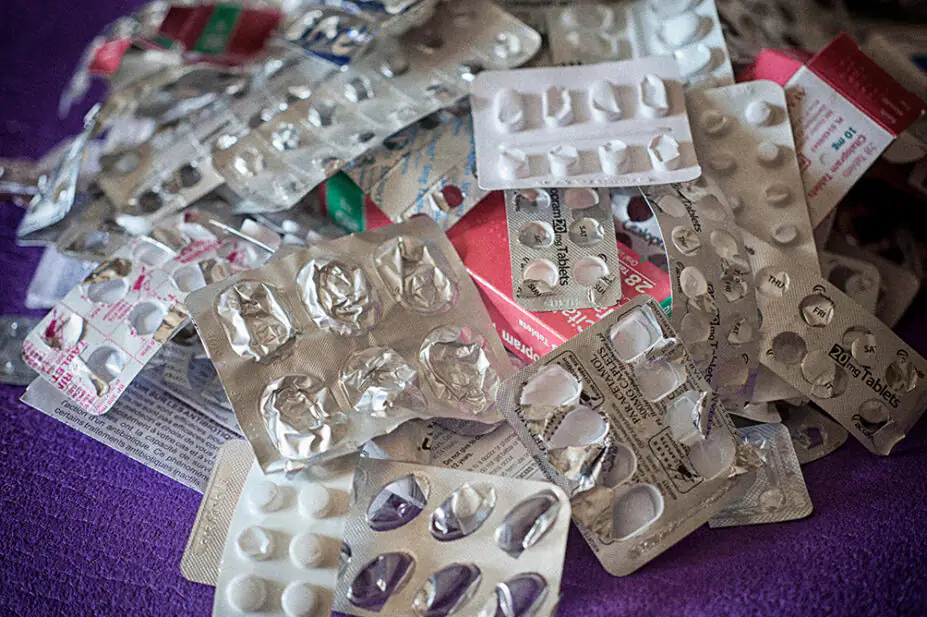
John Heseltine / Alamy Stock Photo
The majority of pharmacies (89%) were unable to dispense a medicine at least once a day in the past year owing to supply issues, a survey conducted by the National Pharmacy Association (NPA) has revealed.
The survey — conducted between 5 and 26 March 2026, with results published on 18 June 2026 — also revealed that most of the 520 pharmacy owners who responded, (98%) reported that they had encountered patients who had visited several pharmacies in a day to source a prescription in the past year.
In addition, the survey results showed that nine in ten (96%, n=499) pharmacy owners surveyed said they felt the current situation posed a serious risk to the safety of their patients, while eight in ten (83%, n=432) said their team had experienced patient abuse owing to shortages.
One pharmacy reported that they had to call the police to remove an abusive patient who had their medication delayed owing to supply challenges, the survey results highlighted.
Olivier Picard, chair of the National Pharmacy Association, said current medication shortages were “some of the most severe the UK has experienced”.
“This data confirms [sic] what pharmacists and GPs have been experiencing for many months; medicine shortages are becoming more frequent, lasting longer and causing increasing disruption for patients.
“Our medicines market has never been so volatile, with patients and primary care colleagues at the sharp end of events outside of their control,” he said.
“It is deeply distressing to find patients who have travelled from pharmacy to pharmacy to find the medicines they need without success.”
He added that while medicine shortages are “frustrating and worrying” — causing pharmacy teams to “spend significant time hunting stock and liaising with GP teams when they should be getting on with caring for their patients” — they also “pose a serious risk to patient safety” in some instances.
“We’re urging the government to convene an emergency taskforce to bring together all parts of the supply chain to tackle this issue.”
“As well as this, the government should amend legislation that prevents pharmacies from making simple substitutions to a prescription, where are a safe alternative is in stock,” he continued. “Improving dialogue and information sharing ahead of time between GP surgeries and pharmacies can help mitigate some of the impact of disruption to supply chains.”
Victoria Tzortziou Brown, president of the Royal College of GPs, commented: “With appropriate safeguards in place, the College is supportive of pharmacists being able to make limited changes to prescriptions when a medicine is unavailable and a safe, clinically appropriate alternative is available within agreed prescribing guidance.
“We would also support systems that enable timely communication between pharmacists and GP practices when shortages arise, without creating unnecessary administrative burden.
“The most important thing is that patients are able to access the medication they need safely and without delay. More widely, it’s essential that when shortages occur, the underlying causes are quickly identified and resolved.”
From autumn 2026, community pharmacist prescribers will be able to prescribe an alternative item where there is a need to meet the needs of an individual patient — including in the event of supply issues — as long as there are arrangements in place with the original prescriber to allow such an approach, as part of the ‘Community pharmacy contractual framework‘ for 2026/2027.
The government is currently considering public feedback on proposals to allow all community pharmacists to dispense a medicine of a different form or strength to that prescribed under certain circumstances, including supply issues.
James Davies, director of research and insights at Community Pharmacy England, urged the government to bring forward the legislative changes in light of the NPA’s findings.
“Our ongoing research demonstrates that pharmacy teams continue to spend increasing amounts of time on procurement activities to support the supply of medicines to patients in their local communities. As medicines shortages persist, pharmacies and GPs must work together to get the best outcomes for patients, which may mean considering alternatives and amending prescriptions,” he said.
“But pharmacy teams also need more support from government. It is now six months since the government consultation on pharmacist flexibilities closed, and we urge them to publish the results and bring forward legislative changes to enable pharmacists to make amendments to prescriptions.”
Tase Oputu, president of the Royal College of Pharmacy, said: “Medicines shortages remain a significant concern for patients and pharmacy teams. Our ‘Medicines shortages: one year on’ report found that, despite positive steps to improve medicines resilience, pharmacy teams continue to manage shortages of widely prescribed medicines daily.
“Addressing shortages requires coordinated action across the medicines supply chain, and pharmacists should be enabled to use their clinical expertise to help patients access treatment safely without unnecessary delay.”
In February 2026, a report from the House of Lords identified medicine shortages as a “national security issue”. In response, the government said it was “progressing a range of measures to strengthen its understanding of supply chain pressures” to mitigate the impact of medicines shortages.