

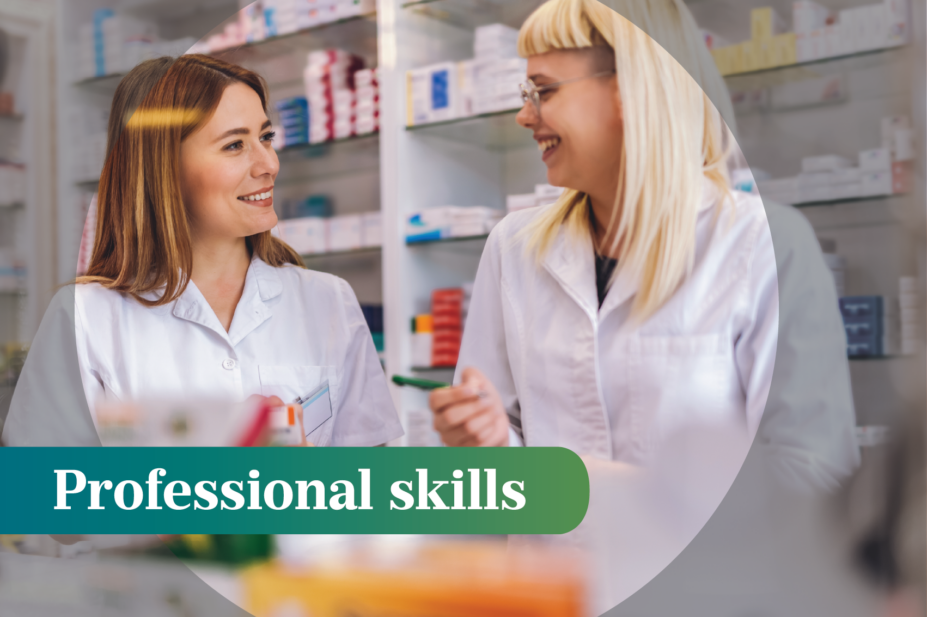
adriaticfoto / Shutterstock.com
After reading this article, you should be able to:
- Describe the benefits of working in a team;
- List the protective effects of work friendships;
- Describe strategies to encourage strong teamwork and how to use it to benefit the pharmacy workplace.
The team is a central organising principle for modern life and work in the 21st century1. The complexity of modern systems means no individual has the capacity to manage all that is necessary2. As a result, teams provide us with the best possible opportunity to manage and thrive in our ever-changing world.
The COVID-19 pandemic taught us the importance of resilience and adaptability. It also highlighted the need for individuals to work together to manage change. Research published in 2021 highlighted the ways in which community pharmacists adapted — or not — to the stress and uncertainty of the early days of the COVID-19 pandemic3. An important finding from this research pointed to the central role of effective management and organisational planning in supporting the mental health and resilience of individual pharmacists and technicians.
An additional and particularly interesting finding of this research involved the protective influence of well-functioning pharmacy teams on the personal resilience of individual team members. It was so important that it was deemed preferable to be a low-resilience individual who had the good fortune of working in a high-resilience practice, rather than being a high-resilience individual who had the bad luck of working in a low-resilience practice3.
An important variable that predicted positive adaptation to environmental stress and crisis was the strength and quality of team-based relationships in the workplace. Team-based community pharmacy practice is relatively new4. Traditionally, community pharmacists have worked independently, or perhaps with a single assistant, in a hierarchical model where most responsibility and decision-making authority fell on a single individual. With an ever-expanding scope of practice for pharmacists, regulation of technicians and new roles and responsibilities for the profession, pharmacy teams have gradually become larger and less hierarchical in nature4,5.
The surprising benefits of working in a team
The efficiency and workflow advantages of teamwork are well known, but the psychological benefits of high-functioning teams on overworked and stressed-out professionals are less so. Effective teams seem to have an inoculating effect on mental health and wellbeing, buffering individuals from some of the worst effects of environmental stress. Mechanisms of action for this inoculating effect include continuous monitoring, entitativity and communication shortcuts5,6.
Continuous monitoring
Most people who work full time recognise that they spend more time with their work colleagues than with their families, friends or loved ones. The reality of modern life is that work occupies many waking hours and we frequently spend the best of those hours engaged in work. Where teams are stable and we have opportunities to work with others on a regular basis, teammates have some of the best insights into our behaviours because they see us most frequently and regularly. As a result, they are able to detect and alert us to incremental downward spirals and changes before these become more serious. When we like and can authentically engage with the people with whom we spend most of our waking hours, they can help us remain psychologically healthy.
Entitativity
Psychologists use the term ‘entitativity’ to describe a kind of psychological belonging that occurs when we feel we have found our ‘tribe’: people who know and understand us because they share similar positive and negative experiences with us7. Working in a demanding context, such as community pharmacy, has its rewards but also requires endurance. The shared experience of complex patients, exacting bosses and scrambled workload can build a sense of ‘team spirit’ with others that is both powerful and protective. More than our families and friends, our teammates co-experience an important part of our life in unique ways, which builds psychological connectivity.
Communication shortcuts
As people work together in teams for longer, a significant evolution occurs in terms of communication. They learn to read one another’s non-verbal cues more accurately, anticipate responses and communicate complex and dense ideas with fewer words and in less time. These shortcuts enhance efficiency but also serve to build a sense of psychological closeness and understanding that can be important for resilience and mental health.
Workplace friendships
There is growing evidence to suggest that where individuals feel connected emotionally to others at work, there are psychological benefits, along with productivity gains, that result. One of the strongest predictors of whether an individual will quit their job is the extent to which they feel they have a ‘best friend’ at work8. Those who report having friends, not just work colleagues, in their workplace are more productive, more efficient and have less likelihood of experiencing occupational stress and burnout.
The findings of our study of pharmacists during the COVID-19 pandemic, published in 2021, reinforced this point. Where pharmacy team members reported feelings of interpersonal chemistry with their colleagues, the ability to share personal feelings and co-experience the ups and downs of working life, these individuals demonstrated higher levels of resilience and wellbeing3.
It may seem idealistic or unrealistic to believe that our work teammates can or should become our friends. Work friendships can end badly or result in blurred boundaries. Still, the idea that one way to support the wellbeing of the workforce includes building high-functioning and affectively warm teams warrants further consideration, particularly from managers.
Fantastic teams and where to find them
To find and build such teams, consider putting some of the following tips into practice.
Tip 1: Reconsider hiring practices to engage and involve more pharmacy staff members
Allowing those who will work most closely with new hires and the opportunity to be directly involved in hiring decisions creates a sense of responsibility to ensure the onboarding process goes well. If the perspectives of those who will work together are taken seriously in hiring decisions, team members will feel more empowered and well-inclined to help establish a foundation for successful team building when the new hire takes up the position.
Tip 2: Be mindful of interpersonal chemistry in day-to-day management
Good managers should be able to name who each of their staff members’ closest work friend is, acquiring that knowledge by simply observing interactions on a regular basis. The art of human resource management involves observing and not ignoring cues in the environment, noticing who speaks with who, who jokes with who and who avoids who is important. Equally important is not ignoring what has been observed or thinking that it is none of the manager’s business. Being aware and supportive of relationship dynamics within a workplace and team can be an essential way of preventing small problems from getting bigger. It is also important in nurturing relationship building within a team.
Tip 3: Consider scheduling practices that focus on teams rather than individuals
It is no secret that when work schedules are released, team members often eagerly examine them to see who else is working with them on a particular day. Top-down scheduling may be insensitive to the interpersonal chemistry and relationships that organically develop within a workplace. Self-scheduling practices that allow individuals more flexibility in signing up for shifts — with a friend, if they desire — provide a sense of empowerment.
In some cases, self-scheduling may not be practical; instead, consider scheduling ‘lines’ rather than individuals. A ‘line’ in this context is a team of individuals who work together. Scheduling them as a line rather than as individuals can help build team culture and cohesion, which in turn can build the interpersonal chemistry needed to support better professional and personal outcomes.
Tip 4: Be intentional around team-building activities
Many workplaces attempt team-building activities, but these can sometimes result in artificially contrived attempts to force fit people together. Team building should also not be simply hosting a holiday party once a year. Instead, find ways to help team members connect as individuals within and outside the pharmacy, which can help build the interpersonal relationships that support mental health and wellbeing. This requires managers to develop a genuine understanding of the individual’s interests — simply giving away tickets to a rugby match, or organising an annual holiday dinner, will not be helpful if staff are not interested in that activity.
Working to understand what motivates and interests people, as well as designing team building around this, is hard work, but it can yield significant dividends in terms of interpersonal chemistry. It is important of course to recognise that individual team members differ with respect to their introversion or extroversion, while these differences need to be respected and incorporated in team-building activities.
Tip 5: Accept that even the strongest relationships have ups and downs
Relationships in the workplace are like all relationships: they are subject to rupture and repair moments. There will be times of stress and disagreement, and this can be particularly challenging in a workplace. The risk of rupture should not discourage managers from actively supporting the building of interpersonal relationships at work — the longer-term benefit of this should not be overlooked owing to short-term pain. Instead, recognise that there may be times when you will need to support both parties in repairing their relationship.
It can be a delicate balancing act for a manager to both respect an individual’s privacy and support workplace efficiency objectives. Still, finding ways to support, nurture, empathise but also to establish clear performance objectives and boundaries, even during times of relationship rupture, is possible. This can actually result in even stronger interpersonal relationships once repair has occurred.
Tip 6: If you’re a manager, start with yourself first
Managing people is complex and can be exhausting. It can also be lonely and isolating, as managers feel they should not establish warm interpersonal relationships with others for fear of appearing to play favourites. Still — like all human beings — managers also need trusted colleagues and friends at work. The solitary, isolated manager is likely to influence the development of an organisational culture that is similarly lonely. In the longer term, this could increase the risk of people quitting, underperforming or experiencing occupational stress and burnout. Managers need to be intentional in building the relational supports they need to support the teams they lead.
Conclusion
Teams serve many functions in modern organisations, but their protective benefits to us as human beings is only now being studied and understood. The importance of social connectivity on personal wellbeing is clear. Even the most introverted individual still needs and benefits significantly from the right form of social connection with another team member. Managerial practices should recognise and support interpersonal chemistry in the workplace to support pharmacists’ mental health, wellbeing and resilience in the face of occupational stress.
- 1.Weller JM, Mahajan R, Fahey-Williams K, Webster CS. Teamwork matters: team situation awareness to build high-performing healthcare teams, a narrative review. British Journal of Anaesthesia. 2024;132(4):771-778. doi:10.1016/j.bja.2023.12.035
- 2.Anderson JE, Lavelle M, Reedy G. Understanding adaptive teamwork in health care: Progress and future directions. J Health Serv Res Policy. 2020;26(3):208-214. doi:10.1177/1355819620978436
- 3.Austin Z, Gregory P. Resilience in the time of pandemic: The experience of community pharmacists during COVID-19. Research in Social and Administrative Pharmacy. 2021;17(1):1867-1875. doi:10.1016/j.sapharm.2020.05.027
- 4.Irwin AN, Marciniak MW, Awad R, et al. Interprofessional team‐based care in the community pharmacy setting: A summary of existing models and best practice recommendations. J Am Coll Clin Pharm. 2024;7(10):1056-1067. doi:10.1002/jac5.2021
- 5.Lim RHM, Shalhoub R, Sridharan BK. The experiences of the community pharmacy team in supporting people with dementia and family carers with medication management during the COVID-19 pandemic. Research in Social and Administrative Pharmacy. 2021;17(1):1825-1831. doi:10.1016/j.sapharm.2020.10.005
- 6.Baker DP, Day R, Salas E. Teamwork as an Essential Component of High‐Reliability Organizations. Health Services Research. 2006;41(4p2):1576-1598. doi:10.1111/j.1475-6773.2006.00566.x
- 7.Austin Z. Entitativity (‘groupness’): researching the foundation of interprofessional collaboration. International Journal of Pharmacy Practice. 2025;33(2):232-234. doi:10.1093/ijpp/riaf008
- 8.Buckingham M. First, Break All the Rules. Simon & Schuster; 1999.
1 comment
You must be logged in to post a comment.


Thank you Zubin Austin for a well written and much needed piece on the importance of teams in pharmacy. The social connectivity in a team is key in fuelling motivation, interest and managerial activities must support this. Ultimately, it has gains in benefitting mental health, well being and resilience of pharmacists in the team and reduce burn out.