Charlotte Gurr
This case example explores how uncertainty can arise when interpreting clinical guidelines to prescribe anticoagulation for older patients who are at risk of falls.
A list of the skills required to manage such situations, mapped to the Royal College of Pharmacy’s ‘Competency framework for all prescribers’, can be found at the end of this article.


Case presentation
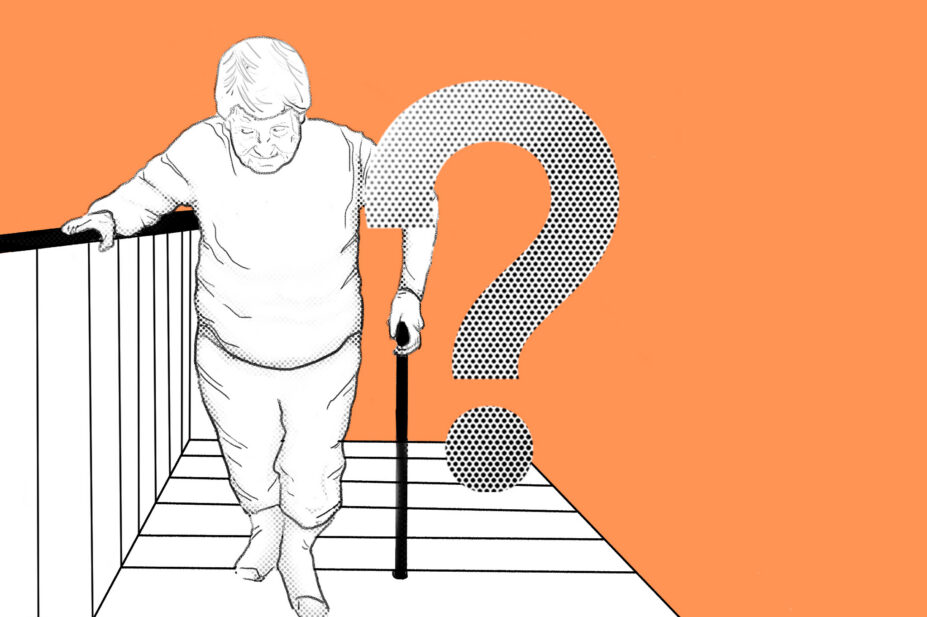
Mrs A is an 82-year-old female with non-valvular atrial fibrillation (NVAF), hypertension, osteoarthritis, early Parkinsonism (i.e. a tremor and occasional freezing) and mild renal impairment (i.e. estimated CrCl 45mL/min), and she has had one fall in the past year. She lives independently and uses a walking stick indoors.
Her GP asked the pharmacist to review her because she is an older adult with multiple long-term conditions and a recent fall. Therefore, she requires a detailed evaluation of the risks and benefits of anticoagulation. Mrs A was referred to the pharmacist–prescriber for review to discuss stroke prevention and bleeding risk.

The dilemma
According to National Institute for Health and Care Excellence (NICE) guidance, anticoagulation is indicated for stroke prevention in atrial fibrillation (AF), where stroke risk is sufficiently high1. However, Mrs A has an increased falls risk, which raises concerns about potentially serious bleeding — especially intracranial haemorrhage — if she falls while anticoagulated. In such situations, the prescribing clinician must consider and weigh the benefits of stroke prevention against the risk of bleeding in a patient with ageing, comorbidity and falls risk while aligning the decision with the patient’s preferences.
If anticoagulation is withheld solely owing to a ‘falls risk’, Mrs A remains at substantially increased risk of ischaemic stroke, which may lead to disabling or fatal outcomes.
However, if anticoagulation is initiated without appropriate risk mitigation, there is a possibility of serious bleed following a fall, which would then impact quality of life for the patient. The pharmacist’s decision-making process can be seen in Box 1 and the Table below1,2.
Box 1: Decision-making process
- Stroke risk was quantified using the CHA₂DS₂-VASc score, while bleeding risk assessed using HAS-BLED/ORBIT categories, in accordance with National Institute for Health and Care Excellence (NICE) guidance1. Her CHA₂DS₂-VASc score is 3 (age ≥ 75 years = 2, hypertension = 1), indicating elevated stroke risk. The calculated bleeding risk (HAS-BLED or equivalent) is moderate;
- The guideline states that anticoagulation should not be withheld on the basis of age or falls risk3;
- In line with NICE guidance, the patient would benefit from direct anticoagulation. This meant considering a direct oral anticoagulant (DOAC) or warfarin. Considering Mrs A’s renal function, monitoring burden and falls risk, a DOAC would be of most benefit. NICE guidance supports offering a DOAC rather than warfarin except when contraindications exist1;
- It is important to consider non-pharmacological interventions. These included services to reduce/mitigate her falls risk (e.g. physiotherapy for gait/balance, referral to occupational therapy for a house assessment to identify any safety hazards and barriers to independence);
- Finally, a structured medication review should be undertaken to identify, optimise and possibly deprescribe any drugs that may increase her risk of falls.

Consultation
A discussion was held with Mrs A regarding the absolute and relative risks of stroke versus bleeding, emphasising evidence that in many older people the stroke prevention benefit outweighs bleeding risk (e.g., older persons with AF and falls risk still derive net benefit from anticoagulation)4.
Mrs A agreed to commence anticoagulation with apixaban. It was chosen for Mrs A because evidence shows it provides effective stroke prevention with a lower risk of serious bleeding compared to other anticoagulants. The results of a large meta-analysis, published in 2014, revealed that apixaban reduced major and intracranial bleeding more than warfarin while maintaining similar or better protection against stroke2. NICE guidance, published in 2021, also highlights apixaban as the DOAC most likely to minimise major bleeding in people with AF1. Considering Mrs A’s age, the moderate kidney impairment and a history of falls, apixaban offers the best balance between preventing stroke and reducing the risk of bleeding, in line with current national recommendations and safe prescribing practice.
A referral to a falls clinic and physiotherapy was made to address gait/balance. Occupational therapy was employed to conduct a home safety assessment to address environmental fall hazards (e.g. loose rugs, poor lighting, etc).
A structured medication review was arranged to identify medications or other drugs that may increase risk of falls.
Safety netting is an important element of the consultation process. Mrs A was provided with written information explaining how anticoagulation works and the signs of adverse effects to look out for, including unexplained bruising or bleeding, black or tarry stools, vomiting blood, sudden severe headache or dizziness, and any symptoms suggestive of stroke. These were explained as new facial drooping, weakness or numbness in the arm or leg — particularly on one side — slurred speech, difficulty finding words, sudden visual changes, or loss of balance or coordination. She was advised to contact her GP practice or NHS 111 without delay if any of these occurred.
The patient was also told to seek emergency help via 999 if she experienced a fall with a head injury or developed acute neurological symptoms (e.g. slurred speech, sudden facial drooping, sudden loss of vision). To support her ongoing understanding and engagement with treatment, she was also directed to reliable patient resources, including NHS information on anticoagulants and Anticoagulation UK.

Monitoring
In discussion with Mrs A, a monitoring plan was agreed: weekly telephone contact for the first month, then monthly clinic review for next three months, checking renal function, signs of bleeding, adherence and falls occurrence.
The following monitoring plan was developed in line with guidance and product literature:
- Noting baseline renal function (eGFR/CrCl), repeating at three months and, when stabilised, annually or more frequently if there are indications of kidney decline;
- Bleeding signs: bruising, haematuria, gastrointestinal bleeding, intracranial bleed symptoms (i.e. headache, vomiting, focal neurology);
- Falls frequency: checking whether falls continue and any subsequent injuries that led to hospitalisations etc;
- Adherence to DOAC and any notable side-effects that may impact compliance;
- Re-assessment of bleeding risk and stroke risk at annual review or sooner if significant changes were reported or identified5–7.
What was the outcome?
After one month, Mrs A reported no falls, no bleeds and indicated good tolerance and adherence to the DOAC.
After three months, she sustained one minor bruise after a minor fall; however, she had no major bleeding events or hospital admissions. She reported improved confidence with walking and felt involved in her care plan. The multidisciplinary interventions (e.g. falls clinic, physiotherapy, occupational therapy (OT)) have helped in the improvement of her mobility.
Box 2: Impact on care
- Stroke prevention strategy aligned with guideline recommendations;
- Falls risk addressed actively, reducing residual risk;
- Patient satisfaction improved through engagement and education;
- Monitoring plan ensured safety and early detection of adverse events.

Follow-up
The follow-up plan included ongoing reviews every three months, with an annual full review.
At six months, anticoagulation was re-evaluated to ensure it remains appropriate if new bleeding risks arise (e.g. new intracranial bleed, major surgery, life expectancy change).
Reflective practice
If I were to do anything differently, I would introduce the falls risk discussion at the point of AF diagnosis or referral, rather than as an add-on later. Embedding this earlier would allow falls-prevention strategies to begin before anticoagulation is initiated, helping to optimise the overall risk–benefit balance from the outset.
On reflection, this case also highlighted how dynamic anticoagulation decisions can be, particularly in older adults with multimorbidity. Several hypothetical scenarios could have shifted the balance. For example, a markedly limited life expectancy may have reduced the net benefit of anticoagulation, prompting a different conversation about priorities of care. Alternatively, if the patient had sustained recurrent injurious falls despite interventions, the bleeding risk might have outweighed advantages, potentially favouring deprescribing. These possibilities emphasise that anticoagulation decisions are not static and must be revisited regularly as circumstances evolve.
Importantly, the non-pharmacological interventions — such as physiotherapy, OT assessment and home safety review — were crucial in improving this patient’s risk–benefit equation. These measures cannot easily be quantified using scoring tools; instead, they require nuanced, individualised assessment, considering lifestyle, home environment, social support, comorbidities, functional ability and medication burden. This reinforces the need for a flexible, holistic approach that adapts to changes in a patient’s condition, goals and living situation over time.
Learning points
- Age and falls risk alone should not automatically preclude anticoagulation. National Institute for Health and Care Excellence (NICE) guidance, published in 2025, explicitly states anticoagulation should not be withheld solely for age or falls risk3;
- Risk–benefit assessments must consider contextual factors beyond scoring tools, including function, life expectancy, home environment and support systems;
- Shared decision-making, patient education and multidisciplinary support (e.g. falls prevention, physiotherapy, home assessment) enhance safety and adherence;
- Choosing a direct oral anticoagulant (DOAC) as first line in appropriate older patients aligns with current evidence and NICE recommendations, given better safety — particularly for intracranial haemorrhage — compared with warfarin;
- Early and structured monitoring is crucial when initiating anticoagulation in a higher-risk older patient while decisions should be revisited periodically.
Practical tips for other prescribers
- Use validated tools (e.g. CHA₂DS₂-VASc; HAS-BLED or ORBIT) but avoid using bleeding-risk scores in isolation to withhold therapy; however, context and clinical judgement remain central;
- In older adults with atrial fibrillation and falls risk, discuss evidence that anticoagulation often remains net beneficial; however, the balance may shift with changes in health status or life expectancy;
- Consider direct oral anticoagulants over warfarin unless contraindicated (e.g. mechanical valve, severe renal impairment), consistent with National Institute for Health and Care Excellence guidance;
- Pair anticoagulation prescribing with non-medication interventions (e.g. falls clinic, home safety assessment, physiotherapy), recognising that these may significantly alter the risk–benefit equation;
- Schedule structured follow-up (e.g. weekly for the first month, then monthly) and be prepared to revisit and adjust decisions in response to evolving clinical circumstances.
RCPharm Competency Framework for All Prescribers
This article is aimed at supporting the development of knowledge and skills related to the following competencies:
- Domain 1.5: Demonstrates good consultation skills and builds rapport with the patient/carer;
- Domain 1.6: Takes and documents an appropriate medical, psychosocial and medication history including allergies and intolerances;
- Domain 1.7: Undertakes and documents an appropriate clinical assessment;
- Domain 1.12: Understands the condition(s) being treated, their natural progression and how to assess their severity, deterioration and anticipated response to treatment;
- Domain 2.1: Considers both non-pharmacological and pharmacological treatment approaches;
- Domain 2.3: Assesses the risks and benefits to the patient of taking or not taking a medicine or treatment;
- Domain 2.4: Applies understanding of the pharmacokinetics and pharmacodynamics of medicines, and how these may be altered by individual patient factors;
- Domain 2.7: Accesses, critically evaluates and uses reliable and validated sources of information;
- Domain 2.8: Stays up to date in own area of practice and applies the principles of evidence-based practice;
- Domain 3.1: Actively involves and works with the patient/carer to make informed choices and agree a plan that respects the patient’s/carer’s preferences;
- Domain 3.3: Explains the material risks and benefits, and rationale behind management options in a way the patient/carer understands so that they can make an informed choice;
- Domain 4.1: Prescribes a medicine or device with up-to-date awareness of its actions, indications, dose, contraindications, interactions, cautions and adverse effects;
- Domain 4.2: Understands the potential for adverse effects and takes steps to recognise and manage them while minimising risk;
- Domain 4.3: Understands and uses relevant national, regional and local frameworks for the use of medicines;
- Domain 5.4: Ensures the patient/carer knows what to do if there are any concerns about the management of their condition, if the condition deteriorates or if there is no improvement in a specific timeframe;
- Domain 6.1: Establishes and maintains a plan for reviewing the patient’s treatment;
- Domain 6.2: Establishes and maintains a plan to monitor the effectiveness of treatment and potential unwanted effects.
Disclaimer
The information in this dilemma draws on the prescriber’s own experience in practice but the patient information has been changed to protect anonymity. The author aims to support others to navigate ‘grey areas’ within active prescribing by stimulating discussion through the sharing of their clinical approach.
The content contained in this dilemma is for educational purposes only and does not constitute clinical advice, guidance or recommendation. Other clinical approaches may be more appropriate for similar patients based on a full exploration of shared decision-making and person-centred care.
- 1.Atrial fibrillation: diagnosis and management. National Institute for Health and Care Excellence. 2021. https://www.nice.org.uk/guidance/ng196
- 2.Ruff CT, Giugliano RP, Braunwald E, et al. Comparison of the efficacy and safety of new oral anticoagulants with warfarin in patients with atrial fibrillation: a meta-analysis of randomised trials. The Lancet. 2014;383(9921):955-962. doi:10.1016/s0140-6736(13)62343-0
- 3.Atrial fibrillation: clinical knowledge summary. National Institute for Health and Care Excellence. 2025. https://cks.nice.org.uk/topics/atrial-fibrillation/
- 4.Mitchell A, Elmasry Y, van Poelgeest E, Welsh TJ. Anticoagulant use in older persons at risk for falls: therapeutic dilemmas—a clinical review. Eur Geriatr Med. 2023;14(4):683-696. doi:10.1007/s41999-023-00811-z
- 5.DOACs (direct oral anticoagulants) — monitoring. Specialist Pharmacy Service. 2023. https://www.sps.nhs.uk/monitorings/doacs-direct-oral-anticoagulants-monitoring/
- 6.Apixaban – BNF monograph. British National Formulary . 2024. https://bnf.nice.org.uk/drugs/apixaban/
- 7.Eliquis 5 mg film-coated tablets: Summary of Product Characteristics. Electronic Medicines Compendium . 2025. https://www.medicines.org.uk/emc/product/100229/smpc