Godong/ Alamy Stock Photo
More than half (57%) of NHS trusts are experiencing ‘moderate to severe’ pharmacy workflow disruption owing to missing, incomplete or inaccurate barcodes, a survey conducted by barcode provider GS1 UK has found.
Results of the survey, shared with The Pharmaceutical Journal on 4 August 2026, also showed that nearly two-thirds (64%) of respondents had received medicines without barcodes in the previous month, with the numbers of affected packs ranging from 1 to more than 150.
The survey was conducted between March 2026 and April 2026 to assess the impact of missing or unreadable barcodes on NHS trusts.
GS1 UK received survey responses from 44 organisations, which were mostly acute NHS trusts, as well as some mental health and specialist services, with the majority based in England.
Four in ten respondents (41%) reported that the most common range of affected packs of medicines were 1–50 packs, the survey results revealed.
It also showed that almost half of respondents (46%) had received medicines with unscannable barcodes in the previous month, ranging from 1 to more than 20 affected packs, while one-quarter (25%) of respondents had received medicines with incorrect or mismatched barcodes in the previous month, ranging from 1 to 10 affected packs.
Commentary on the survey, written by GS1 UK, said that qualitative responses highlighted three recurring themes: patient safety risks where manual workarounds were required, operational inefficiencies affecting robot loading and stock management, and barriers to implementing end-to-end closed-loop medicines management.
Organisations using dispensing robots reported greater impact, reflecting their reliance on barcode functionality, it noted.
In its commentary, GS1 UK recommended manufacturers and marketing authorisation holders continue to include 2D barcodes voluntarily while future regulatory requirements are considered.
It also suggested that government and regulators should consider mandating 2D barcodes on UK medicines packaging and that NHS organisations be encouraged to report missing, inaccurate and unscannable barcode issues through established routes.
Commenting on the survey, Michael Clarke, partnerships director at Medicines UK, said: “While we recognise the potential benefits of 2D barcoding, the government and regulators must also acknowledge the extremely challenging commercial environment for off‑patent medicines, which supply nearly 90% of all NHS prescriptions.
“Almost two‑thirds of these medicines cost less than £1 for a month’s treatment. In such a finely balanced market, absorbing additional costs risks undermining supply resilience and could inadvertently worsen shortages.
“If the government intends to mandate barcodes, it must use the opportunity to modernise how patients get information about their medicines. A 2D barcode on a pack could link to an electronic version of the patient information leaflet, which many people would find more convenient to access than a closely-printed, tightly-folded paper leaflet.
“Of course a non-digital route to this information must be maintained for patients who cannot access information digitally, but moving to digital-first information for patients would enhance the experience for most patients and deliver a significant environmental benefit, in line with NHS net zero ambitions,” he added.
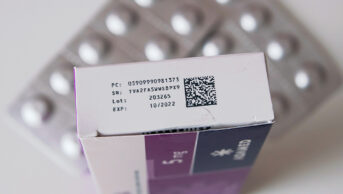
Under the EU Falsified Medicines Directive (FMD), medicine packs are required to feature a 2D barcode containing a unique serial number alongside a product code, batch number and expiry date.
However, since the UK withdrew from the EU in 2020, the FMD has no longer applied. The previous government committed to establishing a UK version of the scheme, but no consultation on this has yet taken place.
In June 2025, the four UK chief pharmaceutical officers wrote an open letter to pharmaceutical companies and stressed “the importance of continuing to print 2D barcodes on medicines’ packaging, encoding, as a minimum, the GTIN [global trade item number], batch number and expiry date”.
In October 2025, pharmacists launched a petition to make accurate GTIN barcodes mandatory in all Medicines and Healthcare products Regulatory Agency-licensed medicines, following reports of growing problems with barcode data errors and missing 2D barcodes on UK medicine packs.