Addictive Stock Creatives/ Alamy Stock Photo
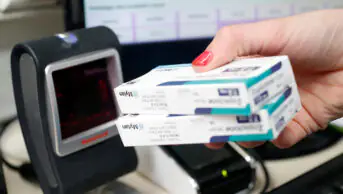
The government is looking into which barcodes are required on medicines packaging, the Department of Health and Social Care (DHSC) has confirmed.
In comments made to The Pharmaceutical Journal on 6 August 2026 in response to findings of a survey — which revealed that more than half (57%) of NHS trusts reported experiencing ‘moderate to severe’ pharmacy workflow disruption owing to missing, incomplete or inaccurate barcodes — the DHSC said: “Patient safety is paramount, which is why the government is examining what barcodes may be required on medicines packaging.”
“All pharmacists and pharmacy staff are required to follow robust procedures to ensure medicines are correctly supplied to each patient, as well as carrying out appropriate checks before any medicine is dispensed,” the DHSC added.
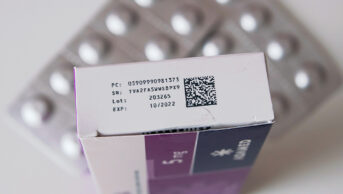
The EU Falsified Medicines Directive (FMD), which went live across the EU in February 2019, requires that all medicines issued in member states carry a 2D barcode containing a unique serial number alongside a product code, batch number and expiry date.
However, since the UK withdrew from the EU in 2020, this directive has no longer applied.
A Department of Health and Social Care factsheet, published in January 2021, said that a consultation into a UK version of the FMD was expected by February 2022, but no such consultation has yet taken place.
In a position statement published in February 2026, the Royal College of Pharmacy (RCPharm) said: “[The College] joins the call from NHS England for regulatory changes to mandate 2D barcodes on UK medicines packaging and include GTIN [global trade item number] information in the licensing process for medicines.
“Minimum data required is GTIN, batch number and expiry date.”
The statement added that “barcode standards are not just a technical detail”, as they are “fundamental to patient safety, operational resilience, and the NHS digital future”.
Between May and June 2026, NHS England ran a survey, the results of which have yet to published, asking pharmacy team members to share their experiences of the impact of incomplete or inaccurate barcode data on patient safety and day‑to‑day practice.
Tase Oputu, president of RCPharm, commented: “Pharmacists should be able to rely on accurate barcode information every time they scan a medicine. Consistent use of 2D barcodes supports safer patient care, improves traceability and helps digital systems work as intended.
“When barcodes are missing or can’t be scanned reliably, pharmacy teams have to rely on manual workarounds that increase workload and reduce the safety and efficiency benefits that barcode technology is designed to provide.
“We support regulatory changes to mandate 2D barcodes on UK medicines packaging and encourage pharmacists to continue reporting barcode issues to help build the evidence for change.”