Andriy Popov / Alamy Stock Image
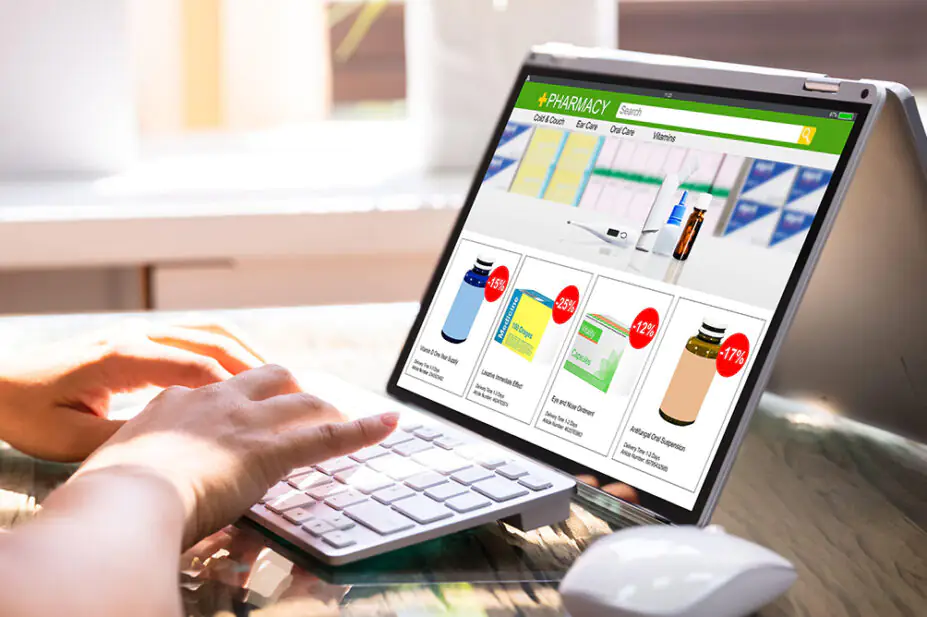
One in ten online pharmacies have seen their websites and social media presence cloned by illegal medicine sellers in the past year, a survey conducted by the National Pharmacy Association (NPA) has revealed.
Results of the survey, published on 16 April 2026, showed that the criminal activity reported by respondents included copying regulator logos and repurposing pharmacies’ social media health advice videos to sell illicit medicines.
The NPA surveyed 100 distance-selling pharmacies between 26 March and 6 April 2026.
Fraudulent sellers have particularly focused on weight-loss medications. The survey results revealed that two in five online pharmacies said they have seen patients unwittingly buy weight-loss medication from unregulated providers in the past year.
One pharmacy reported that it only discovered its online presence had been cloned after the pharmacy was approached by a patient, who had unwittingly bought a counterfeit Mounjaro (tirzepatide; Eli Lilly) pen from a site posing as the pharmacy for one-quarter of the market price but had felt no health benefit from using it, according to the survey results.
The NPA said it had sent the evidence to health secretary Wes Streeting and called for stronger safeguards to help patients identify a safe and regulated online pharmacy, including a new ‘pharmacy’ domain name and a list of all regulated online pharmacies, as well as logos for webpages.
Sehar Shahid, NPA board member and online pharmacy owner, commented: “I know first hand how distressing it is to see criminals posing as regulated pharmacists to try and trick patients into buying counterfeit medicines.
“Medicines from unregulated providers may be faked, swapped for an alternative medicine or not meet the strict regulatory standards we have in the UK.
“Patients should be wary of any provider that is offering medicines at a price that is too good to be true and are not offering any consultations before prescribing.”
Kathie Cashell, chief executive of the General Pharmaceutical Council, said: “The sale of counterfeit medicines through fake online pharmacies or social media platforms is a major threat to patient safety.
“As the pharmacy regulator, we are working closely with the MHRA [Medicines and Healthcare products Regulatory Agency] to support them to take action against fake online pharmacies and counterfeit medicines.
“We refer any illegal sales of medicine we identify onto the MHRA and provide support and advice to legitimate pharmacies who have been victims of cloning. We took the decision to discontinue our own internet pharmacy logo scheme earlier this year, in response to the risk of the logo being cloned by criminals.”
Cashell added that the issue would require collaboration across regulators, governments and other stakeholders to ensure people can safely access legitimate online pharmacies.
“We have already begun exploring potential solutions that we and others could put in place and welcome the suggested actions put forward by the NPA,” she said.
“As a next step, we are planning to bring together regulators, other stakeholders and parliamentarians together at a roundtable in the House of Commons in June [2026] to discuss further actions to tackle this issue. We will also shortly launch a public campaign, highlighting the risks of using fake pharmacies and explaining how to keep safe when going online for medicines.”
Tim Duffield, head of intelligence for enforcement at the MHRA, said: “We take all reports extremely seriously, and we will be reaching out to the NPA to gather a better understanding of the nature of these claims.
“While the MHRA does not regulate pharmacies, it is committed to protecting public health and supporting patients to make safe choices.
“Our Criminal Enforcement Unit works tirelessly to take action against those unlawfully trading in medicines, including online and will continue to take enforcement action where appropriate.
“Our teams have made significant seizures and arrests, preventing millions of doses of potentially dangerous products reaching patients and denying criminals millions of pounds in illegal profits and this work is ongoing.”
However, Sehar said: “Although the MHRA works hard, their efforts are a drop in the ocean to tackle what is fast becoming a sophisticated criminal enterprise.
“We need tougher enforcement action and the government should put stronger safeguards in place to help patients clearly identify regulated providers online.”
A spokesperson for the Department of Health and Social Care (DHSC) said: “Patient safety is our absolute priority, and we take any attempt by criminals to exploit people seeking treatment online extremely seriously.”
“[The DHSC will] continue to keep protections under review to ensure patients can access medicines safely,” they added.
Sehar also said: “Social media companies have been asleep at the wheel and have not done enough to prevent a booming market for counterfeit medicines to flourish on their platforms.”
An investigation conducted by The Pharmaceutical Journal in 2025 concluded that social media platforms needed to do more to protect young people — two-fifths (41%; n=820) of whom have seen weight-loss drugs online.