Pixel-Shot/ Shutterstock.com
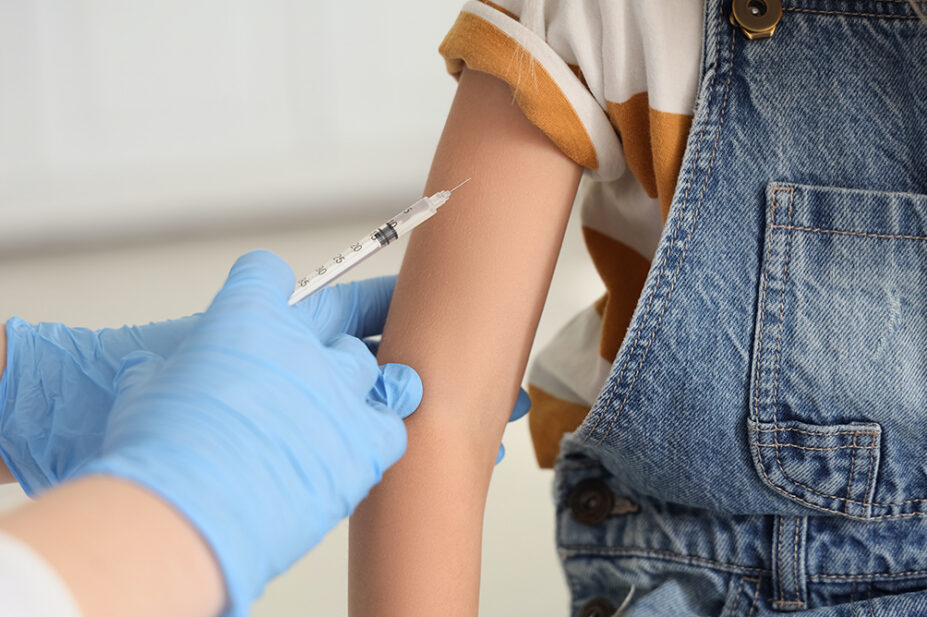
A House of Lords committee has said there is “some evidence” that commissioning community pharmacies and other supplementary providers to offer childhood vaccinations could improve access and reduce inequality gaps, but added that it may carry risks.
In its report published on 18 November 2026, the House of Lords Childhood Vaccination Committee said that commissioning supplementary providers, including pharmacies, may “risk diverting from the core offer, adding costs and increasing system complexity”.
“The government is right to evaluate the commissioning of supplementary provision carefully,” it added.
In the report’s summary, the committee recommended that the government “must” make it easier to catch up on missed vaccinations, while supplementary provision should “be commissioned and evaluated to test whether it reduces inequalities in uptake”.
It described GPs and schools as a “convenient, familiar core offer” and agreed with the government that the aim should be to reduce inequalities “rather than simply to increase choice”.
The report also described the commissioning of health visitors to vaccinate children at risk of missing out as “a promising way to do this” and recommended rolling out the model if a current pilot succeeds.
Commenting on the report, Malcolm Harrison, chief executive of the Company Chemists’ Association, said that the Department of Health and Social Care and NHS must “expand the scope of existing vaccination services commissioned from community pharmacy” to build on the sector’s “strong track record” of providing childhood vaccines, which community pharmacy is “well placed” to provide.
“With more pharmacies in more deprived areas, where vaccine hesitancy tends to be higher, pharmacists are also well placed to build vaccine confidence too,” he added.
The Lords committee report said that childhood vaccination rates in England had been falling for “more than a decade”.
In a report published in June 2026, the UK Health Security Agency (UKHSA) noted that there was an overall decline in childhood vaccination rates in the first quarter of 2026, with variation across UK nations.
Measles, mumps and rubella vaccination rates were similar in the most and least deprived areas in 2016/2017; however, the gap had widened to nearly eight percentage points by 2024/2025, it revealed. The report also noted that for HPV, the “disparity” had grown to more than 22 percentage points by 2024/2025.
The UKHSA said that “no single factor” explained the decline and pointed to evidence that “inflexible vaccination services” can be inaccessible for busy families, while continuity of care has fallen as pressures on GPs, nurses and health visitors have grown.
A spokesperson for the NHS Greater Manchester Integrated Care Board (ICB) told The Pharmaceutical Journal on 19 November 2026 that a local pilot of community pharmacy delivery of MMR catch-up vaccines in the north west of England “has been evaluated as demonstrating positive results, so NHS Greater Manchester is considering the future commissioning model for the MMR vaccine to improve access, uptake and address health inequalities”.
Olivier Picard, chair of the National Pharmacy Association, told The Pharmaceutical Journal: “The committee are right to sound the alarm about falling uptake, in sharp contrast to steady growth for a number of years.
“We agree with the committee that it makes sense to use pharmacies, who are highly accessible and on people’s doorsteps, to help tackle this, including providing catch-up vaccines to those who have missed out.”
Commissioning responsibility for vaccination is due to move on to ICBs from April 2027. The committee said this could “at best” be an opportunity to make vaccination a priority, but it heard evidence that the changes risk “further fragmentation”.
It recommended that vaccination commissioning budgets should be ring-fenced for two years during the transition.
In a statement, published on 18 November 2026, Tom Nutt, chief executive of Meningitis Now, said that action was needed by “bringing together government, the NHS, UKHSA, schools, charities, community pharmacies and others” to reverse the decline in vaccinations, adding that an “ambitious approach” is needed for childhood vaccination.
“The recent MenB [meningococcal B disease] outbreaks have demonstrated just how quickly diseases, such as meningitis, can change lives and why we cannot afford to be complacent,” he said.