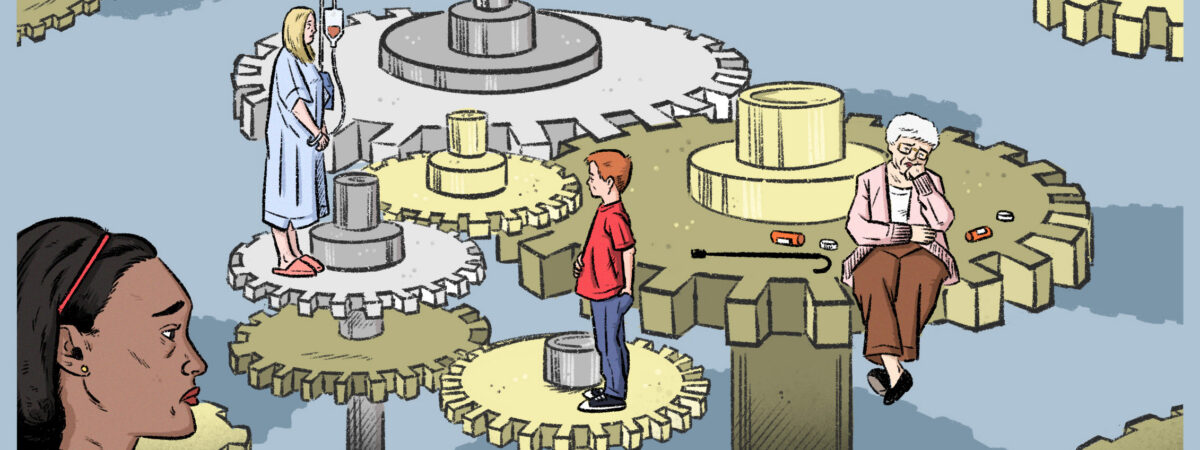
The extension of the UK Rare Diseases Framework represents both progress and unfinished business. When it launched in 2021, the framework set out a shared ambition to address structural inequities experienced by the 3.5 million people in the UK living with rare conditions — through faster diagnosis, better coordination of care, improved awareness and greater access to specialist treatments1.
Five years on, the decision to extend the framework to 2027 has been welcomed across the pharmacy sector. For many, it signals more than continuity — it reflects the success of sustained advocacy from patient groups and recognises that progress remains incomplete.
However, the extension should not be viewed as a continuation of the status quo. It is a strategic inflection point, creating a window to redefine how rare disease policy is delivered and whether policy can genuinely move from ambition to system-level change.
From alignment to impact
The rare diseases framework has played an important role in aligning stakeholders across the four nations. It has provided a shared direction of travel, underpinned by national action plans, and enabled collaboration between policymakers, clinicians and patient organisations at a scale that did not previously exist.
A stable, UK-wide framework provides a foundation for coordinated action, helping to anchor investment, research and service delivery
This alignment matters. Rare disease policy, by definition, must operate in an environment of uncertainty, with small patient populations, limited evidence and complex care needs. A stable, UK-wide framework provides a foundation for coordinated action, helping to anchor investment, research and service delivery. As sector organisations have noted, it has functioned as a “cornerstone” for engagement between policymakers and the rare disease community2.
However, alignment alone does not deliver impact. While progress has been made — particularly in areas such as awareness and the expansion of genomic medicine — the lived experience of patients continues to reflect many of the same challenges identified in 20213. Delays to diagnosis prevail, with the average rare disease diagnostic journey taking 5.6 years, as well as fragmented and inconsistent access to care and treatments4.
The next phase must focus on execution
Across the commentary surrounding the extension, one theme is consistent: the need to use this additional year wisely to co-produce solutions and tangibly define what comes next. The challenge is not ambition but execution.
The NHS is a complex, ever‑changing system; the challenge is ensuring policy translates into real patient outcomes. Many rare conditions still lack structured care pathways; rare endocrine diseases, such as hypoparathyroidism, exemplify this — limited specialist centres, fragmented referrals and inconsistent assessment of quality‑of‑life impacts.
Without dedicated funding and clearer accountability structures, many priorities have remained aspirational rather than operational
The absence of ring-fenced funding for the framework has constrained delivery, while a lack of clear accountability has made it difficult to drive sustained progress. The need for actions to either be cost-neutral or delivered at low cost has limited the impact. Progress reports published by the devolved nations reflected on how financial constraints make it difficult to maintain progress5. Without dedicated funding and clearer accountability structures, many priorities have remained aspirational rather than operational.
Why extending the framework matters now
The integration of NHS England into the Department of Health and Social Care has the potential to bring clearer accountability for delivery, with more direct reporting into the health minister. At the same time, the development of the NHS ten-year plan presents an opportunity to more fully embed rare diseases within wider reform agendas.
The extension period must therefore be used not only to accelerate improved patient outcomes but to embed rare disease policy with the UK’s broader life sciences strategy
Improvement benefits patients, industry and clinicians, as well as helps the UK remain competitive. Rare diseases sit at an intersection of genomics, innovation and personalised medicine. As global competition intensifies for clinical trials, research investment and scientific talent, policy coherence becomes a critical enabler of competitiveness. The UK’s strengths of science, genomic capability and clinical engagement are well established. However, realising future potential requires an environment that supports innovation at pace and scale.
The extension period must therefore be used not only to accelerate improved patient outcomes but to embed rare disease policy with the UK’s broader life sciences strategy.
The real measure of progress
This extension represents a test of whether rare disease policy can be fully integrated into the health system’s transformation agenda, keep pace with scientific innovation and attract investment.
A successful result relies on building a more accountable, coordinated and delivery-focused approach to rare disease policy
A successful result relies on building a more accountable, coordinated and delivery-focused approach to rare disease policy — one that ensures the next iteration of the framework is not only well designed but achievable in practice. If so, this push may prove to be the moment the UK moves decisively from ambition to impact.
- 1.The UK Rare Diseases Framework. UK government . 2021. https://www.gov.uk/government/publications/uk-rare-diseases-framework/the-uk-rare-diseases-framework
- 2.The UK Rare Diseases Framework will be extended by a year! . Beacon for Rare Diseases. 2025. https://www.rarebeacon.org/news/the-uk-rare-diseases-framework-will-be-extended-by-a-year/
- 3.NHS England sets up world’s first national genetic cancer risk register. National Health Executive. 2026. https://www.nationalhealthexecutive.com/articles/detecting-cancer-earlier-world-first-national-genetics-register
- 4.Major change for rare disease treatments on way, signals MHRA. UK government . 2025. https://www.gov.uk/government/news/major-change-for-rare-disease-treatments-on-way-signals-mhra
- 5.Refreshing the UK Rare Diseases Framework Reflections on progress to date and lessons for the future. Specialised Healthcare Alliance & Genetic Alliance. https://shca.info/wp-content/uploads/2024/12/Reflecting-on-the-UK-Rare-Diseases-Framework.pdf