

The climate crisis is a public health emergency, which has impacts on the population’s health and adds to the burden on UK health services, while also placing these services at risk1–3.
Simultaneously, the provision of health services adds to the problem through carbon emissions, pharmaceutical pollution of waterways, plastic pollution and generation of waste4–7. For example, medicines and prescribing alone account for 17% of the entire NHS carbon footprint4.
Excessive use of oral nutritional supplements
An exploration of the environmental impact of medicines waste in care homes identified oral nutritional supplements as a particular problem8.
Oral nutritional supplements are widely prescribed to support individuals that have problems meeting their nutritional needs through diet alone — a common problem for older adults in care homes. While oral nutritional supplements can be clinically and cost effective in some clinical conditions, their widespread use in older, frail adults in the care home setting is problematic.
Care homes are required by law to satisfy the nutritional requirements of residents, rendering the prescription of oral nutritional supplements to care home residents superfluous in many cases9. The overprescribing of oral nutritional supplements is highlighted in the NHS Business Services Authority Oversupply Dashboard and as a proposed future item within the National Medicines Optimisation Opportunities list10,11. The financial expenditure on standard oral nutritional supplements in England increased from approximately £157m in 2021/2022 to almost £210m in 2023/2024, an increase of more than £52m in three years12.
The cost implications of overprescribing of oral nutritional supplements in the care home setting are well documented12. What is less well explored is the level of wasted oral nutritional supplements products and their environmental impact.
In our small-scale project in four care homes, we identified that disposal of unused, unopened cartons of oral nutritional supplements was common when a care home resident did not like the taste of a given product. In one instance, we observed 209 cartons of oral nutritional supplements prescribed for a single resident being disposed of owing to refusal. Disposal of opened and partially-consumed oral nutritional supplements was common when residents did not finish a whole carton or bottle.
Our study also identified that care home staff were unsure of how to dispose of oral nutritional supplements. We observed a variety of practices, including disposing of oral nutritional supplements in the medicines waste disposal and disposal of liquid product down the sink8.
Environmental implications
The London Procurement Partnership recently published a report calling for the “increasingly urgent need to evaluate oral nutritional supplements from a sustainability perspective … and the impact that disposing of wasted nutrient-dense products has on sewage systems and water quality (eutrophication)”13. We echo this call.
There has been little research on the true impact of oral nutritional supplements disposal on waterways to date
The disposal of wasted oral nutritional supplements presents two problems — how to dispose of the product and how to dispose of, or recycle, the packaging.
The unnecessary disposal of oral nutritional supplements in the medicine waste stream increases the cost of processing and the volume of materials being sent for incineration, and the subsequent negative environmental impacts of both transport and incineration of waste, such as carbon emissions and air pollution.
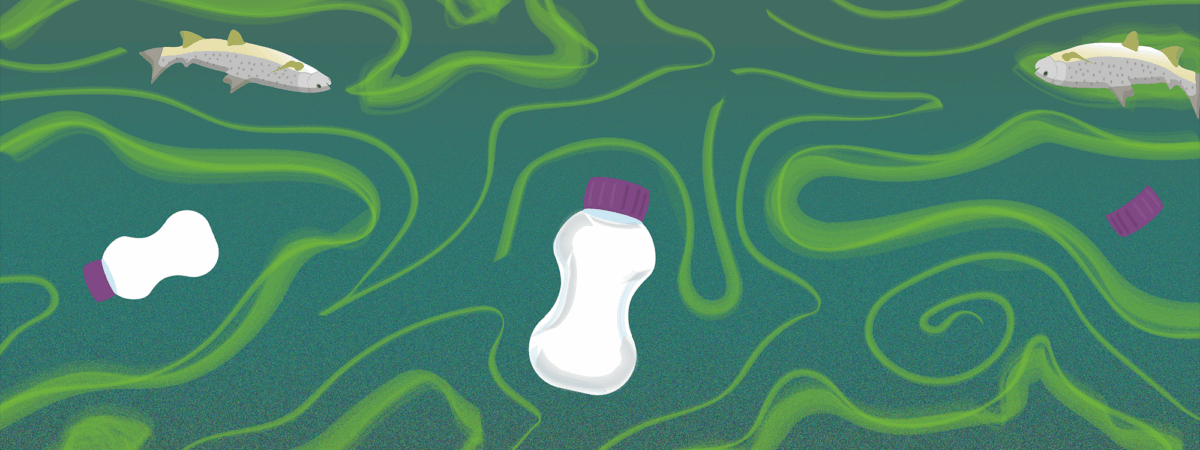
The more common disposal of oral nutritional supplements down the sink risks eutrophication of water sources — increased nutrient levels in aquatic ecosystems, leading to algal blooms, oxygen-depleted ‘dead zones’ and water quality degradation. However, as outlined by the London Procurement Partnership’s report, there has been little research on the true impact of oral nutritional supplements disposal on waterways to date13. Underpinning this confusion is a distinct lack of clear guidance from the manufacturers of oral nutritional supplements on how to dispose of unused product.
Problematic packaging
What to do with the packaging presents a further conundrum. Oral nutritional supplement packaging is bulky and cumbersome, typically consisting of multiple elements including a bottle or pot, lid, seal, label and outer packaging13. The plastic materials often used are high-density polyethylene (HDPE), polypropylene (PP) and polyethylene terephthalate (PET)14. These plastics contribute to greenhouse gas emissions, persist in the environment and may contain hazardous chemicals that are persistent, bio-accumulative and toxic6.
Globally, less than 10% of plastics are recycled; the remainder are incinerated, sent to landfill, dumped, burned in open pits or leaked into the environment
Packaging may state that it is recyclable, but the ability to recycle is variable and dependent on services provided by local authorities. Even when recycling is available locally, care homes may not have access to recycling facilities and, in our study, we observed a general lack of awareness of which plastics could be recycled where. Globally, less than 10% of plastics are recycled; the remainder are incinerated, sent to landfill, dumped, burned in open pits or leaked into the environment15.
In response to the lack of easily accessible, manufacturer-provided information on disposal, the Centre for Sustainable Healthcare reached out to nine oral nutritional supplements manufacturers to seek advice and guidance. Of the four companies who responded, only two provided further information about packaging disposal. One company declined to provide the information, saying that it was “commercially sensitive’, and instructing people to ‘[dispose of the product] as household or medicine waste depending on the protocol of […] the local authorities”.
This lack of information on appropriate disposal is compounding the risk of inappropriate disposal and subsequent environmental harm.
Pharmacy professionals have a vital role to play in both reducing the unnecessary prescribing of oral nutritional supplements products and educating patients and care home staff on proper disposal and recycling of packaging. The proposed single national formulary, as outlined in the NHS ten-year plan, provides an opportunity to implement a national approach to eliminating inappropriate prescribing of ONS16.
Tackling the climate crisis is a daunting task, but a little goes a long way. By bringing the environmental impacts of these supplements into the spotlight, we can encourage clinicians to think twice before prescribing oral nutritional supplements and ensure that patients and care home staff minimise the negative environmental impacts of disposal.
Manufacturers who are profiting from these products must also take responsibility for their environmental impact, through research on pollution impacts, guidance on disposal and tangible progress towards a circular system for packaging.
It is time to stop asking consumers to shoulder the blame and start holding manufacturers to account for the products and waste they create. It is time for polluters to pay.
Box: Our call to action
1. Reduce the amount of waste generated in the first place by tackling overprescribing
Many integrated care boards have already implemented ‘food first’ policies and discourage the prescribing of oral nutritional supplements in care homes. There are various examples of resources to encourage care home staff to provide homemade supplements instead of prescribed oral nutritional supplements17. Research is currently underway to measure the effectiveness of oral nutritional supplements versus fortified food in care home residents18.
2. Commit to transparency
Manufacturers should provide distinct, accessible disposal and recycling advice for both product residues and packaging. Furthermore, they should invest in research into the development of sustainable or reusable packing within a circular system.
3. Embed sustainability from design to disposal
Each manufacturer should carry out extensive carbon footprint and life-cycle assessment of their oral nutritional supplements, encompassing raw materials, production, distribution and disposal. This will identify where the biggest issues lie and enable manufacturers to take focused actions to reduce them.
Other contributors
Zoe Starling, volunteer at the Centre for Sustainable Healthcare (contributed to contacting manufacturers and collating data)
- 1.Health Effects of Climate Change (HECC) report. Centre for Climate and Health Security and UK Health Security Agency. December 2024. Accessed December 2025. https://www.gov.uk/guidance/health-effects-of-climate-change-hecc-report
- 2.Jeffrey J. NHS overheating in the UK at its highest rate ever. Round our Way. June 2023. Accessed December 2025. https://roundourway.org/latest/nhs-overheating-in-the-uk-at-its-highest-rate-ever
- 3.Jeffrey J. NHS underwater: the growing problem of hospital flooding. Round Our Way. March 2023. Accessed December 2025. https://roundourway.org/latest/nhs-underwater-the-growing-problem-of-hospital-flooding
- 4.Five years of a greener NHS: progress and forward look. NHS England. September 2025. Accessed December 2025. https://www.england.nhs.uk/long-read/five-years-greener-nhs-progress-forward-look/
- 5.Pharmaceutical Residues in Freshwater. Organisation for Economic Co-operation and Development. . 2019. Accessed December 2024. https://www.oecd.org/content/dam/oecd/en/publications/reports/2019/11/pharmaceutical-residues-in-freshwater_33f873ac/c936f42d-en.pdf
- 6.Groh KJ, Backhaus T, Carney-Almroth B, et al. Overview of known plastic packaging-associated chemicals and their hazards. Science of The Total Environment. 2019;651:3253-3268. doi:10.1016/j.scitotenv.2018.10.015
- 7.Pharmaceutical waste reduction in the NHS. NHS Business Services Authority. 2015. Accessed December 2025. https://www.england.nhs.uk/publication/pharmaceutical-waste-reduction-in-the-nhs/
- 8.Hampson N. Medicines waste in care homes – reducing social and environmental impacts. Sustainable Healthcare. 2025. Accessed December 2025. https://sustainablehealthcare.org.uk/activity/medicine-waste-in-care-homes/
- 9.Regulations for service providers and managers. Care Quality Commission. May 2025. Accessed December 2025. https://www.cqc.org.uk/guidance-regulation/providers/regulations-service-providers-and-managers/health-social-care-act/regulation-14
- 10.NHS Business Services Authority Oversupply Dashboard. NHS Business Services Authority . Accessed December 2025. https://www.nhsbsa.nhs.uk/access-our-data-products/epact2/dashboards-and-specifications/oversupply-dashboard
- 11.National medicines optimisation opportunities 2024/25. NHS England. October 2023. Accessed December 2025. https://www.england.nhs.uk/long-read/national-medicines-optimisation-opportunities-2023-24/
- 12.ACBS policy on standard adult ready-to-drink oral nutritional supplements: consultation response. Department of Health and Social Care. 2024. Accessed December 2025. https://www.gov.uk/government/consultations/oral-nutritional-supplements-acbs-policy/outcome/acbs-policy-on-standard-adult-ready-to-drink-oral-nutritional-supplements-consultation-response
- 13.Scoping the sustainability impact of Oral Nutritional Supplements. Integrating sustainability with procurement and Prescribing. NHS London Procurement Partnership. 2025. Accessed December 2025. https://www.lpp.nhs.uk/news/read-our-report-on-exploring-the-sustainability-impact-of-oral-nutritional-supplements-ons/
- 14.Pascall MA, Ahmed J, Arensberg MB, Ledbetter E, Cheetham L. The Case for Advanced Recycling as a Path to Sustainable Food Packaging for Specialized Nutrition Products. Foods. 2025;14(21):3586. doi:10.3390/foods14213586
- 15.Global Plastics Outlook. Published online February 22, 2022. doi:10.1787/de747aef-en
- 16.Ten-year health plan for England: fit for the future. Department of Health and Social Care. July 2025. Accessed December 2025. https://www.gov.uk/government/publications/10-year-health-plan-for-england-fit-for-the-future
- 17.Oral Nutritional Supplement Replacement in Care Homes . NHS Leicester, Leicestershire and Rutland Area Prescribing Committee. 2025. Accessed December 2025. https://www.lscdg.org/wp-content/uploads/2025/09/ONS-Replacement-in-Care-Homes-Overarching-Document.pdf
- 18.The REFRESH trial nutRition intervEntions For malnouRished oldEr adultS in care Homes: a parallel, superiority, three-arm cluster randomised controlled trial. University of Plymouth. Accessed December 2025. https://www.plymouth.ac.uk/research/penctu/refresh-trial
1 comment
You must be logged in to post a comment.

Need to to give nutrition in glass bottles with wide neck and pour out to people who can hold their drink and sip in smaller lighter drinking cups the pet bottles if washed correctly and dried can be reused for the same person /family