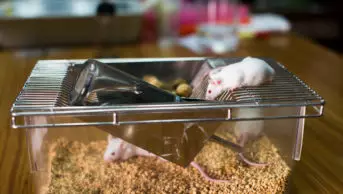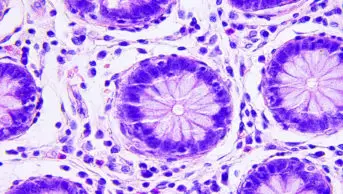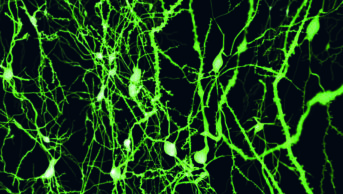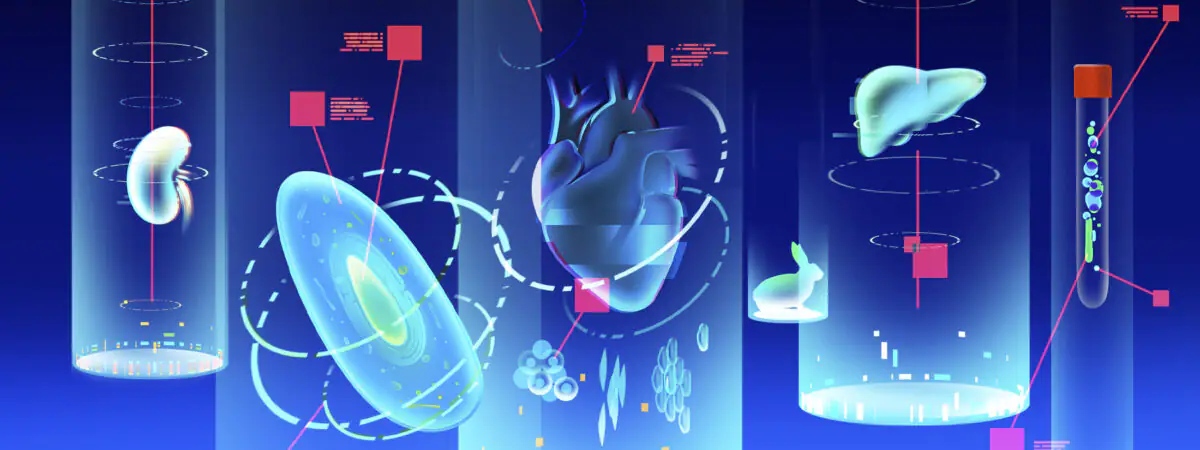
In November 2025, the government published a long-awaited strategy to replace the use of animals in research1. This ‘roadmap’ pointed to advances in technology — particularly AI and genomics but also organoid and 3D cell systems — which could bring an end to the use of animals in science “in all but exceptional circumstances” (see Box 1).
Although this long-term vision of ending the use of animals in medicine development is unlikely to be realised in the near future, the strategy has established an ambitious goal.
The ministers who developed the strategy, including science minister Lord Patrick Vallance, say that the advances now happening in non-animal models “finally allow us to see a path to changing our reliance on animals in science”. But how realistic are the government plans and what are the alternatives on the table?
Box 1: Alternative non-animal models
Human stem cell assay
- Used in drug discovery and toxicity testing to determine responses of specific cells to therapeutic agents or environmental factors;
- Can also be used to study cell behaviour in regenerative medicine or cancer.
Organoid
- A 3D, miniaturised and simplified version of organs grown in vitro from stem cells or patient-derived tissues (e.g. liver or kidney) that have multiple cell types and can mimic the function, structure and biological complexity of real organs;
- They allow researchers to investigate interactions between cells and within structures.
Organ-on-a-chip
- A microfluidic chip device designed to simulate the structure and function of a human organ;
- Microchips containing living human cells (e.g. liver or lung cells) that mimic the physiological responses of organs, allowing researchers to observe drug reactions.
3D cultures
- Involves cultivation of cells in a three-dimensional environment that more accurately mimics the natural growth conditions of cells in vivo;
- Some advanced cell cultures can replicate more complicated structures such as skin-enabling tests for sensitisation or irritation.
In silico models
- Computer simulations that can predict a substance’s chemical behaviour or toxicity, as well as identifying new drug discovery targets;
- Can encompass mathematical modelling and simulation, machine learning, AI and other computational techniques.
Reducing animal testing
In 2024, 2.64 million scientific procedures were performed in Great Britain involving animals protected under the Animals (Scientific Procedures) Act 1986 — a figure which has been steadily declining over the past decade (see Figure 1)2.
Figure 1: The number of scientific procedures carried out on living animals in Great Britain from 2014–2024
Phasing out the use of animals in science can only happen “where reliable and effective alternative methods, with the same level of safety for human exposure, can replace them”, the government’s strategy says.
The National Centre for the Replacement Refinement and Reduction of Animals in Research (NC3Rs) was established more than 20 years ago to support the development and use of non-animal alternatives.
Anthony Holmes, director of science and technology at NC3Rs, notes that the strategy is “ambitious but pragmatic”.
He believes that, for such a polarised topic, some people will always warn that change is moving too fast, and others will feel it does not go far enough. However, the UK “has always had a very strong position on the use of animals in research, and for more than 20 years, we’ve worked to ensure that we’re now at a point where we can actually deliver meaningful change”, he says.
[The reality is that] animal research will continue because the alternatives are just not available”
Sarah Bailey, professor of neuropharmacology at the University of Bath
The government’s strategy sets out various timelines for phasing out specific animal tests. For example, under the strategy, the government aims to halve the use of non‑human primates and dogs in cardiovascular safety studies by 20301.
Sarah Bailey, professor of neuropharmacology at the University of Bath, is mainly supportive of the goals of the strategy but says the reality is that “animal research will continue because the alternatives are just not available”.
“We could do better, go further, go faster, in bringing in those alternatives. And that’s what I think this strategy is going to do,” she explains.
Ready alternatives
The government’s strategy sets out three categories, or ‘baskets’; the first containing tests that can easily be consigned to history because “mature and accepted alternatives already exist”.
At the top of this list is the rabbit pyrogen test used to batch test vaccines, blood products, radiopharmaceuticals and other products for contaminants that can cause a fever.
Instead of injecting a small amount of a solution into a rabbit and monitoring its temperature, Medicines and Healthcare Products Regulatory Agency (MHRA) scientists have helped develop a new method that mimics the human immune response. Known as a ‘monocyte activation test’, products are tested against human peripheral blood mononuclear cells, which are monitored for cytokine production to see if pyrogen contaminants are present (see Figure 2).
Figure 2: The rabbit pyrogen test and monocyte activation test compared
‘Basket one’ also includes an end to the use of animals in the development of therapeutic monoclonal antibodies. Here, animal models can be completely irrelevant because the target is so human-specific. For some biologic drugs, regulators have already accepted a combination of in vitro assays before moving to human clinical trials.
Discussions around removing animals from this equation often cite a clinical trial that took place at Northwick Park Hospital in Harrow, north west London in 2006, where six healthy volunteers experienced a near-fatal cytokine storm within 90 minutes of receiving TGN1412, which is a humanised IgG4 monoclonal antibody, also known as theralizumab. Pre-clinical safety tests in animals had not raised any issues, yet the affected volunteers were admitted to intensive care for several days.
The UK government has said that formalised guidance will be in place by the end of 2026 for approving biological therapies where no pharmacologically relevant preclinical animal model exists. In 2025, the US Food and Drug Administration (FDA) announced similar plans.
For campaigners, these represent “pragmatic first steps”.
Laura Alvarez, deputy director of science at advocacy group Cruelty Free International, welcomes the strategy but points out it would not bring an “overnight” move away from use of animals.
“It has the potential to support a targeted, science-led transition,” she says.
Developing new methods
‘Basket two’ in the strategy covers the use of animals where alternative methods exist but have not yet been shown to be robust enough to be used in isolation.
In pharmacokinetic studies investigating how a drug is absorbed, distributed and eliminated, advances in prediction tools — using AI and molecular structure — may prove to be a viable alternative and at least lower the number of animal experiments needed.
I’ve developed some models that we use instead of animals now. But you’ve got to validate it, you’ve got to know that it really is meaningful
Robin Lovell-Badge, head of the Laboratory of Stem Cell Biology and Developmental Genetics at the Francis Crick Institute
The hope is that combining in vitro human tissue cultures, organoids or organ-on-a-chip models with AI, the need for animals could diminish. Work is also underway to replace animals in testing the cardiovascular safety of drugs, the strategy says.
AI models are already being used in drug development to mine datasets to uncover novel targets and candidates. AI-designed drug candidate, INS018_055, now being tested for use in idiopathic pulmonary fibrosis, is one such example that was able to move quickly to early clinical trials, the strategy notes.
However, developing alternative models is not always straightforward, says Robin Lovell-Badge, head of the Laboratory of Stem Cell Biology and Developmental Genetics at the Francis Crick Institute.
“I’ve developed some models that we use instead of animals now. But you’ve got to validate it, you’ve got to know that it really is meaningful,” he explains.
“There is concern that when it comes to drug testing, you develop your nice in vitro assay with liver cells, showing how they handle a particular drug, but is that going to reflect what happens when you put the drug somewhere else?”
He adds that whole systems are complicated and interconnected. An impact seen within homogenous cells in a petri dish is not the only part of the picture.
No alternatives
‘Basket three’ contains animal tests or models for which no alternatives currently exist, including experiments that involve complexity of multicellular mammalian tissues, organs or whole organisms. Here, the strategy sets a more vague, longer-term intention. There is only one example of a model — the use of fish to assess endocrine disruption — that could be reduced if alternatives were found. Those validated models should be in place by the end of 2035, it states.
Bailey believes that for fundamental research into how complex organs and processes in the body work, use of animals will be needed for “a good long while yet”, including in her research into how stress affects the brain, as well as the development of new and better anxiolytics or antidepressants.
We could be better at how we do our animal experiments, both in terms of what sort of animals we use and how we design our experiments
Malcolm Macleod, professor of neurology and translational neuroscience at the University of Edinburgh
“The brain is complex. It’s made up of millions of nerve cells that form trillions of synapses, and all our thoughts, emotions and behaviours are controlled across this collection of cells,” she explains.
“It’s not just one cell that governs that behaviour, it’s a network of brain regions and you can’t recreate that in a dish.”
Ageing, neurodegeneration, the impact of hormones throughout the body and the reproductive system are all examples of complex systems that in vitro models cannot — at least yet — replicate. “It’s about the right model for the question that you’re asking,” Bailey says.
She is one of a number of researchers who caution against moving away from animals before non-animal models can prove equivalence or even superiority. This could even be of detriment to UK life sciences if pharmaceutical companies find the requirements too onerous or unclear.
“If we move too quickly without good, validated methods, we’ll be transferring the risk from animal models to humans, and are people ready for that?” Bailey warns.
Malcolm Macleod, professor of neurology and translational neuroscience at the University of Edinburgh, says there are clear examples where animal research has truly transformed life expectancy through the development of antibiotics, anti-cancer treatments, drugs for hypertension, vaccines — the list goes on.
There are also situations where human clinical trials are not practical or feasible, such as Duchenne muscular dystrophy or Huntington’s disease, because to see benefit you would need to wait 15 to 20 years.
“We could be better at how we do our animal experiments, both in terms of what sort of animals we use and how we design our experiments,” he adds.
However, for greater adoption of non-animal models, Macleod says there needs to be an agreed framework that clearly sets out the standards they need to meet to provide “confidence that this is truly an alternative”.
He says that this would involve academia, industry, government and other stakeholders, such as N3CRs, developing a list of what models are accepted in what circumstances.
“It is a testable question: does the [non-animal model] give you the same answer or a different answer to animal models? What is the target performance you need in order for it to be adopted?” Macleod adds.
Scaling up
The government strategy is cognisant of the need to drive discovery and uptake of alternative models. To this end, it has committed to setting up a new preclinical translational research hub to bring together expertise in data, cell engineering and genomic technology to create a “pipeline” of alternatives. Applications for funding to set up the hub are currently open.
A new UK Centre for the Validation of Alternative Methods (UKCVAM) will coordinate a network of public and private laboratories, as well as help policymakers, regulators, industry end users and alternative method developers.
In a briefing document on the use of animals in pharmaceutical research, published in 2025, the Association of the British Pharmaceutical Industry (ABPI) said it was committed to the 3Rs principles with partners “actively developing alternatives” and phasing them in “wherever possible” (see Box 2).
Box 2: The 3Rs
‘The 3Rs’ in this context refer to the principles of replacement, reduction and refinement of animals used in research, which is aimed to reduce reliance on the use of animals and minimise pain, suffering and distress in those animals still required.
- Replacement — wherever possible, a scientifically satisfactory method or testing strategy not entailing the use of protected animals must be used instead of a regulated procedure;
- Reduction — whenever a programme of work involving the use of protected animals is carried out, the number of protected animals used must be reduced to a minimum without compromising the objectives of the programme;
- Refinement — the breeding, accommodation and care of protected animals and the methods used in regulated procedures applied to such animals must be refined to eliminate or reduce to the minimum any possible pain, suffering, distress or lasting harm to those animals.
In a review published in February 2026, the ABPI evaluated the readiness of non-animal models and concluded there was “a gap in maturity of in vitro pre-clinical models developed in academic settings compared to the translational readiness required for a model to be used in industry for medicines development”.
It essentially means more work is needed to validate, standardise and scale up their use — issues that the preclinical hub and UKCVAM hope to address.
The creation of 3D organoids is one area that has been gaining momentum. A team at Cambridge University has developed liver cancer models for hepatocellular carcinoma (HCC), cholangiocarcinoma (CC) and combined HCC/CC tumours. Using it to screen potential drug candidates, they identified the ERK inhibitor SCH772984 as a potential therapeutic agent and estimated in doing so it replaced the need for 300 mice3.
We all support reduction of animals used for testing and research where possible. But we do need to bring everyone on board
Robin Lovell-Badge, head of the Laboratory of Stem Cell Biology and Developmental Genetics at the Francis Crick Institute
Alvarez says replacing all uses of animals will require “sustained effort”, starting with partial replacement and reduction by combining human cell-based data, computational modelling and existing human clinical evidence.
Lovell-Badge adds that researchers have already worked hard to reduce the number of animals they use and develop new methods where appropriate. However, they too face hurdles. He has had research papers rejected because they had only done experiments in stem cell lines rather than in animals.
“We all support reduction of animals used for testing and research, where possible. But we do need to bring everyone on board.”
- 1.Replacing animals in science: A strategy to support the development, validation and uptake of alternative methods. Department for Science, Innovation and Technology. 2025. https://www.gov.uk/government/publications/replacing-animals-in-science-strategy/replacing-animals-in-science-a-strategy-to-support-the-development-validation-and-uptake-of-alternative-methods
- 2.Annual Statistics of Scientific Procedures on Living Animals Great Britain 2024. Home Office. 2025. https://assets.publishing.service.gov.uk/media/6900cf7287219d3b21b9aa80/E03462560_-_Animals_in_Scientific_Procedures_2025_v02_PRINTv2.pdf
- 3.Broutier L, Mastrogiovanni G, Verstegen MM, et al. Human primary liver cancer–derived organoid cultures for disease modeling and drug screening. Nat Med. 2017;23(12):1424-1435. doi:10.1038/nm.4438